Category: Tech

Buy Now, Pay Later Securitization: The Rise of 'Burrito Bonds'

2025-05-11

Buy Now, Pay Later Securitization: The Rise of 'Burrito Bonds'

This article explores the securitization of Buy Now, Pay Later (BNPL) loans, a novel approach where small loans are bundled and sold to investors, often humorously referred to as 'burrito bonds'. The author argues this innovation improves credit market efficiency by unbundling risk, allowing granular pricing, and enabling more efficient capital allocation. Despite skepticism, the author posits it's a win-win, leading to lower borrowing costs and a more complete market. This process, the article contends, makes credit cheaper and capital allocation more effective, potentially even boosting economic resilience.

US Coastal Sea Level Report: Acceleration Trends Significant

2025-05-11
US Coastal Sea Level Report: Acceleration Trends Significant

William & Mary's Batten School and VIMS released their 2024 U.S. sea level "report cards," providing updated analyses of sea level trends and projections for 36 coastal communities. The report cards, encompassing 55 years of historical data, aid planning and adaptation by analyzing rates of sea level rise and acceleration at each locality and forecasting 2050 water levels. This year's report cards are consolidated in an interactive dashboard and add data from several new tide gauge stations. While most locations show continued acceleration of sea level rise, the West Coast remains relatively stable, and the Southeast is experiencing significant acceleration, potentially linked to Greenland ice sheet melt.

Legacy Automakers Struggle to Build Software-Defined Vehicles

2025-05-11
Legacy Automakers Struggle to Build Software-Defined Vehicles

Ford's abandonment of its FNV4 next-generation electrical architecture project, merging it with its existing architecture, highlights the struggles legacy automakers face in transitioning to software-defined vehicles (SDVs). Tesla pioneered the SDV approach, using OTA updates and centralized computing to reduce costs and enhance user experience, but also revealed software quality control issues. GM, Volvo, and others have encountered delays and software bugs in their SDV projects, while Volkswagen outsourced key software tasks. The transition challenges legacy automakers in organizational structure, development philosophy, and technological accumulation, requiring a balance between safety and agile development, while catering to both combustion and electric vehicles. Ultimately, the winners will be those that successfully transform into software companies, a path fraught with challenges.

Trump Admin. Kills $18M Food Waste Project, Sparking Outrage

2025-05-11
Trump Admin. Kills $18M Food Waste Project, Sparking Outrage

An ambitious community-based project in Rhode Island, designed to reduce food waste and greenhouse gas emissions through community composting and job creation, has been abruptly terminated by the Trump administration. The $18 million grant, funded by the Inflation Reduction Act, was canceled because the project was deemed 'no longer consistent' with the EPA's priorities. Environmental advocates are furious, calling the move illegal and highlighting its disproportionate impact on vulnerable communities. The project aimed to divert over 11,000 tons of food waste annually, preventing over 15,000 metric tons of emissions.

Bias-Free Dual H2 Production System: 4x Higher Efficiency Than DOE Target

2025-05-11
Bias-Free Dual H2 Production System: 4x Higher Efficiency Than DOE Target

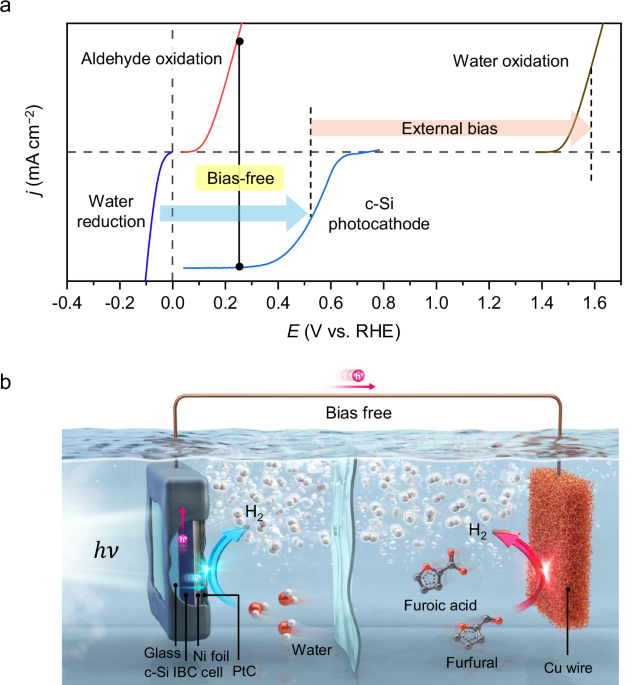
Researchers have devised a novel bias-free dual hydrogen production system, replacing the energy-intensive oxygen evolution reaction with the cost-effective oxidation of furfural. The system consists of a highly efficient PtC/Ni/c-Si photocathode for water reduction and a copper anode for furfural oxidation, producing valuable furoic acid and hydrogen. This design cleverly harnesses the high photocurrent of the c-Si photocathode, eliminating the need for external bias and achieving a significantly higher hydrogen production rate than conventional water splitting. The solar hydrogen production rate is more than 8 times higher than previously reported bias-free PEC H2 production systems, far exceeding the US Department of Energy (DOE) target.

European Courts Order Pirate Site Blocking, DNS Providers React Differently

2025-05-11

European courts have recently issued orders to DNS resolvers like OpenDNS, Cloudflare, and Google to block pirate websites, leading to varied responses from these tech giants. OpenDNS took drastic action, withdrawing from France and Belgium; Cloudflare used "alternate mechanisms" to comply, notifying users with an HTTP 451 error; Google silently refused DNS queries without explanation. This lack of transparency confuses users and potentially violates court requirements for detailed explanations. Concerns are rising about similar bills in the US, highlighting the importance of transparency in tackling online copyright issues.

The Rise and Fall (and Possible Rise?) of US Rare Earths

2025-05-11

The US once dominated the rare earth industry, but strategic missteps led to China taking the lead. This article recounts the history of the US rare earth industry, focusing on Molycorp's failed partnership with China and how China quickly mastered rare earth processing and permanent magnet production. While the US government has recently invested heavily to rebuild its rare earth supply chain, it faces challenges from market demand, technological hurdles, and China's strong competitive position. The author questions the viability of a US rare earth revival, noting that demand may be lower than anticipated and alternative technologies are developing.

Massive Supply Chain Attack Compromises Hundreds of E-commerce Stores

2025-05-11
Massive Supply Chain Attack Compromises Hundreds of E-commerce Stores

Hundreds of e-commerce stores, including a $40 billion multinational, are running backdoored versions of popular software. Security firm Sansec discovered that attackers have been actively exploiting these backdoors since at least April 20th. Affected packages are from vendors including Tigren, Magesolution (MGS), Meetanshi, and Weltpixel, released between 2019 and 2022. Attackers compromised vendor servers to inject backdoors, gaining access to all customer stores and their visitors. The backdoor disguises itself as a license check, located in License.php or LicenseApi.php. E-commerce stores using software from these vendors are urged to check their security immediately.

AI Deciphers 2000-Year-Old Herculaneum Scroll: Unveiling Philodemus' Ethical Treatise

2025-05-11
AI Deciphers 2000-Year-Old Herculaneum Scroll: Unveiling Philodemus' Ethical Treatise

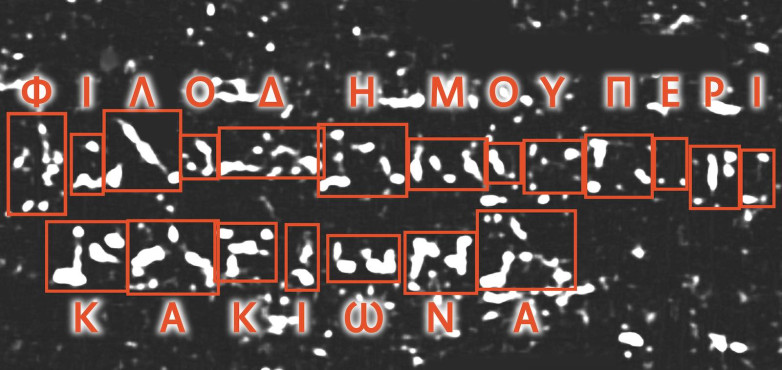
Using AI-powered 'virtual unwrapping', researchers have for the first time identified the title and author within a sealed Herculaneum scroll, PHerc. 172. The scroll has been confirmed as *On Vices* by the Greek philosopher Philodemus, an ethical treatise offering guidance on cultivating a virtuous life. This breakthrough, achieved by the Vesuvius Challenge and researchers from the University of Würzburg, earned them a $60,000 prize. While the author and title are clear, the scroll's precise place within the *On Vices* series (known to have at least 10 books) requires further investigation. This discovery offers valuable insights into Philodemus' ethical views and the complete *On Vices*, showcasing AI's transformative potential in humanities research.

The Friction Economy: A Tale of Two Worlds

2025-05-11
The Friction Economy: A Tale of Two Worlds

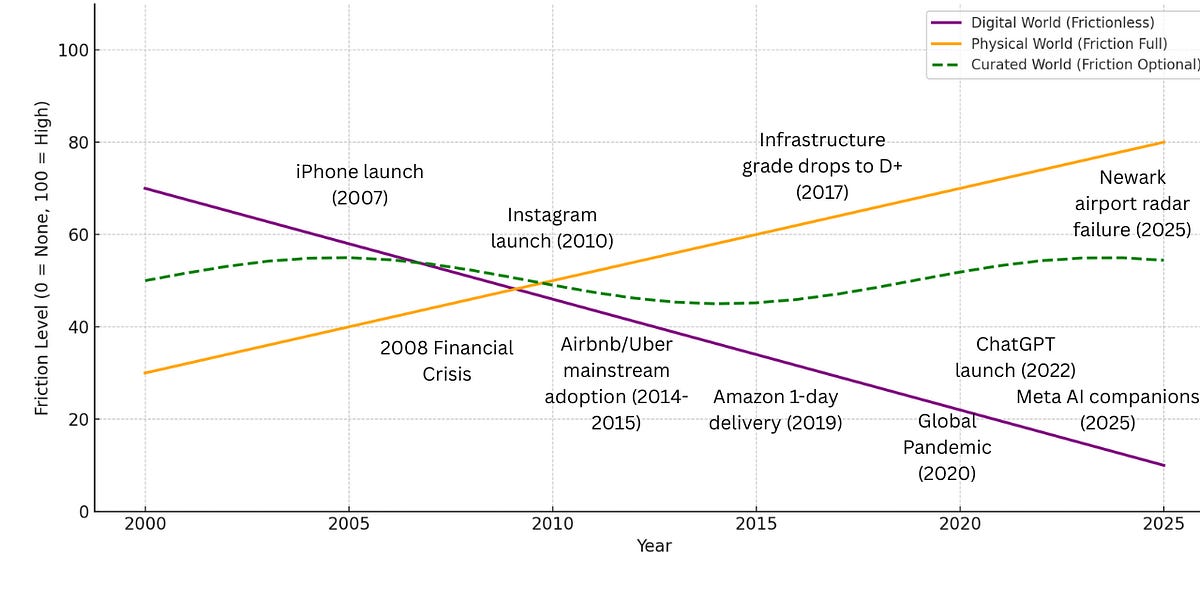
This essay explores the redistribution of 'friction' in today's economy. The digital world is nearly frictionless, with AI and other technologies eliminating cognitive resistance, but this comes at the cost of shifting friction onto the physical world and the workforce. The author points to the prevalence of AI cheating in college education and the decay of American infrastructure as reflections of this friction shift. The wealthy can use money to circumvent the friction of the physical world, creating 'curated worlds,' while the average person faces deteriorating infrastructure and working conditions. The essay concludes with a call to rethink economic models, directing effort toward sustainable systems rather than simply eliminating friction.

Epochalypse 2038: The Ticking Time Bomb of a 32-bit Timestamp Vulnerability

2025-05-11

On January 19, 2038, millions of embedded and industrial systems worldwide face potential collapse due to a 32-bit timestamp vulnerability. This isn't science fiction; it threatens critical infrastructure, from hospitals to power grids. Unlike Y2K, this is far larger, affecting countless un-updatable embedded systems. The Epochalypse Project, launched by two cybersecurity researchers, aims for global collaboration to mitigate this impending threat through standardized testing, vulnerability documentation, and remediation strategy development. Individuals can contribute by testing personal devices and engaging with tech companies, while professionals must take the lead in avoiding a digital disaster.

The Decline of 'Thinkers' in Science: A Call for 'Little Science'

2025-05-11
The Decline of 'Thinkers' in Science: A Call for 'Little Science'

This article explores the distinction between science and technology, highlighting the current imbalance in the scientific community—a surplus of 'doers' and a deficit of 'thinkers.' The author argues that while 'doers' like Elon Musk excel at leveraging existing technology, scientific progress demands 'thinkers' capable of groundbreaking innovation. The post-WWII era of 'Big Science,' while yielding remarkable achievements, has also led to institutional sclerosis and decreased innovation, the author contends. A return to 'Little Science,' fostering individual exploration and curiosity-driven research, is advocated to create more space for 'thinkers' and ensure the continued advancement of science.

One-Click RCE in ASUS DriverHub: A Shocking Vulnerability

2025-05-11

A security researcher discovered a critical vulnerability in ASUS's pre-installed DriverHub software allowing for one-click remote code execution (RCE). The vulnerability stems from insecure RPC handling, enabling attackers to bypass origin checks and execute arbitrary code with administrative privileges. The researcher responsibly disclosed the flaw, and ASUS has since released a patch. Importantly, this impacts any system with DriverHub installed, not just ASUS motherboards. The researcher's detailed exploit chain highlights the severity and potential impact of this vulnerability.

Tech ASUS

Liana Pandemic Threatens Tropical Rainforests: Visible from Space

2025-05-11
Liana Pandemic Threatens Tropical Rainforests: Visible from Space

A new study reveals a dramatic surge in lianas in tropical rainforests, jeopardizing carbon storage and biodiversity. Lianas, which spread rapidly and outcompete trees for resources, are increasing by 10-24% per decade. This is linked to rising atmospheric CO2 levels, as lianas benefit disproportionately from increased CO2. The resulting tree mortality and hampered forest regeneration lead to a 95% reduction in carbon storage. Surprisingly, their unique leaf properties make lianas detectable from space, opening new avenues for monitoring their spread. Researchers urge a focus on climate change mitigation and caution against intervention until the lianas' full ecological role is understood.

Lightweight Wearable Chip for Real-Time Heart Attack Detection

2025-05-11
Lightweight Wearable Chip for Real-Time Heart Attack Detection

Researchers at the University of Mississippi have developed a lightweight, energy-efficient chip implantable in wearables for real-time heart attack detection. Using AI and advanced mathematics, the chip analyzes ECGs to identify heart attacks with 92.4% accuracy, twice as fast as traditional methods. Its design allows integration into devices like smartwatches, potentially saving crucial time in diagnosis and treatment, reducing the risk of permanent damage. Future applications could extend to detecting other conditions like seizures and dementia.

The AI Job Apocalypse is Here (and it's not what you think)

2025-05-11
The AI Job Apocalypse is Here (and it's not what you think)

Duolingo's recent layoffs, framed as an "AI-first" strategy, expose a hidden truth: AI-driven job displacement is already widespread. Hundreds of writers and translators have been replaced by AI, a trend echoed across creative industries, journalism, and even government. This isn't a robot uprising, but a calculated move by corporations using AI to cut costs and consolidate power. The resulting job crisis is particularly acute for recent college graduates, with unemployment rates reaching historic highs. While the full economic impact remains unclear, the crisis reveals a deeper issue: the erosion of valuable jobs and the potential for AI to exacerbate existing inequalities. We're facing a critical juncture, needing to define what kind of work we value and how to protect it before the AI-driven job apocalypse consumes us.

Dotless Domains: A DNS Oddity

2025-05-11

This article explores the phenomenon of "dotless domains," which are top-level domains (TLDs) like .com or .org that are directly accessible without a second-level domain. While ICANN and the IAB discourage this practice, some country code top-level domains (ccTLDs) still exist due to national jurisdiction. The article lists current and historical examples of dotless domains and analyzes their technical limitations in email delivery and website access. Furthermore, it delves into the structure of the DNS tree and the theoretical possibility of the root domain (.) having A, AAAA, and MX records, although this is practically nonexistent.

Woz Explains Why the Original Apple II Didn't Have Lowercase Letters

2025-05-10

Steve Wozniak reveals the surprisingly simple reason behind the original Apple II's lack of lowercase letters: a tight budget. The cost of a full keyboard was prohibitive in the early 1970s, leading Wozniak to utilize a cheaper uppercase-only teletype keyboard. Coupled with hand-coding the entire system and a lack of funds for a timeshare assembler, adding lowercase would have been a massive undertaking, making the decision economically and practically impossible.

Microsoft Teams to Block Meeting Screenshots for Enhanced Security

2025-05-10
Microsoft Teams to Block Meeting Screenshots for Enhanced Security

Microsoft is rolling out a new Teams feature in July 2025 to prevent users from capturing screenshots of sensitive information shared during meetings. This functionality will be available on Windows and Mac desktops, and iOS and Android mobile apps. Unsupported platforms will default to audio-only mode. While screenshots are blocked, users could still capture sensitive information by taking photos. This mirrors a recent similar feature introduced by Meta for WhatsApp. Microsoft also plans to release additional Teams features, including audio summaries of meeting transcripts.

Accelerating Sea Level Rise: A Climate Crisis in Progress

2025-05-10
Accelerating Sea Level Rise: A Climate Crisis in Progress

For 2,000 years, global sea levels remained relatively stable. That changed in the 20th century with a steady, accelerating rise. Satellite data reveals a 4-inch increase since 1993, with the rate more than doubling in the last 30 years. Human-caused global warming is the primary culprit, with oceans absorbing excess heat from fossil fuel combustion, causing expansion and ice sheet melting. Scientists project a 6-inch global average sea level rise by 2050, potentially exceeding 3 feet in the coming centuries. Coastal communities face severe consequences: increased flooding, erosion, and saltwater intrusion. While slow rises are adaptable, rapid increases pose immense challenges, particularly for low-lying island nations and coastal areas. The US Gulf Coast, especially Louisiana, is extremely vulnerable. The Trump administration's rollback of climate policies further exacerbates this crisis.

Tech

Tesla's Insurance Arm Bleeding Money: High Repair Costs Bite

2025-05-10
Tesla's Insurance Arm Bleeding Money: High Repair Costs Bite

Tesla's insurance business continues to hemorrhage money, with a staggering 103.3% loss ratio in 2024, far exceeding the industry average of 66.1%. The culprit? Exorbitant repair costs for Tesla vehicles, averaging 32% higher than those of internal combustion engine (ICE) cars. Despite leveraging data from its Full Self-Driving system and vehicle telematics to adjust risk profiles, Tesla hasn't managed to effectively control costs. Poor customer satisfaction, marked by lengthy repair times and subpar communication, further exacerbates the problem. Rising premiums haven't solved the issue, leaving Tesla's insurance arm facing a precarious future.

Kraken Foils North Korean Hacker's Job Application

2025-05-10
Kraken Foils North Korean Hacker's Job Application

Kraken, a US-based cryptocurrency exchange, uncovered a North Korean operative masquerading as "Steven Smith" who applied for a software engineering position. Smith fabricated a resume with impressive credentials, including a prestigious university degree and extensive experience. Suspicions arose during the interview process where Smith demonstrated a profound lack of knowledge about basic American culture and even his supposed place of residence. This incident highlights a growing threat of North Korean hackers infiltrating foreign companies to steal funds, funding their weapons programs through multiple jobs and internal access. The incident underscores the importance of robust cybersecurity measures and thorough background checks.

Tech

Trump Tariffs Cause a Dramatic Drop in US Port Imports

2025-05-10
Trump Tariffs Cause a Dramatic Drop in US Port Imports

President Trump's tariffs have led to a drastic decline in US port imports, with Seattle's port experiencing an unusual lack of container ships. This has raised concerns about supply chain disruptions, rising prices, and job losses. The Ports of Los Angeles and Long Beach are facing similar issues, with imports down 35% year-on-year. Experts warn that the impact will ripple across the nation, starting with West Coast ports and spreading to other regions. While the administration is negotiating with China to potentially reduce tariffs, the outcome remains uncertain.

Tech ports

Worldcoin: Selling Your Eyeballs for a Digital Identity – Is It Worth the Privacy Cost?

2025-05-10
Worldcoin: Selling Your Eyeballs for a Digital Identity – Is It Worth the Privacy Cost?

Worldcoin, co-founded by OpenAI CEO Sam Altman, is creating biometric digital identities ('World IDs') by scanning users' irises. While aiming to combat fake online accounts in the age of AI, the project has raised significant ethical and privacy concerns. The company has been criticized for using financial incentives to collect biometric data in regions with weaker legal protections, leading to investigations and penalties from multiple regulatory bodies. Worldcoin's partnerships with major corporations threaten widespread adoption of World ID across various sectors, raising serious data security and privacy invasion concerns. Its business model itself is highly questionable.

Tech biometric

41,000 Years Ago: How Homo Sapiens Survived a Geomagnetic Reversal

2025-05-10
41,000 Years Ago: How Homo Sapiens Survived a Geomagnetic Reversal

A new study suggests that a cataclysmic geomagnetic reversal 41,000 years ago (the Laschamps excursion), which weakened Earth's magnetic field, exposed our ancestors to harmful solar radiation. Homo sapiens adapted by seeking shelter in caves, creating clothing, and using ochre pigments as sunscreen. Neanderthals, however, seemingly failed to adapt, potentially contributing to their decline. The study proposes a novel hypothesis linking this event to the rise of Homo sapiens and the demise of Neanderthals, though further research is needed to confirm the correlation.

Google Pays $1.4B to Settle Texas Data Privacy Lawsuit

2025-05-10
Google Pays $1.4B to Settle Texas Data Privacy Lawsuit

Google will pay $1.4 billion to settle claims by Texas that it collected user data without permission, the state's attorney general announced. This is the largest amount any state has won in a settlement with Google over data privacy violations. The settlement covers geolocation, incognito searches, and biometric data, reflecting Texas's tough stance against tech companies exploiting user data. Google stated the settlement addresses older claims and won't require new product changes.

Tech settlement

20-Year-Old Botnet Taking Down Thousands of Routers Crushed

2025-05-10
20-Year-Old Botnet Taking Down Thousands of Routers Crushed

Law enforcement agencies have dismantled a massive botnet that operated for two decades, infecting thousands of routers worldwide and creating two residential proxy networks: Anyproxy and 5socks. Four individuals from Russia and Kazakhstan were indicted for their roles in operating and profiting from these illegal services, raking in over $46 million. The botnet exploited vulnerabilities in outdated routers, providing anonymity for various cybercrimes including ad fraud and DDoS attacks. The takedown, a joint operation involving the US, Netherlands, Thailand and others, highlights the growing global cooperation in combating cybercrime.

Tech

Trump Admin Eyes Axing Energy Star Program, Sparking Outrage

2025-05-10
Trump Admin Eyes Axing Energy Star Program, Sparking Outrage

The Energy Star program, a voluntary initiative launched in 1992 and recognized for its blue label, has saved US consumers an estimated $500 billion over 33 years. However, the Trump administration is reportedly planning to eliminate it. This move has sparked controversy, with critics arguing it aligns with the administration's broader rollback of environmental regulations and funding, demonstrating disregard for public good. Supporters highlight the program's bipartisan support and significant contribution to energy efficiency, warning its elimination would harm consumers and potentially be replaced by initiatives counter to energy-saving goals.

Intel 2008-2014: A Decade of Giants – From Atom to Broadwell

2025-05-10
Intel 2008-2014: A Decade of Giants – From Atom to Broadwell

This article recounts Intel's key developments from 2008 to 2014. From launching the low-power Atom processor to enter the mobile market, to releasing high-performance Nehalem and Sandy Bridge architectures to solidify its PC dominance, and finally adopting the 22nm FinFET process and 14nm Broadwell architecture to lead the technology trend, Intel experienced a decade of both glory and challenges. During this period, the company underwent several restructurings, acquired McAfee, and launched important projects such as Ultrabook and Thunderbolt. Despite setbacks in the smartphone market, Intel remained a leader in PC, server, and other markets, laying the foundation for future development.

Tech
1 2 79 80 81 83 85 86 87 194 195