German Court Bans Apple's 'Carbon Neutral' Watch Ads

2025-08-27

German Court Bans Apple's 'Carbon Neutral' Watch Ads

A German court ordered Apple to stop advertising its Apple Watch as carbon neutral, deeming the claim misleading and a violation of German competition law. The court questioned the validity of Apple's carbon offsetting program in Paraguay, citing concerns about the short-term nature of land leases and the uncertainty of long-term carbon sequestration. Apple can appeal, but the ruling highlights the need for companies to be cautious about carbon offset claims and avoid greenwashing.

Read more


Trump Threatens Tariffs on Nations Regulating US Tech

2025-08-26
Trump Threatens Tariffs on Nations Regulating US Tech

Donald Trump threatened to impose additional tariffs on countries that regulate American tech companies. He claims digital taxes and similar measures harm US tech firms while giving Chinese companies a pass. This could lead to tech export bans, potentially hurting even US chipmakers. However, this threat might be another Trumpian bluster, possibly ending with no action or minor concessions through negotiations.

Read more
Tech

The AI Hype Bubble: Expectations vs. Reality

2025-08-25
The AI Hype Bubble: Expectations vs. Reality

Current expectations for AI are overblown, with many companies finding that AI's ROI is far lower than anticipated. A MIT report reveals that 95% of companies that have adopted AI haven't seen any meaningful return on their investment. While AI tools are widely used, they're primarily employed for simple tasks like drafting emails and basic analysis, with complex tasks still dominated by humans. Some companies are even pulling back on AI investments; for example, the Commonwealth Bank of Australia is bringing back call center employees previously replaced by AI. AI valuations are overinflated, echoing the dot-com bubble of the 1990s, and the market is already showing signs of correction. While AI is important, for most companies, it's failing to deliver on its gold-plated promises.

Read more
Tech

Firefox 142: AI-Powered Browser Update, But Not Without Issues

2025-08-25
Firefox 142: AI-Powered Browser Update, But Not Without Issues

Mozilla has released Firefox 142, incorporating AI features such as content summarization for links and LLM support for extensions. However, the rollout is staggered, with some regions not yet seeing all features like link previews and the new tab page's news and weather integrations. Accuracy concerns exist with the AI summarization. Despite this, improvements include simpler sidebar and tab bar interactions, and enhanced tracking protection exception management. A new feature, CRLite, improves certificate revocation checking.

Read more

Tech

Arch Linux Under Week-Long DDoS Attack

2025-08-24
Arch Linux Under Week-Long DDoS Attack

The popular Arch Linux distribution is under a week-long distributed denial-of-service (DDoS) attack targeting its main website, AUR, and forums. The attacker's motive is unknown. The Arch team is actively working with its hosting provider to mitigate the attack and evaluating DDoS protection options. While Arch is known for its technical difficulty, the attack causes inconvenience to the community. Users can obtain packages via the pacman-mirrorlist package or GitHub to work around service outages.

Read more
Tech

Microsoft Throttles onmicrosoft.com Emails: Upgrade or Face Restrictions

2025-08-23
Microsoft Throttles onmicrosoft.com Emails: Upgrade or Face Restrictions

Microsoft is warning companies using the onmicrosoft.com domain for emails to migrate to a custom domain or face email throttling. Starting October 15th, Microsoft will limit emails to 100 external recipients per organization per 24 hours, gradually expanding to all tenants by June 2026. This aims to combat spammers exploiting the onmicrosoft.com domain. Microsoft advises adding and setting a custom domain as primary to avoid restrictions, but migration might increase admin workload and necessitate credential updates.

Read more
Tech

Microsoft Curbs Vulnerability Info Access for Chinese Firms

2025-08-23
Microsoft Curbs Vulnerability Info Access for Chinese Firms

Following July's SharePoint zero-day attacks, seemingly linked to a leak in Microsoft's early-bug-notification program (MAPP), Microsoft has reportedly stopped providing Chinese companies with proof-of-concept exploit code for upcoming vulnerabilities. MAPP typically gives vendors two weeks' advance notice before Patch Tuesday, but now access is restricted for companies in countries required to report vulnerabilities to their governments, including China. These companies will receive general written descriptions instead of PoC code. Security experts see this as a positive step to prevent future leaks.

Read more
Tech

China's Great Firewall Mysteriously Blocks Port 443 for an Hour

2025-08-21
China's Great Firewall Mysteriously Blocks Port 443 for an Hour

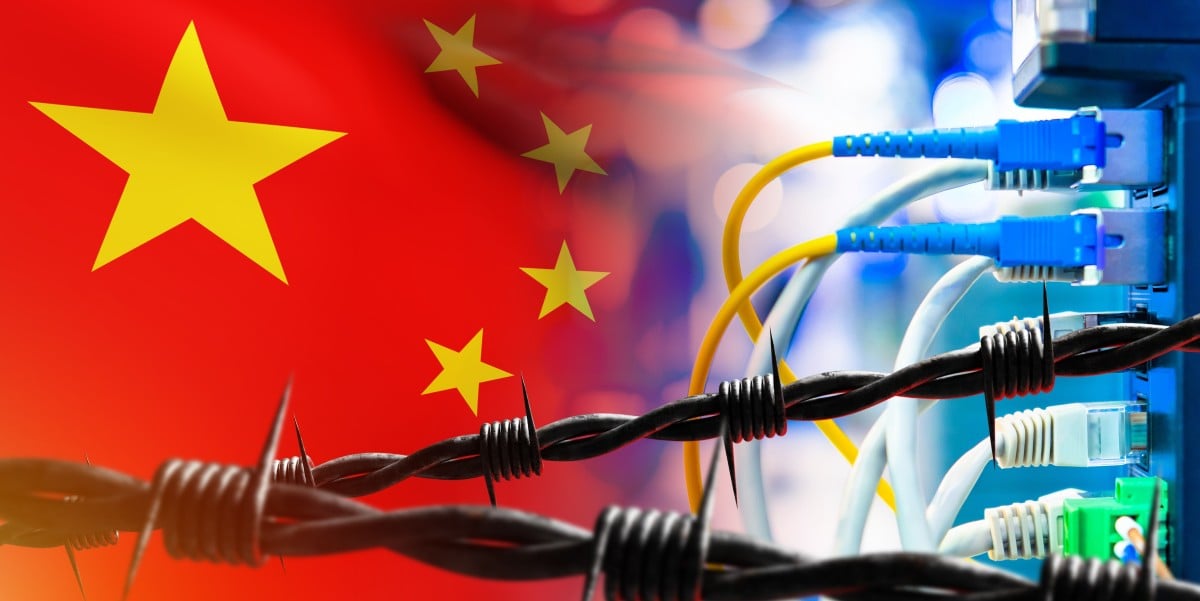
On August 20th, China's Great Firewall experienced a mysterious outage, blocking access to most foreign websites for about an hour. The outage affected TCP port 443, the standard port for HTTPS traffic, disrupting services reliant on it, including some Apple and Tesla services. The cause remains unclear, possibly a new device being tested, misconfiguration, or human error. This isn't the first Great Firewall glitch, highlighting flaws in China's internet censorship.

Read more

AI Crawlers Overwhelm the Open Web: Meta and OpenAI Leading the Charge

2025-08-21
AI Crawlers Overwhelm the Open Web: Meta and OpenAI Leading the Charge

Fastly's report reveals that AI crawlers are consuming the open web at an alarming rate, accounting for 80% of all AI bot traffic. Meta's AI division contributes over half of this crawler traffic, while OpenAI dominates on-demand fetch requests. This excessive scraping leads to increased website load, server overload, and harms content creators. Some companies ignore robots.txt directives, prompting website operators to fight back with anti-scraping techniques like Anubis. Experts call for responsible crawling standards, even suggesting that only the bursting of the AI bubble can solve this, with government regulation becoming urgent.

Read more
Tech web load

UK's Age-Verification Loophole: VPNs Enable Minors to Bypass Porn Filters

2025-08-19
UK's Age-Verification Loophole: VPNs Enable Minors to Bypass Porn Filters

England's children's commissioner is urging the government to address a significant loophole in its new online safety regulations: the use of VPNs by minors to circumvent age restrictions. A recent report reveals a concerning number of young people accessing pornography before age 18, despite the implementation of mandatory age checks for commercial porn sites. The surge in VPN usage post-regulation highlights the ineffectiveness of current measures. While the government claims no plans to ban VPNs, it intends to collaborate with providers to implement robust age verification, potentially impacting the privacy and security of legitimate users, including schools relying on VPNs for secure access to internal systems. This move represents a significant challenge in balancing child safety with online freedoms.

Read more
Tech

Your ChatGPT Chats Might Be Indexable by Search Engines

2025-08-18
Your ChatGPT Chats Might Be Indexable by Search Engines

Recently, OpenAI ChatGPT users were shocked to find their search queries appearing in Google search results. OpenAI had disclosed this possibility, but most users overlooked it. More concerning, a court order compels OpenAI to retain all user conversation data, including deleted content, due to an ongoing copyright lawsuit. Google's Gemini AI also has a memory function, recording user chats by default. The article warns users to be cautious with AI chatbots, avoiding sensitive information, as all mainstream AI chatbots record user conversations by default.

Read more
AI

AI Bubble Admitted, But OpenAI CEO Plans to Dominate

2025-08-16
AI Bubble Admitted, But OpenAI CEO Plans to Dominate

OpenAI CEO Sam Altman acknowledges the current AI hype as a bubble, but emphasizes AI's long-term significance. He likens the situation to the dot-com bubble, stating that while overexcitement exists, the underlying technology holds immense potential. Altman reveals OpenAI's massive investment in data center construction to meet future computational demands and plans to launch more AI products and services. Despite projected $10 billion revenue this year, OpenAI requires substantial funding to achieve its ambitious goals.

Read more
AI

Ten Windows 11 Improvements We Actually Want

2025-08-16
Ten Windows 11 Improvements We Actually Want

Windows 11 is plagued by useless features and annoying pop-up ads, neglecting what users truly need. This article lists ten crucial improvements: multiple clipboards, multiple clocks in the taskbar, a fourth modifier key, remapping all keyboard shortcuts, a movable and resizable taskbar, an audio firewall, pinning apps to specific screens, program groups launching multiple apps at once, easier audio device switching, and a reduction in Microsoft's distracting features. These enhancements would significantly boost user productivity instead of focusing on flashy, unnecessary features.

Read more
Development OS Improvements

Microsoft's Universal Print Gets 'Pull Print' Feature for Enhanced Security

2025-08-14
Microsoft's Universal Print Gets 'Pull Print' Feature for Enhanced Security

Microsoft has made its 'Pull Print' feature for Universal Print generally available, addressing the security risk of sensitive documents left unattended at printers. Users can now release print jobs from any registered printer without pre-selecting a device, simply by authenticating. Two release methods are offered: direct print and secure release (via QR code). While alternatives exist, this free addition to Universal Print is particularly attractive for Microsoft 365 organizations already using the service, significantly improving both security and convenience.

Read more

UK Police Expand Live Facial Recognition, Sparking Privacy Concerns

2025-08-13
UK Police Expand Live Facial Recognition, Sparking Privacy Concerns

The UK is expanding its use of live facial recognition (LFR) technology with ten new police vans, boosting capabilities beyond London and South Wales. While authorities claim LFR is used only in targeted investigations and with privacy safeguards, privacy campaigners raise concerns about misidentification and potential misuse. Recent revelations suggest access to passport and immigration databases for facial recognition searches, further fueling the debate. The expansion highlights the ongoing tension between effective policing and individual privacy rights.

Read more
Tech

KDE Linux: An Immutable Arch-Based Distro Aims for Bulletproof Stability

2025-08-10
KDE Linux: An Immutable Arch-Based Distro Aims for Bulletproof Stability

KDE has unveiled KDE Linux, a brand-new, ambitious Linux distribution built on Arch Linux – not a replacement for KDE Neon. This immutable distro features dual read-only Btrfs root partitions, updating like a smartphone OS with whole-system image replacements. Designed for superior stability and security, it's currently pre-alpha, with limitations including a lack of Secure Boot support and Nvidia driver compatibility issues. While early testing reveals bugs (like desktop crashes on login), its radical design and commitment to robustness make it a promising project.

Read more
Development

The ThinkPad Legend: David Hill's 22-Year Journey

2025-08-08
The ThinkPad Legend: David Hill's 22-Year Journey

This article delves into the 22-year career of David Hill, the legendary designer behind many iconic ThinkPad features. He shares the stories behind the design of the TrackPoint, the innovative butterfly keyboard (and why more weren't made), and the ThinkLight. Hill also reveals unrealized projects, like a foldable all-in-one desktop and more laptops with the butterfly keyboard. The article further recounts how, after Lenovo's acquisition of IBM's PC division, Hill led the creation of the ultra-thin and light ThinkPad X300, proving Lenovo's ability to innovate while upholding ThinkPad's legacy.

Read more
Tech

GAO Slams Federal Agencies for Cybersecurity Failures

2025-08-06
GAO Slams Federal Agencies for Cybersecurity Failures

The Government Accountability Office (GAO) issued scathing reports criticizing three federal agencies—the General Services Administration (GSA), Environmental Protection Agency (EPA), and Department of Homeland Security (DHS)—for their CIOs' failure to implement cybersecurity recommendations. DHS has 43 outstanding recommendations, seven prioritized by GAO; EPA has 11; and GSA has 4. Common failures include inadequate cybersecurity event logging and IT portfolio reviews. The EPA faces additional issues with cloud software management, lacking documentation and service level agreements. DHS's Homeland Advanced Recognition Technology (HART) program remains plagued with problems, with all nine recommendations unimplemented. The GAO hopes newly appointed CIOs will address these shortcomings, and has brought the issues to Congress's attention.

Read more

Texas Mega-Data Center to Run on Nuclear Power?

2025-08-05
Texas Mega-Data Center to Run on Nuclear Power?

Facing AI's insatiable energy demands, Fermi America is planning a massive advanced energy campus in Texas, featuring up to six gigawatts of nuclear power deployed by Hyundai. The project aims to power data centers by 2032, with the first reactor slated to begin construction next year. While ambitious, the project faces significant cost and risk, as similar ventures have experienced massive overruns and supplier bankruptcies (Westinghouse). Besides nuclear, the campus will include gas, solar, and battery storage. Fermi America is already building initial gas generation capacity, targeting one gigawatt by late 2026. This isn't the first nuclear-powered data center proposal; other companies like Amazon, Microsoft, and Oracle are also exploring similar initiatives.

Read more
Tech

Google Pauses Non-Essential AI Workloads to Protect Power Grids

2025-08-05
Google Pauses Non-Essential AI Workloads to Protect Power Grids

Facing an impending heatwave and potential power grid strain, Google announced it will pause non-essential AI workloads in its data centers to avoid exacerbating electricity shortages. This move is a result of a collaboration with Indiana Michigan Power and the Tennessee Valley Authority, who can request Google to reduce power consumption during surges in demand. While the technology is still nascent and inapplicable to high-demand services like Search and Maps, it signifies a proactive step by the tech giant to address its data center's energy consumption and demonstrates a commitment to sustainability. Google also continues investing heavily in renewable energy sources, including geothermal, solar, wind, and nuclear, to reduce its carbon footprint.

Read more
Tech

Firefox Addon Devs Targeted in Ongoing Phishing Campaign

2025-08-04
Firefox Addon Devs Targeted in Ongoing Phishing Campaign

Mozilla is warning of a phishing campaign targeting Firefox add-on developers. Attackers impersonate Mozilla or AMO (addons.mozilla.org), tricking developers into clicking malicious links to supposedly update their accounts, threatening access loss otherwise. The goal is likely to compromise trusted developer accounts to distribute malicious add-ons designed to steal cryptocurrency seed phrases. Security researchers highlight the constant emergence of such malicious extensions. Mozilla acknowledges the role of add-ons in crypto scams and is improving detection, but malicious developers are constantly adapting.

Read more

Development

Dropbox Kills Off Its Password Manager

2025-07-31
Dropbox Kills Off Its Password Manager

Dropbox is shutting down its password manager service by the end of October, prompting user backlash and criticism for its lack of consultation with paid subscribers. The company cites a focus on core product improvements as the reason. Launched in 2020, the password manager failed to gain significant traction in a competitive market. Dropbox's recent financial performance shows steady but slowing revenue growth, accompanied by several rounds of layoffs.

Read more

Fighting Back Against Windows 11's Built-in Malware: An Open Source Counter-Offensive

2025-07-28
Fighting Back Against Windows 11's Built-in Malware: An Open Source Counter-Offensive

Windows 11 is riddled with distracting ads and tracking features, akin to built-in malware. This article calls for the development of an automated Windows cleanup tool to counter Microsoft's tactics. The tool should be open-source, user-friendly, configurable, and integrate existing excellent tools. The ultimate goal is to force Microsoft to change course and improve user experience through community pressure; a prime example of FOSS fighting back against Microsoft's dominance.

Read more
Development

UK's Online Safety Act Sparks VPN Surge: A Privacy vs. Censorship Showdown

2025-07-28
UK's Online Safety Act Sparks VPN Surge: A Privacy vs. Censorship Showdown

The UK's new Online Safety Act, mandating age verification on websites to restrict minors' access to harmful content, has unexpectedly triggered a massive surge in VPN usage. ProtonVPN reported a more than 1400% increase in UK sign-ups. Users are circumventing age checks, raising concerns about privacy and censorship. Regulator Ofcom will assess compliance and enforce penalties, but this could lead to a UK version of the 'Great Firewall'.

Read more

Debian 13 to sidestep the Y2038 bug

2025-07-28
Debian 13 to sidestep the Y2038 bug

To avoid the potential Y2038 time-related bug, Debian 13 "Trixie" will default to 64-bit timestamps, except for very old hardware still using 32-bit processors. This mirrors the Y2K bug, but developers are proactively addressing it this time. Debian maintainers have modified over 6400 packages to ensure a smooth transition. While a substantial undertaking, Debian is confident that most hardware will seamlessly upgrade after Debian 13's release.

Read more
Development Unix timestamp

SharePoint Zero-Day Exploited Before Patch Release: A Leak?

2025-07-27
SharePoint Zero-Day Exploited Before Patch Release: A Leak?

A critical SharePoint vulnerability disclosed at the May Pwn2Own competition was massively exploited a day before Microsoft released a patch in July. Security researchers suspect a leak allowed attackers to bypass the fix. The incident involved Chinese state-sponsored actors, ransomware operators, and compromised over 400 organizations. While Microsoft issued updated patches, the event highlights risks in vulnerability disclosure and patching processes, underscoring the importance of cybersecurity.

Read more

DNSSEC's Low Adoption Rate: A Security Flaw and Lack of User Awareness

2025-07-26
DNSSEC's Low Adoption Rate: A Security Flaw and Lack of User Awareness

Despite its aim to enhance domain name system security, DNSSEC's deployment rate remains worryingly low at 34%. This article analyzes the reasons behind this: the lack of user visibility is the core issue. Unlike HTTPS's padlock icon, DNSSEC doesn't directly inform users about the security of their connection, making it difficult for them to perceive its value. Furthermore, DNSSEC's long dependency chain, requiring deployment from the root zone to leaf nodes, increases deployment difficulty. The article also explores technologies like DoH/DoT and their complementarity with DNSSEC, calling for continued efforts to improve DNS security.

Read more

Four-Day Workweek Boosts Employee Well-being and Productivity

2025-07-23
Four-Day Workweek Boosts Employee Well-being and Productivity

A six-month trial involving thousands of employees across multiple countries showed that a four-day workweek, without a pay cut, significantly improved worker well-being and productivity. Researchers found reduced burnout, increased job satisfaction, and fewer sleep problems. While those reducing their hours by eight or more saw the greatest benefits, even a five-hour reduction yielded positive results. Although the study had limitations (volunteer participation, smaller companies, English-speaking countries), it suggests that income-preserving four-day workweeks are a promising organizational intervention, particularly in light of advancements in AI and automation.

Read more

WhoFi: Wi-Fi-Based Biometric Identification Achieves 95.5% Accuracy

2025-07-23
WhoFi: Wi-Fi-Based Biometric Identification Achieves 95.5% Accuracy

Researchers from La Sapienza University of Rome have developed WhoFi, a novel biometric identification system using Wi-Fi signals. By analyzing patterns in Wi-Fi Channel State Information (CSI), WhoFi can accurately re-identify individuals across different locations, unaffected by lighting conditions and able to penetrate obstacles. Achieving up to 95.5% accuracy on the NTU-Fi dataset, WhoFi demonstrates the potential of Wi-Fi signals as a robust and privacy-preserving biometric modality, though privacy concerns remain.

Read more

US Critical Infrastructure Cybersecurity Program Halted Due to Funding Lapse

2025-07-23
US Critical Infrastructure Cybersecurity Program Halted Due to Funding Lapse

A US program monitoring critical infrastructure networks for threats, CyberSentry, has been suspended due to expired government funding. Run by Lawrence Livermore National Laboratory, the program uses AI to detect cyberattacks and previously successfully identified high-risk Chinese-made surveillance cameras in US infrastructure. The suspension raises concerns about US critical infrastructure cybersecurity, particularly with the increasing sophistication of cyberweapons targeting industrial control systems. This mirrors a similar funding lapse earlier this year with the CVE program, highlighting staffing and funding shortages at the Cybersecurity and Infrastructure Security Agency (CISA).

Read more
2 4 5 6 7 8 9 10