Category: Design

The Delight of Visual Rhyme: How Patterns in Art Create Pleasure

2025-08-21
The Delight of Visual Rhyme: How Patterns in Art Create Pleasure

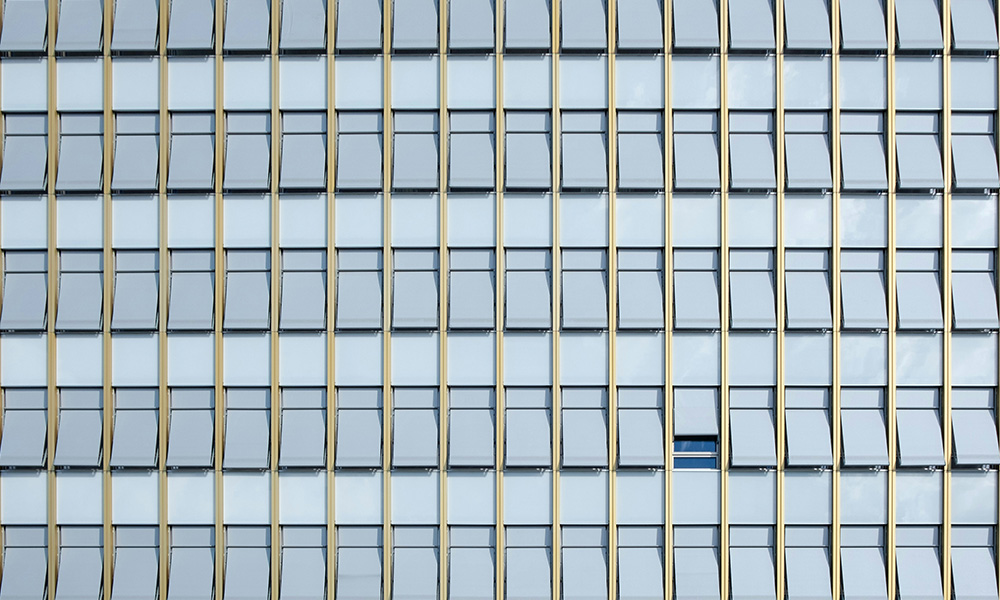
This article explores how the interplay of repetition and variation in art creates aesthetic pleasure. Using Gustave Caillebotte's "Paris Street; Rainy Day" as a prime example, the author analyzes the repetition and subtle variations of geometric shapes like triangles and rectangles, and how these patterns trigger visual satisfaction in the brain. The article further examines Lee Friedlander's photograph "Albuquerque, New Mexico," and works by Roni Horn and Ormond Gigli, arguing that the "same-but-different" repetition patterns in various art forms generate visual rhyme, leading to aesthetic enjoyment for the viewer.

Design
Relive the 80s: Epson MX-80 Font Pack Released

2025-08-21

Michael Walden has recreated the fonts from the iconic Epson MX-80 dot matrix printer, popular in the 1980s. Manually transcribing the font data, he's expanded the character set to include Windows-1252 characters and offers the fonts in various formats (.fon, .ttf, .otf, .woff, .woff2). Perfect for retro printing simulations or displaying program listings on web pages and in documentation.

Design retro font

Geotoy: Open-Source 3D Modeling Tool Showcases Stunning Artist Portfolio

2025-08-19

Geotoy, a completely free and open-source 3D modeling tool by Casey Primozic, is showcased through a stunning portfolio of 3D models created by artist ameo. The collection includes a diverse range of creations, from a 3D Hilbert curve and shingles to a temple, maze, spring, fractal terrain, torus knot, dandelion, power line, woven structures, roots, bumpy sphere, abstract hourglass, birdbath, concrete tetrapod, terraced floating island, extruded clay bowl, advanced shader props, superellipse dominos, and even a Dark Souls-inspired tree. This impressive display highlights Geotoy's capabilities and ameo's artistic talent.

Design

Revolutionary Digital Painting Software: True Pigment

2025-08-16
Revolutionary Digital Painting Software: True Pigment

True Pigment is an open-source digital painting software featuring a groundbreaking dual-component pigment canvas. This canvas stores the spectral reflectance and transmittance of pigments, enabling physically accurate color mixing, even for opaque and transparent colors. The software also offers flexible lighting controls, accurate color management (including sRGB, AdobeRGB 1998, and D65 P3 color spaces), and CMYK soft proofing. Developed by Wu Yiming, it's licensed under GNU GPL v3 or later for individual use.

The Chrome-Tastic Airbrush Art of the 80s: A Nostalgic Look Back

2025-08-15

The 80s saw airbrush art explode in popularity. The author recounts their teenage yearning for an airbrush, dreaming of painting band logos and making money. While computer design eventually took over, the author fondly remembers the unique chrome effects, gradients, and speed lines of 80s airbrush art. Digital art today perfectly replicates the style, but lacks the organic imperfections of the original. The author hopes to one day rediscover their old airbrush and revisit this iconic art form.

The Pains and Pleasures of Typeface Licensing: A Designer's Perspective

2025-08-14
The Pains and Pleasures of Typeface Licensing: A Designer's Perspective

A designer shares their experiences navigating typeface licensing across numerous projects. High-quality commercial fonts and supporting independent foundries are key considerations. However, varying licensing terms from different foundries create complexities. The article explores ideal licensing features: clear and easily accessible terms, shareable shopping carts, straightforward payment options, flexible pricing models, and the ability to subset fonts. The author highlights the need for a balance between foundry needs and client usability for a smoother workflow.

Pen Plotter Limitations: Speed and Color Challenges

2025-08-14
Pen Plotter Limitations: Speed and Color Challenges

While pen plotters offer speed and precision advantages over hand drawing, they are significantly slower than inkjet printers, making large-scale artwork production time-consuming and limiting edition sizes. Multi-color plotting presents further challenges, requiring manual ink or paint changes and leading to potential misalignments. The author even designed a 3D-printed pen holder to address alignment issues but still requires manual pen switching. Compared to professional printing, pen plotters fall short in resolution and color accuracy.

Design drawing

Tetris in a Home Studio: Mastering Space Optimization

2025-08-13
Tetris in a Home Studio: Mastering Space Optimization

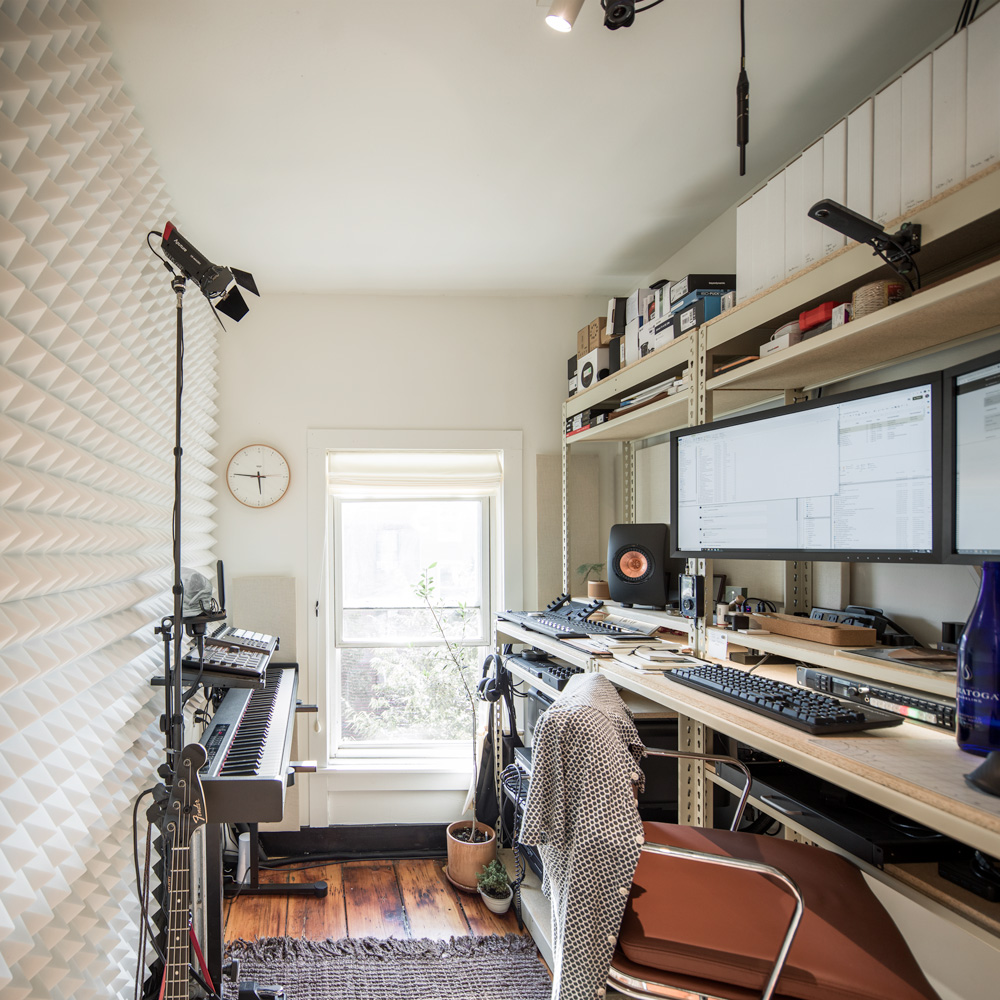
This article details the author's ingenious approach to transforming a limited space into a multi-functional home studio for music production, gaming, and work. Equipment was segmented into four distinct zones, prioritizing ergonomics and minimizing interference. Large musical instruments dominate the back wall, while monitors leverage hidden space and adjustable arms for flexibility. A custom-built flight simulator dashboard and clever cable management (nearly 700 feet!) complete the setup, resulting in an efficient and aesthetically pleasing workspace.

Millau Viaduct: Where Architecture Meets Engineering

2025-08-11
Millau Viaduct: Where Architecture Meets Engineering

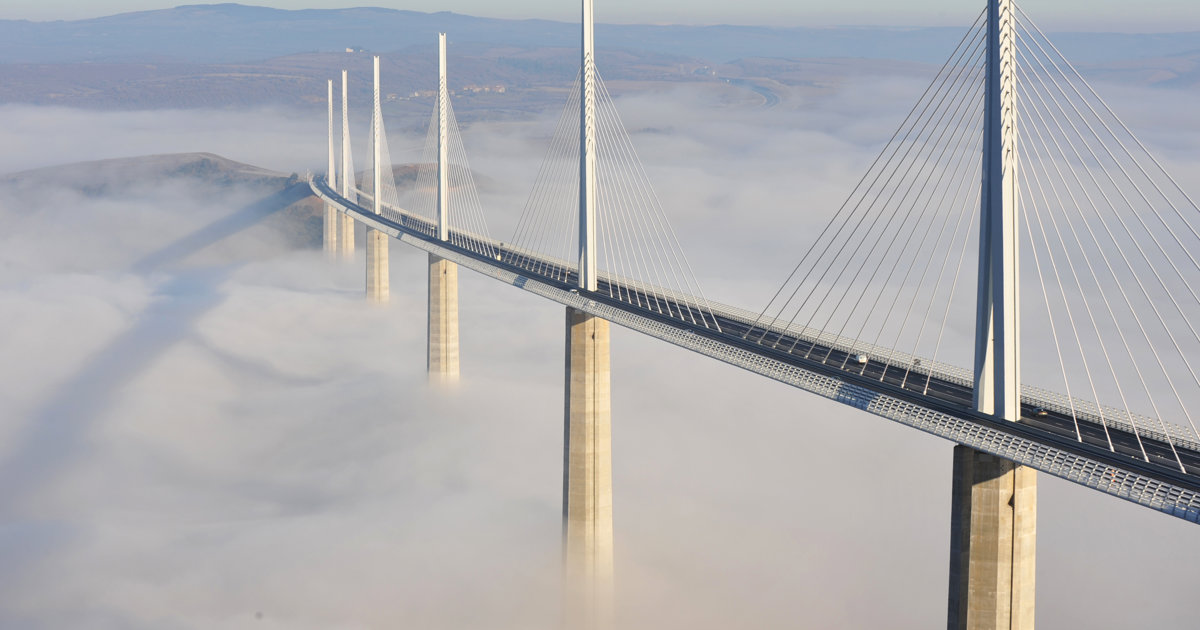
The Millau Viaduct transcends the typical bridge; it's a masterful blend of architecture and engineering. Its elegant cable-stayed design gracefully spans the Tarn River gorge, achieving both aesthetic beauty and structural efficiency. Setting multiple world records with its height and span, the viaduct's slender form minimizes its environmental impact, showcasing a triumph of modern bridge design.

Nine Years of NYC Commute: A Street Photography Project

2025-08-07
Nine Years of NYC Commute: A Street Photography Project

For nine years, Danish photographer Peter Funch captured the daily morning commute at the corner of 42nd Street and Vanderbilt Avenue in New York City. His project, "42nd and Vanderbilt," presents a unique perspective on the subtle changes and unchanging habits of commuters. By photographing the same individuals multiple times over the years, Funch invites viewers to ponder the unnoticed details of daily life, the fleeting moments of solitude amidst the urban bustle, and the spectrum of emotions—from anxiety to tranquility—reflected in the commuters' faces.

Photographer and Chef Bourdain: Marrow, Tequila, and The Last Supper

2025-08-06
Photographer and Chef Bourdain: Marrow, Tequila, and The Last Supper

This article recounts the behind-the-scenes story of a photographer shooting a portrait of renowned chef Anthony Bourdain for her photography book, "My Last Supper." From the nervous preparation to unexpected moments during the shoot, and finally to the success of the photograph and Bourdain's own evaluation of it, the author uses delicate strokes to depict the friendship and shared pursuit of art between the two, as well as the complex emotions and meanings behind the photograph. Ultimately, a picture of Bourdain holding his daughter becomes a testament to their friendship and reflects the enduring charm of photographic works.

Beyond Flashy Signs: A Deep Dive into India's Street Lettering

2025-08-05
Beyond Flashy Signs: A Deep Dive into India's Street Lettering

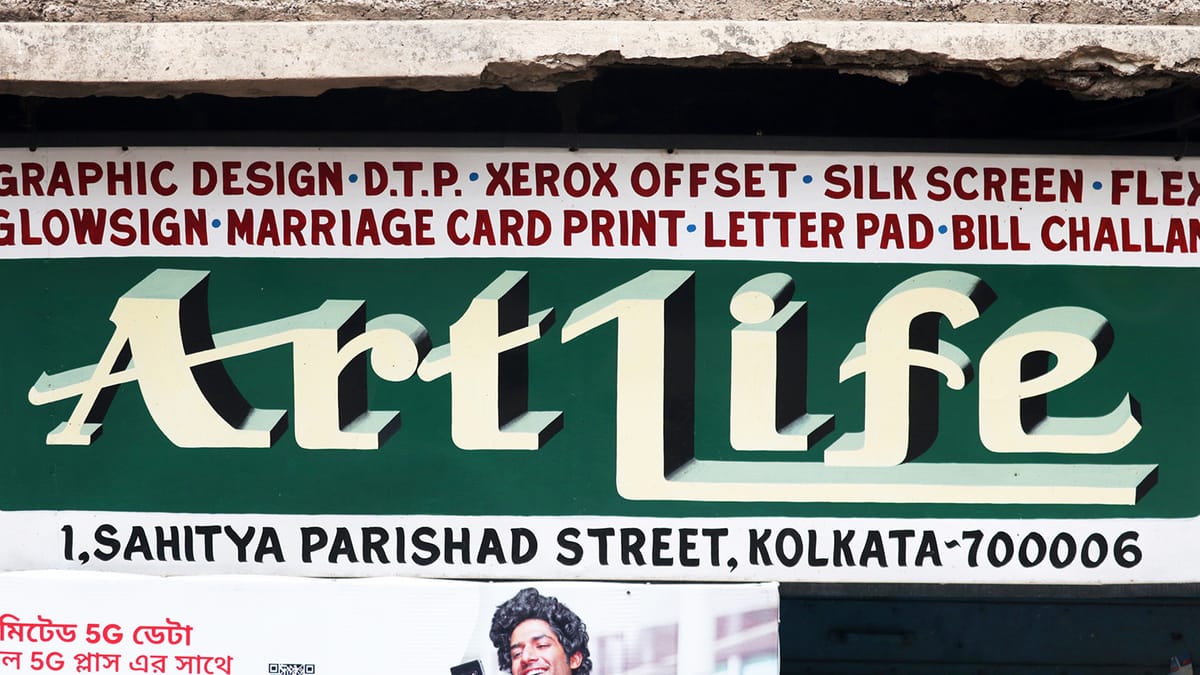
For a decade, Pooja Saxena has documented the vibrant street lettering of India, revealing a depth beyond the commonly perceived flashy signage. Her work showcases diverse forms, from ribbon lettering in metal to mosaic and wood techniques, each reflecting unique regional styles. Through interviews with artists like Delhi's Mohanlal Sihani, she unveils the trust-based process and the creative independence that imbues Indian cities with distinctive typographic flavors. Viewing the art through a typeface designer's lens, Saxena highlights the influence of traditional printing techniques and celebrates the artists' ingenuity in handling limited spaces and multilingual scripts. Her book is not just a visual feast but a profound exploration of Indian street culture.

(bl.ag)

The Tyranny of Annoying Device Sounds: My Car, Washing Machine, and Baby Monitor Gone Wrong

2025-08-04

The author rails against the excessive noise notifications from modern smart devices. From a car's low fuel level alert to a washing machine's button beeps and a baby monitor's startup sound, these noises are not only disruptive but also pose safety risks (e.g., the car alert being distracting while driving at high speed). The author calls on designers to prioritize user needs when designing products and to reduce unnecessary noise pollution, using examples from their own home (dishwasher, refrigerator, and e-reader) to show that quiet design is possible.

Design

Australia's Youngest Art Director: The Making of Bluey

2025-08-04
Australia's Youngest Art Director: The Making of Bluey

In 2017, the author rejoined Ludo Studio, working on various 2D animation projects. He was then invited to be the art director for the children's show, Bluey, becoming Australia's youngest art director for an animated series. The director's love for Brisbane fueled a desire to showcase the city's unique beauty in the animation. Initial design phases combined Brisbane's stunning scenery with fundamental animation design principles, ultimately creating the acclaimed show.

Universal Logo's Untold Story: A Six-Month Masterpiece of Light and Shadow

2025-07-31
Universal Logo's Untold Story: A Six-Month Masterpiece of Light and Shadow

The creation of Universal Pictures' iconic logo is a tale of ingenuity and painstaking effort. Art director Alexander Golitzen, using plexiglass, phosphorescent coatings, and multiple exposures, spent six months crafting the mesmerizing rotating globe and stars. Thin plexiglass stars, coated with silver-activated zinc sulfide for high reflectivity, were individually rotated with multiple lights and filmed with a narrow aperture. The globe, painted black with an interior phosphorescent coating, had the title added in a separate pass. Multiple projections and exposures, along with a second, larger globe, were used to create the final effect. The logo's design even inspired the 'Interociter' device in the 1955 film 'This Island Earth'.

Why Your iPhone Photos Don't Make for Great Prints

2025-07-30

Ever wonder why you rarely see smartphone photos printed and framed? This article explains why. By comparing iPhone photos to those from a professional camera, the author highlights several key differences. iPhone's fisheye lens creates distortion, especially noticeable in body posture and facial features. The computational photography attempts to brighten everything, sacrificing crucial facial details and shadow accuracy. The background blur (bokeh) is also far less natural and pleasing than that produced by professional cameras. In short, while convenient, iPhone photos lack the detail and realism suitable for prints and framing.

Design image quality

Truchet Tiles: Simple Geometry, Infinite Possibilities

2025-07-29

Truchet tiles, simple square tiles with non-rotationally symmetric patterns, create surprisingly complex and captivating visual effects. First described in 1704 by Sébastien Truchet, they're now widely used in information visualization and graphic design. By varying the tile orientations, diverse patterns emerge, even creating labyrinths. Their elegant simplicity extends to programming; a single line of code can generate endless variations, highlighting the beauty of concise algorithms and infinite possibilities. This makes them a prime example of generative art.

Optimal Image Resolution for Printing: Debunking the 300PPI Myth

2025-07-28

This article delves into the optimal practices for printing image resolution. While the conventional wisdom suggests 300PPI is sufficient, the author argues this overlooks viewing distance and human eye resolution. Using formulas and real-world examples, the article demonstrates how to calculate the appropriate PPI based on viewing distance, highlighting that in the modern era of high-resolution cameras, higher PPI is necessary to fully leverage lens capabilities and achieve optimal print quality. Ultimately, the author encourages readers to experimentally determine their own eye resolution to achieve the best print settings for their individual needs.

CNC Bed Frame Design & the Search for the Perfect 2D CAD Tool

2025-07-28

The author is designing a CNC-cut bed frame from a single sheet of plywood. He explores various design approaches and software options, starting with Autodesk Inventor but finding it cumbersome for 2D cutting. The article compares several 2D CAD tools, including Cuttle, FlatFab, and Kyub, highlighting their strengths and weaknesses. The author ultimately leans toward a parametric CSG approach and shares experiences optimizing his code-based CAD system using Clojure Zippers.

Sixteen Colors: An Online Archive of ANSI/ASCII Artpacks

2025-07-27
Sixteen Colors: An Online Archive of ANSI/ASCII Artpacks

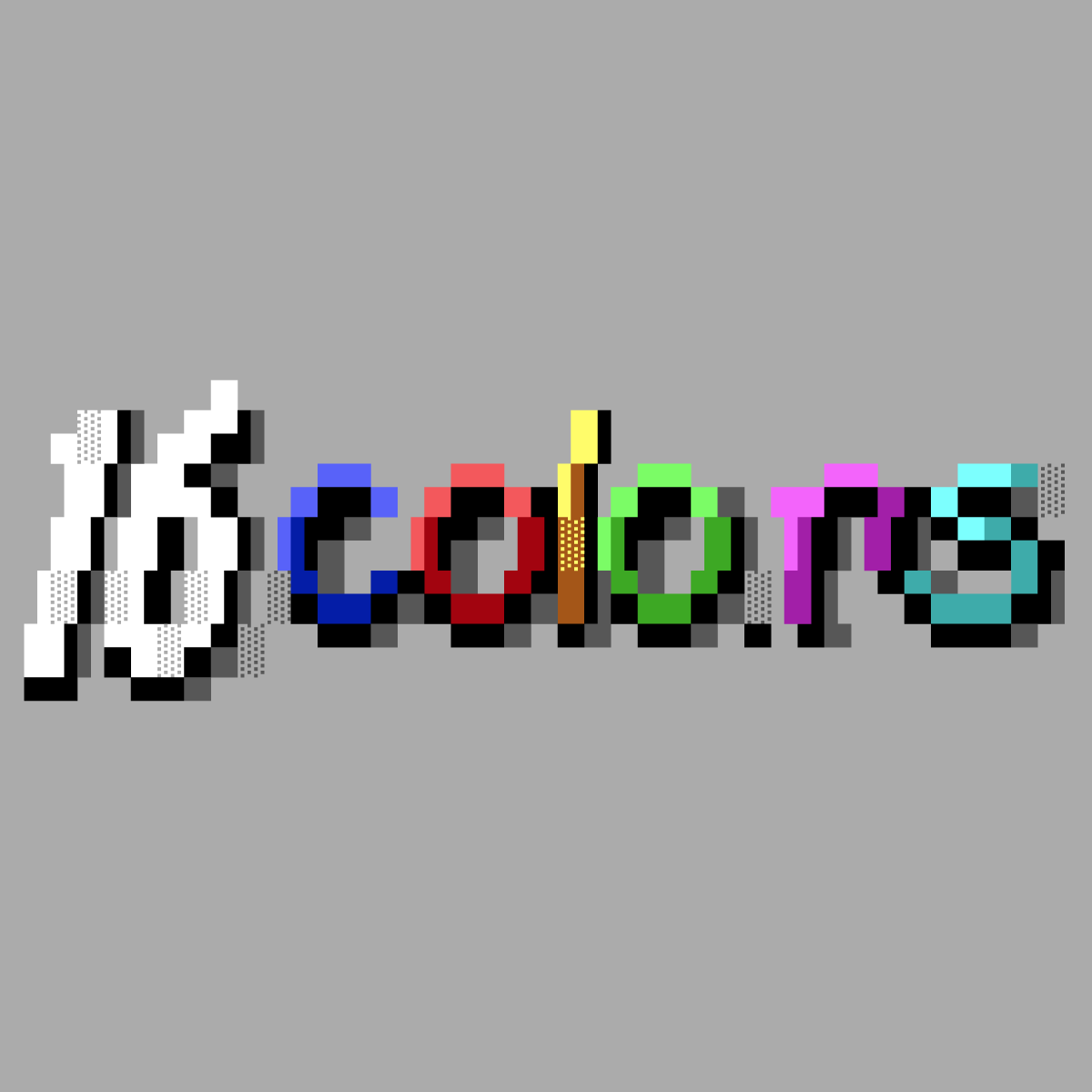
Sixteen Colors is an online archive preserving ANSI and ASCII artpacks, a form initially designed for text-mode computer consoles. Popularized in the early 90s with the rise of dial-up Bulletin Board Systems (BBSs), artists formed groups releasing monthly artpacks, sparking fierce competition (like between ACiD and iCE). The internet's rise in the late 90s diminished BBSs and the demand for ANSI/ASCII art, yet artists continue the tradition. Sixteen Colors aims to publicly archive this legacy. For more context, watch "THE ART OF WAREZ," a short film exploring the scene's origins.

Design ANSI art

Retro Web Design Element Frequency: A Nostalgic Palette Returns

2025-07-23

This data summarizes the frequency of over 100 retro web design elements, encompassing colors (blue is most prevalent, followed by green and multicolor), patterns (animal prints, geometric shapes, florals, etc.), and themes (tech, nature, etc.). The data reveals trends in popular retro web design elements, offering a reference for designers and illustrating a nostalgic web aesthetic.

Design

Kimi Researcher's Journey to Anti-Bland Design: Iteration, Collaboration, and the Impossible Triangle

2025-07-19
Kimi Researcher's Journey to Anti-Bland Design: Iteration, Collaboration, and the Impossible Triangle

The Kimi researcher team's journey in designing the UI for their AI research reports wasn't a straightforward process. Their initial sleek UI was deemed 'bland,' leading them to define 'anti-bland' design standards. Through case studies, team collaboration, and countless iterations, they tackled the 'impossible triangle' of aesthetics, interactivity, and data fidelity. They employed elements like Bento layouts, Italian italics paired with bold type, and subtle JS animations to enhance the user experience. The team emphasizes the importance of collaboration and continuous iteration in achieving a design that's both aesthetically pleasing and functionally effective.

Design

The Arial Enigma: A Tale of Cloning and Innovation

2025-07-17

The story of Arial is shrouded in mystery and controversy, its relationship with Helvetica a source of ongoing debate. This article unravels the font's creation, from the demands of Xerox and IBM's laser printers, to Monotype's design of Sonoran Sans (later Arial) based on its Grotesque series, and finally, Microsoft's acquisition of the rights to include it as a core Windows font. The narrative intertwines Monotype's financial struggles, its deal with Microsoft, and the controversy surrounding whether Arial is a clone of Helvetica. Designers have offered contrasting opinions, some criticizing it as a poor imitation, while others appreciate its unique characteristics. This piece aims to uncover the true history of Arial, revealing the business and technological factors behind its development.

Designing for the Eye: Optical Corrections in Architecture and Typography

2025-07-16
Designing for the Eye: Optical Corrections in Architecture and Typography

This article explores the fascinating world of optical corrections in visual design and architecture. Using the Müller-Lyer illusion as a starting point, it delves into how our perception biases influence design choices. The author meticulously examines typeface design, particularly Futura, showcasing how subtle adjustments compensate for these biases to enhance aesthetic appeal. A comparison with FF Bau highlights the importance of these corrections. Further, the article analyzes the architectural marvel of the Parthenon, demonstrating the ancient Greeks' masterful use of optical corrections in achieving structural and visual harmony. The piece concludes with a call for designers to prioritize detail and strive for excellence, rejecting mediocrity.

Design

Japanese Grandparents Build Giant Totoro Statue, Drawing Fans Worldwide

2025-07-15
Japanese Grandparents Build Giant Totoro Statue, Drawing Fans Worldwide

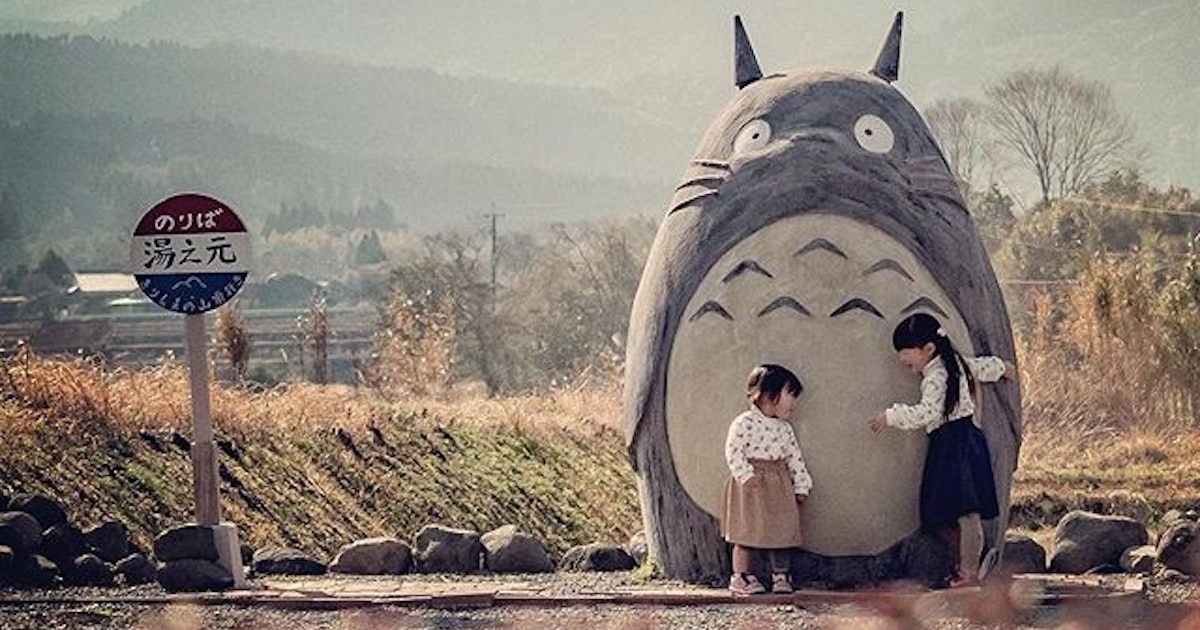
A Japanese couple in their 70s painstakingly crafted a massive Totoro statue using traditional plastering techniques and concrete. Their meticulous work, replicating the beloved character from Studio Ghibli's *My Neighbor Totoro*, even includes the iconic red umbrella and bus stop sign. The giant statue has delighted their grandchildren and become a popular attraction for Totoro fans worldwide, transforming their small town into a pilgrimage site and showcasing their incredible skill and passion for animation.

Design Totoro statue

Arial: How a Cheap Helvetica Substitute Conquered the World

2025-07-14

Arial is ubiquitous, yet its success isn't due to inherent beauty but rather its status as a cheap Helvetica substitute, riding the coattails of Microsoft Windows. The article details Arial's history, revealing it as not an original design, but a near-identical font created by Monotype to circumvent Helvetica's licensing. Bundled with Windows, Arial proliferated, becoming a standard for the masses, despite being viewed by professional designers as a low-quality imitation.

Design

Creative Projects: From Photography Portfolios to Quantum Data Viz

2025-07-12
Creative Projects: From Photography Portfolios to Quantum Data Viz

This list showcases a diverse range of creative projects, including building a professional portfolio website for a Boston-based photographer, creating a data visualization of quantum computer research findings, 3D modeling a globe, designing a gorgeous liquid glass calendar modal, building a Mario level, and crafting a UI designer website with React Three Fiber animations and elegant transitions. These projects span web design, data visualization, 3D modeling, and game development, demonstrating a breadth of creative and technical skills.

Mid-80s MacPaint Art Still Looks Amazing

2025-07-12
Mid-80s MacPaint Art Still Looks Amazing

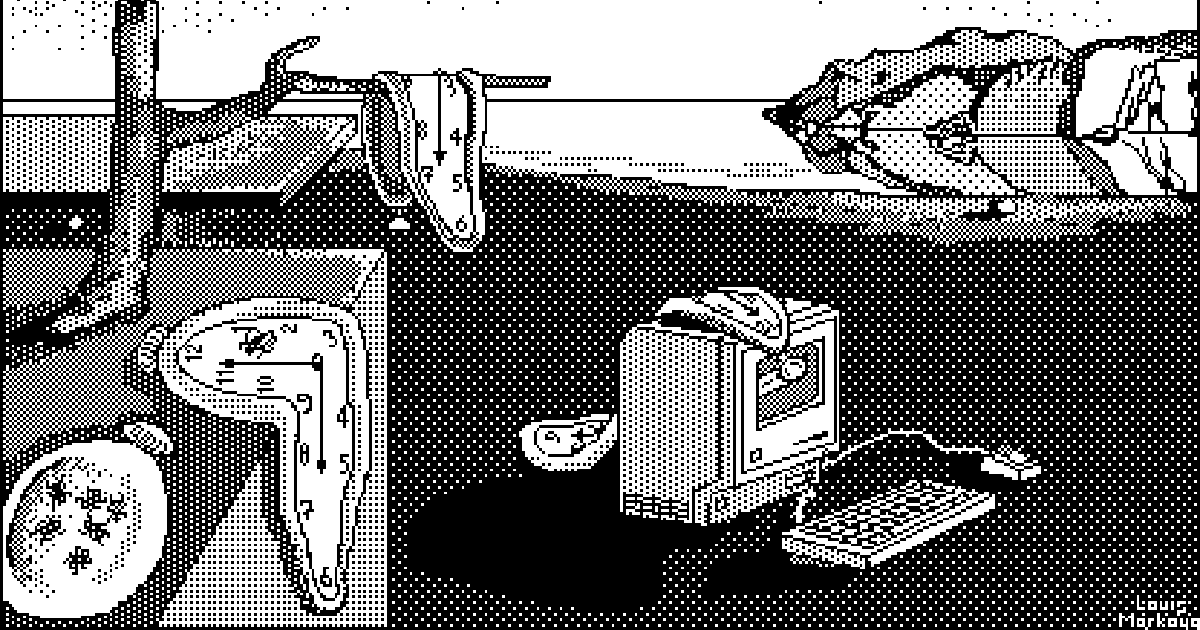
Browsing a BMUG CD-ROM unearthed a trove of early 80s MacPaint art. The author discovered over 18,000 images on Discmaster and shared some highlights, saving many more for future posts. The impressive quality of the art, created on small, low-resolution screens, sparks interest in finding the original artists and seeing their current work. The Amiga's similar capabilities are also noted as a future area of exploration.

A Nostalgic Journey Through Mac Settings (1984-2004)

2025-07-09
A Nostalgic Journey Through Mac Settings (1984-2004)

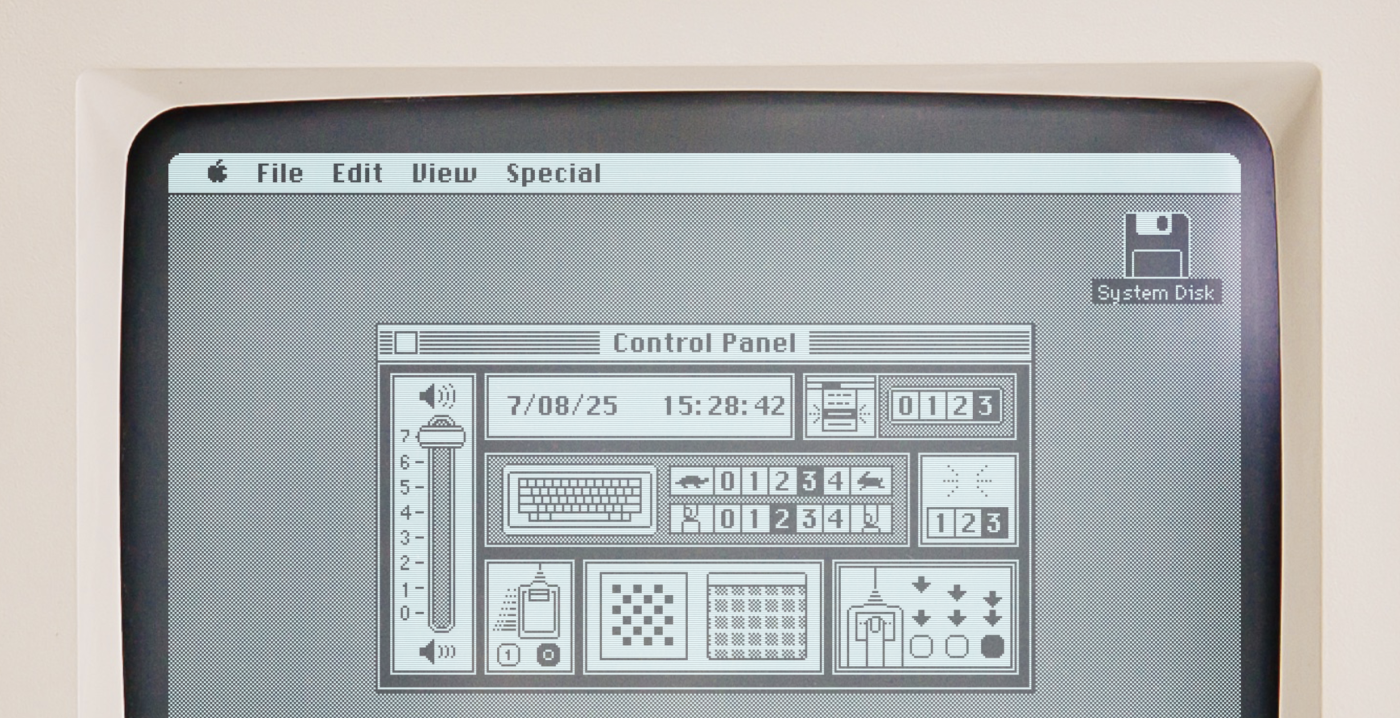
This article takes a nostalgic trip through the evolution of Mac settings, from 1984 to 2004. It recounts the design choices, feature additions, and stories behind each era's control panels, showcasing the evolution of Mac's design philosophy and the impact of technological advancements on user experience. From the initially elegant and simple control panel to the feature-rich System Preferences, the journey reflects the changing landscape of technology and user needs.

Design
2 4 5 6 7 8 9 10