UML Diagrams Deconstruct Evans' DDD Cargo Shipping Example

2025-04-18
UML Diagrams Deconstruct Evans' DDD Cargo Shipping Example

This project visualizes the DDD cargo shipping example from Eric Evans' book using UML diagrams. Generated from the dddsample-core GitHub project, these diagrams – including class, sequence, object, and communication diagrams – illuminate the system's architecture and behavior, showcasing the interplay between components and the structure of the domain model. A directed graph, created with Astah Professional, further clarifies relationships between elements. This resource provides a practical, visual understanding of DDD principles in action.

Read more
Development Cargo Shipping System

Plasma Bigscreen Rises From the Ashes: KDE's TV Interface Gets a Reboot

2025-07-16
Plasma Bigscreen Rises From the Ashes: KDE's TV Interface Gets a Reboot

The abandoned KDE TV interface project, Plasma Bigscreen, has been resurrected thanks to Plasma Mobile contributor Devin. After a week of code overhaul, Plasma Bigscreen boasts a fresh look with a flat design, background blur, KRunner search functionality, and a redesigned settings application. While still needing refinements such as a virtual keyboard and clearer long-term direction, it aims for inclusion in the official Plasma 6.5 release, bringing a modern KDE experience to television users.

Read more
Development TV Interface

TrueNAS on a Raspberry Pi 5: A Hacky but Educational Journey

2025-08-28

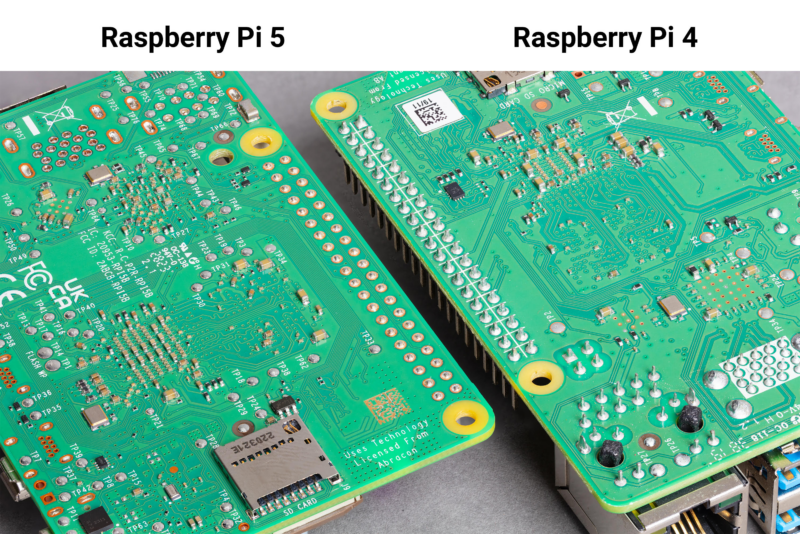
The author attempts to run TrueNAS, a network storage system typically used on more powerful hardware, on a Raspberry Pi 5. Due to the Raspberry Pi's lack of official UEFI support, a community project, rpi5-uefi, is used. While successfully installing TrueNAS, limitations in UEFI mode—including missing fan, GPIO, and built-in Ethernet support, plus restrictions on multiple PCIe devices—prevent some hardware from being recognized. The author concludes that while a challenging learning experience, higher-end Arm hardware is still recommended for high-performance needs.

Read more
Hardware

Two Enigmatic Mathematica Programs

2025-06-29

This code showcases two Mathematica programs that generate numerical sequences. The first employs `Do` and `While` loops to iteratively build a sequence whose growth pattern depends on the position of preceding elements. The second program extends the sequence by cumulatively adding prior differences, continuing until the length surpasses 50. Both programs highlight Mathematica's capability in generating intricate sequences, with algorithms warranting further investigation.

Read more
Development Sequence Generation

Samuel Pepys' Diary: A Timeless Bestseller

2025-06-11

Samuel Pepys' diary was first published in June 1825 and became an instant success. Newspapers featured reviews quoting memorable passages, such as his descriptions of the Great Fire of London, his new wig, and his first cup of tea. Subsequent editions followed, and by the end of the 19th century, it was celebrated as a classic of British history and literature. Today, Pepys is a star of museum exhibits and historical novels, and excerpts from his diary are used to introduce students to the Restoration period and even to history itself; six-year-olds in England, following the National Curriculum, can recount how Pepys buried his expensive cheese to save it from the fire.

Read more

Nonlinear Generalization of Maxwell's Equations from a Variational Approach

2025-04-20

This research article derives a nonlinear generalization of Maxwell's equations from a variational approach where the action measures the variability of the metric tensor. The space is a Weyl space where the metric tensor's covariant derivative needn't vanish. The Lorentz force law is derived as a geodesic equation. Charge density obeys a covariant wave equation, suggesting it's a field propagating at light speed, supporting the wave nature of electrons. The Dirac equation is also shown to be geometric. The link between the Lorentz force and spacetime's metric directly explains Zitterbewegung and quantum mechanical waves.

Read more

The Rise and Fall of Experimental Playgrounds: From Junk to Juxtaposition

2025-07-01
The Rise and Fall of Experimental Playgrounds: From Junk to Juxtaposition

Post-war Europe saw the rise of 'junk playgrounds,' unconventional spaces built from discarded materials. These weren't your typical swings and slides; they encouraged child-led construction, exploration, and even risky play like handling fire. Emdrup playground in Denmark, a prime example, boasted a 50-foot tower built by children. However, safety concerns and aesthetic criticisms led to their decline, replaced by more 'sanitized' adventure playgrounds. While games like Minecraft offer a digital echo of this creative freedom, they lack the physical and social richness of the originals. The article explores the history and value of these experimental playgrounds, urging a renewed focus on imaginative, co-created play spaces in modern cities.

Read more

Microsoft's Kernel-Level Security Overhaul: A Collaborative Effort to End BSODs

2025-06-30
Microsoft's Kernel-Level Security Overhaul: A Collaborative Effort to End BSODs

Following a widespread outage caused by a faulty CrowdStrike update last year, Microsoft is collaborating with major security vendors like CrowdStrike, Bitdefender, and ESET to revolutionize Windows kernel security. The initiative involves moving antivirus and EDR applications out of the kernel to a new endpoint security platform. This aims to mitigate the risk of kernel-level driver errors causing system crashes and reduce reliance on kernel-level access, including for game anti-cheat engines. Microsoft emphasizes this will be an iterative process, starting with AV and EDR, before expanding to other use cases. Additionally, a new Quick Machine Recovery feature and a redesigned BSOD are also in the works to improve user experience.

Read more

arXivLabs: Experimental Projects with Community Collaborators

2025-08-21
arXivLabs: Experimental Projects with Community Collaborators

arXivLabs is a framework enabling collaborators to develop and share new arXiv features directly on our website. Individuals and organizations involved embrace arXiv's values of openness, community, excellence, and user data privacy. arXiv is committed to these values and only partners with those who share them. Got an idea for a project that will benefit the arXiv community? Learn more about arXivLabs.

Read more
Development

HDMI 2.2 Officially Unveiled: 96 GB/s Bandwidth, 16K Support

2025-06-25
HDMI 2.2 Officially Unveiled: 96 GB/s Bandwidth, 16K Support

The HDMI Forum has finalized HDMI 2.2, boasting a 96 GB/s bandwidth thanks to new Ultra96 cables. This unlocks support for 16K at 60Hz and 12K at 120Hz (with chroma subsampling), and 4K at 240Hz with 12-bit color depth without compression. While offering a slight edge over DisplayPort 2.1b, HDMI 2.2 provides significant improvements, including backward compatibility and a new audio-video sync technology. AMD's next-gen RDNA GPUs are expected to be among the first to adopt HDMI 2.2, though the extent of bandwidth support remains to be seen.

Read more
Hardware High Resolution

Improving OpenAI Image Generation with AI: An Iterative Refinement Experiment

2025-05-21

This article details an experiment using Large Language Models (LLMs) to iteratively improve the quality of images generated by the OpenAI API. Starting with a complex prompt, researchers found the resulting images suffered from blurry text and weak visual appeal. Two approaches were tested: First, using an LLM as a 'judge' to identify and iteratively fix image flaws, but this proved ineffective as the LLM struggled to handle creative and technical tasks simultaneously. Second, using the LLM to generate bounding boxes around blurry text for targeted editing, but the LLM struggled with accurate localization. Ultimately, separating text clarity improvement from overall image quality enhancement yielded better results.

Read more

Bangalore Math Club: Rekindling the Joy of Math

2025-05-29

A recent graduate started a small math club in Bangalore to recapture the collaborative spirit and joy of learning math he experienced in college. Two successful meetups have already been held, with 7-8 participants each, working together on problem sets. He invites others who share his passion for math to join and experience the fun of collaborative learning.

Read more
Misc math club

The Amiga 600: Commodore's Epic Fail, Now a Retro Gem

2025-03-16
The Amiga 600: Commodore's Epic Fail, Now a Retro Gem

The Amiga 600, one of Commodore's last Amigas, epitomized the company's downfall. Launched in 1992, it featured outdated 1985 technology, lacked competitiveness in price and expandability, and suffered from inferior graphics compared to PCs. This article delves into the reasons for its failure, contrasting it with the more successful Amiga 500. Despite its initial flop, the Amiga 600's compact size has made it a popular choice among retro enthusiasts today. The author analyzes Commodore's strategic missteps and the Amiga 600's technical shortcomings, highlighting how a once-failed product has become a nostalgic icon.

Read more
Hardware

arXivLabs: Experimenting with Community Collaboration

2025-02-21
arXivLabs: Experimenting with Community Collaboration

arXivLabs is a framework for collaborators to develop and share new arXiv features directly on the website. Individuals and organizations involved embrace arXiv's values of openness, community, excellence, and user data privacy. arXiv only partners with those who share these values. Got an idea to enhance the arXiv community? Learn more about arXivLabs.

Read more
Tech

Haskell's IO Monad and the Value Restriction: A Surprising Connection

2025-05-26

This article explores how Haskell's IO Monad cleverly avoids type safety issues stemming from polymorphic references. Despite Haskell's reputation for purity, the design of the IO Monad implicitly incorporates a mechanism similar to the 'value restriction' found in other ML languages. The article analyzes the risks of polymorphic references, compares Haskell's approach to other languages, and delves into the internal implementation of the IO Monad, revealing its similarity to the State Monad and why directly manipulating the IO constructor is dangerous. Finally, it demonstrates how to use the MonadGen type class to circumvent IO's restrictions, but also emphasizes the risks involved.

Read more
Development

Oracle's JavaScript Trademark Case: A Fight for Open Source

2025-06-29
Oracle's JavaScript Trademark Case: A Fight for Open Source

The creator of Node.js is fighting Oracle's claim to the "JavaScript" trademark. While a fraud claim was dismissed, the core dispute lies in the trademark's genericness and abandonment. The plaintiff argues "JavaScript" is a generic term, not an Oracle brand, and Oracle's use of a Node.js website screenshot as evidence further fuels the controversy. The case will proceed, with Oracle required to respond to allegations of genericness and abandonment. The outcome will determine whether "JavaScript" is freed from trademark restrictions and returned to the community.

Read more
Development

GPT-4.5: Ahead of Its Time, but Not a Breakthrough

2025-03-02
GPT-4.5: Ahead of Its Time, but Not a Breakthrough

OpenAI's GPT-4.5 release was underwhelming despite its massive size (estimated 5-7 trillion parameters). Unlike the leap from GPT-3.5 to GPT-4, improvements are subtle, focusing on reduced hallucinations and enhanced emotional intelligence. The article argues GPT-4.5 serves as a stepping stone, underpinning future model training. It highlights the need for balancing different scaling approaches and integrating techniques like reinforcement learning for significant breakthroughs. GPT-4.5's true impact will be felt when integrated into various systems and applications, not as a standalone product.

Read more
AI

Nagel on Moral Judgment and Progress: A Critique

2025-04-07
Nagel on Moral Judgment and Progress: A Critique

This article examines Thomas Nagel's views on the objectivity of moral judgment and moral progress. Using the anecdote of a WWII French Resistance member interrogating a Nazi collaborator, Nagel illustrates the power of moral intuitions. While acknowledging utilitarian and evolutionary explanations for these intuitions, he argues they reflect underlying moral truths. Nagel distinguishes scientific from moral progress, asserting that accessing moral truths depends on historical developments revealing new moral reasons. He uses examples like individual rights, social equality, sexual morality, and international justice to show moral progress stems from multiple factors, not a single principle. The author ultimately questions Nagel's view, suggesting applying utilitarian principles to all affected individuals is key to moral advancement.

Read more

Australia Bans Kaspersky Lab Products Over Security Concerns

2025-02-27
Australia Bans Kaspersky Lab Products Over Security Concerns

The Australian government has banned all Kaspersky Lab products and web services from its systems, citing unacceptable security risks related to foreign interference, espionage, and sabotage. Kaspersky denies these allegations, claiming the ban lacks specific evidence and is politically motivated. This follows similar bans in the US, Germany, and Canada, reflecting a broader trend of Western nations restricting Kaspersky's access to government systems.

Read more
Tech Kaspersky

Mojo Now Lets You Call Mojo Code From Python!

2025-05-25
Mojo Now Lets You Call Mojo Code From Python!

The Modular team is excited to announce a new feature in the latest Mojo nightly builds: the ability to call Mojo code from Python! This is enabled by expanding the Python interoperability section of the Mojo manual and adding examples demonstrating round-trip data transfer between Python and Mojo, including GPU-accelerated Mojo code called from Python. This breakthrough aims to integrate Mojo into existing Python codebases, boosting performance and unlocking new applications by offloading performance bottlenecks to fast Mojo, especially when using accelerators.

Read more
Development

In the AI Era, Adaptable Tools Will Win

2025-08-27
In the AI Era, Adaptable Tools Will Win

In the age of AI, success hinges not on adapting to tools, but on tools adapting to you. The article contrasts Linear, a rigid tool, with Fibery, a flexible one, illustrating their diverging fates. Linear's inflexibility limits AI integration, while Fibery leverages LLMs to transform complex setups into simple prompts. LLMs shift the focus from solution design to problem definition; users describe needs in natural language, and AI handles the implementation. This highlights the power of malleable software, where configuration becomes fast and easy, allowing users to adapt to evolving needs, while rigid tools fall behind. The article predicts that malleable software will gradually replace rigid counterparts in the coming years, becoming the dominant paradigm.

Read more
Development Malleable Software

Particle Life Simulation in the Browser: A WebGPU Power Play

2025-05-26
Particle Life Simulation in the Browser: A WebGPU Power Play

This article details a browser-based particle life simulation powered by WebGPU. The simulation uses a non-physical model with asymmetric inter-particle forces, creating life-like behavior. The author explains the model, WebGPU implementation, spatial hashing optimization for performance, and rendering techniques, including a parallel prefix sum algorithm for efficient binning. The result is a visually stunning simulation capable of generating diverse and interesting life forms, with options for custom rules and sharing.

Read more
Development Particle Simulation

ACK for Cray X-MP: A Retrocomputing Triumph

2025-01-26
ACK for Cray X-MP: A Retrocomputing Triumph

This project is a fork of the Amsterdam Compiler Kit (ACK) that supports the Cray X-MP supercomputer and COS operating system. It disables other platforms by commenting out references in the LUA build scripts. Successfully building and running on macOS and Linux requires installing bison, flex, gcc, gmake, and lua. Crucially, it also needs the tools from the COS-Tools GitHub repository (a cross-assembler, linker, and library manager for the Cray X-MP). After building, cross-compilers generate executables for the Cray X-MP and COS. The README details compiling a program, uploading via FTP to a NOS 2.8.7 system, then using the Cray Station interface to transfer and run it on the Cray X-MP, finally showing how to view the results. A fascinating blend of retrocomputing and modern software engineering.

Read more
Development COS

GitHub Open Source Project Thruster: Simplifying Rails App Deployment with an HTTP/2 Proxy

2024-12-26
GitHub Open Source Project Thruster: Simplifying Rails App Deployment with an HTTP/2 Proxy

Thruster is an HTTP/2 proxy designed to simplify production deployments of Rails applications. It works alongside the Puma web server, providing features like HTTP/2 support, automatic TLS certificate management with Let's Encrypt, basic HTTP caching, and X-Sendfile support with compression. It aims for zero configuration; simply setting the TLS_DOMAIN environment variable enables TLS, otherwise it runs in HTTP-only mode. Thruster also wraps the Puma process, making it ideal for containerized environments. Originally created for the ONCE project, it's now used for simpler deployments of other Rails applications.

Read more
Development Deployment

Albania's AI Minister: Sun-Powered Anti-Corruption?

2025-09-12
Albania's AI Minister: Sun-Powered Anti-Corruption?

Albania's new government is employing an AI-powered virtual minister named Diella (“sun” in Albanian) to oversee public procurement, aiming to combat widespread corruption. Previously a virtual assistant on the e-Albania platform, Diella will now manage government contracts with private companies. While intended to increase transparency and reduce graft, skepticism remains, with some fearing manipulation. Albania's EU accession bid is hampered by corruption, making the success of this AI initiative uncertain.

Read more

Native HMR in Node.js: A Technical Deep Dive

2025-06-04

This article details how to implement native Hot Module Replacement (HMR) in Node.js. Traditional approaches using `--watch` flags or virtual module systems like Vite are inefficient and suffer from module isolation. The author leverages Node.js's built-in `node:module` module hooks to create an incremental update mechanism based on file version numbers. The core is the `FileTree` class, which loads and monitors the file tree, and the `useTree` hook intercepts the module loading process, adding a version number to URLs for cache invalidation. The construction of a dependency tree ensures that when a dependent module changes, the parent module is also updated, resulting in efficient HMR and avoiding reevaluation of the entire module tree.

Read more
Development Module Loading

Containerized Environments for Coding Agents: Multi-Agent Collaboration, Simplified

2025-06-05
Containerized Environments for Coding Agents:  Multi-Agent Collaboration, Simplified

Container-use is an open-source CLI tool providing each coding agent with its own containerized environment. Run multiple agents safely and independently, supporting Claude Code, Cursor, and other MCP-compatible agents. Each agent gets an isolated git branch and container, with real-time visibility of command history and logs, allowing for direct intervention and control. Standard git workflows are supported, and it's compatible with any agent, model, or infrastructure, avoiding vendor lock-in. While in early development with potential rough edges, it features rapid iteration and responsive feedback.

Read more
Development multi-agent

The Relativity of Wrong: Why 'Wrong' Isn't Always Equally Wrong

2025-08-26

This essay argues that scientific theories aren't simply 'right' or 'wrong,' but rather exist on a spectrum of accuracy. Using the evolving understanding of Earth's shape as an example—from flat to spherical to oblate spheroid to a slightly pear-shaped model—Asimov demonstrates that scientific progress is a process of refinement, not replacement. Older theories, while incomplete, often contain valuable truths that persist in later, more refined models. The author concludes that celebrating current scientific understanding is justified, even acknowledging its inherent incompleteness.

Read more

Wesley on Slavery: An 18th-Century Conscience

2025-04-27

In 1774, John Wesley published 'Thoughts Upon Slavery,' a scathing condemnation of the then-rampant transatlantic slave trade. The text vividly details the brutality: the kidnapping and forced capture in Africa, the inhumane conditions during the voyage, and the relentless oppression on plantations. Wesley, using extensive firsthand accounts, refutes justifications for slavery, highlighting its violation of natural justice and humanity, and calls for an end to the abhorrent trade. This powerful work remains a poignant 18th-century reflection on slavery and a stark warning for today.

Read more

Trump Admin to Accept $400M Luxury Jet: A Costly Gamble?

2025-05-14
Trump Admin to Accept $400M Luxury Jet: A Costly Gamble?

The Trump administration plans to accept a $400 million luxury 747-8 from Qatar as a temporary Air Force One. However, upgrading it to presidential security standards could take years and cost hundreds of millions more. The plan raises legal and ethical concerns, as ownership will transfer to Trump's presidential library after his term. Security experts warn retrofitting a foreign-owned aircraft is extremely expensive, time-consuming, and could disrupt the already delayed Boeing replacement program. The current Air Force One boasts advanced defense and communication systems; adapting the Qatari jet would pose significant security risks and costs, making continued use of the existing planes until replacements are ready a more sensible option.

Read more
1 2 145 146 147 149 151 152 153 596 597