Tattoos and Cancer Risk: A Twin Study Reveals Increased Hazard

2025-03-04

Tattoos and Cancer Risk: A Twin Study Reveals Increased Hazard

A study using the Danish Twin Tattoo Cohort reveals a heightened risk of lymphoma and skin cancer among tattooed individuals compared to their non-tattooed counterparts. Employing both twin cohort and case-cotwin study designs, the research indicates a stronger association with larger tattoos. The researchers hypothesize that ink deposits may interact with surrounding tissue, triggering an immune response and increased cell proliferation, thus raising cancer risk. However, limitations include a lack of sun exposure data and detailed tattoo type classification. Further research is urged to clarify the etiological pathway of tattoo ink-induced carcinogenesis and inform public health policy.

Read more


The Future of Scala: Balancing Safety and Convenience

2025-03-26
The Future of Scala: Balancing Safety and Convenience

While Scala's hype has cooled since the mid-2010s, it maintains a strong community and adoption. This article explores the future direction of Scala, with authors Martin Odersky and Haoyi Li arguing that Scala needs continuous evolution. It must improve usability, enhance the tooling experience, and actively incorporate community feedback while maintaining its safety and convenience. They highlight the need to balance safety and convenience, refine existing features, and lower the barrier to entry for newcomers. The article also addresses challenges within the Scala ecosystem, such as IDE support and build tools, and proposes solutions.

Read more
Development

Why Some UK Gov Services Are Offline at Night: A Legacy Tech Nightmare

2025-01-16
Why Some UK Gov Services Are Offline at Night: A Legacy Tech Nightmare

This post explores why some DVLA (UK Driver & Vehicle Licensing Agency) digital services are offline overnight. The root cause lies in a complex legacy system, including a 1980s IBM mainframe and a partially completed modernization effort. Facing a choice between years of rebuilding infrastructure or launching a service with nighttime limitations, DVLA chose the latter to deliver value quickly. The article highlights the challenges of digital transformation in large organizations grappling with legacy technology and the difficult decisions involved in balancing speed and long-term stability. The situation underscores how tricky government digitalization can be, even a decade after initial modernization efforts.

Read more

Building a Mechanical Star Tracker for the ISS

2025-01-18
Building a Mechanical Star Tracker for the ISS

Engineer Ted Kinsman was tasked by NASA astronaut Don Pettit to design and build a mechanical star tracker for capturing high-quality astrophotography images from the International Space Station (ISS). Due to the lengthy testing period for electronic devices, the tracker was entirely mechanical, cleverly utilizing a clock drive from an industrial oven. Gear ratios were adjusted to match the ISS's orbital speed. The device successfully reached the ISS in 2024 and has captured stunning images of the cosmos.

Read more
Tech space

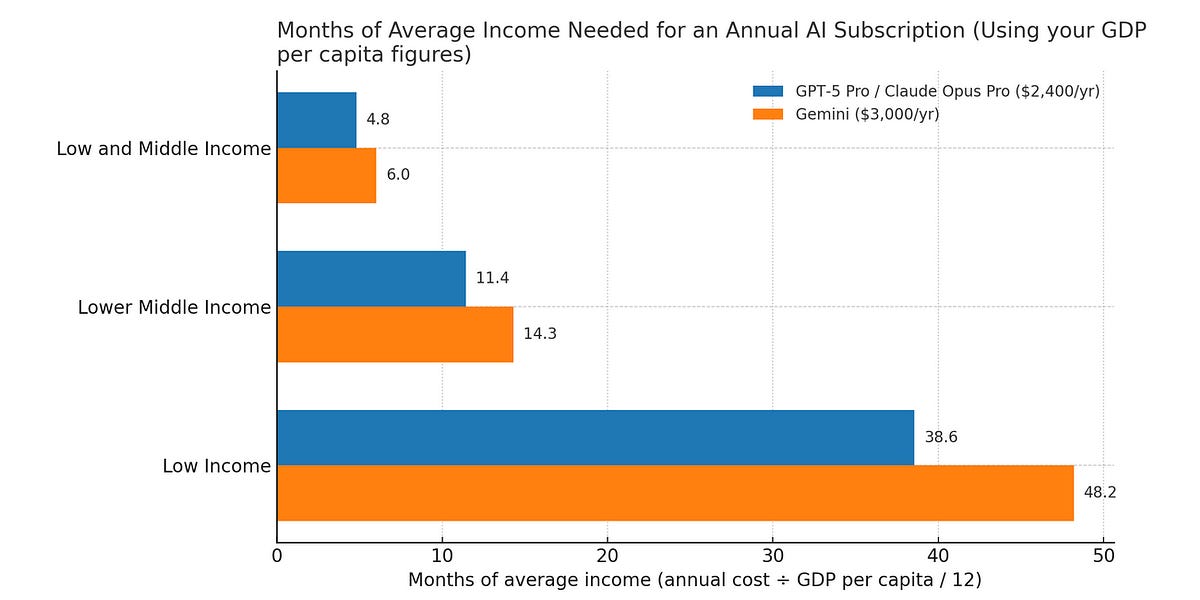
The AI Access Gap: Pricing Pro Models Out of Reach for Developing Countries

2025-08-11
The AI Access Gap: Pricing Pro Models Out of Reach for Developing Countries

New AI pro models like ChatGPT Pro and Gemini Ultra are prohibitively expensive for users in developing countries. The article highlights that individuals in low-income nations would need to work for months or even years to afford annual subscriptions, exacerbating the AI access gap. The author calls on tech giants to consider lowering prices or providing subsidies to universities in developing nations to bridge this divide, questioning whether high prices truly subsidize broader AI model development.

Read more
AI AI gap

Gleam 1.9.0 Released: Improved Debugging, Dependency Management, and Performance

2025-03-09
Gleam 1.9.0 Released: Improved Debugging, Dependency Management, and Performance

Gleam, a type-safe and scalable language, has released version 1.9.0 with significant improvements. Key updates include a new `echo` keyword for enhanced debugging, support for Git repository dependencies, performance boosts for bit arrays and list pattern matching in JavaScript, and expanded language server capabilities such as go-to type definition and JSON encoder code generation. Additional improvements include enhanced HexDocs search integration, custom CA certificate support, and streamlined pipeline syntax conversion. This release is a testament to the vibrant Gleam community and its many contributors.

Read more
Development

Hiding Secrets in Emojis: Exploiting Unicode Variation Selectors

2025-02-12
Hiding Secrets in Emojis: Exploiting Unicode Variation Selectors

A Hacker News comment sparked a discussion about hiding information using Unicode variation selectors. This article demonstrates that arbitrary data can be encoded into a single emoji by converting data into a sequence of Unicode variation selectors, remaining invisible after rendering. This method can bypass human content filters or be used for text watermarking, enabling covert information transmission and tracking. While this technique has potential for abuse, it also highlights the complexity and potential security challenges of Unicode.

Read more

Chrome Sync Sunset: Older Chrome Versions Affected

2025-01-28

Google has announced that Chrome Sync will be discontinued on Chrome versions older than four years. This means users on older Chrome versions will no longer be able to sync their bookmarks, passwords, and other data. The move encourages users to upgrade to the latest Chrome version for improved performance and security. Users of older Chrome versions should upgrade to avoid data loss or functional limitations.

Read more

The Vanishing Act of Government Information in the Digital Age

2025-02-01

This post highlights the crisis of preserving government information in the digital age. Historically, paper government information was preserved in libraries, even outdated information wasn't readily deleted. However, in the digital age, government website information is easily altered or removed, leading to significant information loss. While some organizations strive to preserve government information, massive gaps remain, and the public can no longer assume the completeness and permanence of government information. The authors call for a new distributed digital preservation infrastructure to address this crisis, noting that information loss during the Trump administration exacerbated the problem.

Read more

Daylight DC-1: A Monochromatic Tablet That Reimagines Computing

2025-02-19

The Daylight DC-1 is a unique grayscale tablet prioritizing a healthy relationship with light and the outdoors. The author's experience on an Amtrak train highlighted its readability in direct sunlight, comfortable nighttime use, and the ease of using Android. While it has some shortcomings, such as keyboard support, software roughness, and missing features, it's an impressive device, particularly its innovative display technology. The author ultimately praises its potential and the company's direction.

Read more
(jon.bo)

Pixel 4a Battery Update Disaster: Old Firmware Gone, Users Trapped

2025-01-29
Pixel 4a Battery Update Disaster: Old Firmware Gone, Users Trapped

Google's Pixel 4a battery performance update has turned into a disaster. The update is causing extreme battery drain for many users, and worse, Google removed the older firmware, making it impossible to roll back. Intended to improve battery life, the update has instead made things significantly worse. Affected users are left with Google's compensation offer: a free battery replacement, $50 cash, or a $100 credit towards a new Pixel. This incident highlights the risks of software updates and Google's shortcomings in handling updates for older devices.

Read more

AI-Generated CSAM: A First Amendment Showdown

2025-03-20
AI-Generated CSAM: A First Amendment Showdown

A recent US district court case involving AI-generated child sexual abuse material (CSAM) has ignited a First Amendment debate. The court ruled that private possession of AI-generated virtual CSAM is protected under the First Amendment, but production and distribution are not. This case highlights the challenges and legal complexities faced by law enforcement in combating AI-enabled child sexual exploitation and abuse.

Read more

Uppercut: One-Click Access to Xbox Homebrew's Xbins in OS X Tiger

2025-01-26

Uppercut is a nostalgic throwback to the early 2000s, offering one-click access to the Xbins Xbox homebrew FTP server, specifically designed for OS X Tiger (10.4). This eliminates the cumbersome IRC and FTP configurations of the past. Inspired by the modern Xbins connector Pandora, Uppercut recreates the experience of accessing homebrew resources as it might have been in 2005. For modern OS users, Pandora is recommended. The developer also live streams the development process on Twitch.

Read more

Bypassing Middleboxes Blocking MPTCP with eBPF

2025-07-18

The MPTCP protocol can be blocked by middleboxes (like NATs, firewalls) in certain network environments. This article introduces an eBPF-based TCP-in-UDP solution that cleverly bypasses these limitations by encapsulating TCP packets within UDP packets. This solution requires no extra data layers or VPNs, simply reordering the TCP header and using eBPF to efficiently handle checksums, ultimately solving challenges posed by network stack optimizations and hardware offloading. While some minor issues remain, such as the loss of the URG flag and MTU/MSS adjustments, this approach offers an effective way to improve MPTCP performance in complex network environments.

Read more
Development Network Optimization

Emacs 30.1: Native Compilation, Android Support, and More

2025-02-24
Emacs 30.1: Native Compilation, Android Support, and More

Emacs 30.1 is here, packed with new features and improvements. Native compilation is now enabled by default, resulting in a significant performance boost. Full support for Android has arrived, along with numerous touchscreen enhancements. Other highlights include a built-in JSON parser, improved minibuffer completion, enhanced Org mode URI protocol integration, and countless quality-of-life improvements. This release marks a major leap forward for Emacs.

Read more
Development Native Compilation

VitoDeploy: Streamlining PHP Deployment

2025-04-02
VitoDeploy: Streamlining PHP Deployment

VitoDeploy, a self-hosted web application, simplifies server management and production deployment for PHP applications, especially those built with Laravel. Developers praise its ease of use, performance, and versatility, with many highlighting its open-source nature. The application now supports SQLite, and a 1.x branch is available for beta testing.

Read more
Development Deployment Tool

Intensional Programming in Joy: Introspection with a Single Operator

2025-02-12

This article explores intensional programming in Joy, a stack-based functional programming language. Joy itself is extensional, lacking the ability to 'dissect' code blocks. The author proposes two intensional operators: 'map' and 'quota', proving their mutual expressibility. While behaviorally equivalent, intensional programs can distinguish a single operator from a subprogram with multiple commands. This opens avenues for exploring weaker notions of equivalence in intensional languages and demonstrates a robust approach to introducing intensionality in minimalist languages like Joy.

Read more

Typst vs. TeX: A Comparison of Layout Models and a Look Ahead

2025-02-14

This article explores the differences in layout models between the typesetting engines Typst and TeX. TeX, based on boxes and glue, is flexible but lacks awareness of precise positions; Typst uses a region model, allowing elements to react to their position but sacrificing some flexibility. The author analyzes the strengths and weaknesses of both models and points out that Typst, by introducing a re-layout mechanism, is expected to balance flexibility and optimization, addressing current shortcomings in handling complex layouts (such as wrap-around images and pageable tables).

Read more
Development typesetting engine

Russian Threat Actors Exploit Microsoft Device Code Authentication in Widespread Attacks

2025-02-15
Russian Threat Actors Exploit Microsoft Device Code Authentication in Widespread Attacks

Volexity has uncovered multiple Russian threat actors employing sophisticated social engineering and spear-phishing campaigns to compromise Microsoft 365 accounts via Device Code Authentication phishing. These attacks exploit the less-familiar Device Code Authentication workflow, making them difficult for users to recognize as phishing attempts. The campaigns, often politically themed (e.g., focusing on the US administration), impersonate individuals from organizations like the US Department of State and the Ukrainian Ministry of Defence, luring victims into fake Microsoft Teams meetings or application access. Volexity is tracking three threat actors, one potentially linked to CozyLarch (overlapping with DarkHalo, APT29). The effectiveness of this attack stems from exploiting users' unfamiliarity with device code authentication, bypassing traditional security measures. Volexity recommends organizations block device code authentication via conditional access policies and enhance user security awareness training.

Read more

Txeo: A Modern C++ Wrapper for TensorFlow Achieving Near-Native Performance

2025-02-21
Txeo: A Modern C++ Wrapper for TensorFlow Achieving Near-Native Performance

Txeo is a lightweight and intuitive C++ wrapper for TensorFlow designed to simplify TensorFlow C++ development while maintaining high performance and flexibility. Built entirely with Modern C++, Txeo enables developers to use TensorFlow with the ease of a high-level API, eliminating the complexity of its low-level C++ interface. Benchmarks show negligible performance overhead compared to native TensorFlow, ranging from 0.65% to 1.21%. Currently supports Linux, with Windows and macOS support planned.

Read more
Development

Code Colocation: The Secret to Maintainable Codebases

2025-02-19

This article champions code colocation as a key to maintainable software. The author argues that keeping code comments, templates, CSS, unit tests, and application state close to their related code significantly improves maintainability, applicability, and ease of use. Compared to scattering these elements across various directories, colocation avoids synchronization issues, makes finding things easier, reduces context switching, and thus lessens technical debt. Examples from modern frameworks like React, Vue, and Angular illustrate the practice, highlighting how colocation boosts readability and simplifies codebase management. The article also addresses strategies for utility functions and resource files, recommending placing them as close as possible to their usage to minimize maintenance overhead and cognitive load.

Read more

China's Supreme Court Cracks Down on Academic Paper Mills

2025-03-04
China's Supreme Court Cracks Down on Academic Paper Mills

China's Supreme People's Court has issued its first-ever guidance on cracking down on academic paper mills, aiming to curb scientific fraud. While previous government regulations existed, paper mills – businesses that produce fraudulent or low-quality manuscripts – have persisted. The court's guidelines instruct lower courts to severely punish 'paper industry chains' and research fraud. The number of paper mill-related cases has increased in recent years, with court rulings shifting from recognizing contracts with paper mills as valid to deeming them invalid, reflecting a stronger emphasis on academic integrity and fair competition. While some researchers are optimistic this will curb misconduct, others remain skeptical of its impact.

Read more

OpenArc: A Lightweight Inference API for Accelerating LLMs on Intel Hardware

2025-02-19
OpenArc: A Lightweight Inference API for Accelerating LLMs on Intel Hardware

OpenArc is a lightweight inference API backend leveraging the OpenVINO runtime and OpenCL drivers to accelerate inference of Transformers models on Intel CPUs, GPUs, and NPUs. Designed for agentic use cases, it features a strongly-typed FastAPI implementation with endpoints for model loading, unloading, text generation, and status queries. OpenArc simplifies decoupling machine learning code from application logic, offering a workflow similar to Ollama, LM-Studio, and OpenRouter. It supports custom models and roles, with planned extensions including an OpenAI proxy, vision model support, and more.

Read more

AsciiDoc: A Superior Alternative to Markdown for Documentation

2025-02-06
AsciiDoc: A Superior Alternative to Markdown for Documentation

Tired of Markdown's limitations? AsciiDoc might be the structured, full-featured alternative you need. It excels at handling tables, footnotes, and cross-references, supports document composition and conditional content, and boasts a unified ecosystem. This guide uses a sample application user guide to demonstrate AsciiDoc's features, including metadata, headings, text formatting, lists, tables, attributes, and conditional content. It also introduces adoc Studio, an editor streamlining AsciiDoc export and management, integrating seamlessly with Git for Docs-as-Code workflows. Combining AsciiDoc with Git and adoc Studio makes documentation more efficient and professional.

Read more
Development

Re-reading Neuromancer in 2025: A Cyberpunk Classic Reexamined

2025-07-13
Re-reading Neuromancer in 2025: A Cyberpunk Classic Reexamined

Reading William Gibson's *Neuromancer* for the first time in 2025, the author reflects on its groundbreaking impact on the cyberpunk genre. The book's depiction of AI, virtual reality, and cyberspace remains strikingly prescient, showcasing Gibson's visionary talent. However, the novel's omissions (like mobile phones) and assumptions (massive space stations) highlight the difficulty of accurately predicting future technology. Ultimately, *Neuromancer* transcends mere technological prediction; its unique prose and profound exploration of the human condition remain powerfully relevant, solidifying its status as a cyberpunk bible.

Read more

The Definitive Guide to Jens Quistgaard's Dansk Peppermills

2025-01-21

This website is a comprehensive guide to the collection of peppermills designed by Jens Quistgaard for Dansk Designs. Each mill is meticulously documented, detailing its unique shape, model number, grinder type, and production history. The site unravels the stories behind these iconic designs, revealing the evolution of their forms and manufacturing processes. From the earliest all-metal grinders to later plastic variations, this resource is a must-have for collectors and design enthusiasts alike.

Read more

Asteroid Impact Risk in 2025: Hype or Hazard?

2025-01-28
Asteroid Impact Risk in 2025: Hype or Hazard?

Recent headlines warn of asteroids on a collision course with Earth, with 2024 YR4 posing a 1/88 chance of impact in 2032. This article details near-Earth asteroid flybys in 2025, assessing their potential risks. While no immediate threat exists, the article examines notable asteroids like Apophis and explores humanity's planetary defense strategies: DART, gravity tractors, and nuclear options. While small asteroid impacts are frequent, the probability of a catastrophic event is low. The article concludes that while no immediate panic is warranted, continued monitoring and preparedness are crucial.

Read more

Generative AI is Eating Away at OSINT Analysts' Critical Thinking

2025-04-03

The increasing reliance on generative AI tools in OSINT (Open Source Intelligence) investigations is leading to a decline in critical thinking among analysts. Studies show that over-reliance on AI reduces critical thinking, making users more susceptible to accepting AI-generated misinformation. Real-world scenarios illustrate the potential dangers of AI in OSINT, highlighting the vital need for manual verification. The article urges OSINT practitioners to prioritize critical thinking, treating AI as a supplementary tool rather than the decision-maker. It advocates for intentionally introducing friction to avoid over-dependence on AI, thus preserving accuracy and integrity in OSINT.

Read more
Tech

Meelo: A Self-Hosted Music Server for Collectors

2025-01-28
Meelo: A Self-Hosted Music Server for Collectors

Meelo is a self-hosted personal music server and web app, similar to Plex or Jellyfin, but with a focus on flexibility and browsing experience. Designed for music collectors, it identifies B-sides, rare tracks, automatically detects duets and features, supports various formats and metadata parsing, and fetches information from MusicBrainz and more. Meelo supports music videos, differentiating them from interviews or behind-the-scenes content. It's available now via Docker images.

Read more

Using eSIMs on Devices with Only Physical SIM Slots: A 9eSIM Review

2025-01-20
Using eSIMs on Devices with Only Physical SIM Slots: A 9eSIM Review

This blog post details using a 9eSIM SIM card to enable eSIM functionality on devices that only accept physical SIM cards, tested on Android and Linux. The author purchased a 9eSIM bundle including the SIM, smartcard reader, and adapter. Initial setup proved slightly tricky, requiring the SIM card to be used within its original packaging for proper reader connection. Adding, switching, and deleting eSIM profiles was straightforward using an Android app or the Linux command-line tool lpac (and its GUI, EasyLPAC). Tests were conducted with free test eSIM profiles and a paid LycaMobile eSIM, successfully achieving eSIM connectivity on a Debian Linux laptop.

Read more
Hardware physical SIM
1 2 589 590 591 592 593 594 596