diffsitter: Semantic Code Diff Tool

2025-07-11
diffsitter: Semantic Code Diff Tool

diffsitter is a code diff tool that generates semantically meaningful diffs by comparing the Abstract Syntax Trees (ASTs) of files, ignoring formatting differences. It supports numerous programming languages and offers features like configurable node filtering, terminal-friendly formatting, and detailed logging. Installation options include building from source, using pre-built binaries, and package managers.

Read more


20-Year-Old AI Prodigy Henrique Godoy: Latin America's Fintech Pioneer

2025-06-12
20-Year-Old AI Prodigy Henrique Godoy: Latin America's Fintech Pioneer

Henrique Godoy, a 20-year-old Brazilian mathematical prodigy, is revolutionizing AI in Latin America. At 15, he was the youngest student ever admitted to the University of São Paulo's elite mathematics program. He later secured a substantial scholarship to study computer science, achieving a top 200 ranking in the Brazilian University Mathematics Olympiad. Godoy pioneered the first successful Large Language Model (LLM) implementation in Latin American investment banking, and founded Doki, a fintech platform managing over R$10 million for medical professionals. His work has garnered over 500 citations, showcasing his significant contributions to AI and fintech. Godoy's exceptional achievements position him as a leading figure in the future of AI.

Read more
AI

UltraPlot: A Succinct Matplotlib Wrapper for Stunning Graphics

2025-09-14
UltraPlot: A Succinct Matplotlib Wrapper for Stunning Graphics

UltraPlot is a concise Matplotlib wrapper designed for creating beautiful, publication-quality graphics. Building upon ProPlot and updated for modern matplotlib (3.9.0+), it simplifies the creation of complex multi-panel layouts, Cartesian plots, projections and maps, colorbars and legends, insets and panels, and visually appealing colormaps. Easily installable via pip or conda, with comprehensive documentation available.

Read more
Development

Bell's Theorem: An Overlooked Quantum Milestone

2025-03-10
Bell's Theorem: An Overlooked Quantum Milestone

In 1964, John Stewart Bell published a largely unnoticed paper demonstrating that quantum mechanics is incompatible with locality, even if 'hidden variables' unaccounted for in quantum theory exist. This challenged the Copenhagen interpretation, sparking profound philosophical debates about the nature of reality. Bell's theorem was eventually experimentally verified, establishing a new foundation for quantum mechanics and prompting a reevaluation of the quantum world by philosophers. While Bell himself didn't receive widespread recognition during his lifetime, his contribution to the development of quantum mechanics is undeniable, with his work now forming the cornerstone of quantum information science.

Read more

Fighting the Digital Ghosts: Author Robin Sloan Builds an Alternative Network

2025-03-18
Fighting the Digital Ghosts: Author Robin Sloan Builds an Alternative Network

Author Robin Sloan, concerned about the internet's increasing dominance by algorithms and malicious information, is exploring the creation of an alternative network based on mail. He's opened a small shop selling zines printed on an eco-friendly Riso printing press, aiming to leverage the US Postal Service to build a more authentic and human connection network to combat the "ghosts" of the digital age. This isn't just nostalgia; it's a commitment to democracy and offline connection.

Read more

curl Gets a Major Update: Partial File Reading Support

2024-12-30
curl Gets a Major Update: Partial File Reading Support

The upcoming curl 8.12.0 release introduces exciting new functionality: partial file reading. Users can now leverage a new variable system to extract specific byte ranges from files and use them within curl command lines. This adds significant flexibility to how curl handles files, allowing for tasks like extracting the beginning of a file as a username or a section in the middle for a POST body. This significantly expands curl's capabilities, empowering users with a more robust command-line tool.

Read more
Development file handling

Email Security Analysis: Passing Rate Analysis of Email from vooijs.eu

2025-03-29

This report details the security attributes of an email from the vooijs.eu mailbox. The email passed DKIM verification, but SPF record checks showed a mismatch between HELO and the SPF record, although it ultimately passed. URIBL checks were blocked, indicating a potential risk with the sender's IP address. The email content was brief, simply stating "This is it." Overall, the email's security level is moderate, and further investigation into potential risks is needed.

Read more
Misc

Evaluating LLMs' Code Generation Capabilities: Introducing MultiCodeBench

2024-12-30
Evaluating LLMs' Code Generation Capabilities: Introducing MultiCodeBench

AI-powered programming assistants based on code Large Language Models (LLMs) have become increasingly prevalent, significantly boosting developer productivity. However, existing code generation benchmarks primarily focus on general-purpose scenarios, leaving the performance of LLMs in specific application domains largely unknown. This paper introduces MultiCodeBench, a new benchmark comprising 2,400 programming tasks across 12 popular software development domains and 15 programming languages. Experiments on eleven mainstream LLMs reveal their code generation performance across different domains, offering practical insights for developers in selecting LLMs and guidance for model developers to enhance domain-specific code generation capabilities.

Read more
Development Code Generation

SK Hynix Overtakes Samsung as World's Top DRAM Maker After 30+ Years

2025-08-21
SK Hynix Overtakes Samsung as World's Top DRAM Maker After 30+ Years

For the first time in over three decades, SK Hynix has surpassed Samsung Electronics as the world's largest DRAM manufacturer. Fueled by booming demand for AI memory chips and an exclusive supply deal with Nvidia, SK Hynix's market share soared. Samsung's share plummeted by 8.8 percentage points in the first half of 2025, its steepest decline since 1999. SK Hynix's success is largely attributed to its strong US market performance, particularly its supply of HBM3E chips to Nvidia, accounting for 54% of its Q1 DRAM operating profit. Analysts predict SK Hynix will maintain its lead in the near term.

Read more
Tech SK Hynix

Git Project Deadlocked Over Rust Integration

2024-12-13

The Git project is embroiled in a heated debate over the integration of the Rust programming language. Proponents argue that Rust's memory safety and ease of refactoring would enhance Git's security and developer experience. However, opponents express concerns that Rust integration could compromise support for niche platforms like NonStop, potentially hindering Git's long-term viability. NonStop's prevalence in the financial sector, its reliance on Git, and the lack of a Rust compiler for the platform complicate the issue. The discussion ultimately reached no resolution, leaving the Git project grappling with a critical decision between maintaining broad platform support and improving security and developer experience.

Read more
Development Platform Support

OpenAI's FrontierMath Debacle: A Transparency Crisis in AI Benchmarking

2025-01-21
OpenAI's FrontierMath Debacle: A Transparency Crisis in AI Benchmarking

OpenAI's new model, o3, achieved impressive results on the FrontierMath math benchmark, but the story behind it is controversial. FrontierMath, created by Epoch AI, was funded by OpenAI, which also had exclusive access to most of the hardest problems. This lack of transparency raises concerns about the validity of o3's performance and broader issues surrounding AI benchmarking transparency and safety. Even if OpenAI didn't directly train on the dataset, exclusive access could have provided an indirect advantage. The incident highlights the need for greater transparency, clear data usage agreements, and consideration of AI safety implications in future AI benchmarks.

Read more

Disposable Vapes Release Toxic Metals at Alarming Rates

2025-06-25
Disposable Vapes Release Toxic Metals at Alarming Rates

A study from UC Davis reveals that some disposable e-cigarettes and vape pods release significantly higher amounts of toxic metals, such as lead, nickel, and antimony, than traditional cigarettes and older e-cigarette models after a few hundred puffs. One disposable device released more lead in a day's use than almost 20 packs of traditional cigarettes. Researchers found that these toxins are either present in the e-liquid or leach from components into the e-liquid, ultimately transferring to the vapor. The high levels of these metals, exceeding health risk thresholds for cancer and other illnesses, highlight the urgent need for stronger regulations and enforcement, especially given the popularity of these devices among teens and young adults who are particularly vulnerable to lead exposure. The findings underscore the potentially severe health consequences, exceeding those of traditional cigarettes in some cases.

Read more

Embeddings: The Future of Technical Writing?

2025-05-12

This article explores how embedding technology could revolutionize technical writing. Unlike text generation models, embedding technology compares the semantic similarity of texts by converting them into high-dimensional vectors (embeddings). The article explains how embeddings are generated, their cost, and the differences between different models, using the Voyage-3 model as an example to illustrate its advantages in handling large texts. The author uses the analogy of map coordinates to explain how embeddings are represented in high-dimensional space and, using Word2vec as an example, demonstrates the ability of embedding technology to capture semantic relationships. Finally, the article introduces the application of embedding technology in recommending related pages on documentation websites and looks ahead to its enormous potential in technical writing.

Read more
Development embedding technology

Under the Hood of Ruby's JIT Compilers

2025-09-13
Under the Hood of Ruby's JIT Compilers

This article delves into the inner workings of Ruby's JIT compilers, such as YJIT and ZJIT. It explains how JIT-compiled code coexists with bytecode and how Ruby switches between execution modes. The article also clarifies how Ruby decides which methods to compile (based on call counts) and when JIT-compiled code falls back to the interpreter (e.g., TracePoint activation or redefined core methods). In essence, Ruby's JIT compiler strikes a balance between performance and correctness through an ingenious mechanism.

Read more
Development

Lenovo Unveils Legion Go S Handheld with SteamOS

2025-01-07

At CES 2025, Lenovo officially launched its new handheld gaming console, the Legion Go S, officially licensed by Valve and featuring SteamOS. This announcement sparked discussions about its competition with the Steam Deck and Valve's quality control measures for third-party SteamOS devices. Some commentators suggest the Legion Go S may outperform the Steam Deck, but concerns remain regarding driver support and compatibility issues with third-party hardware.

Read more
Hardware handheld Lenovo

77 Days, 3877 Miles: A Cyclist's Epic Journey Down the Eastern Divide Trail

2025-01-15

In the fall of 2024, zygomorph completed an epic 77-day bicycle journey covering 3,877 miles (6,239 km) along the US portion of the Eastern Divide Trail. From Maine to Florida, this detailed journal chronicles his adventure, filled with stunning scenery, challenging terrain, and unforgettable experiences. Each day is meticulously documented, rich with vibrant descriptions and photos, making for a compelling tale of outdoor exploration.

Read more

Titania: A Teaching Language for Compiler Development

2025-09-15
Titania: A Teaching Language for Compiler Development

Titania, based on the Oberon-07 language by Niklaus Wirth, is designed as an educational tool for learning compiler development. Its clean syntax covers core concepts like modules, procedures, and data types, and it includes built-in functions for numerical operations, bit manipulation, and memory management. Learning Titania provides a deep understanding of compiler principles and language design.

Read more
Development compiler development

AI Revolutionizes Protein Design: New Tool Unveiled

2024-12-15

Scientists have developed a groundbreaking AI-powered tool, RoseTTAFold, for designing novel proteins. This tool predicts the amino acid sequence of a protein based on a user-specified target structure, generating stable and functional proteins. This breakthrough promises to accelerate advancements in drug discovery, materials science, and bioengineering, offering new possibilities for addressing various challenges facing humanity. The technology holds the potential to revolutionize biomedicine by creating proteins with specific functions for treating diseases or developing new materials.

Read more

Optimizing ESP32 OLED Driver: Speed vs. Font Support

2025-04-14
Optimizing ESP32 OLED Driver: Speed vs. Font Support

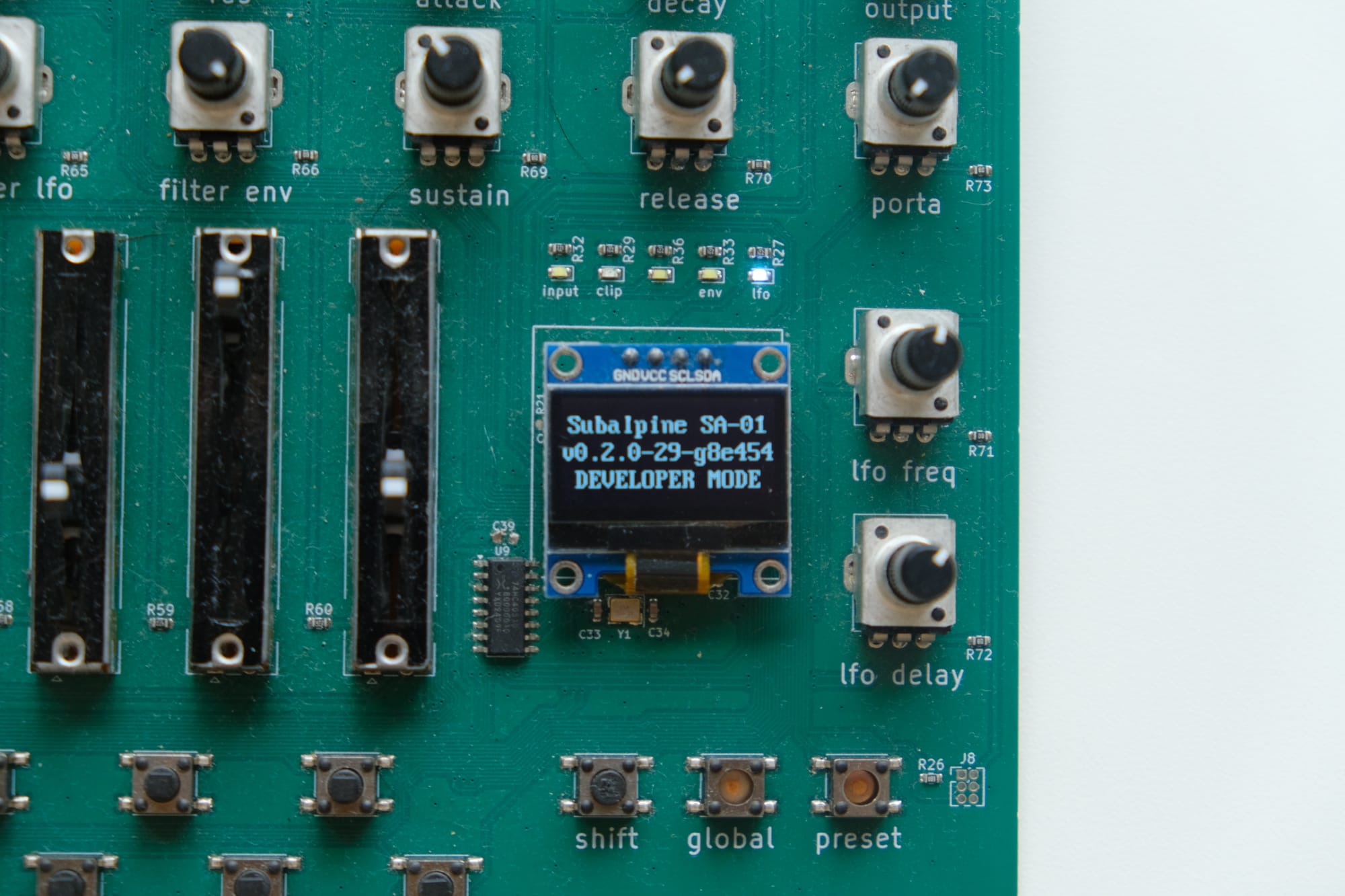
The author experimented with several drivers for an SSD1306 OLED display on an ESP32, ultimately settling on a modified, deprecated driver. Initially, an Espressif driver was used, but it only supported a single font. Subsequent attempts with LVGL and U8G2 suffered from low refresh rates. The author returned to the deprecated driver, adapting its I2C API calls for compatibility with the latest ESP-IDF, achieving a 40Hz refresh rate. To add font support, the nvbdflib library was integrated, directly parsing BDF fonts and drawing to the framebuffer, resulting in high-speed refresh and custom font capabilities.

Read more
Development

LLM Architecture Evolution in 2025: Deep Dives into DeepSeek, OLMo, Gemma, Mistral, and Qwen

2025-07-20
LLM Architecture Evolution in 2025: Deep Dives into DeepSeek, OLMo, Gemma, Mistral, and Qwen

This article reviews the architectural advancements in large language models (LLMs) during 2025, focusing on open-source models like DeepSeek, OLMo, Gemma, Mistral, and Qwen. DeepSeek V3/R1 enhances computational efficiency with Multi-Head Latent Attention (MLA) and Mixture-of-Experts (MoE). OLMo 2 emphasizes RMSNorm placement, employing Post-Norm and QK-Norm. Gemma 3 utilizes sliding window attention to reduce memory requirements. Mistral Small 3.1 balances performance and speed. Qwen 3 offers both dense and MoE variants for flexibility. SmolLM3 stands out with its 3B parameter size and NoPE (No Positional Embeddings). Finally, Kimi 2 impresses with its trillion-parameter scale and the Muon optimizer. These models showcase innovations in attention mechanisms, normalization, MoE, and optimizers, demonstrating the diversity and ongoing evolution of LLM architectures.

Read more

Human Nose Shape and Climate Adaptation: A Genetic Investigation

2025-01-30
Human Nose Shape and Climate Adaptation: A Genetic Investigation

A study published in PLOS Genetics investigates whether variations in human nose shape across populations are linked to climate adaptation. Researchers used Qst-Fst comparisons to analyze the genetic differentiation of nose shape traits and neutral markers. They found that nares width correlates with temperature and absolute humidity, suggesting that some aspects of nose shape may have been driven by local adaptation to climate. However, the study acknowledges that this is a simplified explanation, potentially involving other factors like sexual selection.

Read more

Trump Admin Admits to Wrongfully Deporting Protected Salvadoran Man

2025-04-01
Trump Admin Admits to Wrongfully Deporting Protected Salvadoran Man

The Trump administration admitted in a court filing to mistakenly deporting Kilmar Abrego Garcia, a Maryland father with protected legal status, to El Salvador. Garcia received "withholding of removal" in 2019, signifying a high likelihood of harm if returned. Despite ICE's knowledge of his protected status, an administrative error led to his deportation. Now held in El Salvador's grim "Terrorism Confinement Center," the government claims the court lacks jurisdiction to order his return. His attorney argues that if the government can deport anyone at will with no judicial recourse, immigration laws become meaningless.

Read more

Twentyseven 1.0.0: A 12-Year Haskell Odyssey in Rubik's Cube Solving

2025-08-02

After twelve years of development, a Haskell-based Rubik's Cube solver, Twentyseven, has reached version 1.0.0. Inspired by Herbert Kociemba's Cube Explorer, it uses Iterative Deepening A* (IDA*) search, cleverly projecting the cube state into simpler subproblems to estimate remaining moves and find optimal solutions. While optimal solutions can take hours, the author also discusses Kociemba's faster two-phase algorithm for near-instantaneous solutions. This release primarily focuses on GHC compiler compatibility and code maintenance.

Read more
Development

Tackling Dependency Management Challenges in Common Lisp's Metaobject Protocol

2025-03-01

This article details the author's experience tackling dependency management challenges while working on a Common Lisp library utilizing the Metaobject Protocol (MOP). Through a monitored-class example, the author demonstrates how to elegantly leverage CLOS's Dependent Maintenance Protocol to ensure that subclass monitoring functionality remains consistent even when superclasses are redefined. The article thoroughly explains the use of dependency wrappers and update-dependent methods to guarantee subclasses always inherit the latest monitoring capabilities, even after superclass redefinitions. This is a practical case study of efficient interactive development in Common Lisp, showcasing the language's powerful metaprogramming capabilities and its robust support for interactive development.

Read more
Development Metaobject Protocol

Running a Neural Network on a Calculator: A 56-Hour Train Journey

2025-01-04
Running a Neural Network on a Calculator: A 56-Hour Train Journey

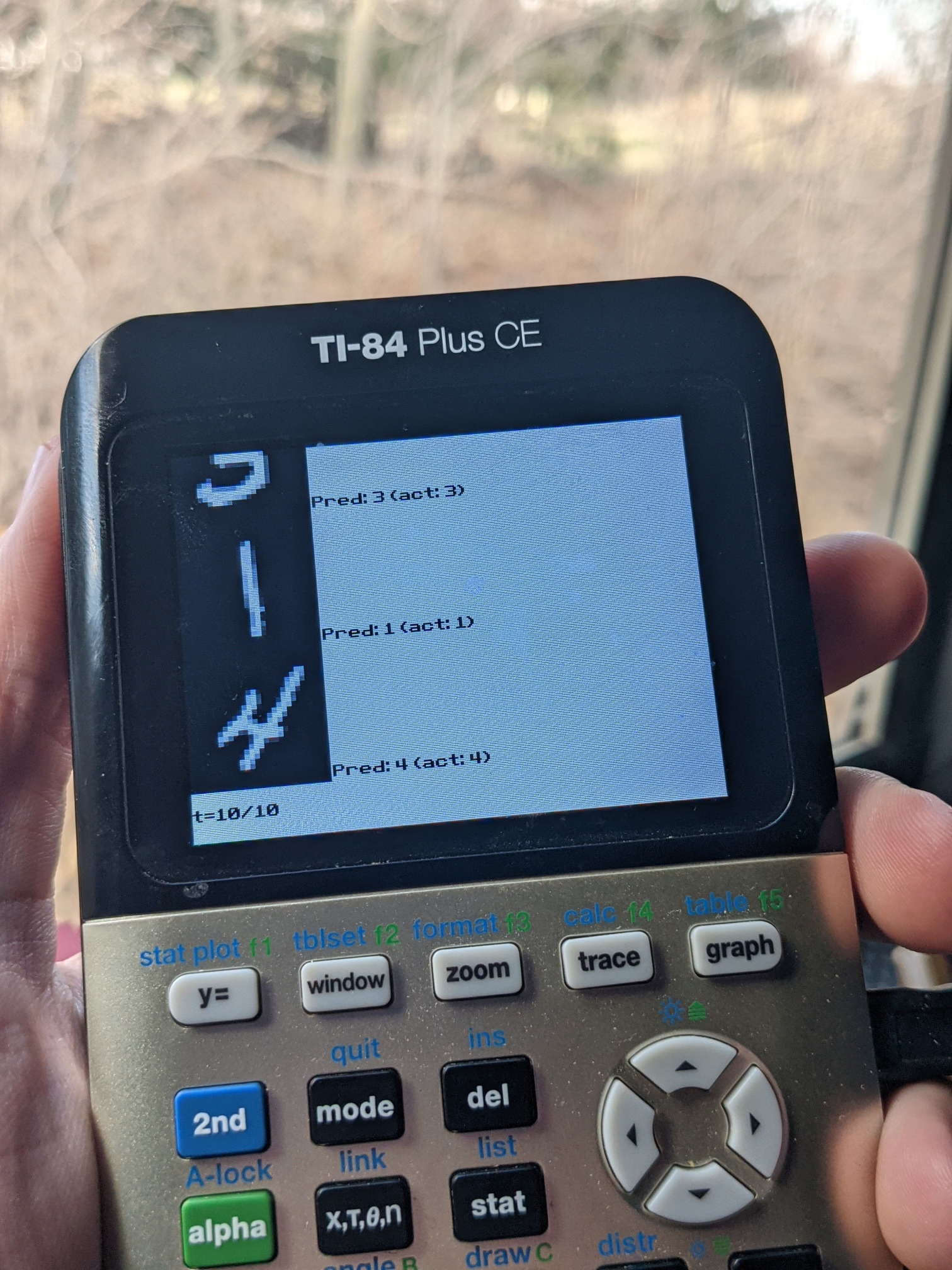
A computer science PhD challenged himself to port a convolutional neural network (CNN) to a TI-84 Plus CE graphing calculator during a 56-hour train ride. Overcoming significant hardware limitations, including scarce memory and the lack of native floating-point operations, he successfully trained and ran the network to identify handwritten digits. While slow, the accomplishment demonstrates the feasibility of running AI on severely resource-constrained devices, showcasing ingenious memory management and algorithmic optimizations.

Read more
(z80.me)
Hardware neural network

47 Seconds of Gym Hell: How I Fixed PureGym's Broken Check-in with Apple Wallet

2025-08-16
47 Seconds of Gym Hell: How I Fixed PureGym's Broken Check-in with Apple Wallet

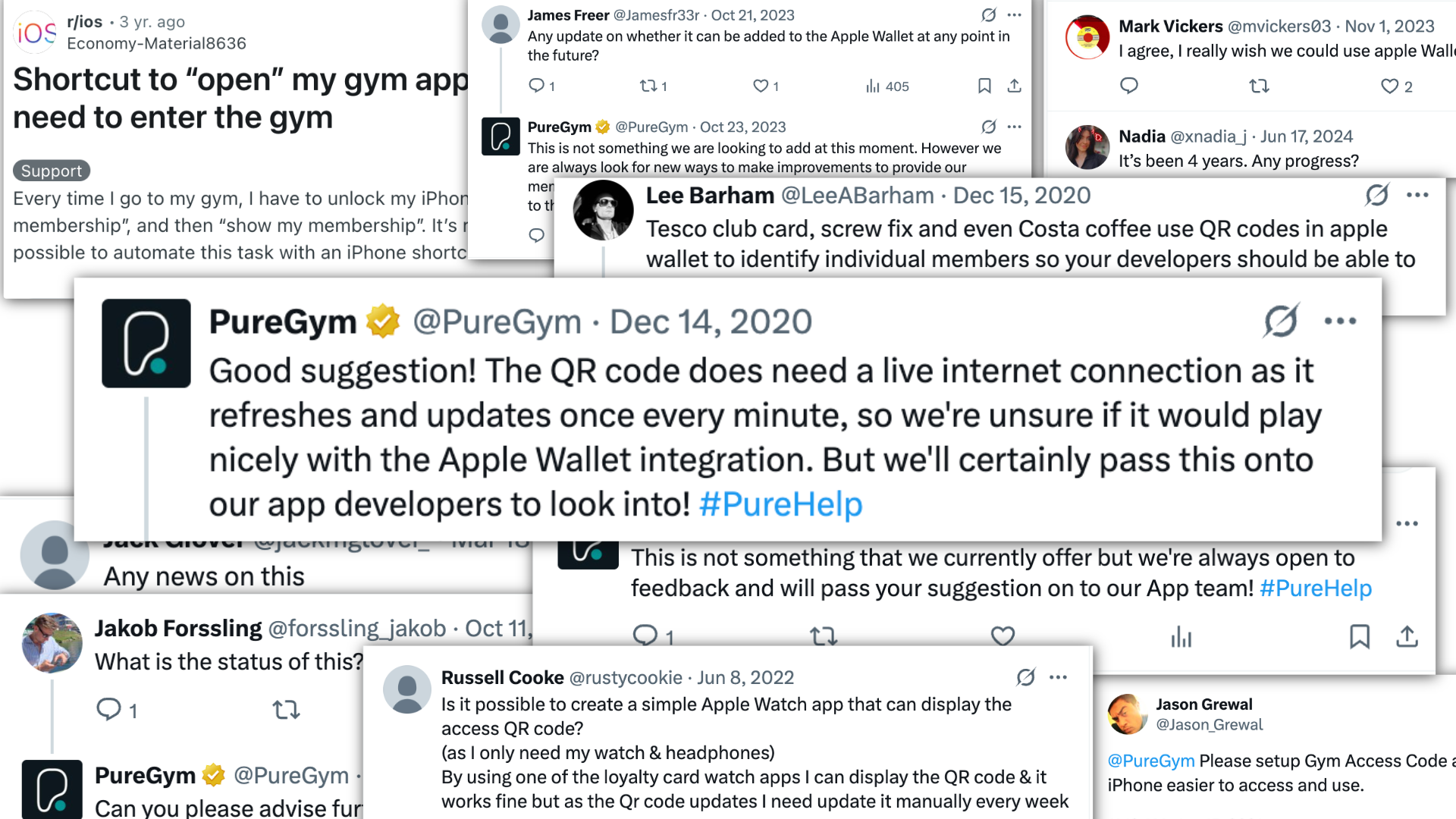
An iOS developer's frustration with PureGym's app (47 seconds to check in!) led him on a wild ride. He discovered laughably insecure APIs – an 8-year-old unchanging PIN was more secure than the minute-refreshing QR code. Using mitmproxy, he reverse-engineered the system, built an Apple Wallet pass using PassKit, and slashed check-in time to 3 seconds. The article details the process: reverse engineering, certificate wrestling, Swift backend development, and more. He even integrated it with Home Assistant. A humorous and technically detailed personal project highlighting the importance of user experience.

Read more
Development

Monorepo Build Tools: Scaling Your Codebase

2024-12-20

Traditional build tools struggle with large codebases (100-10,000 active developers). Monorepo build tools like Bazel and Mill offer solutions by supporting multiple languages, custom build tasks, automatic caching and parallelization, remote caching and execution, drastically improving build speed and efficiency. They also feature dependency-based test selection and build task sandboxing, reducing testing time and non-determinism. While these features might seem unnecessary for small projects, they are crucial for large-scale collaboration and continuous integration in larger projects, preventing build times from becoming a bottleneck.

Read more
Development build tools scalability

Lightpanda: A Lightweight Headless Browser for AI and Automation

2025-01-24
Lightpanda: A Lightweight Headless Browser for AI and Automation

Lightpanda is an open-source headless browser designed for AI and automation tasks. Written in Zig, it boasts ultra-low memory footprint and exceptionally fast execution—11x faster and 9x less memory than Chrome. Supporting Javascript execution and partial Web APIs, it's compatible with Playwright and Puppeteer, ideal for AI agents, LLM training, scraping, and testing. Currently in Beta, it already features an HTTP loader, HTML parser, DOM tree, Javascript support (v8), basic DOM APIs, Ajax, XHR API, Fetch API, and DOM dumping.

Read more
Development headless browser

ViTs vs. CNNs: Speed Benchmarks Shatter Resolution Myths

2025-05-04

This article challenges the common belief that Vision Transformers (ViTs) are inefficient for high-resolution image processing. Through rigorous benchmarking across various GPUs, the author compares the inference speed, FLOPs, and memory usage of ViTs and Convolutional Neural Networks (CNNs). Results show ViTs perform exceptionally well up to and including 1024x1024 pixels, often outperforming CNNs on modern hardware in both speed and memory efficiency. The author also argues against an overemphasis on high resolution, suggesting that lower resolutions are often sufficient. Finally, the article introduces local attention mechanisms, further enhancing ViT efficiency at higher resolutions.

Read more
AI
1 2 458 459 460 462 464 465 466 596 597