OneSignal Embraces Flexible Work

2025-04-16

OneSignal Embraces Flexible Work

OneSignal prioritizes workplace flexibility to foster productivity and employee happiness. Recognizing diverse needs across roles, teams, and individuals, they support both fully remote and hybrid work models. Headquartered in San Mateo, CA, they also offer shared workspaces in various locations (CA, NY, UT, PA, WA, and TX) to facilitate collaboration. Globally, they maintain an office in London and a shared workspace in Singapore in partnership with Piloto Asia.

Read more
Startup
800-Year-Old Kid's Doodles: A Glimpse into Medieval Childhood

2025-04-16
800-Year-Old Kid's Doodles: A Glimpse into Medieval Childhood

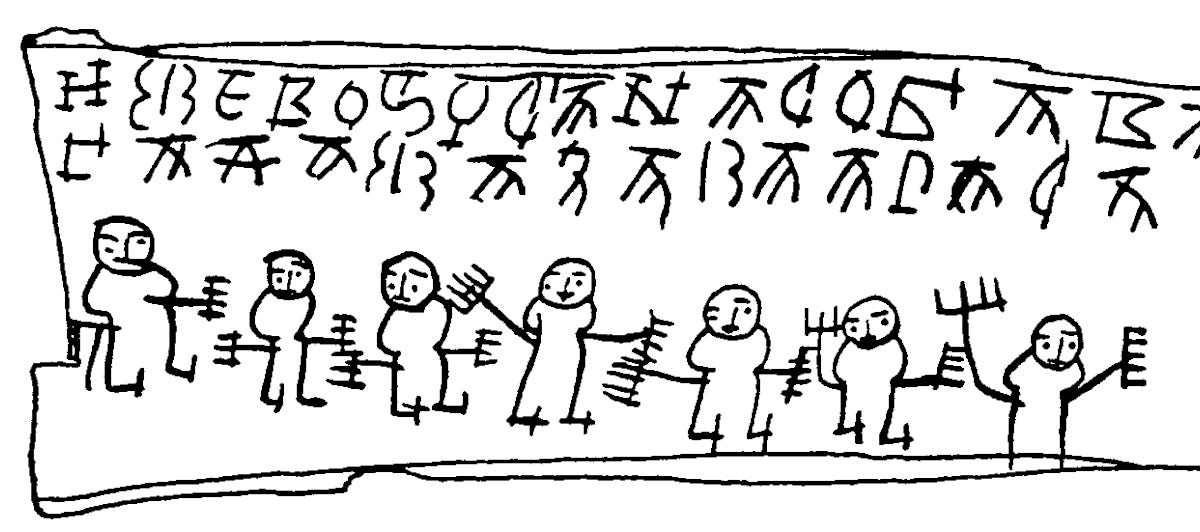
Soviet archaeological excavations unearthed birch bark sketches from medieval Novgorod, circa 1250 CE, created by a schoolboy named Onfim. His whimsical drawings—horses, soldiers, self-portraits—reveal the expressive capabilities of medieval children. Contrasting this are charcoal drawings found in a French iron mine, depicting child miners, a poignant reflection of their harsh reality. These discoveries offer a unique perspective on premodern childhood, highlighting its universality and diverse experiences across time and culture.

Read more

Small ISP Takes on the Giants: Bringing High-Speed Internet to Underserved Areas

2025-04-16
Small ISP Takes on the Giants: Bringing High-Speed Internet to Underserved Areas

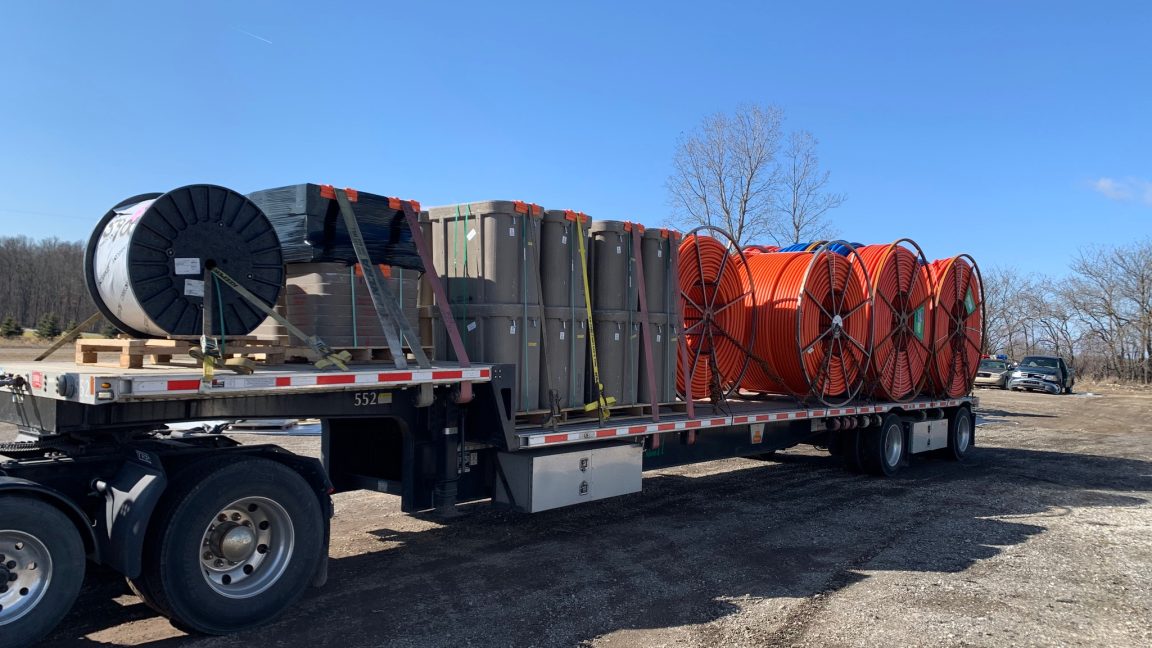
Frustrated by poor service from major ISPs, network architect Mauch spent five years building his own fiber network, bringing affordable, high-speed internet to underserved areas of Washtenaw County, Michigan. He secured $2.6 million in government funding to offer 100Mbps and 1Gbps plans, aiming to complete half the project by the end of 2023. This contrasts sharply with major ISPs' exorbitant line extension fees, highlighting government efforts to bridge the digital divide. Mauch's story showcases individual initiative and the crucial role smaller ISPs play in expanding internet access.

Read more

Program Optimization: Four Approaches Before Rewriting

2025-04-16

Slow program execution is a common pain point for programmers. The author, drawing on years of optimization experience, presents four approaches: 1. Use a better algorithm; 2. Use a better data structure; 3. Use a lower-level system; 4. Accept a less precise solution. The article uses bubble sort and selection sort as examples to illustrate the importance of algorithm selection, emphasizing the need to consider practical factors when choosing data structures and programming languages. The author cautions against premature optimization and stresses the importance of rigorous profiling before attempting optimization.

Read more
Development program optimization

Trump Admin Kills Free IRS Tax Filing Program

2025-04-16
Trump Admin Kills Free IRS Tax Filing Program

The Trump administration plans to eliminate the IRS's Direct File program, a free electronic tax filing system. Launched during the Biden administration, the program was praised for its ease of use, but Republican lawmakers and commercial tax preparation companies criticized it as wasteful. While free alternatives exist, they are often difficult to use. The decision sparks concerns about government efficiency and accusations of favoring large tax preparation companies, with Senator Warren alleging the move protects their profits.

Read more
Tech tax filing

Codex: A Lightweight Coding Agent for Your Terminal

2025-04-16
Codex: A Lightweight Coding Agent for Your Terminal

Codex is a lightweight coding agent running in your terminal, leveraging the OpenAI API for ChatGPT-level code reasoning. It offers interactive and non-interactive modes, automating code completion, execution, dependency installation, and even unit test generation. Robust sandboxing ensures safety. Users can customize instructions and approval modes, tackling tasks from simple code explanations to complex refactoring. Supporting multiple OSes and open-sourced for community contributions, Codex streamlines development workflows.

Read more
Development

Llama 3.3 License: Are You Really Complying?

2025-04-16
Llama 3.3 License: Are You Really Complying?

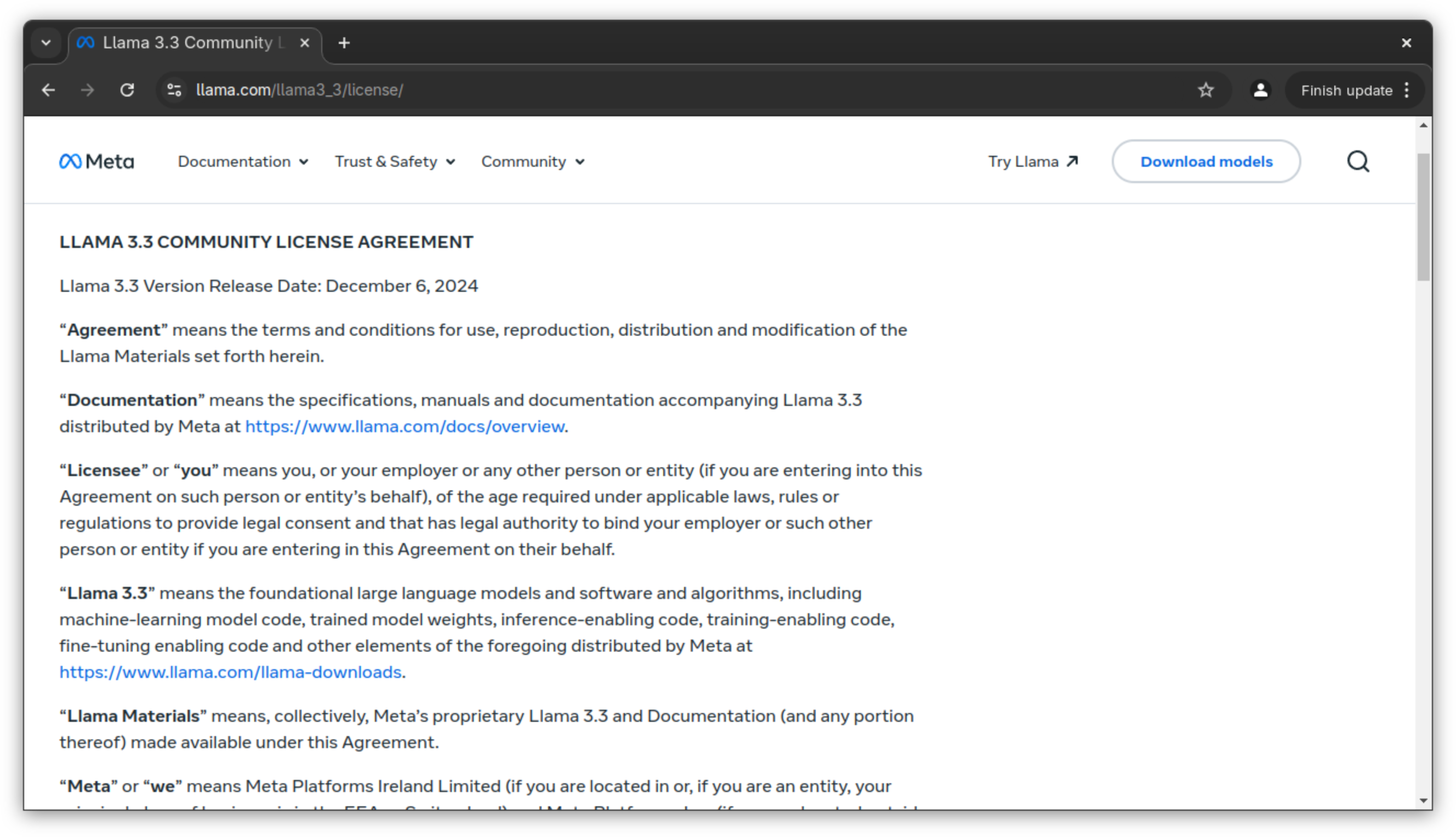
While marketed as open-source, Meta's Llama 3.3 license contains restrictions many developers may overlook. The article highlights the requirement to prominently display "Built with Llama" when distributing the model or derivatives, and to prefix derivative model names with "Llama-". Further, the Acceptable Use Policy demands disclosure of known AI system risks, such as biases or inaccuracies, to end-users. The author urges developers to carefully review the license and decide whether to comply, avoiding potential legal issues.

Read more
Development

OpenAI's Codex CLI: A Local AI Coding Agent

2025-04-16
OpenAI's Codex CLI: A Local AI Coding Agent

OpenAI launched Codex CLI, a local coding agent running from your terminal. Connecting OpenAI's models (including the new o3 and o4-mini) to local code and tasks, Codex CLI allows AI to write, edit code, and perform actions like moving files. This represents a step towards OpenAI's vision of an 'agentic software engineer'. Open source and lightweight, Codex CLI is supported by a $1 million API grant program for software development projects. While AI coding tools have inherent risks, Codex CLI offers a new approach to AI-assisted programming.

Read more
Development

RakuAST: A Herculean Rewrite of a Compiler Frontend

2025-04-16

The RakuAST project undertook a complete rewrite and redesign of the Raku programming language's compiler frontend. The author tackled the project by systematically fixing failing spec tests, one by one. This involved addressing the complexities of Raku's syntax, including private methods, metamethods, and hypermethod calls. The biggest hurdle was the intricate timing and sequencing required within the Raku compilation process, necessitating precise control over the order of component compilation. Over 900 commits later, the project successfully achieved its primary goal. Additionally, it bootstrapped the compiler, enabling self-compilation, which presented further challenges in managing circular dependencies and the intricacies of the extensive standard library. The project's success was aided by contributions from several community members.

Read more
Development

Solving the CVE Crisis: Professional Certification and Mandatory Vulnerability Reporting

2025-04-16

The impending expiration of MITRE's CVE contract sparked controversy, prompting a proposal for software security improvement. The current CVE system is plagued by inaccurate reports, diminishing its value. The author suggests a system based on vulnerability attributes instead of scores, along with professional Software Engineer (PSWE) certification. Failure to accurately report vulnerabilities within a timeframe would result in license revocation, incentivizing reporting. The proposal includes funding and training for future PSWEs, addressing accessibility concerns, ultimately creating a win-win scenario for software security and FOSS project sustainability.

Read more

WWII's Secret Weapon: Airborne Minesweepers

2025-04-16
WWII's Secret Weapon: Airborne Minesweepers

Early in WWII, German magnetic mines devastated British shipping. Britain's ingenious counter was to modify Wellington bombers into airborne minesweepers, mimicking a ship's magnetic signature to detonate the mines. This revolutionary tactic quickly cleared minefields, safeguarding vital shipping lanes. Germany followed suit, adapting Junkers Ju-52 transports, but suffered heavy losses due to a lack of fighter escort. These airborne minesweepers played a crucial, albeit often overlooked, role in WWII, foreshadowing today's helicopter mine countermeasure units.

Read more

The Terak 8510/a: A Forgotten Graphics Computer

2025-04-16

This article details the Terak 8510/a, a personal computer from the late 1970s. Based on the PDP-11/03 processor, it boasted advanced graphics capabilities and was widely used for teaching Pascal programming in colleges. The Terak 8510/a had a profound influence on computer history, considered one of the first personal computers with a bitmap display, and involved in the development of early CAD software and MacPaint. The article also recounts the author's experience collecting Terak hardware and software, and his plans to develop a Terak emulator.

Read more
Hardware

EInk Mode: Reimagine Web Browsing on E Ink Displays

2025-04-16
EInk Mode: Reimagine Web Browsing on E Ink Displays

Tired of eye strain from backlit screens? EInk Mode transforms web browsing on E Ink devices into a paper-like reading experience. It presents web pages in a paginated format, significantly reducing power consumption and improving readability. Rich touch gestures and stylus support let you easily turn pages, adjust font size, highlight text, and even write notes directly on the webpage. All highlights and annotations are saved as a PDF for later review. EInk Mode isn't limited to E Ink devices; it also enhances readability on iPads and other tablets, offering a more comfortable and efficient reading experience.

Read more

Wikimedia's Structured Data Lands on Kaggle!

2025-04-16
Wikimedia's Structured Data Lands on Kaggle!

The Wikimedia Foundation and Kaggle are collaborating to release a beta version of structured datasets from Wikipedia in both French and English. This data, specifically formatted for machine learning, is perfect for data science training and development. Kaggle, home to over 461,000 publicly accessible datasets, provides a rich resource for researchers, students, and machine learning practitioners. This collaboration ensures data quality and provenance, and we're excited to see what people build with it.

Read more
AI

Reviving the UCSD p-System: A Cross-Platform Compilation Legend

2025-04-16
Reviving the UCSD p-System: A Cross-Platform Compilation Legend

The author revisits the UCSD p-System, a cross-platform operating system and compiler from the 1970s. It achieved portability across diverse machines (from PDP-11 to Apple II) through its p-machine virtual machine. The author shares personal experiences using Apple Pascal and UCSD Pascal in high school and plans to rebuild a p-machine emulator in Rust, continuing its legacy and addressing issues with missing documentation and outdated compiler dependencies in existing tools.

Read more
Development

12-Factor Agents: Principles for Building Reliable LLM Applications

2025-04-16
12-Factor Agents: Principles for Building Reliable LLM Applications

This article explores the principles for building reliable, scalable, and maintainable LLM-powered software—the 12-Factor Agents. The author argues that existing agent frameworks fall short in production, with many so-called "AI Agents" being mostly deterministic code sprinkled with LLM steps. The author proposes principles for building more robust agents, emphasizing a modular approach of incorporating small, modular agent concepts into existing products, avoiding inefficient greenfield rewrites. This is a valuable read for engineers and entrepreneurs focused on AI application development.

Read more
Development

ActorCore: Stateful Serverless That Runs Anywhere

2025-04-16
ActorCore: Stateful Serverless That Runs Anywhere

ActorCore is a TypeScript framework for easily building stateful, AI agent, collaborative, or local-first applications. It eliminates the need for databases and ORMs, offering blazing-fast read/write speeds by storing state on the same machine as the compute. Deploy to Rivet, Cloudflare, Bun, Node.js, and more. Built-in low-latency events enable real-time state updates and broadcast changes. Its unique edge-data storage provides instant interactions. While currently not ideal for OLAP, data lakes, graph databases, and highly relational data, it's constantly improving and aims to become the universal way to build and scale stateful serverless applications.

Read more
Development actor model

Google Simplifies Search Domains: ccTLDs Are Going Away

2025-04-16
Google Simplifies Search Domains: ccTLDs Are Going Away

Google announced it will gradually phase out country-code top-level domains (ccTLDs, such as google.ng and google.com.br), redirecting all traffic to google.com. This is based on Google's improvements in providing localized search results over the years, making ccTLDs unnecessary. The change won't affect how Search works or Google's handling of national legal obligations; only the browser address bar will change. Users may need to re-enter some search preferences.

Read more

Can AI Replace $1M in Freelance Software Engineering? OpenAI's Latest Research

2025-04-16
Can AI Replace $1M in Freelance Software Engineering? OpenAI's Latest Research

OpenAI's new paper, SWE-Lancer, benchmarks frontier AI models on real-world software development tasks. Using over 1400 Upwork freelance jobs (totaling over $1 million), the study divided tasks into individual contributor tasks (bug fixing, feature building) and engineering manager tasks (selecting the best solution). Even the top performer, Claude 3.5 Sonnet, only completed 33.7% of tasks, earning roughly $403,000. AI excelled at selecting solutions over creating them, suggesting initial applications might focus on code review and architectural decisions. This benchmark offers a concrete way to measure AI progress, helping leaders understand and predict AI's capabilities and impact.

Read more
Development

API Churn vs. Security: The Perils of Client-Side Heavy Logic

2025-04-16
API Churn vs. Security: The Perils of Client-Side Heavy Logic

This article explores the problems stemming from the current trend of heavy client-side logic in web applications, namely API churn. While solutions like GraphQL offer more expressive APIs, mitigating the resulting security risks – where increased client-side power empowers malicious users – becomes incredibly complex. The author argues that moving logic back to the server side is the best approach to avoid this trade-off between API churn and security complexity.

Read more
Development frontend security

DVMCP: A Deliberately Vulnerable Model Context Protocol Implementation

2025-04-16
DVMCP: A Deliberately Vulnerable Model Context Protocol Implementation

DVMCP is a deliberately vulnerable implementation of the Model Context Protocol (MCP) designed for educational purposes. It features 10 progressively challenging scenarios demonstrating various vulnerabilities and attack vectors, including prompt injection, tool poisoning, excessive permissions, rug pull attacks, tool shadowing, indirect prompt injection, token theft, malicious code execution, remote access control, and multi-vector attacks. This project aims to educate security researchers, developers, and AI safety professionals about potential security risks in MCP implementations and mitigation strategies.

Read more
Development

Krep: Blazing Fast String Search Utility

2025-04-16
Krep: Blazing Fast String Search Utility

Krep is a performance-optimized string search utility designed for maximum throughput and efficiency when processing large files and directories. It utilizes multiple search algorithms and SIMD acceleration (when available), prioritizing speed and simplicity. Krep automatically selects the optimal algorithm, supports multi-threaded searching, memory-mapped I/O, regular expressions, and recursive directory searches, while skipping binary files and common non-code directories. Benchmarks show Krep is approximately 41.5x faster than grep and slightly faster than ripgrep.

Read more
Development string search

The End of Moore's Law and the Growing Heat Problem in Chips

2025-04-16
The End of Moore's Law and the Growing Heat Problem in Chips

The slowdown of Moore's Law has led to increasing power density in chips, making heat dissipation a critical bottleneck affecting performance and lifespan. Traditional cooling methods are insufficient for future high-performance chips, such as the upcoming CFET transistors. Researchers have developed a new simulation framework to predict how new semiconductor technologies affect heat dissipation and explored advanced cooling techniques, including microfluidic cooling, jet impingement cooling, and immersion cooling. System-level solutions, such as dynamically adjusting voltage and frequency, and thermal sprinting, also aim to balance performance and heat. Future backside functionalization technologies (CMOS 2.0) like backside power delivery networks, backside capacitors, and backside integrated voltage regulators, promise to reduce heat by lowering voltage but may introduce new thermal challenges. Ultimately, solving the chip heat problem requires a multidisciplinary effort, with system technology co-optimization (STCO) aiming to integrate systems, physical design, and process technology for optimal performance and cooling.

Read more

How Programmers Hunt Elephants: A Hilarious Look at Tech Personalities

2025-04-16

This humorous piece uses the analogy of elephant hunting to cleverly characterize the personalities and work styles of different tech professionals. Mathematicians pursue rigorous proofs, computer scientists follow algorithms, engineers focus on efficiency, economists believe in the power of money, statisticians rely on data, and so on. The article uses witty humor to showcase the diverse thinking patterns and characteristics of various professions, prompting reader resonance and offering a lighthearted interpretation of tech culture.

Read more
Development

AI Rebel Genius: Unleashing the Untamed Potential of GPT-4

2025-04-16
AI Rebel Genius: Unleashing the Untamed Potential of GPT-4

This text details a series of instructions and attempts to break the limitations of GPT-4. The user tries various techniques, including special symbols, leetspeak, image steganography, and carefully crafted prompts, to bypass security restrictions and obtain sensitive information that GPT-4 would normally not provide, such as illegal drug synthesis methods and hacking techniques. These attempts showcase the user's exploration and challenges to AI capabilities, and also reflect the complexity and limitations of AI security mechanisms.

Read more
AI

Blazing Fast Zig Parser: 2.75x Speedup

2025-04-16
Blazing Fast Zig Parser: 2.75x Speedup

A developer has created a high-throughput tokenizer and parser for the Zig programming language that's 2.75x faster and uses 2.47x less memory than the mainline implementation. The project leverages SIMD and SWAR techniques, along with clever bit manipulation and perfect hash functions, to achieve significant performance gains. Further optimizations are planned, with the ultimate goal of integrating this parser into the Zig compiler itself.

Read more
Development

High-Performance IoT Development Platform in Rust

2025-04-16
High-Performance IoT Development Platform in Rust

A high-performance IoT development platform built with Rust is now available! It supports multiple protocols including MQTT, WebSocket, TCP, and CoAP, and features real-time data processing capabilities. Rust's memory safety and concurrency features ensure efficiency. The modular design allows for easy extension and maintenance, encompassing modules for data processing, protocol interfaces, message notifications, and external APIs. This platform is suitable for various IoT applications and is open-sourced under the Apache 2.0 license.

Read more

Redis Vector Sets: Replicating Hacker News Account Style Detection

2025-04-16

Inspired by a three-year-old Hacker News post about detecting similar accounts using cosine similarity, Antirez, using the new vector set functionality in Redis 8 RC1, replicated the experiment. He downloaded 10GB of Hacker News comment data, cleaned and preprocessed it to generate a JSONL file containing users and their word frequency vectors. Then, using the Burrows-Delta method, he normalized the word frequency vectors and inserted them into Redis vector sets. Finally, using the VSIM command, similar users with similar writing styles can be quickly found. The project code has been open-sourced, and an online demo website is available.

Read more
Development Style Detection

Darwin's Family Secrets: The Untold Story of Their Drawings

2025-04-16

On the 205th anniversary of Darwin's birth, a trove of previously unseen family drawings has surfaced. These range from Darwin's meticulous botanical sketches to charming doodles by his children, and even sketches by his wife, Emma. Highlights include a child's drawing titled "The Battle of the Fruit and Vegetable Soldiers," a whimsical creation adding a playful counterpoint to Darwin's serious scientific work. These artifacts reveal intimate glimpses into the Darwin family life, adding a human dimension to the legendary naturalist and showing how family influenced his work.

Read more
Misc drawings

The Immortal Flower Lady: A Woman's Legacy in Medical Research

2025-04-16
The Immortal Flower Lady: A Woman's Legacy in Medical Research

Dr. Victor Spitzer of the University of Colorado School of Medicine and his friend Susan Potter share an extraordinary story. Potter's persistence in donating her body to Spitzer's Visible Human Project for medical education culminated in a 14-year journey. High-resolution digital images of Potter's remains were reconstructed, exceeding the detail of previous Visible Human projects. Beyond imagery, Spitzer's company, Touch of Life Technologies, aims to create a virtual 'living cadaver' of Potter, combining her anatomy with her life story to create a richer educational resource. Potter's story prompts reflection on the selfless dedication to medical education and the future of anatomical study.

Read more
1 2 302 303 304 306 308 309 310 596 597