Category: Tech

Trump's Proposed NASA Budget Cuts: A Death Blow to American Space Exploration?

2025-06-12
Trump's Proposed NASA Budget Cuts: A Death Blow to American Space Exploration?

The Trump administration's proposed budget includes a near 50% cut to NASA's science programs and a roughly 24% overall reduction. This drastic move, formulated without significant NASA input due to a leadership vacuum following the withdrawal of Jared Isaacman's nomination, jeopardizes numerous ongoing projects. The cuts would cancel 19 active space exploration projects totaling $12 billion in investment, impacting crucial missions like Mars exploration. This not only wastes significant taxpayer funds but also threatens America's future in space exploration, potentially allowing China to overtake the US in space leadership.

Tech

Israeli Spyware Firm Paragon Targeted Journalists in Europe

2025-06-12
Israeli Spyware Firm Paragon Targeted Journalists in Europe

Citizen Lab research reveals that Graphite, spyware from US-backed Israeli firm Paragon Solutions, was used to target at least three prominent European journalists, including two editors at Italian investigative news site Fanpage.it. The revelations raise concerns about potential Italian government involvement in spying on critics and broader misuse of commercial spyware. While Paragon denies wrongdoing, Italy has terminated its relationship with the company. The incident also casts a shadow on Paragon's US government contracts.

Tech

Italian Gov't Suspected of Mass Surveillance on Journalists Using Israeli Spyware

2025-06-12
Italian Gov't Suspected of Mass Surveillance on Journalists Using Israeli Spyware

Citizen Lab's new report reveals that government spyware from Israeli surveillance tech provider Paragon was used to hack at least two European journalists, including Italian journalist Ciro Pellegrino. This follows WhatsApp's earlier notification to roughly 90 users about Paragon's 'Graphite' spyware. The findings further implicate the Italian government in a potential mass surveillance operation. While Italy's parliamentary committee COPASIR denies targeting journalists, new forensic evidence challenges this claim, sparking a political controversy over the government's use of spyware and its implications for freedom of the press.

Waymo Robotaxis: Premium Price, Premium Demand?

2025-06-12
Waymo Robotaxis: Premium Price, Premium Demand?

New data reveals Waymo's self-driving taxi service consistently costs more than Uber and Lyft, averaging several dollars more per ride. Despite this higher price point, Waymo boasts 250,000 paid weekly trips. The study found Waymo's pricing is more variable, especially for short trips, potentially due to a less refined pricing model compared to its established competitors. However, consumers seem unfazed by the higher cost, with many willing to pay a premium for the driverless experience. This highlights the appeal of technological novelty and the comfort of a solo ride. Safety, however, remains a top concern, with many preferring some form of remote human monitoring.

Tech

visionOS 26: Apple's AR Platform Takes Another Leap Forward

2025-06-12
visionOS 26: Apple's AR Platform Takes Another Leap Forward

visionOS 26 delivers substantial improvements to Apple's Vision Pro, enhancing user experience significantly. Key updates include vastly improved Spatial Personas, geographic persistence (saving app and window positions), and support for third-party widgets. New immersive environments (like a customizable Jupiter environment), an upgraded 3D photo algorithm, collaborative viewing capabilities, and support for ultra-wide-field-of-view video are also included. While features like hand controller support are still in development, visionOS 26 demonstrates Apple's continued commitment to the future of augmented reality, solidifying the Vision Pro's long-term potential.

Brazil's Supreme Court Holds Social Media Firms Liable for User-Posted Illegal Content

2025-06-12
Brazil's Supreme Court Holds Social Media Firms Liable for User-Posted Illegal Content

A majority of justices on Brazil's Supreme Court have voted to hold social media companies liable for illegal content posted by their users. This ruling opens the door for companies like Meta, X, and Microsoft to be sued and fined for content published by users. The vote is still ongoing, but a simple majority is sufficient for passage. This decision follows a warning from US Secretary of State Marco Rubio about potential visa restrictions for foreign officials involved in censoring American citizens.

My Mac Contacted 63 Apple Domains While Idle

2025-06-12
My Mac Contacted 63 Apple Domains While Idle

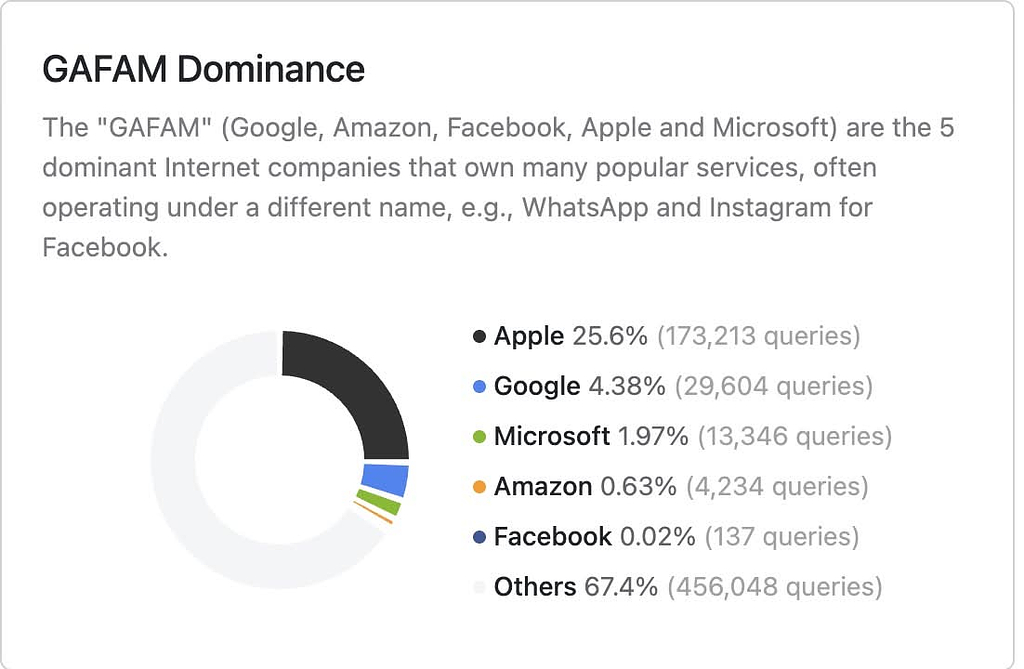
My M2 MacBook Air contacted 63 different Apple domains in a single hour while I wasn't logged in or using it. Despite using NextDNS to block Apple's native telemetry, a significant portion of DNS queries still targeted Apple domains. In contrast, my 2019 Intel MacBook Pro showed less than 3% of queries going to Apple. This raises concerns about the extent of Apple's data collection, even with services like mail and calendar already blocked.

Tech

Denmark Ditches Microsoft in Pursuit of Digital Sovereignty

2025-06-12
Denmark Ditches Microsoft in Pursuit of Digital Sovereignty

Denmark is moving away from Microsoft Office to LibreOffice, prioritizing 'digital sovereignty' over perceived reliance on US tech giants. Driven by security concerns, economic factors (a 72% increase in Microsoft software costs in five years), and geopolitical anxieties, the government aims to reduce dependence on foreign technology. While a complete transition won't be easy, and not everyone agrees with the strategy, this move reflects a growing EU-wide push for greater control over its digital infrastructure and data, spurred by incidents like alleged Microsoft service disruptions to the ICC following US sanctions.

Tech

Pentagon's UFO Smoke Screen: A Carefully Crafted Illusion?

2025-06-12
Pentagon's UFO Smoke Screen: A Carefully Crafted Illusion?

The Wall Street Journal revealed the Pentagon's long-standing manipulation of UFO incidents for disinformation purposes. By fabricating evidence and stories, the Department of Defense diverted public attention from real, secret weapons programs to 'alien technology.' This practice targeted not only the public but also its own personnel. For example, the 1967 incident at a nuclear bunker, where a supposed 'alien spacecraft' disabled missiles, was actually a government electromagnetic pulse test. Additionally, new recruits to secretive programs received photos of UFOs, told they represented anti-gravity technology – a potentially out-of-control 'hazing ritual' or part of an internal disinformation campaign. Ultimately, the truth remains elusive, and the government's intent may be to discourage the search for it.

Solar Orbiter Captures First-Ever Images of Sun's Poles: A Messy Magnetic Field and a New Era

2025-06-12
Solar Orbiter Captures First-Ever Images of Sun's Poles: A Messy Magnetic Field and a New Era

The European Space Agency's Solar Orbiter has captured humanity's first-ever images of the sun's poles, a groundbreaking achievement. Previous images were all taken from near the sun's equator. By tilting its orbit, Solar Orbiter provided an unprecedented perspective. Using multiple instruments, the mission revealed a chaotic magnetic field at the sun's south pole and complex patterns of material flow. Future data will significantly advance our understanding of the sun's 11-year activity cycle and the formation of the solar wind.

Tech

US Military Fights for the Right to Repair

2025-06-12
US Military Fights for the Right to Repair

The US Navy is pushing for the right to repair its own equipment, citing the case of the USS Gerald R. Ford, where oven malfunctions caused major logistical problems due to contractual restrictions. Secretary Phelan emphasized the need to regain control of intellectual property and ensure sailors can fix hardware, particularly during combat. The Army also faces similar issues, prompting a directive from the Secretary of Defense to include right-to-repair provisions in future contracts. This bipartisan effort aligns with the Servicemember Right-to-Repair Act currently under consideration by Congress. Experts believe this move will reduce costs and improve efficiency while demonstrating trust in military personnel's capabilities.

Denmark Ditches Microsoft, Embraces Open Source

2025-06-12
Denmark Ditches Microsoft, Embraces Open Source

Denmark's Ministry of Digitization is abandoning Microsoft products in favor of Linux and LibreOffice. This move prioritizes 'digital sovereignty' and reduces reliance on a few tech providers, fueled partly by concerns over US influence following President Trump's Greenland ambitions. Half the ministry will transition to Linux and LibreOffice this summer, with a complete switch expected by fall. Major cities like Copenhagen and Aarhus are following suit, highlighting a growing trend towards open-source solutions.

Tech

Your Brain Rewires Itself in Real Time When Listening to Rhythms

2025-06-12
Your Brain Rewires Itself in Real Time When Listening to Rhythms

New research from Aarhus University and the University of Oxford reveals a fascinating finding: when you hear a steady rhythm or musical tone, your brain doesn't passively receive the sound; it dynamically reorganizes itself. Researchers developed FREQ-NESS, a novel neuroimaging method, to map brain organization with unprecedented precision, showing the interplay of brainwaves across multiple networks. This breakthrough could revolutionize our understanding of brain function and has implications for brain-computer interfaces and clinical diagnostics.

Tech

DNS4EU: An EU-Funded DNS Service Relies Heavily on Non-EU Providers

2025-06-12
DNS4EU: An EU-Funded DNS Service Relies Heavily on Non-EU Providers

This investigation examines the EU-funded DNS4EU project, aimed at strengthening digital sovereignty and security for EU citizens. Through DNS lookups, Whois queries, and BGP route tracing, the author reveals that DNS4EU's core infrastructure relies heavily on non-EU providers, including Cloudflare and AS60068 based in the UK. This contrasts sharply with the project's goals, raising questions about its security and data sovereignty. The article uses a lighthearted narrative style combined with technical details to highlight the shortcomings of the DNS4EU project.

Tech

EU Launches DNS4EU: A Sovereign DNS for Enhanced Digital Independence

2025-06-12
EU Launches DNS4EU: A Sovereign DNS for Enhanced Digital Independence

DNS4EU, an EU-funded DNS resolution service aimed at bolstering the European Union's digital sovereignty, is now live. Developed by a consortium of cybersecurity firms, CERTs, and academic institutions, it offers a fast, reliable, secure, and privacy-friendly alternative to existing public DNS providers. Users can choose filtering options to block malicious websites and ads. DNS4EU also provides tailored services for governments and telcos, reducing costs and enhancing security. This initiative represents a significant step towards greater digital autonomy for the EU.

Tech

The Man Behind Apple's Iconic Sounds: The Sosumi Beep and More

2025-06-12

This article unveils the story behind Jim Reekes, the creator of iconic Apple sounds like the Mac startup chime and the iPhone camera shutter sound. He reveals the inspiration for the Mac startup sound – the final chord of The Beatles' 'A Day In The Life' – and the origin story of the Sosumi beep, born from a trademark dispute. Multiple video links showcase interviews and clips of Reekes detailing his creative process, including the synthesizers and camera he used.

Nanoplastics Disrupt the Gut Microenvironment: Unraveling the Mechanisms of Microbiota Imbalance

2025-06-12
Nanoplastics Disrupt the Gut Microenvironment: Unraveling the Mechanisms of Microbiota Imbalance

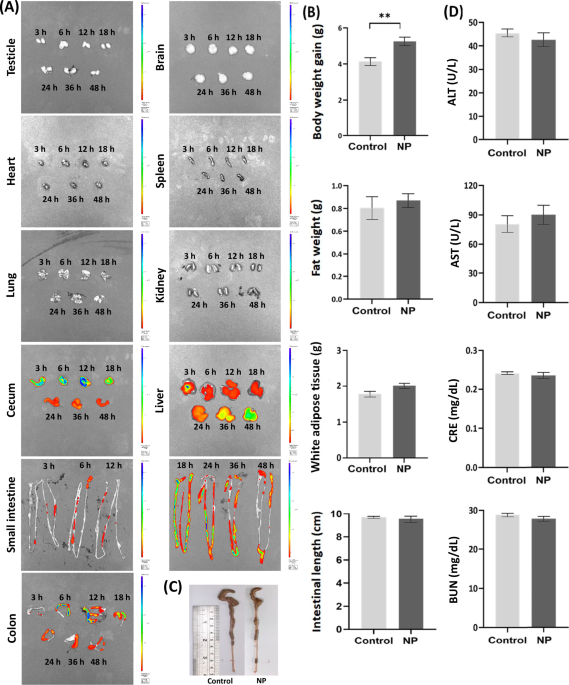
This study reveals that nanoplastics (NPs) disrupt the gut microenvironment through complex host-microbe interactions. NPs accumulate in the cecum, liver, small intestine, and colon, persisting for up to 48 hours. Chronic NP exposure leads to increased body weight in mice without significant liver damage. However, NPs reduce the expression of tight junction proteins (ZO-1 and occludins), increasing intestinal permeability and altering gut microbiota composition. Further investigation reveals that NPs modulate intestinal microRNAs, suppressing mucin MUC-13 expression and impacting the abundance of specific bacteria (e.g., Lachnospiraceae and Ruminococcaceae). Notably, NPs ingested by Lachnospiraceae lead to their extracellular vesicles (EVs) suppressing MUC-13; concurrently, NP-modified goblet cell-derived EVs promote Ruminococcaceae proliferation, ultimately causing gut dysbiosis and impaired intestinal barrier function. This study highlights the potential long-term risks of NP exposure to gut health and emphasizes the crucial role of host-microbe interactions.

Nine-Armed Octopus Shows Remarkable Adaptability

2025-06-12
Nine-Armed Octopus Shows Remarkable Adaptability

Researchers in Spain observed an Octopus vulgaris, nicknamed Salvador, with nine arms due to unusual regeneration after a predator attack. Its bifurcated arm, resembling Dali's moustache, was initially used less for risky tasks, suggesting long-term memory of the injury. However, Salvador's nervous system adapted, integrating the ninth arm effectively into its environment exploration. This highlights the remarkable adaptability of octopuses.

Tech

The Seymour Cray Era: A Review of Supercomputing's Genesis

2025-06-12

Boelie Elzen and Donald MacKenzie's "The Seymour Cray Era of Supercomputers: From Fast Machines to Fast Codes" chronicles the roughly three-decade reign of Seymour Cray in the supercomputing world. The book details the development of key supercomputer models, the technical choices and compromises involved, and the evolving market landscape, culminating in SGI's acquisition of Cray's assets and the shift towards massively parallel processing. It highlights the early divergence between business and scientific computing, showcasing Cray's challenge to IBM's dominance with the CDC 6600. The narrative explores technological risks, the crucial role of software support, and the diverse applications of supercomputers across various industries. While lacking in personal anecdotes and aesthetic considerations, the book offers valuable insights into the history of scientific computing, computer architecture, and high-value/low-volume business strategies.

Tech

23andMe Bankruptcy: 15% of Users Delete Data Amidst Regeneron Acquisition

2025-06-11
23andMe Bankruptcy: 15% of Users Delete Data Amidst Regeneron Acquisition

Following its bankruptcy filing, 23andMe revealed that 1.9 million users (about 15% of its customer base) have requested deletion of their genetic data. This surge in data deletion requests stems from concerns over data security following the company's bankruptcy auction, where pharmaceutical giant Regeneron acquired 23andMe for $256 million. While Regeneron pledged to uphold privacy practices, over two dozen states have sued, arguing that 23andMe cannot sell customer data without explicit consent. This comes after a months-long data breach affecting 6.9 million users last year. The court is expected to finalize the sale in late June.

Tech

Active Matter and the Glass Transition: A New Frontier

2025-06-11
Active Matter and the Glass Transition: A New Frontier

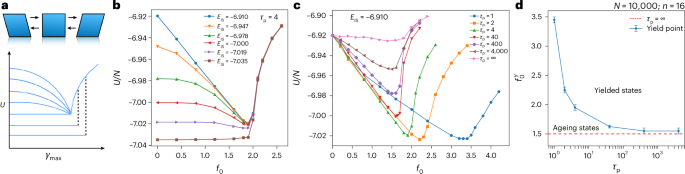
Recent research has illuminated the intriguing dynamics of active matter, such as cells and microorganisms, as they undergo glass transitions. Studies reveal unique behaviors in active glasses, differing significantly from their passive counterparts. Through simulations and experiments, researchers explore how density, interactions, and self-propulsion affect the glass transition in active systems. They've found that active matter exhibits distinct yielding behavior and aging phenomena compared to traditional glasses. These findings advance our understanding of complex nonequilibrium dynamics and offer new insights into material design and biological systems.

Black Hole Universe: Did the Big Bang Not Mark the Beginning?

2025-06-11
Black Hole Universe: Did the Big Bang Not Mark the Beginning?

A new study proposes that the universe did not originate from the Big Bang, but rather from the gravitational collapse and subsequent bounce inside a supermassive black hole. This model, grounded in known physics and observations, addresses unresolved mysteries in the standard cosmological model, such as singularities and dark energy. It predicts a slight positive spatial curvature in the universe, testable through future observations. This research offers a novel perspective on the origin and evolution of the universe and may explain the formation of supermassive black holes and the nature of dark matter.

Lost Roanoke Colony Mystery Solved? Hammerscale Reveals a Surprising Truth

2025-06-11
Lost Roanoke Colony Mystery Solved? Hammerscale Reveals a Surprising Truth

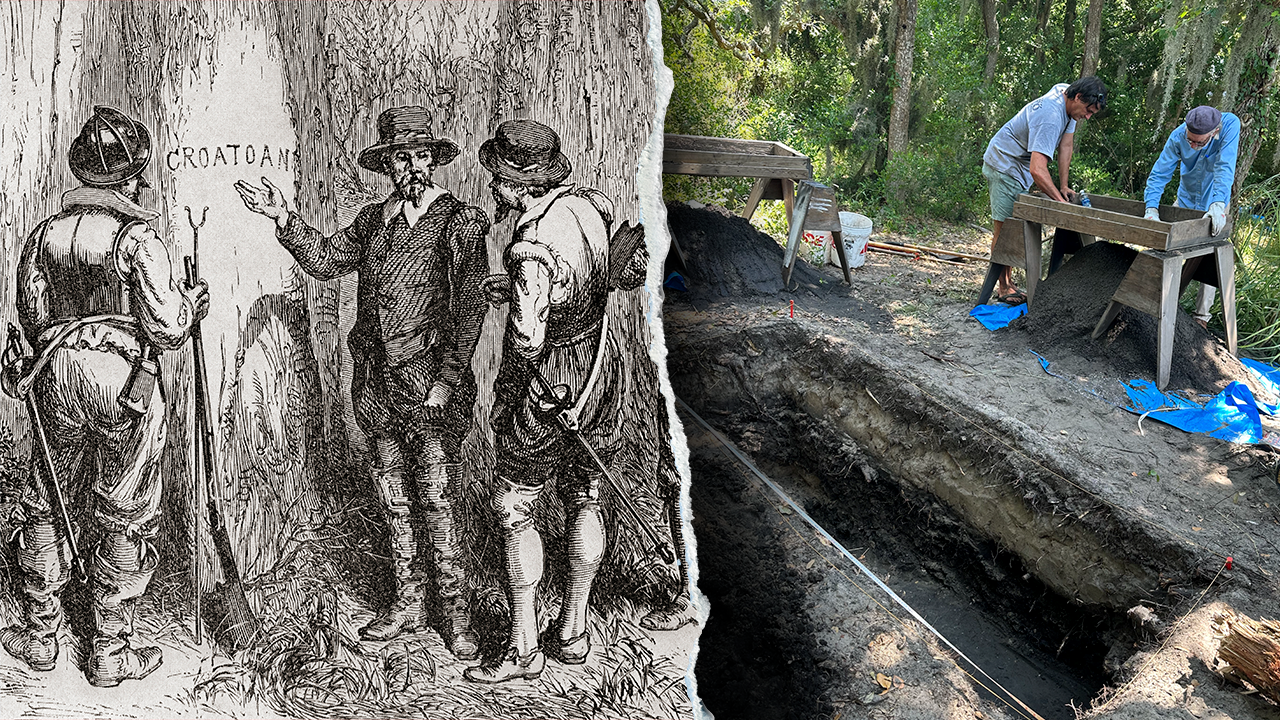
A team led by British archaeologist Mark Horton has potentially solved the centuries-old mystery of the Lost Roanoke Colony. The discovery of hammerscale—tiny flakes of iron from forging—on Hatteras Island provides definitive proof of 16th-century English ironworking technology, absent among Native Americans at the time. This suggests the colonists assimilated into the Croatoan community rather than perishing. While the mystery may persist in some form, this archaeological evidence offers a compelling explanation for the colonists' fate.

Google Beam: $25,000 3D Video Conferencing System

2025-06-11
Google Beam: $25,000 3D Video Conferencing System

Following the Gemini hype at Google I/O, Google unveiled Google Beam, a $24,999 3D video conferencing system developed in partnership with HP. The system uses six high-speed cameras to capture a volumetric video of the speaker, displayed on a 65-inch light field screen. This creates a hyperrealistic 3D image without the need for headsets or glasses, offering 60fps and millimeter-scale precision. Google claims Beam improves meeting efficiency and recall by enhancing non-verbal cues, and future integrations with Meet's live translation are planned. Despite the steep price, the technology is undeniably impressive.

Vera Rubin Observatory: Unveiling an Unprecedented Cosmic Panorama

2025-06-11
Vera Rubin Observatory: Unveiling an Unprecedented Cosmic Panorama

The US$810 million Vera C. Rubin Observatory, set to begin full operations in the coming months, boasts the world's largest digital camera, capturing 3200-megapixel images revealing unprecedented cosmic detail. It will map the entire southern sky every three to four nights, observing each spot around 800 times over its ten-year lifespan, capturing millions of transient and variable astronomical events. Data will be used to study the history of the universe, dark matter, and potentially hazardous solar system objects. While not the largest telescope in terms of aperture, its unparalleled speed and wide field of view promise a revolutionary leap in astronomical discovery.

Tech cosmic map

Climate Messaging Backfires: Individual vs. Collective Action

2025-06-11
Climate Messaging Backfires: Individual vs. Collective Action

A new study reveals that many Americans misjudge the impact of their personal behaviors on carbon emissions, overestimating the effectiveness of actions like recycling while underestimating the impact of reducing air travel or meat consumption. Surprisingly, interventions focusing solely on individual actions decreased commitment to collective efforts like voting or participating in protests. The study highlights the need for a balanced approach, combining individual lifestyle changes with collective action to effectively address climate change. Future research will explore communication strategies that promote both.

Manga Piracy Soars While Music and Film Downloads Plummet: 2024 Global Piracy Report

2025-06-11

Global pirate site visits dropped to 216 billion in 2024, but the landscape is shifting. Manga piracy boomed, increasing by 4.3%, fueled by insatiable global demand, while music and film piracy tanked. The US remains the top source of pirate site traffic, accounting for over 12% of global visits. Despite readily available legal alternatives, online piracy persists, highlighting unmet demand and shortcomings in legal content access.

Menstrual Cycle Tracking Apps: A Privacy Goldmine?

2025-06-11
Menstrual Cycle Tracking Apps: A Privacy Goldmine?

A new report from Cambridge University reveals the significant privacy risks associated with menstrual cycle tracking apps (CTAs). These apps collect vast amounts of sensitive user data, from diet and exercise to sexual preferences, and sell it to third parties for profit, vastly underestimating the data's value. The report highlights potential risks such as job discrimination, health insurance discrimination, and cyberstalking, even limiting access to abortion. It calls for stronger regulation of the femtech industry and suggests the NHS develop a transparent and trustworthy alternative to protect user privacy.

Asteroid 2024 YR4: A Near Miss, But a Valuable Lesson

2025-06-11
Asteroid 2024 YR4: A Near Miss, But a Valuable Lesson

Asteroid 2024 YR4, once flagged as the highest-ever recorded impact risk to Earth, is back in the news – this time for a slightly increased chance of a lunar impact in 2032. Observed briefly by the James Webb Space Telescope in May, new data refined its trajectory, increasing the lunar impact probability from 3.8% to 4.3%. While a collision is unlikely to significantly alter the moon's orbit and any debris would burn up in Earth's atmosphere, the event served as a valuable real-world test of planetary defense strategies. Initial concerns of a higher Earth impact probability were later dismissed as further data ruled out any risk. The asteroid, roughly the size of a 10-story building, provided scientists with a rare opportunity to practice the entire planetary defense process, from detection and analysis to public communication.

Stytch's Fraud Prevention Framework: Beyond Whack-a-Mole

2025-06-11
Stytch's Fraud Prevention Framework: Beyond Whack-a-Mole

Traditional fraud prevention feels like a never-ending game of whack-a-mole. Stytch introduces a four-stage framework: signal gathering, decisioning, enforcement, and analysis/feedback. This framework collects user activity data, makes decisions based on that data, enforces security measures, and iteratively improves detection. The article uses sophisticated credential stuffing attacks as an example, showing how device fingerprinting enhances signal gathering and decision-making to effectively counter attacks. Stytch's Device Fingerprinting focuses on signal gathering and decisioning, avoiding a 'black box' approach and empowering users with flexible control over enforcement, acting as a reliable partner in the fight against fraud.

1 2 56 57 58 60 62 63 64 194 195