Category: Development

Escaping the Software Goliaths: Towards Freer and Safer Computing

2025-06-13

Frustrated with the expense, unreliability, and slowness of modern software, the author proposes an alternative: favor software with fewer users, infrequent updates, easy modification, and a thriving fork culture. Using his own journey with Lua and the LÖVE game engine as a case study, he details how to build a small, self-sufficient software ecosystem. He encourages readers to fork and modify existing software to meet their needs, ultimately achieving a more free and secure computing experience. This approach champions simplicity and practicality, challenging the drawbacks of traditional software development.

Development

Beyond Hindley-Milner: A Tutorial on the Cubiml Compiler with Algebraic Subtyping

2025-06-13

This blog post series introduces Cubiml, a compiler tutorial built around a novel type inference system called "cubic biunification," an improvement on Algebraic Subtyping. It addresses the limitations of the Hindley-Milner system's lack of subtyping support, providing more powerful and intuitive type inference. The tutorial walks through the implementation of Cubiml with detailed code examples, covering booleans, conditionals, records, functions, let bindings, recursive let bindings, mutual recursion, and case type matching. The ultimate goal is a compiler that type-checks programs without requiring manual type annotations.

Development

arXivLabs: Experimenting with Community Collaboration

2025-06-13
arXivLabs: Experimenting with Community Collaboration

arXivLabs is a framework enabling collaborators to develop and share new arXiv features directly on the website. Individuals and organizations involved share arXiv's values of openness, community, excellence, and user data privacy. arXiv is committed to these values and only works with partners adhering to them. Got an idea to enhance the arXiv community? Explore arXivLabs!

Development

Tattoy: Level Up Your Terminal with GPU-Powered Effects

2025-06-13
Tattoy: Level Up Your Terminal with GPU-Powered Effects

Tattoy is a terminal enhancement framework that renders graphics using UTF8 half-blocks, supporting GPU shaders and ShaderToy shaders, and provides a live-updating minimap of the terminal scrollback. It automatically adjusts text contrast, is compatible with existing shells and themes, and allows running commands in the background, such as audio visualizations or system monitors. Plus, Tattoy features a plugin system enabling developers to extend functionality using any language.

OxCaml: Supercharging OCaml for Performance

2025-06-13

OxCaml is a high-performance extension to the OCaml programming language developed by Jane Street. Serving as both their production compiler and an experimental platform, OxCaml aims to improve OCaml's suitability for performance-oriented programming. It offers safe, convenient, and predictable control over performance-critical aspects, focusing on fearless concurrency, memory layout control, and allocation management. While aiming for eventual upstream contribution, some OxCaml extensions are currently non-portable, resulting in libraries exclusive to OxCaml. Open-source and actively seeking experimental users, OxCaml enhances OCaml with quality-of-life improvements like polymorphic parameters and immutable arrays.

Development

Google Kills Off Android Instant Apps

2025-06-13
Google Kills Off Android Instant Apps

Google is sunsetting its Android Instant Apps feature in December 2025. This feature allowed users to try parts of an app without a full installation from the Play Store. Low developer adoption is the likely culprit, as creating the smaller, instant-enabled app versions required significant effort. While designed to improve user experience by offering faster app access and reduced storage needs, the high development overhead proved unsustainable.

Development Instant Apps

qrkey: Command-line Tool for Offline Private Key Backup with QR Codes

2025-06-13
qrkey: Command-line Tool for Offline Private Key Backup with QR Codes

qrkey is a command-line tool for generating and recovering QR codes from files for offline private key backup. It handles large files by splitting them into multiple QR codes and includes metadata for easy recovery and validation. Install via Homebrew (macOS), Docker, or see releases for other systems. Generate: `qrkey generate --in --out file.pdf`; Recover: `qrkey recover --in `.

Development private key backup

Reactive State Management in Python: A Practical Guide

2025-06-13
Reactive State Management in Python: A Practical Guide

This article explores reactive state management in Python using signals. Traditional approaches rely on manual updates, leading to bugs and maintenance headaches. Signals offer a declarative alternative, defining dependencies between states and automatically updating derived values. This solves common problems like forgotten updates, inconsistent states, and complex testing. The article details three core primitives: Signal, Computed, and Effect. Real-world examples demonstrate their use in microservice configuration, real-time dashboards, and distributed system monitoring.

Development

GetHooky: Never Forget to Lint Again!

2025-06-13

Tired of forgetting to run your linter before pushing to production? GetHooky is a cross-platform CLI tool that automatically tests and lints your code on commit or push. It's super easy to use—install once, use anywhere. Works with any project, in any language, and supports all Git hooks. Say goodbye to messy code and hello to efficient development!

Development

Go BitTorrent Client: A Work in Progress

2025-06-13
Go BitTorrent Client: A Work in Progress

This project implements a BitTorrent client in Go, handling torrent file parsing, peer discovery, and file downloading. Core functionalities are already implemented, including Bencode encoding/decoding, torrent file processing, peer communication, and download management for both single and multi-file torrents. Future development includes support for magnet links, the metadata exchange protocol, and DHT.

Development

Real-time Vector Glyph Rendering: Beyond SDFs, Towards High-Precision Anti-aliasing

2025-06-13

Frustrated with limitations in existing real-time text rendering solutions, like the blurring and texture issues of SDFs, the author embarked on a new approach. The subpixel structure problems of his new OLED monitor served as the final push. He abandoned SDFs and instead rasterizes glyph Bézier curves directly on the GPU, employing temporal accumulation to refine anti-aliasing quality over time. Clever atlas packing and Z-order algorithms efficiently manage glyph data, while subpixel anti-aliasing resolves color fringing on OLED screens. The result is high-quality, high-performance real-time text rendering, especially impressive when dealing with thin lines and intricate glyphs.

jemalloc: 20 Years of an Open Source Memory Allocator

2025-06-13
jemalloc: 20 Years of an Open Source Memory Allocator

jemalloc, the open-source memory allocator, has had a 20-year journey since its inception in 2004. From its origins as a memory allocator for the Lyken programming language, to its integration into FreeBSD, and widespread adoption by Firefox and Facebook, jemalloc has gone through multiple phases and faced various challenges, such as fragmentation issues and the removal of Valgrind support. Although Facebook/Meta ultimately ceased active development of jemalloc, the code remains publicly available, and its development history offers valuable lessons for open-source software maintenance and community collaboration.

Development memory allocator

Building Better Software in the Age of AI

2025-06-13
Building Better Software in the Age of AI

In an era of readily available code generation tools, the bottleneck in software development is no longer speed, but quality. The author advocates for a balance between 'shipping' and 'craftsmanship,' criticizing the practice of sacrificing quality for speed. Using the development of their code editor, Zed, as an example, they demonstrate how AI can bridge knowledge gaps and help developers pursue an exceptional user experience. The article concludes by introducing 'Agentic Engineering,' a concept that combines human craftsmanship with AI tools to build superior software.

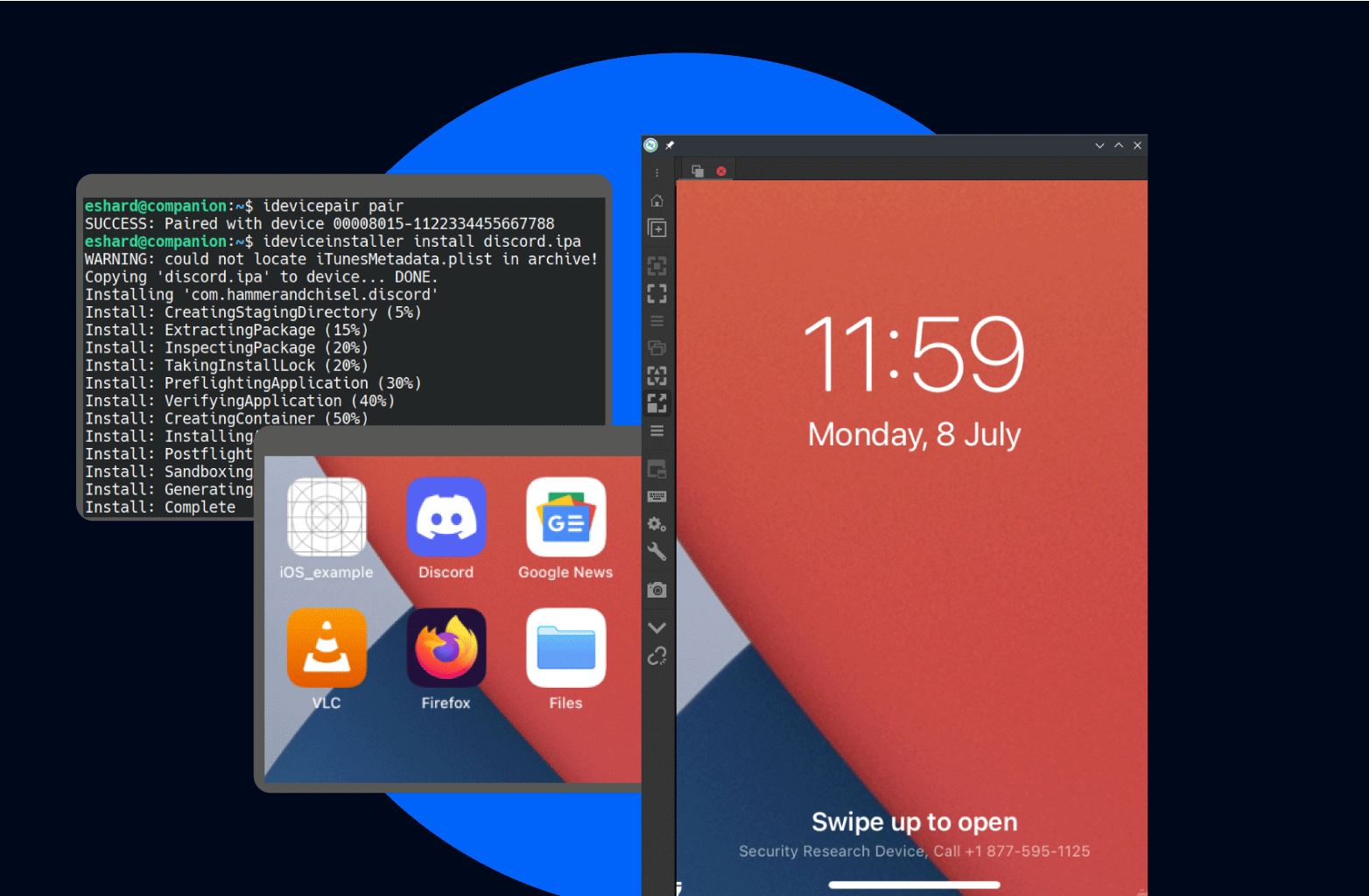
Emulating iOS 14 in QEMU: From Black Screen to Home Screen

2025-06-12
Emulating iOS 14 in QEMU: From Black Screen to Home Screen

This blog post details the journey of emulating iOS 14 on QEMU. The team overcame numerous hurdles, including analyzing system logs, userspace debugging (leveraging dyld cache symbols and the gdb stub), and bypassing data migration and SEP-related code. Through patching, clever workarounds (like utilizing iOS accessibility mode), they achieved booting, unlocking, multitouch support, network connectivity, and even the ability to install and run arbitrary IPA files. The post meticulously describes the technical details, showcasing the team's expertise and perseverance.

Development

McWig: A Vim-like Text Editor in Go – A Speedy Experiment

2025-06-12
McWig: A Vim-like Text Editor in Go – A Speedy Experiment

McWig is a modal, Vim-like text editor written in Go, currently used by its creator as a daily driver. It only supports .go files and is in early development, so use with caution as it may damage files. Features include LSP autocomplete, goto definition, hover info, Tree-sitter support, and color themes (borrowed from Helix). However, it's also buggy. The project was a quick experiment to explore the text editor space, and the author plans to develop it into a stable, full-featured editor.

Development

Google Drops Pixel Hardware Repos from Android 16: AOSP's Future Uncertain?

2025-06-12
Google Drops Pixel Hardware Repos from Android 16: AOSP's Future Uncertain?

Google's release of Android 16 omitted the Pixel hardware repositories and device trees crucial for custom ROM developers, sparking speculation about AOSP's future. While Google denies discontinuation, the change appears deliberate. The absence of these repos significantly hinders custom ROM updates and may impact security research. Google assures continued AOSP commitment but shifts towards a hardware-independent reference target, suggesting an end to Pixel device tree releases. Custom ROM users face a more challenging path ahead.

Development

Roame is Hiring a Lead Full-Stack Engineer to Revolutionize Points-Based Travel with AI

2025-06-12
Roame is Hiring a Lead Full-Stack Engineer to Revolutionize Points-Based Travel with AI

Roame, a flight search engine leveraging credit card points and miles, backed by Y Combinator and other top investors, seeks a Lead Full-Stack Engineer. This hands-on role requires experience with Next.js, Firebase, and Go, and involves building the entire frontend and contributing to the backend. The ideal candidate is passionate about travel, points optimization, and AI, thriving in a fast-paced startup environment. The position offers competitive salary, equity, and benefits, including free lunches and company offsites.

Development Travel Points

QEMU: A Powerful Open-Source Virtualization Tool

2025-06-12
QEMU: A Powerful Open-Source Virtualization Tool

QEMU is a generic and open-source machine emulator and virtualizer. It can emulate a complete machine in software without needing hardware virtualization, achieving good performance through dynamic translation. QEMU integrates with Xen and KVM hypervisors, providing emulated hardware while letting the hypervisor manage the CPU for near-native performance. It allows running operating systems built for one architecture on a different one, and offers userspace API virtualization for running binaries compiled against different ABIs. QEMU boasts a stable command-line interface and monitor API, integrates with tools like libvirt, oVirt, OpenStack, and virt-manager, and is licensed under the GPLv2. Comprehensive documentation and a vibrant community ensure ease of use and support.

Development

Solving LinkedIn Queens with SMT: Easier Than SAT!

2025-06-12
Solving LinkedIn Queens with SMT: Easier Than SAT!

This post details solving the 'LinkedIn Queens' puzzle—a variation of the classic N-Queens problem with added regional constraints—using the SMT solver Z3. The author demonstrates that expressing the problem in SMT, leveraging integer variables and constraints, is significantly simpler than the equivalent SAT formulation which requires many boolean clauses. While SMT solvers might be slower than highly optimized SAT solvers like Glucose, the ease of encoding makes SMT preferable for many. The post includes complete code and helpful sanity checks to verify the model's correctness. This provides a compelling explanation for the industry's preference for tools that compile to SAT rather than using SAT directly.

Development SMT solver

macOS Tahoe's ASIF Disk Images: A Performance Leap

2025-06-12
macOS Tahoe's ASIF Disk Images: A Performance Leap

macOS Tahoe introduces ASIF, a new disk image format that dramatically improves virtual machine performance. ASIF images are independent of the host filesystem's capabilities, achieving near-native speeds; for example, on an M3 Pro MacBook Pro, unencrypted APFS volumes reached 5.8 GB/s read and 6.6 GB/s write. ASIF offers a massive speed advantage over previous UDSP images and saves disk space. Currently, ASIF images can only be created in Tahoe, but they work in Sequoia. Future virtualization software is expected to support ASIF, further enhancing VM performance.

Development

Rust's Slow Compile Times: A Deep Dive

2025-06-12

The slow feedback loop and long compilation times of Rust are frequent complaints. This blog post delves into the Rust compiler team's efforts to improve compilation speed and the challenges they face. While the team makes weekly progress, tackling performance improvements and regressions, and has achieved significant gains (e.g., nearly doubling speed on a specific benchmark in three years), near-instant compilation remains elusive due to technical hurdles and prioritization. These include the compiler's large and complex codebase, the need to balance various trade-offs in optimizations, maintaining stability, adding new features, and the limited time and resources of volunteer contributors. The post concludes by outlining future improvement directions, such as optimizing specific compilation workflows and performing large-scale refactoring of the compiler.

Development Compiler Performance

Becoming a 10x Engineer with AI: A Mindset Shift

2025-06-12
Becoming a 10x Engineer with AI: A Mindset Shift

This post details how the author leverages AI to significantly boost their software engineering productivity. Instead of viewing AI as a mere code generator, they see it as a highly experienced engineering partner. The key is effective prompt engineering to maximize AI's potential. The author stresses the importance of well-crafted prompts and the necessity of verifying AI-generated code. Beyond code generation, AI is used to understand complex concepts and accelerate learning. The author encourages engineers to actively experiment and continuously learn to become truly AI-native.

Development

Google Makes Custom ROM Development for Pixel Phones Harder

2025-06-12
Google Makes Custom ROM Development for Pixel Phones Harder

Google's latest Android 16 AOSP release omits device trees and driver binaries for Pixel phones, significantly increasing the difficulty of building custom ROMs. While Google assures AOSP isn't going away and is shifting to a virtual device called "Cuttlefish" as its reference target, developers now face reverse-engineering changes, adding complexity. This impacts the custom ROM community, such as LineageOS and GrapheneOS, requiring them to rebuild device trees from scratch, increasing their workload substantially. Although Google states AOSP isn't being phased out, the changes make supporting Pixel devices more challenging.

Development Custom ROMs

AI Code Generation: Accuracy and Confidence are Key

2025-06-12
AI Code Generation: Accuracy and Confidence are Key

Only 3.8% of developers report experiencing both low hallucinations and high confidence in shipping AI-generated code. These are the teams truly benefiting from AI in production. They trust the suggestions, ship faster, and close the loop with high-quality feedback. Among this low-hallucination group, those who are also confident (17%) report a 1.3x higher likelihood of seeing code quality gains (44% vs. 35%) and 2.5x greater confidence in shipping AI code (24% vs. 9%). This is the 'sweet spot,' where over half (53%) report clear improvements in code quality. This highlights the strong link between accuracy, quality, and confidence: developers seeing fewer errors and higher-quality output are much more likely to trust and use AI in production. Low hallucinations make developers 1.3x more likely to report improved code quality (44% vs. 35% overall), but most developers, even with accurate output, remain hesitant. Automated quality checks can bridge this gap.

Development developer confidence

AI Coding Tools: Productivity Boost, Trust Deficit

2025-06-12
AI Coding Tools: Productivity Boost, Trust Deficit

A Qodo survey reveals that while AI coding tools significantly boost developer productivity, trust in their output remains low. Many developers still manually review AI-generated code, negating some productivity gains. The survey found that experienced developers benefit most, while the majority see moderate improvements, and some fail to effectively leverage AI tools. Although about 60% of developers reported improved code quality from AI, 76% still won't ship AI-generated code without human review. Top developer requests for improvement include better contextual understanding, reduced hallucinations, and improved code quality. Qodo's CEO suggests feeding AI models more detailed information—product requirements, specifications, coding styles—to improve output quality.

Development

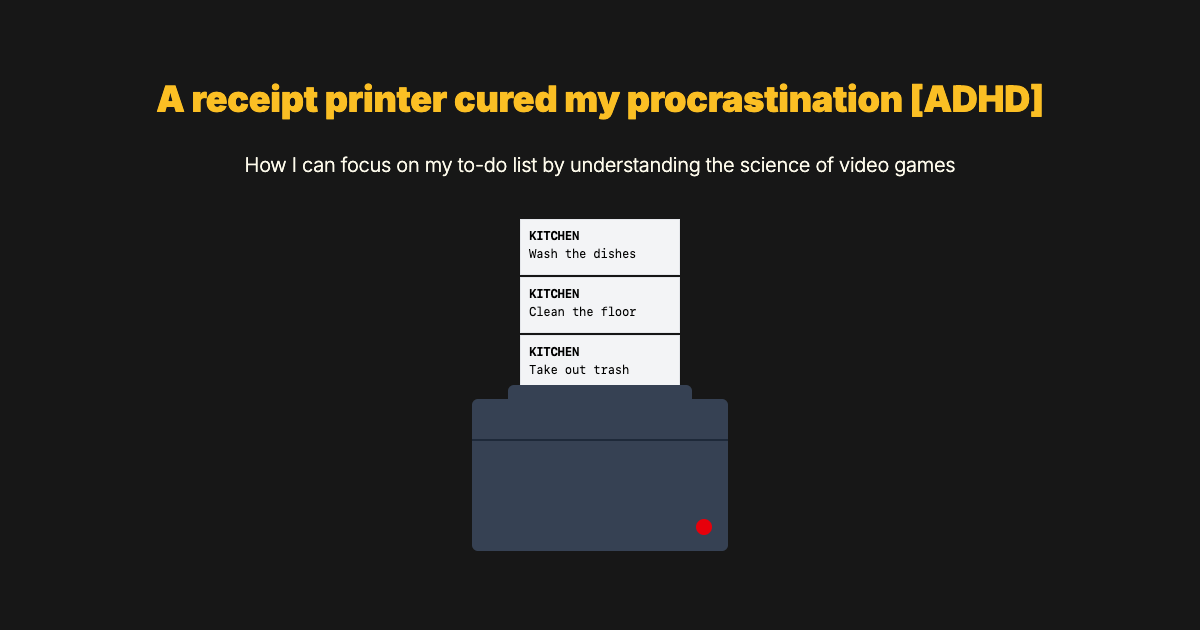
Conquering Procrastination: From Sticky Notes to Thermal Receipt Printer

2025-06-12
Conquering Procrastination: From Sticky Notes to Thermal Receipt Printer

The author, plagued by procrastination for years, discovered a productivity-boosting system by studying video game addiction. He breaks down tasks into micro-tasks (sticky notes), crumpling and discarding completed ones into a jar for immediate feedback. To enhance efficiency, he integrated a thermal receipt printer for automated task lists, dramatically improving consistency. Finally, he developed software to horizontally decompose tasks for easy printing and management. This system significantly improved his productivity and offers valuable insights for others facing similar struggles.

MIT's 2022 Quantum Computation Lecture Notes

2025-06-12

Lecture notes from MIT professor Peter Shor's Fall 2022 Quantum Computation course (8.370/18.435) are now available. The comprehensive notes cover a wide range of topics, from fundamental concepts like superposition and unitary evolution to quantum measurement, entanglement, and key algorithms such as Deutsch-Jozsa, Simon's, Shor's, and Grover's algorithms. Advanced topics including quantum error correction codes and quantum key distribution are also included. While Lecture 26 is missing, this extensive resource provides a valuable foundation for learning quantum computation.

Next.js 15.1+ Broken Outside Vercel: SEO Nightmare & Security Flaw

2025-06-12

Next.js 15.1 and later versions are severely broken outside of Vercel deployments. Vercel's metadata streaming, intended for performance optimization, breaks metadata handling on non-Vercel platforms, crippling SEO. Search engine crawlers can't read the JavaScript-generated metadata, and even static builds require JavaScript execution for metadata. Furthermore, version 15.1.8 contains a critical security vulnerability (CVE-2025-29927), patched only in 15.2.3. This article strongly advises against using Next.js 15.1+ and suggests considering alternatives to avoid Vercel lock-in and potential security risks.

Development

arXivLabs: Experimenting with Community Collaboration

2025-06-12
arXivLabs: Experimenting with Community Collaboration

arXivLabs is a framework enabling collaborators to develop and share new arXiv features directly on the website. Individuals and organizations involved share arXiv's values of openness, community, excellence, and user data privacy. arXiv is committed to these values and only works with partners who adhere to them. Got an idea to enhance the arXiv community? Learn more about arXivLabs.

Development

SchemeFlow: Full-Stack Engineer Wanted (Y Combinator Backed)

2025-06-12
SchemeFlow: Full-Stack Engineer Wanted (Y Combinator Backed)

SchemeFlow, a Y Combinator-backed AI startup in London, is seeking a highly skilled Full-Stack Engineer. The company uses AI to streamline the bureaucratic process of building projects, aiming to accelerate infrastructure development in the West. The ideal candidate will have strong full-stack experience (Vue.js, FastAPI, Google Cloud, Supabase, etc.) and a deep understanding of user needs. Competitive salary, equity, and potential relocation to San Francisco are offered.

Development
1 2 61 62 63 65 67 68 69 214 215