Category: Development

Workflow Use: No-Code Automation for Deterministic Workflows

2025-05-16
Workflow Use: No-Code Automation for Deterministic Workflows

Workflow Use is a revolutionary project aiming to create deterministic, self-healing workflows by recording browser interactions. Users simply show the recorder the workflow, and the system automatically generates reusable automation scripts. Currently in early development, the project aims to enable computers to learn tasks once and execute them indefinitely without human intervention. Future plans include improving LLM fallback, implementing self-healing, and integrating with other tools.

Development

Stop Building GPT Wrappers, Build a World Model Instead

2025-05-16
Stop Building GPT Wrappers, Build a World Model Instead

Foundry is building core infrastructure for browser agents, not GPT wrappers. They argue that every SaaS app and enterprise tool without an API will soon be automated by browser agents, but current browser agent technology is in its infancy. Foundry aims to build hyper-realistic, deterministic web simulations, a comprehensive annotation framework, reliable benchmarks, and robust RL training environments to improve browser agent reliability and efficiency. They are seeking a senior software engineer to build core ML systems and RL infrastructure from scratch.

arXivLabs: Community Collaboration on arXiv Features

2025-05-16
arXivLabs: Community Collaboration on arXiv Features

arXivLabs is a framework enabling collaborators to develop and share new arXiv features directly on the website. Individuals and organizations involved share arXiv's values of openness, community, excellence, and user data privacy. arXiv is committed to these values and only works with partners who adhere to them. Got an idea for a project that will benefit the arXiv community? Learn more about arXivLabs.

Development

LPython: A Python Compiler to Machine Code

2025-05-16

LPython is a Python compiler that translates type-annotated Python code into optimized machine code, supporting backends like LLVM, C, C++, WASM, Julia, and x86. Benchmarks demonstrate its speed in both compilation and runtime. It offers Just-In-Time (JIT) compilation and seamless interoperability with CPython. An alpha version is available, with bug reports encouraged.

Development Python compiler

rv: A Reproducible, Fast, and Declarative Way to Manage R Packages

2025-05-16
rv: A Reproducible, Fast, and Declarative Way to Manage R Packages

rv is a revolutionary R package manager that allows you to manage and install R packages in a reproducible, fast, and declarative way. By specifying the R version, repositories, and dependencies in a configuration file (rproject.toml), the `rv sync` command synchronizes the library, configuration file, and lock file, while `rv plan` provides a preview. It supports custom package and repository settings, allowing for the installation of specific packages and their suggested packages. rv is written in Rust and comes with detailed installation and usage documentation.

Development R package management

Rust Compiler Error Messages: A Decade of Evolution

2025-05-16

This article explores the evolution of Rust compiler error messages over the past decade. By analyzing error outputs from various stable Rust releases, from 1.0 onwards, the author showcases significant improvements in clarity, readability, and user experience. Key milestones include the introduction of numerical error codes in 1.2.0 and colorful error messages with the `rustc --explain` hint in 1.26.0. The author highlights the continuous effort of hundreds of contributors, demonstrating the dedication to detail and iterative improvement within the Rust community. Minor, amusing inconsistencies across versions are also noted, underscoring the human element in this extensive undertaking.

Development Error Messages

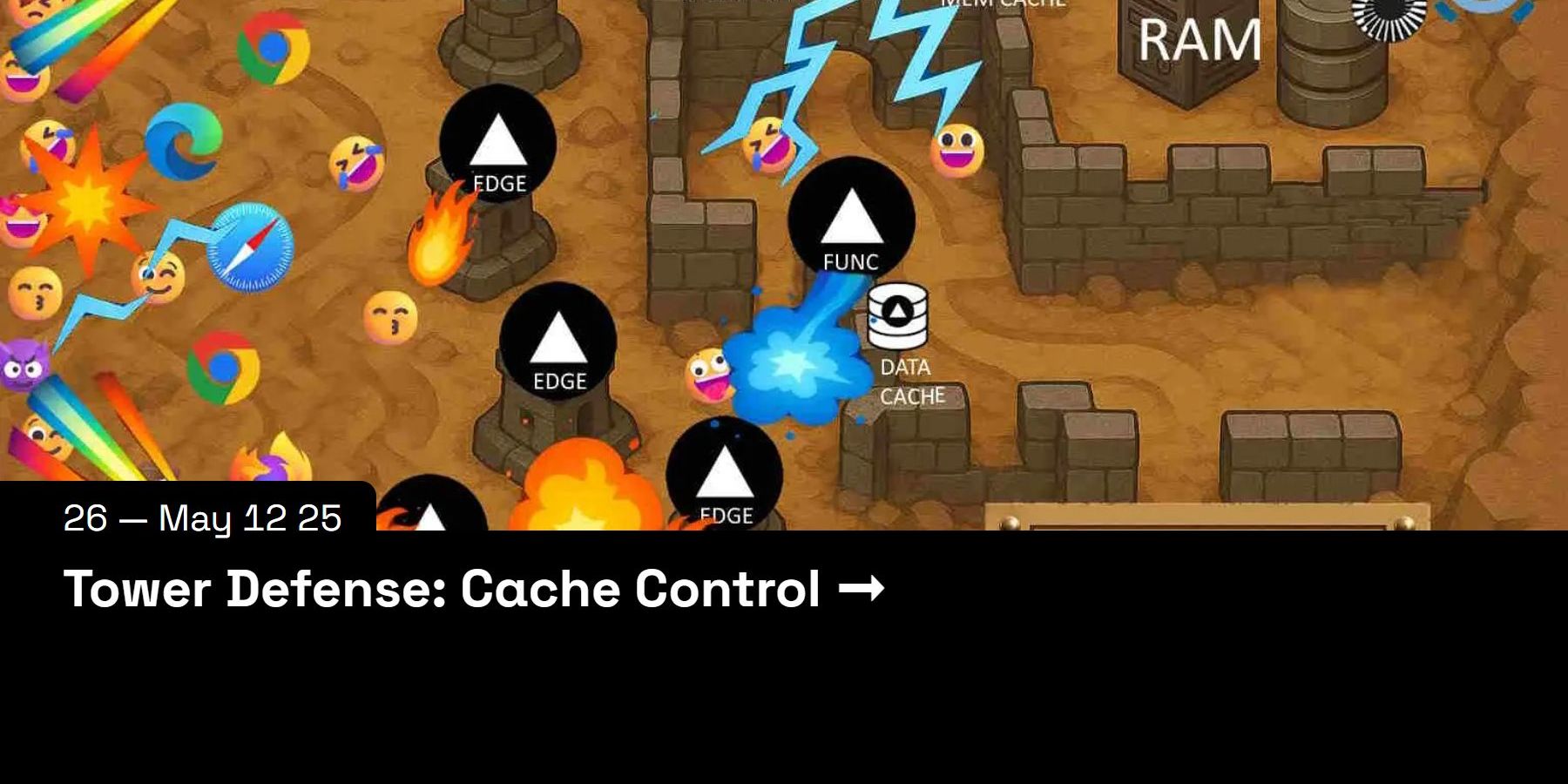
Caching Strategies for High-Performance, Low-Cost Websites

2025-05-16
Caching Strategies for High-Performance, Low-Cost Websites

This article details the caching techniques used on the author's websites, jasonthorsness.com and hn.unlurker.com. Different approaches are presented for various website types: mostly-static sites utilize content hashing, CDNs, and client-side caching; data-driven dynamic sites combine short-term cache-control headers, backend memory caching, single-instancing, and disk caching; and for authenticated sites, the author suggests prioritizing non-per-user components and leveraging collaborative caching between the browser and server. Through clever caching strategies, the author achieves high performance at a minimal cost, maintaining stability even under heavy traffic.

Development

Erlang-RED: Re-imagining Node-RED's Backend in Erlang

2025-05-16
Erlang-RED: Re-imagining Node-RED's Backend in Erlang

This project experiments with replacing Node-RED's existing Node.js backend with an Erlang equivalent. Leveraging Erlang's inherent concurrency, the goal is to boost Node-RED's performance. A significant portion of Node-RED nodes are already implemented, with a flow-based testing system ensuring functionality. Development is flow-driven, separating test flows and code for better maintainability and integration.

Development

Happy 30th Birthday, Java! A Conversation with James Gosling

2025-05-16
Happy 30th Birthday, Java! A Conversation with James Gosling

Java turns 30! This article celebrates the language's legacy and delves into the fascinating life of its creator, James Gosling. From a resourceful Canadian teen building computers from salvaged parts to a pioneering programmer at Sun Microsystems, Gosling's journey is full of anecdotes. He recounts legendary April Fool's pranks at Sun, while reflecting on Java's evolution and his current skepticism towards the overhyped AI revolution. Gosling emphasizes the continued importance of programming skills and the enduring relevance of Java in a rapidly changing tech landscape.

Development

Building MVPs: Speed, Focus, and Avoiding Common Pitfalls

2025-05-16
Building MVPs: Speed, Focus, and Avoiding Common Pitfalls

This article explains how to efficiently build a Minimum Viable Product (MVP). An MVP isn't about shoddy work; it's a streamlined version of your core product designed for rapid validation of core assumptions and user needs. The article highlights common mistakes to avoid, such as feature bloat, wrong technology choices, and neglecting code quality. By focusing on core problems, choosing the right tech stack, and prioritizing code quality and security, you can effectively mitigate risks, accelerate iteration, and ultimately achieve product success.

Development

SQL-tString: Secure SQL Query Construction in Python

2025-05-16
SQL-tString: Secure SQL Query Construction in Python

SQL-tString is a robust Python library enabling the construction of SQL queries using t-strings (similar to f-strings) while preventing SQL injection vulnerabilities. It supports parameterized queries, handles optional parameters and NULL value conditions, and flexibly adapts to various database dialects (supporting qmark and $ paramstyles). It's also backward compatible with Python 3.12 and 3.13.

Jetrelay: A Highly Efficient Pub/Sub Server Leveraging Linux Kernel Features

2025-05-16

Jetrelay, a pub/sub server compatible with Bluesky's jetstream, achieves impressive efficiency with only 500 lines of code. By cleverly utilizing Linux kernel features like `sendfile()`, `io_uring`, and `fallocate()`, Jetrelay broadcasts data and manages persistent storage with minimal user-space overhead. This allows it to saturate a 10Gbps network connection using just 8 CPU cores. The design avoids unnecessary data copies and uses asynchronous I/O to handle thousands of concurrent client connections effectively.

Development

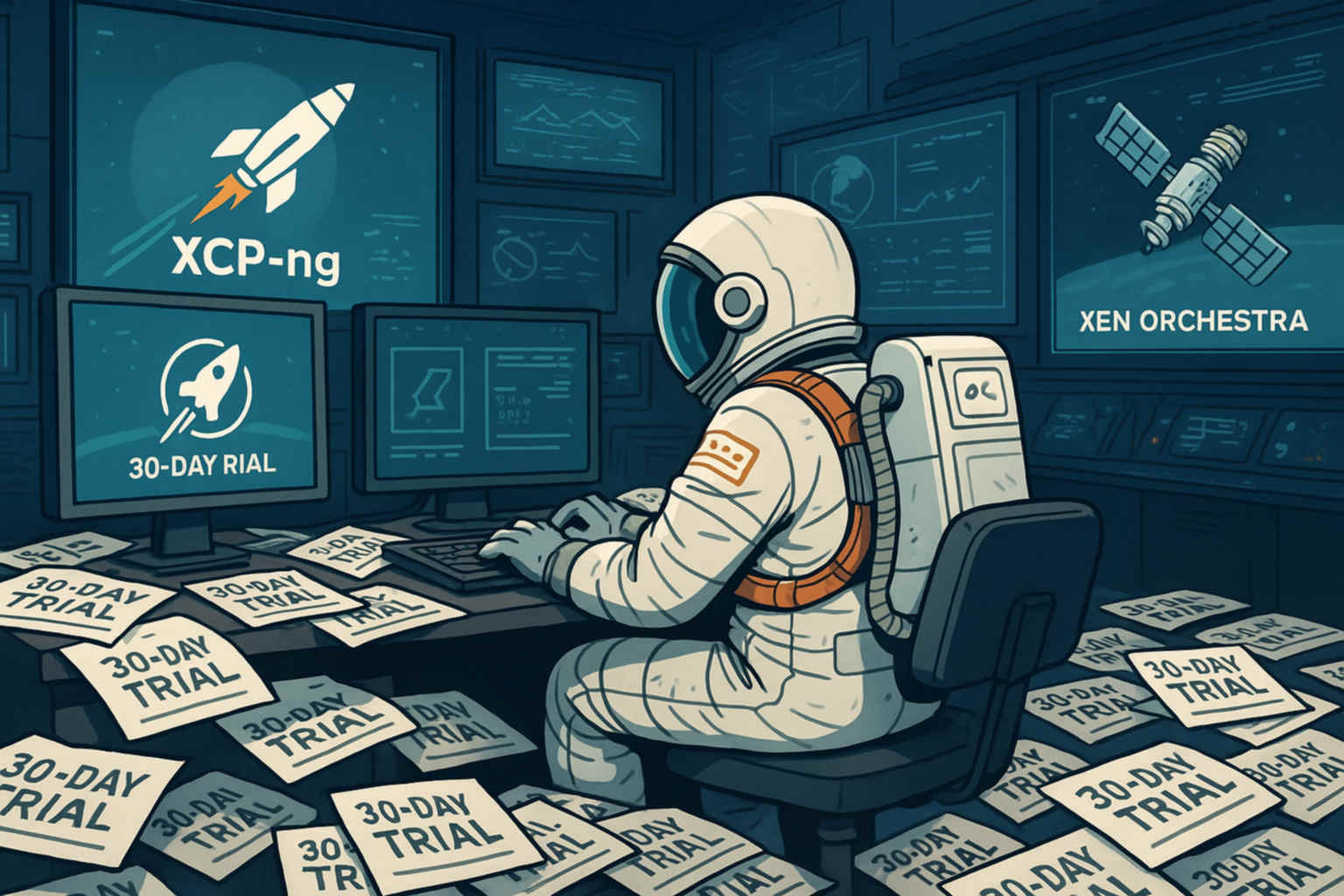
Ten Years of Trial Abuse: A Hilarious Open Source Saga

2025-05-16
Ten Years of Trial Abuse: A Hilarious Open Source Saga

A semi-governmental company with $130 million in annual revenue heavily relies on an open-source platform, Xen Orchestra, for its IT infrastructure. Astonishingly, for a decade, they've abused the platform's 30-day trial, registering at least 60 accounts—from corporate to personal emails, even incrementally numbering them ([email protected], [email protected]...). Despite the availability of a free open-source version, they persistently use the trial, refusing paid support. This raises concerns within the open-source community about trial mechanisms and the sustainability of open-source projects.

Extracting MRR from Stripe Data: Pitfalls and SQL Implementation

2025-05-16
Extracting MRR from Stripe Data: Pitfalls and SQL Implementation

This article details how to extract data from the Stripe API and calculate Monthly Recurring Revenue (MRR). The author highlights the unreliability of using Stripe's `subscriptions` object directly, as it only contains the latest subscription state. The correct approach uses `invoice line items`, handling discounts, varying billing cycles (monthly, quarterly, annually), and more. The article provides detailed SQL code, covering data cleaning, cycle normalization, and the final MRR metric calculations, including new MRR, churn MRR, expansion MRR, and reactivation MRR. The article emphasizes the method's adaptability and customizability, and recommends an application to simplify MRR calculations.

Development MRR calculation

Ollama's MIT License Compliance Issue

2025-05-16
Ollama's MIT License Compliance Issue

Ollama, an open-source large language model client based on llama.cpp, is facing a license compliance issue. The user reports that the copyright notice for llama.cpp, required by the MIT license, is missing from Ollama's binary distributions. This necessitates the addition of the appropriate copyright information to the binaries to ensure compliance with the MIT license.

Development MIT license

AI Coding: A Double-Edged Sword?

2025-05-16

The author attempted to rebuild their SaaS backend using AI (Claude, Cursor), initially progressing smoothly. However, they soon encountered problems. The AI-generated code lacked consistency and maintainability, forcing a manual rewrite. The author reflects on the pitfalls of over-reliance on AI, including diminished coding and problem-solving skills. They advocate caution, suggesting AI should be a supplementary tool, not a complete replacement.

Development

CPython 3.14's GIL-less Build: Unlocking Multicore Power

2025-05-16
CPython 3.14's GIL-less Build:  Unlocking Multicore Power

The release of CPython 3.14.0b1 marks a significant step towards a free-threaded Python, removing the Global Interpreter Lock (GIL). Quansight played a crucial role, enabling experimental use of the GIL-less build in real-world production workflows with complex dependencies. Removing the GIL unlocks the full compute power of multicore CPUs and GPUs, addressing Python's historical limitations in parallel computing. This requires extensive thread-safety audits of existing packages to fix data races. Quansight, in collaboration with Meta, adapted numerous core libraries (NumPy, Pandas, etc.) and improved CPython itself for thread safety. Challenges remain, but the GIL-less build represents the future of Python, promising dramatic performance improvements.

Development

Frontend DDD Misconceptions: It's Not About Doing DDD *in* Angular

2025-05-16
Frontend DDD Misconceptions: It's Not About Doing DDD *in* Angular

This article debunks common misconceptions about Domain-Driven Design (DDD) among frontend developers. Many confuse DDD with Angular's modularity or tooling, overlooking DDD's core: understanding the business and designing the system from business needs. The author argues that DDD is a product-wide discipline, not just frontend-specific; the frontend is merely a part of it. The article distinguishes between strategic and tactical DDD, emphasizes the importance of strategic DDD, explains key concepts like bounded contexts and domain events, and concludes that DDD's value lies in complex business scenarios, while blindly applying it can be detrimental.

Development

Wasmer Hiring: Compiler Engineer to Shape the Future of Cloud Computing with WebAssembly

2025-05-16
Wasmer Hiring: Compiler Engineer to Shape the Future of Cloud Computing with WebAssembly

Wasmer is seeking a skilled compiler engineer to join its team building the next generation of cloud computing platforms powered by WebAssembly. The ideal candidate will possess strong Rust or C/C++ skills, a deep understanding of compiler development, and excellent communication and teamwork abilities. Wasmer is committed to open source and offers competitive salaries, stock options, and flexible work arrangements. This is a unique opportunity to make a significant impact on the future of cloud computing within a dynamic, open-source-focused startup.

Development

OpenHarmony Ecosystem Expansion: A Surge of Library Adaptation Proposals

2025-05-16
OpenHarmony Ecosystem Expansion: A Surge of Library Adaptation Proposals

The OpenHarmony open-source operating system community has recently seen a surge in adaptation proposals for several third-party libraries, including pako, snappyjs, brotli, hi-base32, is-png, and EventBus. These proposals aim to integrate these libraries into OpenHarmony, enhancing its functionality and performance. They include HarmonyOS demos and adherence to OHPM specifications. This demonstrates the continued growth and expansion of the OpenHarmony ecosystem, attracting more and more developers.

Development Library Adaptation

In Memoriam: Michael Ryabushkin, Champion of the SoCal Python Community

2025-05-16
In Memoriam: Michael Ryabushkin, Champion of the SoCal Python Community

Michael Ryabushkin, a cornerstone of the SoCal Python community, passed away in May 2025. Tributes poured in, remembering his immense contributions to the community and his warmth and generosity as a mentor, friend, and colleague. He organized countless Python events, helped numerous developers find jobs and career paths, and even offered selfless support during others' darkest hours. His passion, humor, and selfless dedication will be deeply missed.

Development in memoriam

Dia Browser: Ambitious AI-Native Browser Faces Challenges

2025-05-16
Dia Browser: Ambitious AI-Native Browser Faces Challenges

Following the maintenance mode of its Arc browser, The Browser Company (BCNY) launched Dia, an AI-native browser. Dia features a sidebar chat interface powered by GPT 4.1 and intelligently distinguishes search types. However, its sidebar takes up too much space, impacting user experience; additionally, some features are still underdeveloped. While Dia excels in ad blocking, BCNY faces challenges in standing out in the competitive browser market.

Development AI browser

Lock-Free Data Structures: A High-Performance Tightrope Walk

2025-05-16

This article dives deep into the implementation of a lock-free array, `LockFreeArray`, in Rust. It uses atomics and a freelist to achieve lock-free insertion and retrieval of values across multiple threads, eliminating the performance overhead of locks. The article thoroughly explains `AtomicPtr`, `AtomicUsize`, `compare_exchange`, and the crucial role of memory ordering. Benchmarks demonstrate a significant performance advantage over `Mutex>>` (83.19% faster on average). However, the article stresses the inherent dangers of lock-free programming, requiring a deep understanding of memory models and atomic operations to avoid data races and memory leaks.

Development lock-free

I Dropped My Phone The Screen Cracked: A Web Audio Library for Simplified Audio Programming

2025-05-16
I Dropped My Phone The Screen Cracked: A Web Audio Library for Simplified Audio Programming

I Dropped My Phone The Screen Cracked is a novel Web Audio library that simplifies creating, configuring, and connecting audio nodes in the browser using method chaining and CSS-style selectors. It supports macro definitions and plugin creation, making audio programming as intuitive as patching a modular synthesizer, allowing for concise and expressive complex audio processing. Developers can easily create and connect audio nodes via method chaining, manipulate them with selectors, and use macros to encapsulate node chains into reusable units, improving code readability and maintainability.

Development Audio Programming

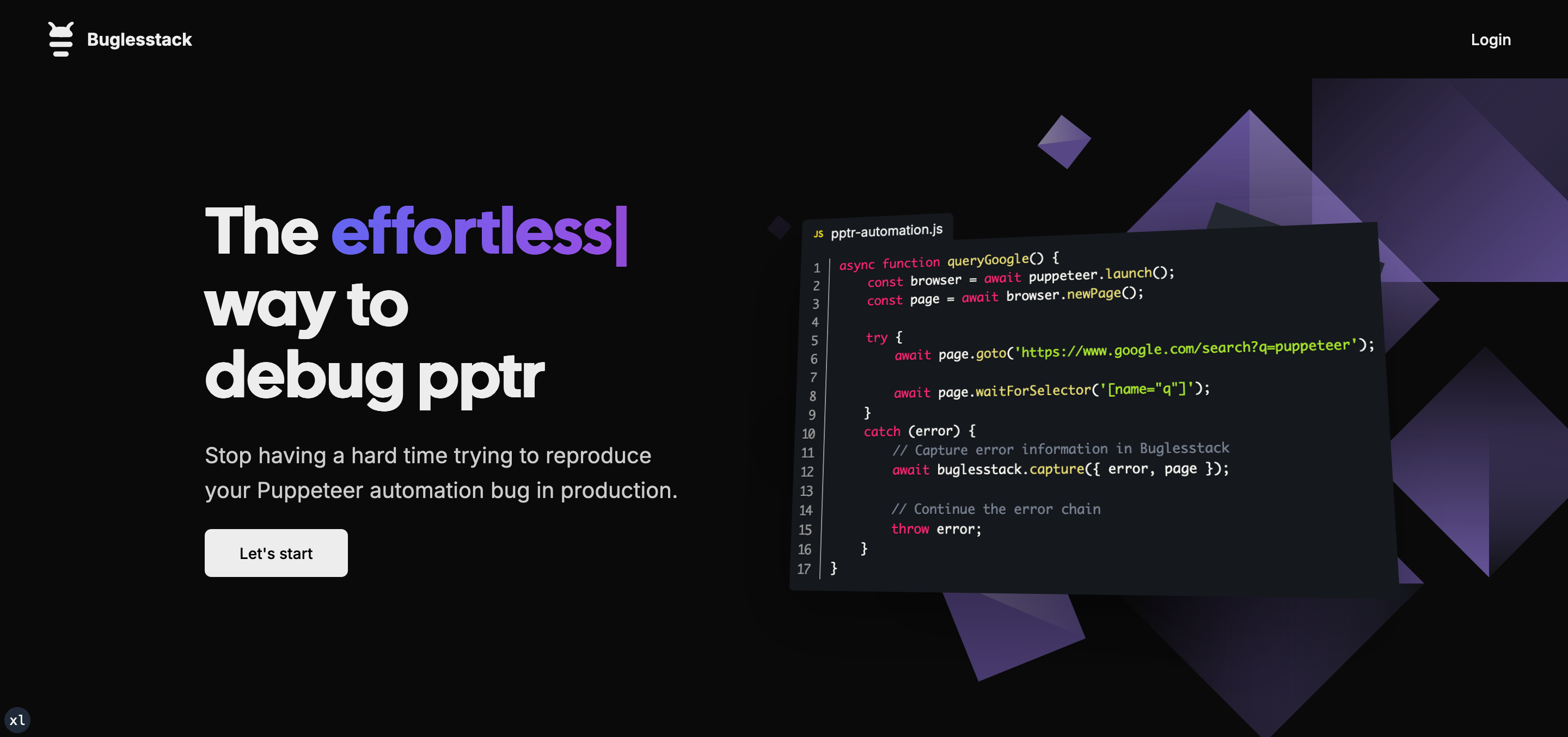
Graceful Error Handling in Puppeteer with Buglestack Reporting

2025-05-16
Graceful Error Handling in Puppeteer with Buglestack Reporting

This code snippet demonstrates how to use Puppeteer to scrape Google search results and gracefully handle potential errors. Upon encountering an error, the code captures error details including the URL, a screenshot, HTML content, metadata, and the error stack, and sends this information to Buglestack for error reporting. This allows developers to quickly identify and fix issues, improving code robustness.

Development

Teal: A Statically-Typed Lua Dialect

2025-05-16

Teal is a statically-typed dialect of Lua, extending Lua with type annotations for arrays, maps, records, interfaces, union types, and generics. It aims to fill a niche similar to TypeScript in the JavaScript world, but maintaining Lua's minimalism, portability, and embeddability. The Teal compiler, `tl`, compiles `.tl` source code into `.lua` files. Installation is via LuaRocks, with pre-compiled binaries available for Linux and Windows. A build tool, Cyan, is recommended for larger projects. VS Code and NeoVim extensions are also available. The project is open source under the MIT license.

Development

gkrellm: A Robust Linux System Monitor

2025-05-16

gkrellm is a powerful system monitoring tool for Linux, displaying hostname, CPU usage, temperature, fan speed, voltage, disk usage, network connections, memory usage, and much more. It offers customizable alarms and warnings, and boasts plugin capabilities for extended monitoring. gkrellm also supports remote system monitoring via client/server mode, providing various charts and display modes for intuitive system status understanding.

Development

Floating-Point Comparisons: Pitfalls and Practical Solutions

2025-05-15
Floating-Point Comparisons: Pitfalls and Practical Solutions

This article delves into the complexities of comparing floating-point numbers. The author highlights the unreliability of simple equality checks due to inherent precision limitations and accumulated rounding errors. Two comparison methods are detailed: relative error (epsilon) and ULP (Units in the Last Place), along with their strengths and weaknesses. The article emphasizes the failure of relative error comparisons near zero, proposing a solution combining absolute error. A compelling example using `sin(π)` demonstrates catastrophic cancellation and how floating-point representation errors can improve π's accuracy.

Development precision

C++ Initialization Gotcha: The Subtleties of `=default`

2025-05-15

This article delves into the perplexing world of C++ initialization. A simple example reveals the significant impact of the placement of `=default` on the initialization of struct members: struct members with `=default` in the declaration are zero-initialized (value 0), while those with `=default` in the definition have indeterminate values, leading to undefined behavior if read. The article thoroughly explains the differences between default, value, and zero initialization, and emphasizes the importance of explicitly initializing variables to avoid potential bugs and security risks.

Development Initialization
1 2 86 87 88 90 92 93 94 214 215