Hubble's Epic Panorama: 200 Million Stars in Andromeda Galaxy

2025-01-25
Hubble's Epic Panorama: 200 Million Stars in Andromeda Galaxy

The Hubble Space Telescope has created its largest-ever panorama of the Andromeda galaxy, showcasing over 200 million stars after more than a decade of work. Composed of over 600 individual Hubble images, this 2.5-billion-pixel mosaic reveals unprecedented detail of our galactic neighbor. Astronomers will use this data to study Andromeda's age, heavy element abundance, stellar masses, and its merger history with other galaxies. This monumental achievement provides invaluable data for understanding the evolution of the universe. The successor to Hubble, the Nancy Grace Roman Space Telescope, is set to launch in 2027 and will capture even higher resolution images.

Read more
Tech

Holy Grail! I Found a Bug in the Sort Function!

2025-02-24
Holy Grail! I Found a Bug in the Sort Function!

The author recounts an incredible experience in his years of programming: he found a bug in JavaScript's built-in `sort()` function! This bug caused incorrect sorting results, baffling him for a long time. Eventually, he reported the bug to the Code Studio team, who responded quickly and fixed it. This story vividly illustrates that even seemingly perfect system software can have bugs, and programmers should maintain a skeptical mindset, persistently searching for the root cause of problems instead of blindly blaming the compiler or system.

Read more
Development sort function

Shakespeare in GTA V: A Lockdown Hamlet

2025-01-20
Shakespeare in GTA V: A Lockdown Hamlet

Two unemployed British actors recreated Shakespeare's Hamlet within the online world of Grand Theft Auto V during the COVID-19 lockdown. The resulting documentary, "Grand Theft Hamlet," follows their hilarious and challenging journey in recreating the play in virtual Los Santos. Facing in-game obstacles and unexpected player interactions, they improvise and persevere, culminating in a unique performance. The film showcases the creative potential of gaming as a medium while highlighting artists' resilience in the face of adversity.

Read more

ChatGPT's Subtle but Significant Impact on Human Language

2025-08-28
ChatGPT's Subtle but Significant Impact on Human Language

Researchers at Florida State University have found that large language models like ChatGPT are subtly altering the way we speak. By analyzing lexical trends before and after ChatGPT's 2022 release, they discovered a convergence between human word choices and patterns associated with AI buzzwords. Increased usage of words like "delve" and "intricate," frequently overused by LLMs, points to a possible "seep-in effect," where AI's influence extends beyond mere tool usage to reshape how people communicate. This raises concerns about potential biases and misalignments in LLMs and their impact on human behavior. The study highlights the need for further research into AI's role in language evolution.

Read more
AI

Go Code Obfuscation: A State Machine Approach to Dynamic Data Decryption

2025-03-06
Go Code Obfuscation: A State Machine Approach to Dynamic Data Decryption

This Go code implements an advanced code obfuscation technique using a state machine and random indexes for dynamic data decryption. The data is randomly split into chunks, and a random index sequence controls the decryption order. A state-dependent decryption key is used to decrypt each chunk sequentially, finally reconstructing the original data. This approach significantly increases the difficulty of reverse engineering, effectively protecting code security.

Read more
Development code obfuscation

CauseNet: A Massive Web-Extracted Causality Graph

2025-09-02

Researchers have built CauseNet, a large-scale knowledge base comprising over 11 million causal relations. Extracted from semi-structured and unstructured web sources with an estimated precision of 83%, CauseNet is a causality graph usable for tasks such as causal question answering and reasoning. The project also provides code for loading into Neo4j and training/evaluation datasets for causal concept spotting.

Read more
AI

Can Earth's Rotation Power a Generator? Physicists Debate a Novel Claim

2025-03-29
Can Earth's Rotation Power a Generator?  Physicists Debate a Novel Claim

A controversial new study claims that electricity can be generated from Earth's rotation. Researchers have devised a device that uses Earth's magnetic field to produce a minuscule current, although only 17 microvolts. While the amount of electricity generated is tiny, the implications are significant. If scalable, this technology could provide clean energy to remote locations or for medical applications. However, the findings are disputed; some scientists express skepticism and call for further evidence to rule out other contributing factors. This research opens a new avenue for clean energy exploration, but also highlights the challenges and uncertainties inherent in scientific discovery.

Read more

MIT Physicists Switch Magnetism with Light: A Breakthrough in Memory Chip Technology

2025-01-07
MIT Physicists Switch Magnetism with Light: A Breakthrough in Memory Chip Technology

MIT physicists have achieved a breakthrough in controlling magnetism using light. They used a terahertz laser to manipulate the atomic spins in an antiferromagnetic material, creating a new, long-lasting magnetic state. This technique offers a novel way to control antiferromagnets, potentially leading to faster, smaller, and more energy-efficient memory chips. The research, published in Nature, overcomes a long-standing challenge in manipulating these materials, paving the way for advancements in information processing and storage.

Read more

Bare-Metal Nim on Raspberry Pi: A Headless Adventure

2025-06-28
Bare-Metal Nim on Raspberry Pi: A Headless Adventure

This project details a bare-metal environment for Raspberry Pi 1/Zero using the Nim programming language. It features a cooperative scheduler, asynchronous programming model, and direct hardware access without vendor-specific APIs. The project includes memory management, exception handling, and runtime monitoring, along with comprehensive setup instructions. Future plans involve expanding to more target platforms and adding more peripheral drivers.

Read more
Development

Samsung Co-CEO Jong-hee Han Dies Suddenly

2025-03-25
Samsung Co-CEO Jong-hee Han Dies Suddenly

Samsung Electronics Vice Chairman and Co-CEO Jong-hee Han died suddenly of a heart attack at age 63, according to Reuters and CNBC. Han joined Samsung in 1988, leading the visual display R&D in 2011 before heading the TV business. In 2021, he took the helm of Samsung DX, encompassing mobile and consumer electronics, and became Co-CEO in 2022. Despite lacking mobile experience, he oversaw 15 years of global TV sales leadership. Just a week before his death, he apologized at the shareholder meeting for poor stock performance and the company's inadequate response to the AI semiconductor market, acknowledging regulatory hurdles in semiconductor M&A but promising tangible results this year. Following his passing, his co-CEO, Young-Hyun Jun, is now Samsung's sole CEO.

Read more
Tech

Realistic Grass Rendering: From Principles to Godot Implementation

2025-05-29

This is the first part of a multi-part series on realistic grass rendering. It begins by exploring the visual properties of real grass, such as its shininess, translucency, and self-shadowing. Several methods for simulating grass in real-time 3D graphics are then introduced, including texturing, normal mapping, and using billboards and full geometry for grass blades. The article concludes by noting that modern GPUs can handle full-geometry grass rendering and previews the next installment, which will detail how to implement full-geometry grass in Godot.

Read more
Development

Fly.io's Secure Cloud Infrastructure: A Deep Dive into Macaroon Tokens

2025-03-30
Fly.io's Secure Cloud Infrastructure: A Deep Dive into Macaroon Tokens

Fly.io, a security bearer token company, details its Macaroon-based security system. The post focuses on its custom tkdb database, leveraging LiteFS and Litestream for high availability and data persistence, and secured communication via the Noise protocol. Token revocation, caching strategies, and leveraging Macaroon features to simplify service token management and enhance security are also covered. Fly.io's experience demonstrates that while some Macaroon features are underutilized by users, they provide significant internal infrastructure benefits, improving reliability and security.

Read more
(fly.io)

Voxel Slugs on a Cube: An Interactive Animation

2025-01-20
Voxel Slugs on a Cube: An Interactive Animation

Artist Japhy Riddle created a captivating animation featuring three colored slugs navigating the edges of an invisible cube, never quite touching. Inspired by this, developer Matt Sephton built an interactive version using Love2D, allowing users to manipulate cube parameters and slug behavior. This interactive version not only replicates the charm of the original but expands its possibilities, such as increasing the number of slugs. Users can download and explore the possibilities themselves.

Read more
Game gamedev

Raspberry Pi 500 Modder Successfully Adds M.2 Slot

2024-12-15

A Raspberry Pi enthusiast successfully added an M.2 slot to the Raspberry Pi 500! While the Pi 500 has the header, the slot itself is absent, leading to some controversy. The modder soldered on four tiny capacitors and used a bench power supply to power a bottom pad, enabling the use of NVMe SSDs and other PCIe devices. This modification requires excellent SMD soldering skills and has sparked discussion about the Pi 500's design choices; speculation includes reserving the feature for a future premium model.

Read more

From Euler Angles to Quaternions: An Elegant Representation of 3D Rotations

2025-02-26
From Euler Angles to Quaternions: An Elegant Representation of 3D Rotations

This article delves into the representation of 3D rotations. Starting with the common Euler angles, it reveals the problem of gimbal lock. It then introduces Rodrigues vectors and explains their discontinuities in representing rotations. Through analogy with lower-dimensional spaces, the article cleverly shows how to map a spherical space with antipodal point equivalence to a 4D hypersphere, ultimately introducing quaternions as a continuous and efficient representation of 3D rotations. The article also explores the application and limitations of four-axis gimbals, explaining that even adding redundant axes cannot completely avoid singularities.

Read more

US Government Censorship: A Chilling Effect on Scientific Research

2025-02-21
US Government Censorship: A Chilling Effect on Scientific Research

The new US government is shutting down aid programs, withdrawing from the WHO and the Paris Agreement, deleting datasets, refusing funding to universities, and banning words like "bias," "women," and "gender" from federal documents. This is crippling scientific research and threatening public health. An anonymous researcher reveals government censorship and the silencing of vulnerable populations, urging attention to this alarming situation. The actions taken are causing widespread fear and threaten the integrity of scientific research and public health.

Read more

RT-2: Giving Robots Web Knowledge Through Vision-Language-Action Models

2025-01-01
RT-2: Giving Robots Web Knowledge Through Vision-Language-Action Models

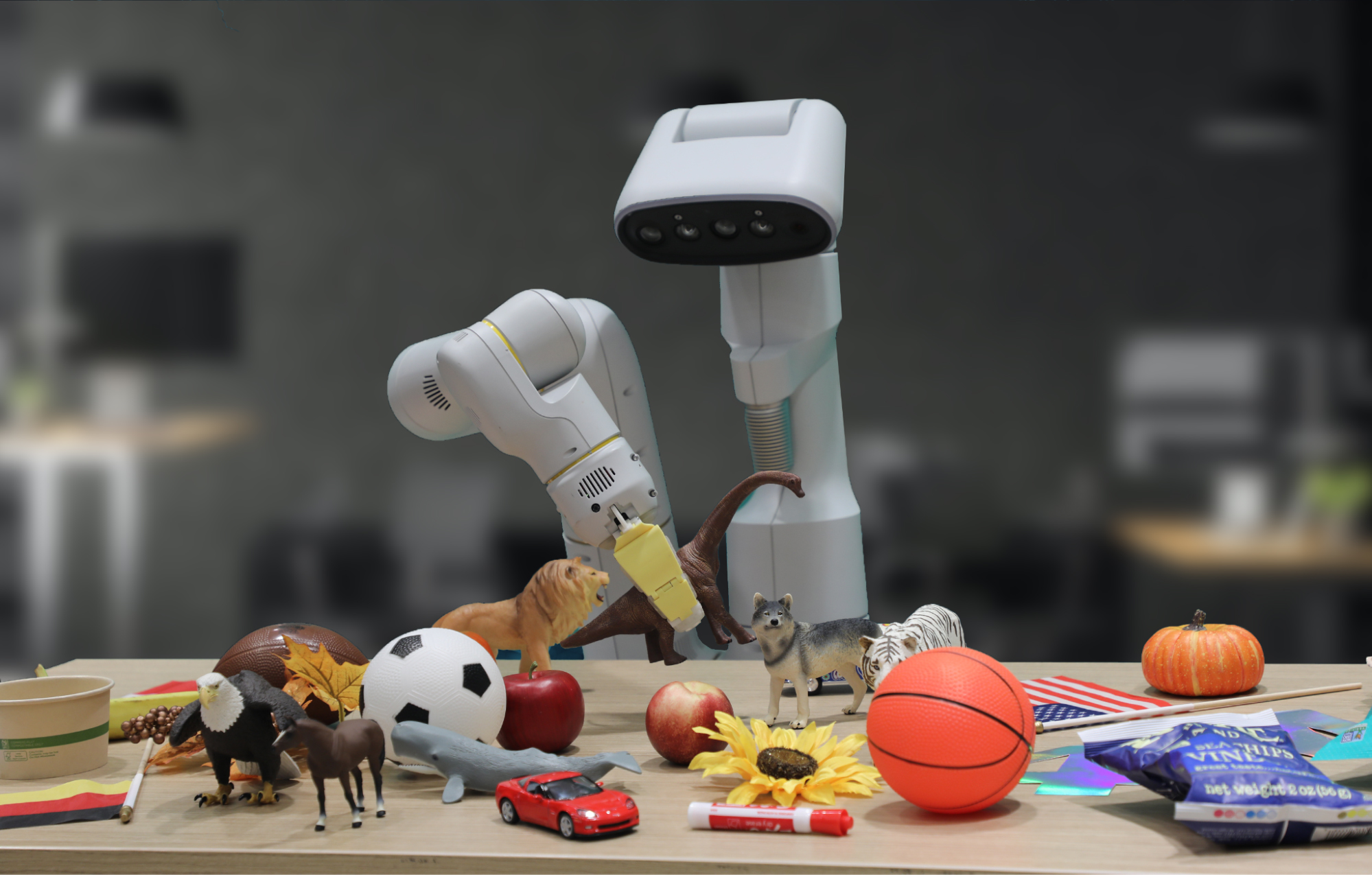
Researchers at Google DeepMind have developed RT-2, a model that leverages internet-scale vision-language data to power robotic control. By representing robot actions as text tokens and co-fine-tuning state-of-the-art vision-language models with both robotic trajectory data and internet-scale vision-language tasks, RT-2 achieves remarkable generalization. It understands complex commands, performs multi-stage semantic reasoning, and even uses improvised tools, such as using a rock as a hammer. This research showcases the immense potential of combining large language model capabilities with robotic control, marking a significant leap forward in robotics.

Read more

Smoothly Handling Leap Seconds: A Company-Wide 'Time Deception'

2025-01-12

In 2015, the author's company faced the risk of system crashes due to a leap second. To avoid a repeat of past failures, the author cleverly designed a 'time deception' system. Over 20 hours before the leap second, the system slowly adjusted the time on all company devices, making them one second behind world standard time, thus smoothly navigating the leap second. This process required precise calculation of time offsets and multiple tests, ultimately preventing system failures. This demonstrates the author's superior technical skills and creative problem-solving abilities.

Read more

Apple's Design Language: A Decade of Swinging Pendulums and Liquid Glass

2025-06-21
Apple's Design Language: A Decade of Swinging Pendulums and Liquid Glass

This article reflects on a decade of Apple's design language evolution, from the minimalist iOS 7 to the current Liquid Glass aesthetic. The author expresses concerns about Apple's design direction, arguing that the new design lacks understanding of classic elements, neglecting usability and accessibility, leading to homogenized app icons and reduced platform stability. The author particularly criticizes Liquid Glass's unnecessary UI changes and questions the leadership of Alan Dye, head of Apple's Human Interface group, suggesting a lack of understanding of the platform's history and user needs.

Read more
Design Apple Design

Microsoft's Analog Optical Computer: Faster, More Energy-Efficient Computing

2025-09-08
Microsoft's Analog Optical Computer: Faster, More Energy-Efficient Computing

Microsoft has developed a novel Analog Optical Computer (AOC) that leverages photons for computation, demonstrating significant potential in solving optimization problems and running AI models. The AOC achieved breakthroughs in medical image reconstruction and financial transaction settlement, such as reducing MRI scan times to one-fifth and efficiently processing complex financial transactions. Microsoft is publicly sharing its AOC's algorithm and digital twin model to foster further research, aiming to build a more efficient and energy-saving computing platform for the future.

Read more

Mathematicians Discover New Way to Count Prime Numbers

2024-12-13
Mathematicians Discover New Way to Count Prime Numbers

Mathematicians Ben Green and Mehtaab Sawhney have proven there are infinitely many prime numbers of the form p² + 4q², where p and q are also primes. Their proof ingeniously utilizes Gowers norms, a tool from a different area of mathematics, demonstrating its surprising power in prime number counting. This breakthrough deepens our understanding of prime number distribution and opens new avenues for future research.

Read more

Kiro: Spec-Driven Development for AI Applications

2025-07-15
Kiro: Spec-Driven Development for AI Applications

Kiro is an AI IDE revolutionizing AI application development with its spec-driven approach. It transforms vague prompts into production-ready systems. Kiro uses 'specs' to clarify requirements, generating user stories, design documents (including data flow diagrams and interfaces), and detailed task lists. 'Hooks' automate testing, documentation updates, and other tasks, ensuring consistent code quality. Compatible with VS Code and supporting multiple languages, Kiro streamlines the development and maintenance of AI applications, bridging the gap between prototype and production.

Read more

Elm Property-Based Testing: Ensuring Coverage of Interesting Cases

2025-05-02

This article demonstrates how to use Test.Distribution in Elm to ensure property-based tests cover interesting cases. The author uses a queue implementation example to show how Test.reportDistribution generates distribution reports of test data and how Test.expectDistribution enforces expected distributions. This allows developers to more precisely control test coverage, preventing important test cases from being missed due to uneven data distribution. The article also mentions Fuzz.examples and Fuzz.labelExamples functions, which help developers better understand and debug test data.

Read more
Development

Blind Community Embraces AI: Hope and Concerns

2025-09-03

The blind community is enthusiastically adopting AI assistive technologies like LLMs for tasks such as image description and audiobook narration, viewing it as a new avenue for information access and increased independence. However, the author expresses caution, noting the inaccuracy of LLMs, potential accessibility barriers, and the risk of over-reliance on technology replacing human interaction. While acknowledging AI's potential benefits, the author argues against blind acceptance, urging the community to focus on practical challenges, potential risks, and the continued pursuit of genuine accessibility.

Read more

Trump Admin Seeks to Revoke Key Climate Change Finding

2025-07-30
Trump Admin Seeks to Revoke Key Climate Change Finding

The Trump administration proposed revoking the 2009 endangerment finding, which established that greenhouse gases endanger public health and welfare, thus underpinning numerous climate regulations. EPA Administrator Lee Zeldin claims this is the largest deregulation in US history, but environmental groups fiercely oppose it, arguing it ignores worsening climate disasters. The move could eliminate tailpipe emission limits and hamper future climate action, leading to likely legal challenges.

Read more
Tech

LLMs: The Illusion of Accuracy – A Balancing Act Between Precision and Practicality

2025-02-25
LLMs: The Illusion of Accuracy – A Balancing Act Between Precision and Practicality

This article explores the limitations of large language models (LLMs) in data retrieval. Using OpenAI's Deep Research as an example, the author points out its inaccuracies when dealing with problems requiring precise data, even showing discrepancies in OpenAI's own marketing materials. The author argues that while LLMs excel at handling ambiguous queries, they underperform in precise data retrieval, inherent to their nature as probabilistic rather than deterministic models. Although LLMs aid in efficiency, their unpredictable error rate complicates building applications reliant on them. The author concludes that the LLM field is fiercely competitive, lacks a moat, and its future direction remains uncertain.

Read more

arXivLabs: Experimenting with Community Collaboration

2025-05-21
arXivLabs: Experimenting with Community Collaboration

arXivLabs is a framework for collaborating on new arXiv features, directly on the website. Individuals and organizations participating must share arXiv's values of openness, community, excellence, and user data privacy. Got an idea to improve the arXiv community? Learn more about arXivLabs.

Read more
Development

Flight Simulator II on the Atari XE: A Retro Look Back

2025-03-09
Flight Simulator II on the Atari XE: A Retro Look Back

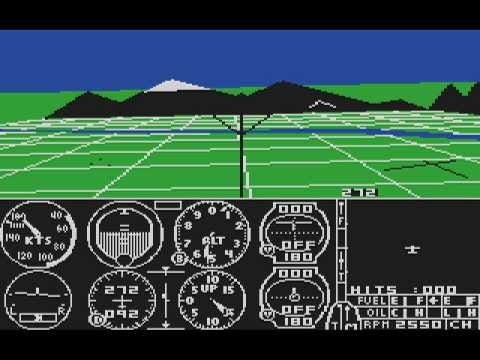
This article revisits the 80s classic, Flight Simulator, and its sequel, Flight Simulator II, specifically its port to the Atari XE. It traces the series' journey from the Apple II to the IBM PC and finally the Atari XE, highlighting the technological feats and unique aspects of Flight Simulator II as a pack-in game for the XE. Despite its simple graphics, the game was groundbreaking for its time as a flight simulator, leaving a lasting impact on the genre.

Read more

CFRS[] Community Demos: Drawing Amazing Art with Six Commands

2025-01-20

CFRS[] is an extremely minimal drawing language consisting of only six commands (C, F, R, S, [, ]). This document compiles CFRS[] demos contributed by community members, including dynamic demos (using the 'S' command for animation) and static demos. These demos showcase a wide variety of shapes, such as flowers, crosses, kaleidoscopes, and leaves, demonstrating the language's expressive power. Even simple commands can create stunning art. This collection offers fun and inspiration for beginners and programming enthusiasts alike.

Read more

A New Paradigm for AI Interaction: Models as Computers

2024-12-15

This article explores the future of AI interaction, proposing a new paradigm: treating large language models (LLMs) as 'computer applications' instead of 'people'. The author argues that the current anthropomorphic approach is inefficient and limits the potential of LLMs. He suggests that LLMs should generate graphical interfaces, not just text conversations, to improve efficiency and discoverability, allowing users direct manipulation like with typical applications. This 'model-as-computer' paradigm will transform human-computer interaction and lead to novel experiences, such as dynamically generating interfaces tailored to user needs, potentially even replacing operating systems. The article cites existing technological prototypes and looks towards future developments.

Read more
1 2 368 369 370 372 374 375 376 596 597