Category: Development

SICP Exercise Runtime Statistics

2025-03-04
SICP Exercise Runtime Statistics

This data table records the interpreter runtime of each exercise in Structure and Interpretation of Computer Programs (SICP). The table reveals a huge variation in runtime across exercises, ranging from milliseconds to seconds. This reflects the impact of algorithmic efficiency and programming techniques on program performance. Some recursive algorithms show rapid runtime growth, while iterative counterparts prove more efficient. This data provides valuable insight for learning and understanding the algorithms and data structures presented in SICP.
Open-Source Gen-AI Powering Enterprise Search: Introducing Onyx

2025-03-04
Open-Source Gen-AI Powering Enterprise Search: Introducing Onyx

Onyx (formerly Danswer) is an open-source AI platform connecting your company's documents, apps, and people. It features a rich chat interface and supports various LLMs. Seamlessly integrate with over 40 connectors including Google Drive, Slack, and Salesforce, maintaining synchronized knowledge and access controls. Build custom AI agents with unique prompts, knowledge bases, and actions. Deploy Onyx securely at any scale—laptop, on-premise, or cloud. A Community Edition is freely available under the MIT license, while an Enterprise Edition offers enhanced features for larger organizations.

Development Enterprise Search

GitSyncPad: One-Button Git Command Micro Keypad

2025-03-04
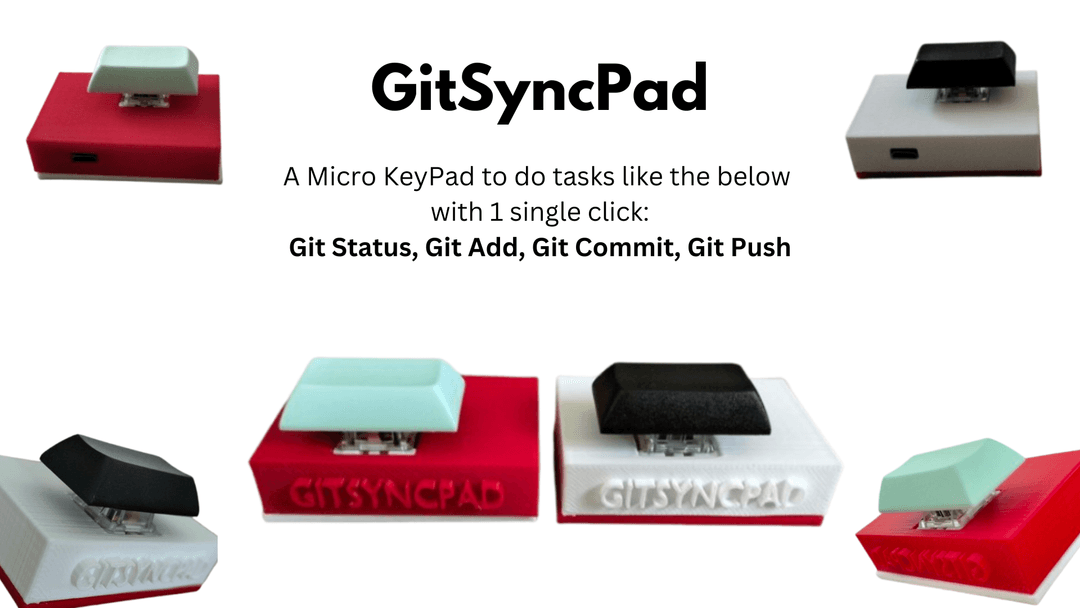
GitSyncPad: One-Button Git Command Micro Keypad

GitSyncPad is an innovative micro keypad designed for effortless Git version control. Execute commands like git add, git commit, and git push with a single button press. No software installation is required; simply connect it to your computer via USB and press the button to effortlessly execute Git commands. Only 10 units available!

Development micro keypad

Vidformer: Revolutionizing Video Processing for Computer Vision

2025-03-04
Vidformer: Revolutionizing Video Processing for Computer Vision

Developed by the OSU Interactive Data Systems Lab, Vidformer provides infrastructure for video-native interfaces and accelerates computer vision visualization. It efficiently transforms videos, enabling faster annotation, editing, and processing without performance compromises. Leveraging a declarative specification format, Vidformer offers transparent optimization and lazy execution, providing near-instantaneous playback. Built on open technologies like OpenCV, Supervision, FFmpeg, Jupyter, and Apache OpenDAL, Vidformer offers a cv2 frontend for easy integration with existing Python workflows. While not a video editor or database, Vidformer complements computer vision libraries and AI models, making it ideal for various video-related tasks.

Development

anon-kode: Terminal-Based AI Coding Assistant

2025-03-04
anon-kode: Terminal-Based AI Coding Assistant

anon-kode is a terminal-based AI coding assistant that leverages any model supporting the OpenAI-style API. It fixes buggy code, explains function behavior, runs tests, and more – similar to Claude-code. After installation and initial configuration, simply start typing. Automated versioning, building, and publishing are handled by GitHub Actions, allowing manual release triggers with patch/minor/major version selection.

Development Code Fixing

Should Engineering Managers Write Code? It Depends on Your Definition of 'Coding'

2025-03-04
Should Engineering Managers Write Code? It Depends on Your Definition of 'Coding'

This article explores whether engineering managers should write code. The author argues that all managers should be 'in the code,' understanding the codebase and how their team works, but not all managers need to be primary code writers. Managers should focus on improving team efficiency, such as hiring, strategy planning, decision-making, culture building, mentoring, etc. However, in the current economic climate, managers face higher efficiency demands and need to find a balance between being 'in the code' and fulfilling other management responsibilities. The article suggests methods for managers to be 'in the code,' such as setting aside dedicated coding time, pair programming with reports, doing code reviews, and increasing coding involvement during specific occasions (e.g., prototyping or incident handling). Ultimately, the author concludes that the key is whether managers are 'in the code,' not whether they primarily write code.

YC-Backed Startup Seeks Founding Web Scraping Engineer

2025-03-04
YC-Backed Startup Seeks Founding Web Scraping Engineer

A YC-backed startup is hiring a Founding Web Scraping Engineer to build internet-scale web crawling infrastructure capable of handling millions of domains and evolving anti-bot defenses. The role requires expert-level experience in large-scale web scraping and crawling (Selenium, Puppeteer, Playwright, Scrapy, etc.), with a deep understanding of anti-bot detection strategies and proven experience in captcha solving, proxy management, and data cleaning. The platform aims to provide end-to-end testing for web agents, including a Browser Gym for RL-driven optimization.

AppStat: Real-time Application Performance Monitoring

2025-03-04

AppStat is a free application performance monitoring tool that provides real-time monitoring of CPU, memory, disk, and thread metrics. Its clean graphical interface helps developers quickly identify resource bottlenecks, memory leaks, and performance spikes without interrupting their workflow. Features include dark/light modes, an always-on-top option, and exportable logs for team analysis.

arXivLabs: Experimenting with Community Collaboration

2025-03-04
arXivLabs: Experimenting with Community Collaboration

arXivLabs is a framework for collaborators to develop and share new arXiv features directly on the website. Individuals and organizations working with arXivLabs embrace our values of openness, community, excellence, and user data privacy. arXiv is committed to these values and only partners with those who share them. Have an idea to enhance the arXiv community? Learn more about arXivLabs.

Development

postmarketOS February 2025 Update: New Name, Audio Support, and More

2025-03-04
postmarketOS February 2025 Update: New Name, Audio Support, and More

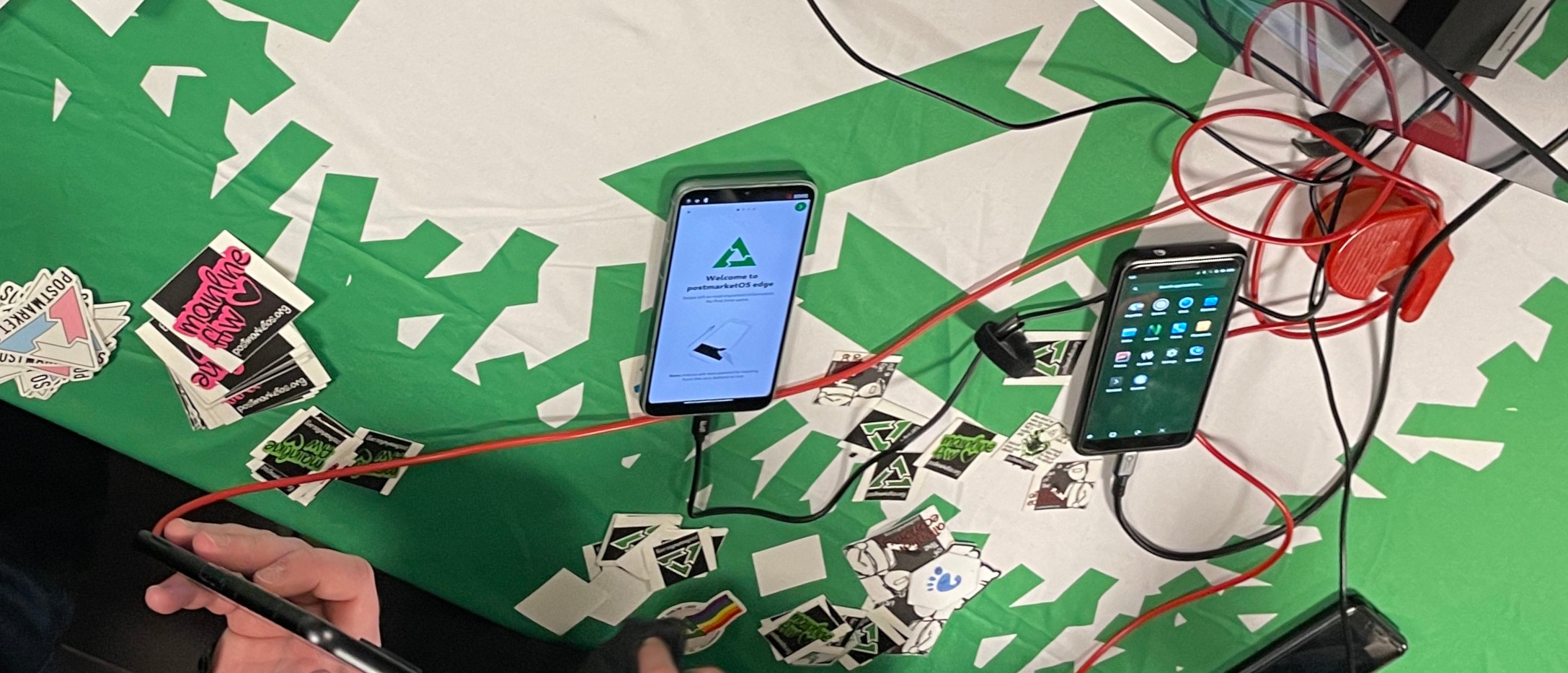
February 2025 saw significant progress for the postmarketOS project. A name change is underway, with community input being sought. MSM89x7 audio support improved, and more Xiaomi devices joined community support. Security audits were completed, and infrastructure improvements, including backup and CI systems, were implemented. Numerous kernel updates and package upgrades were released, enhancing stability and performance.

Development

Small Docs: The Secret to Streamlined Tech Writing

2025-03-04

Just like small code commits are preferred in software development, small, focused documentation improves clarity, accessibility, and review efficiency. This article advocates for writing concise docs addressing a single idea, providing complete context, and avoiding oversimplification. Larger documents should be broken into smaller, self-contained parts. Effective organization, cross-linking, and regular maintenance are crucial to prevent information fragmentation. The ultimate goal is faster reviews, clearer communication, and less stress for everyone involved.

The Performance Cost of Abusing Go's panic/recover

2025-03-04

This article benchmarks the performance difference between using Go's `panic` and `recover` for array iteration versus a traditional loop. The results demonstrate a significant performance penalty for abusing `panic`/`recover` for control flow in smaller datasets. This is attributed to the inhibition of compiler optimizations such as inlining and bounds check elimination. While `panic`/`recover` can offer efficiency gains in handling internal errors, the author cautions against overuse and stresses the importance of keeping such mechanisms internal to a package, away from public APIs.

Development

Breaking the 2GB Barrier: Asynchronous I/O for Large Files in WebAssembly

2025-03-04
Breaking the 2GB Barrier: Asynchronous I/O for Large Files in WebAssembly

The author previously implemented setjmp in WebAssembly, bypassing WASI libc's reliance on the exception handling proposal. However, this approach was limited to files smaller than 2GB. This post details how to use the File API and Blob type to create a memory-based filesystem for handling larger files. Since web I/O is asynchronous while system languages are typically synchronous, Asyncify was used to bridge the paradigms. The author encountered optimization issues with wasm-opt, resolving them by creating a dummy wasm-opt. Finally, by cleverly using a volatile function pointer, they bypassed Asyncify's incorrect assumption about the `asyncjmp_rt_start` function, ultimately achieving asynchronous handling of large files.

Development File Handling

Running Windows NT on a GameCube/Wii: A Wild Ride

2025-03-04
Running Windows NT on a GameCube/Wii: A Wild Ride

An incredible project is underway to port Windows NT 3.51 and later to the GameCube and Wii! This involves significant hacking, including custom ARC firmware, drivers, and a toolchain. The project supports GameCube, Wii, and Wii U (vWii only), detailing the installation process, including partitioning, driver installation, and potential pitfalls. While a challenging undertaking, it showcases the potential of game console hardware and developer ingenuity.

Development

GPL: Boon or Bane for WordPress?

2025-03-04
GPL: Boon or Bane for WordPress?

Daniel Jalkut of Red Sweater Software argues that the GPL license hinders participation and adoption in WordPress. This article counters that argument, asserting that WordPress's thriving plugin and theme community is a direct result of the GPL. The author uses personal experience to show how the GPL protects user freedoms and ultimately fosters a flourishing ecosystem rather than hindering development. While acknowledging limitations, the core principles of sharing and reciprocity are vital for building a robust community and ecosystem – far outweighing license concerns.

(ma.tt)
Development Open Source License

DeepSeek's smallpond: A Lightweight Distributed Compute Framework Built on DuckDB

2025-03-04
DeepSeek's smallpond: A Lightweight Distributed Compute Framework Built on DuckDB

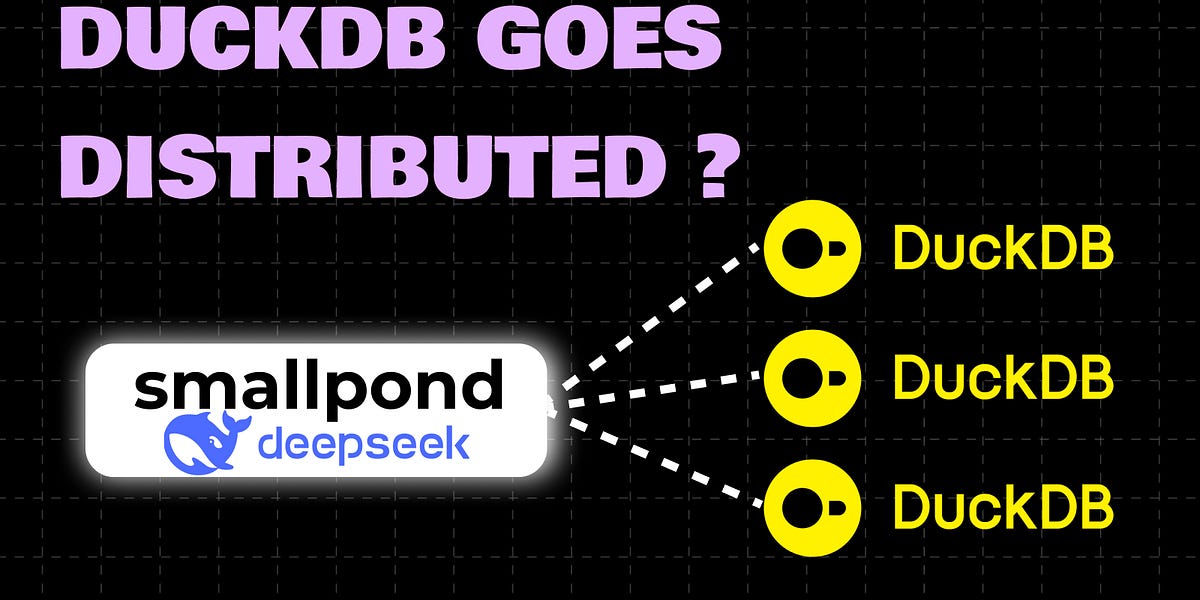
DeepSeek released smallpond, a lightweight distributed compute framework built on DuckDB for handling massive datasets. It employs lazy evaluation and Ray for distributed computing, supports multiple partitioning strategies, and integrates efficiently with DeepSeek's proprietary 3FS file system. While reliance on Ray and 3FS adds complexity, smallpond balances ease of use with performance, offering data engineers a new option for processing terabyte-scale datasets. Compared to heavyweight frameworks like Spark, smallpond is lighter, easier to learn, and particularly suitable for smaller companies that don't need to handle overly complex queries.

Development

Building Your Own Userspace TCP/IP Stack: From Ethernet Frames to ARP

2025-03-04
Building Your Own Userspace TCP/IP Stack: From Ethernet Frames to ARP

This blog post, the first in a series, details building a minimal TCP/IP stack in Linux userspace. The goal is hands-on learning of network and system programming. It covers using TUN/TAP devices for intercepting network traffic, a deep dive into Ethernet frame format and parsing (MAC addresses, ethertype, CRC), and a thorough explanation of the Address Resolution Protocol (ARP), including packet format and the resolution algorithm. The post culminates in verifying the custom stack's ARP reply functionality using arping.

Development

RCL's Design Dilemma: The Challenge of Floats

2025-03-04

The author faced a challenge while building the new configuration language RCL: how to handle floating-point numbers. As a superset of JSON, RCL needs to balance JSON semantics, the type system, and code readability. The article delves into the trade-offs between integer and floating-point types, such as whether to distinguish between integer and floating-point types, and how to handle numerical equality and type conversion. Ultimately, the author chose a single numeric type, "Number," to simplify language design and improve user experience. This solution is implemented in RCL 0.8.0.

Interactive Process Tree Visualization in Jupyter Notebook

2025-03-04
Interactive Process Tree Visualization in Jupyter Notebook

DNB's Cyber Defense Center developed an interactive process tree visualization tool within Jupyter Notebook to enhance incident response efficiency. Leveraging technologies like anywidget, marimo, ibis, Apache Spark, and dependentree, it transforms process creation event logs from EDRs such as Microsoft Defender for Endpoint into an interactive tree. Users can filter events, explore the process hierarchy, and select individual processes for detailed inspection. The tool runs in the browser for easy sharing and demonstration.

Development incident response

Google Improves Widget Discoverability on Google Play

2025-03-04
Google Improves Widget Discoverability on Google Play

Google is updating Google Play to improve the discoverability of app widgets. The update includes a new widget search filter, widget badges on app detail pages, and a curated editorial page showcasing excellent widgets. Product manager Yinka Taiwo-Peters notes this addresses challenges with widget discoverability and user understanding, emphasizing the importance of user adoption for developers. These improvements are "coming soon."

Development App Widgets

Fuchsia Components vs. Linux Containers: A Deep Dive

2025-03-03
Fuchsia Components vs. Linux Containers: A Deep Dive

Google's new operating system, Fuchsia (non-Linux), features a component framework remarkably similar to Linux container solutions like Docker. Both fetch content-addressed blobs from the network, assemble them into isolated filesystems containing all dependencies, and launch namespaced processes rooted in this filesystem. However, this talk focuses on the divergences between these technologies, exploring how their differing use cases and requirements lead to distinct strengths and weaknesses.

Development Linux containers

Chrome's caching mechanism caused a weird bug: A winding debugging journey

2025-03-03

While debugging a Parquet viewer, the author discovered a crash when accessing S3 storage. After some investigation, the problem was found not to be in the application code, but in Chrome's caching mechanism. When handling range requests, Chrome optimizes caching, but when the server returns a 403 error, Chrome still returns partial data, causing the application to crash. The author reported the issue to the Chromium team, but the team considered it a feature rather than a bug. Eventually, the author chose to fix the issue in OpenDAL. This story reminds us that finding the right trust boundary can significantly speed up debugging.

Chirp: Sound-Based Data Transfer App

2025-03-03
Chirp: Sound-Based Data Transfer App

Chirp is an application that transmits data via sound. It uses a simple encoding scheme to convert text into audio frequencies, which are played through speakers and picked up by a microphone. Features include real-time frequency visualization, text-to-sound transmission, and sound-to-text reception, using distinctive start and end signatures. Built with Node.js, React, TypeScript, and Vite, leveraging the Web Audio API for audio processing.

arXivLabs: Experimenting with Community Collaboration

2025-03-03
arXivLabs: Experimenting with Community Collaboration

arXivLabs is a framework for developing and sharing new arXiv features directly on the website, fostering collaboration between individuals and organizations. Participants must adhere to arXiv's values of openness, community, excellence, and user data privacy. Got an idea to improve the arXiv community? Learn more about arXivLabs.

Development

A Programmer's Academic Dilemma and Transformation

2025-03-03

A senior programmer teaching at a UK university, after six years of a full-time academic career, feels stifled by the current system and unable to fully utilize his talents. He's decided to transition to a part-time role to gain more time for his passion projects in programming and writing. He plans to supplement his income through consulting and crowdfunding, seeking support to escape his current state of mediocrity and rediscover his passion and creativity. He finds the current academic environment overly focused on metrics, neglecting quality and value, clashing with his own values. His transformation aims for a better work-life balance and a more impactful contribution to society.

Development academic struggles

Hacking the Xbox 360 Hypervisor: The Bad Update Exploit

2025-03-03
Hacking the Xbox 360 Hypervisor: The Bad Update Exploit

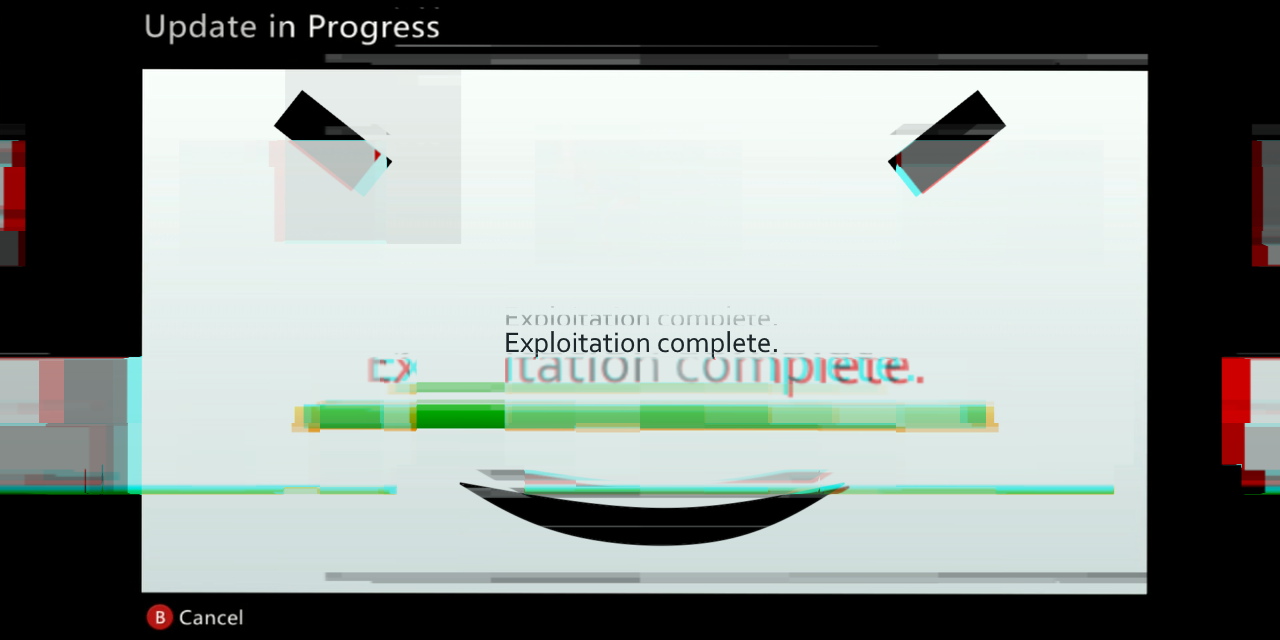
This blog post details the author's journey to exploit vulnerabilities in the Xbox 360 hypervisor, culminating in a new exploit dubbed "Bad Update." Years after initial attempts, leveraging newfound security engineering expertise, the author meticulously reverse-engineered the hypervisor, focusing on system calls and encrypted memory allocations. By cleverly manipulating ciphertext and exploiting a race condition within an LZX decompression routine in a system update payload, they achieved hypervisor-level code execution. The process involved overcoming numerous obstacles, including cache issues and thread synchronization challenges, demonstrating innovative techniques in vulnerability research.

Development Hypervisor Exploit

Smartest Kid: A Python-based Windows Desktop AI Assistant

2025-03-03
Smartest Kid: A Python-based Windows Desktop AI Assistant

Meet Smartest Kid, a Windows desktop AI assistant built in Python! Inspired by SmarterChild, it boasts a clean, simple chat UI and uses Windows COM automation to interact with Microsoft Office (Word, Excel), images, and your file system. Perfect for Windows users exploring AI-powered desktop automation. The project is open-source and welcomes contributions to expand its functionality and personality.

Development Windows automation

High-Performance Go Implementation of Attention Mechanisms and Transformer Layers

2025-03-03
High-Performance Go Implementation of Attention Mechanisms and Transformer Layers

The Frontier Research Team at takara.ai presents the first pure Go implementation of attention mechanisms and transformer layers, prioritizing high performance and ease of use. This library includes dot-product attention, multi-head attention, and a complete transformer layer implementation, featuring batched operations for improved throughput and CPU-optimized matrix operations. Ideal for edge computing, real-time processing, cloud-native applications, embedded systems, and production deployments, future improvements include positional encoding, dropout, and CUDA acceleration.

Development Attention Mechanisms

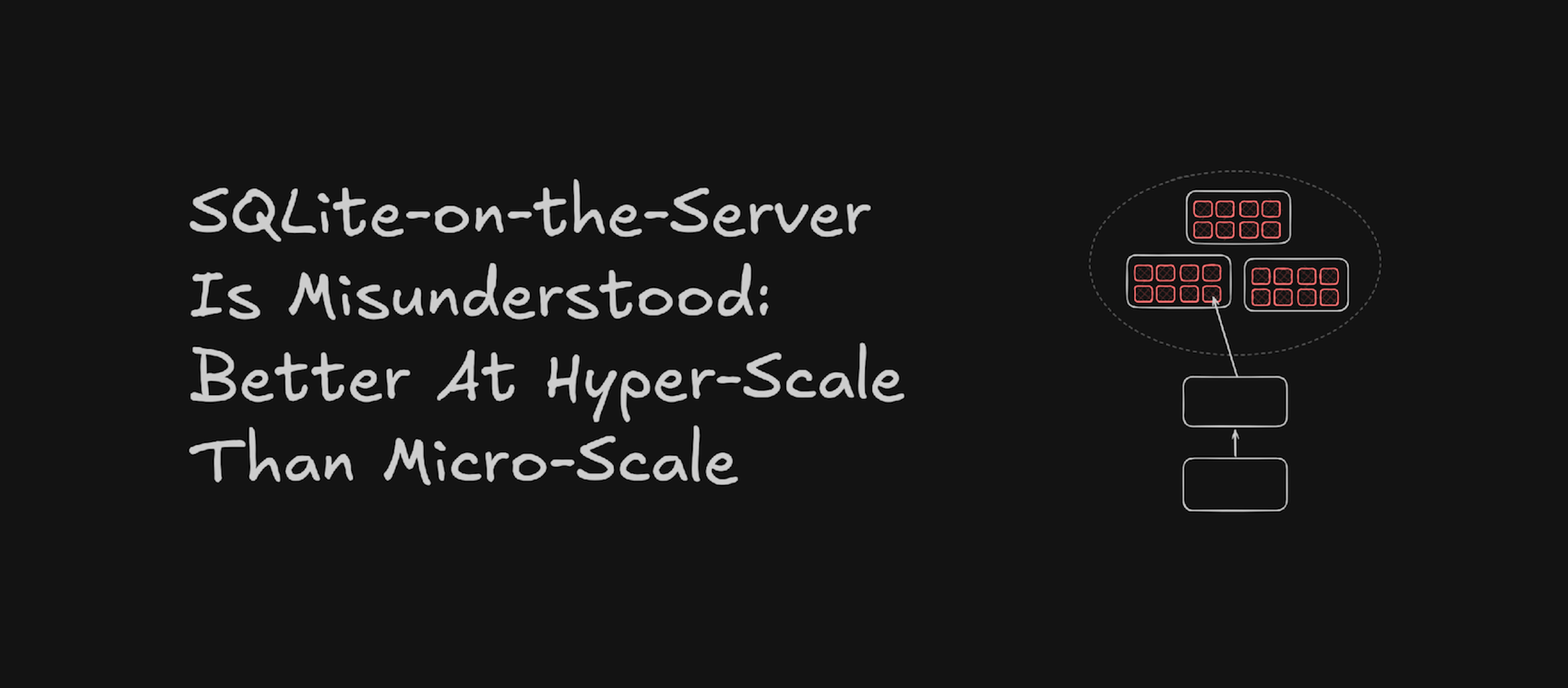
Rethinking SQLite: Surprisingly Powerful at Hyper-Scale

2025-03-03
Rethinking SQLite: Surprisingly Powerful at Hyper-Scale

Contrary to popular belief, SQLite isn't just for small applications. This article argues that services like Cloudflare Durable Objects and Turso unlock SQLite's potential at hyper-scale. These platforms assign SQLite databases per entity, replacing the complexities of sharded databases. This approach solves challenges like rigid schemas, difficult schema changes, and complex cross-partition operations. While challenges remain—lack of open-source self-hosting and standardized protocols—SQLite's ACID compliance, efficient I/O, and rich SQL extensions make it a compelling alternative to traditional partitioned databases.

Development
1 2 146 147 148 150 152 153 154 214 215