Category: Development

LLPlayer: A Multilingual Subtitle Powerhouse for Language Learning

2025-02-25

LLPlayer is an open-source media player designed for language learning. It boasts dual subtitle display, AI-powered real-time subtitle generation (supporting 99 languages), real-time translation (134 languages), OCR subtitle recognition, support for various video and subtitle formats, instant word lookup, and more. Leveraging technologies like OpenAI Whisper, Google Translate, DeepL, and ffmpeg, LLPlayer offers high efficiency and includes a subtitle sidebar and spoiler protection. The entire codebase is written in C# for easy customization.

Development subtitles

DeepEP: A High-Performance Communication Library for Mixture-of-Experts

2025-02-25
DeepEP: A High-Performance Communication Library for Mixture-of-Experts

DeepEP is a communication library designed for Mixture-of-Experts (MoE) and expert parallelism (EP), offering high-throughput and low-latency all-to-all GPU kernels (MoE dispatch and combine). It supports low-precision operations, including FP8. Optimized for the group-limited gating algorithm in DeepSeek-V3, DeepEP provides kernels for asymmetric-domain bandwidth forwarding (e.g., NVLink to RDMA). These kernels achieve high throughput, suitable for training and inference prefilling. SM (Streaming Multiprocessors) number control is also supported. For latency-sensitive inference decoding, low-latency kernels using pure RDMA minimize delays. A hook-based communication-computation overlap method is included, requiring no SM resources. The library is tested with InfiniBand and is theoretically compatible with RoCE.

Development GPU Communication

Is Blogging Still Relevant in the Age of AI?

2025-02-25
Is Blogging Still Relevant in the Age of AI?

This post explores the value of blogging in the era of ChatGPT and other AI tools. While AI can easily access and synthesize information, blogging remains valuable: it solidifies one's knowledge, helps others, builds a personal brand (though this is difficult to achieve solely through blogging), provides a sense of accomplishment, and builds a writing portfolio showcasing thinking skills, benefiting career development. The author argues that AI's main impact on blogging is reducing the sense of accomplishment from reader interaction, but this doesn't negate blogging's overall value.

Development

Uncle Bob and John Ousterhout Debate Software Design

2025-02-25
Uncle Bob and John Ousterhout Debate Software Design

Robert "Uncle Bob" Martin and John Ousterhout engaged in a spirited debate on software design principles, covering key topics such as method length, code comments, and Test-Driven Development (TDD). They fiercely debated the extent of code decomposition, the necessity of comments, and the pros and cons of TDD, using code examples and specific scenarios to support their arguments. This debate highlights the importance of trade-offs in software design and the need to avoid extremes when striving for conciseness and readability.

Crafting an HTML Builder DSL in Lua: A Clever Approach

2025-02-24
Crafting an HTML Builder DSL in Lua: A Clever Approach

This article demonstrates building a Domain Specific Language (DSL) in Lua for generating HTML. The author cleverly leverages Lua's syntactic features, such as optional parentheses and function chaining, along with function environments and metatables, to create a concise and elegant HTML generation solution. A custom `__index` metamethod dynamically generates HTML tag functions, and an `append_all` function efficiently concatenates strings. The result is a fully functional HTML builder DSL, significantly improving code readability and development efficiency. The article also highlights the crucial importance of HTML escaping to prevent security vulnerabilities.

Development HTML Builder

Electro: Blazing-Fast, Lightweight Image Viewer

2025-02-24
Electro: Blazing-Fast, Lightweight Image Viewer

Electro is a lightning-fast, lightweight image viewer built with Rust. Designed with developer experience in mind, it boasts a built-in command terminal and instantly views local and web-hosted images. Its core strength is unparalleled performance—images load near-instantly. Electro is open-source and easily extensible, allowing developers to contribute code or build their own versions.

Development image viewer

Geocodio's Free Tier: Balancing Abuse Prevention and Legitimate Users

2025-02-24
Geocodio's Free Tier: Balancing Abuse Prevention and Legitimate Users

Geocodio maintains a free tier despite the risk of abuse. Initially, simple IP-based blocking led to poor user experience and wasted support time. They transitioned to a granular risk scoring system, using dozens of factors (browser, IP, email, etc.) to automatically identify and handle high-risk signups. Medium-risk signups might face CAPTCHAs or email verification. This system minimizes manual intervention, balancing security and user experience, ensuring the free tier's sustainability.

Beyond Vector Databases: Efficient Text Embedding Processing with Parquet and Polars

2025-02-24
Beyond Vector Databases: Efficient Text Embedding Processing with Parquet and Polars

This article presents a method for efficient text embedding processing without relying on vector databases. The author uses Parquet files to store tabular data containing Magic: The Gathering card embeddings and their metadata, and leverages the Polars library for fast similarity search and data filtering. Polars' zero-copy feature and excellent support for nested data make this approach faster and more efficient than traditional CSV or Pickle methods, maintaining high performance even when filtering the dataset. The author compares other storage methods such as CSV, Pickle, and NumPy, concluding that Parquet combined with Polars is the optimal choice for handling medium-sized text embeddings, with vector databases only becoming necessary for extremely large datasets.

Development text embeddings

Neut: A Functional Programming Language with Static Memory Management

2025-02-24

Neut is a functional programming language featuring static memory management, cleverly combining full λ-calculus support, predictable automatic memory management, and the absence of type system annotations. Unlike traditional garbage collection, Neut uses a type-directed approach to resource handling. The compiler ensures each variable is used exactly once by translating types into functions that can discard or copy values. Even when copying is necessary, Neut avoids unnecessary overhead using the T-necessity operator in modal logic, similar to Rust's borrowing. Neut compiles to LLVM IR and binaries, and boasts built-in LSP server, code formatter, and a rapid prototyping experience akin to scripting languages. Its unique module system distinguishes modules using tarball digests and defines module identities with version information.

arXivLabs: Experimenting with Community Collaboration

2025-02-24
arXivLabs: Experimenting with Community Collaboration

arXivLabs is a framework for collaborators to develop and share new arXiv features directly on the website. Individuals and organizations involved uphold arXiv's values of openness, community, excellence, and user data privacy. arXiv is committed to these values and only works with partners who share them. Got an idea for a project that would benefit the arXiv community? Learn more about arXivLabs.

Development

Stochastic Calculus Intro: From Discrete Steps to Continuous Randomness

2025-02-24

This blog post provides an accessible introduction to stochastic calculus, starting with Pascal's triangle and the binomial distribution to build intuition for Brownian motion and Itô calculus. It explains the physical meaning and mathematical derivation of Brownian motion, introduces Itô's lemma and stochastic differential equations (SDEs), and touches upon Stratonovich calculus. The post features numerous illustrations and code examples, making it ideal for those wanting to explore stochastic calculus.

A Hidden Bug in DOS 3.3 SYS.COM: The NetDrive Disk Image Corruption Mystery

2025-02-24

This article details the author's investigation into a bug in the DOS 3.3 system command `SYS.COM`. This command copies boot loader code to a disk, but when used with NetDrive virtual disk images, it corrupts the image. Through careful analysis, the author discovered that `SYS.COM` fails to check the return code of a Generic IOCTL call used to obtain disk parameters. When this call fails (e.g., the NetDrive driver doesn't support the function), `SYS.COM` erroneously writes garbage data to the disk's boot sector, corrupting the image. This bug only manifests on certain disk image types (e.g., hard disk images) because DOS attempts to retrieve disk geometry information, whereas floppy disk images do not. The author ultimately pinpoints the bug's root cause and explains the conditions under which it occurs.

Development

Ente: Self-Host a Google Photos Alternative and Reclaim Your Privacy

2025-02-24
Ente: Self-Host a Google Photos Alternative and Reclaim Your Privacy

This blog post details how to self-host Ente, an open-source Google Photos alternative, deploying its server on a Kubernetes cluster and the frontend on GitHub Pages. It provides the necessary code, configuration files, and instructions for setting up a Cloudnative-PG database, along with fetching secrets from AWS Parameter Store. While technically demanding, it's ideal for users comfortable with Kubernetes who prioritize privacy. The article also covers building a custom Docker image using GitHub Actions and managing GitHub repositories with Terraform.

Development

Emacs 30.1: Native Compilation, Android Support, and More

2025-02-24
Emacs 30.1: Native Compilation, Android Support, and More

Emacs 30.1 is here, packed with new features and improvements. Native compilation is now enabled by default, resulting in a significant performance boost. Full support for Android has arrived, along with numerous touchscreen enhancements. Other highlights include a built-in JSON parser, improved minibuffer completion, enhanced Org mode URI protocol integration, and countless quality-of-life improvements. This release marks a major leap forward for Emacs.

Development Native Compilation

Rust in the Linux Kernel: Slow Progress, Heated Debate

2025-02-24
Rust in the Linux Kernel: Slow Progress, Heated Debate

Rust's integration into the Linux kernel, while initially promising, has faced significant headwinds. Despite Linus Torvalds' approval in 2022, progress has been slow due to resistance from veteran kernel developers hesitant to learn a new language and non-technical hurdles. Recently, the resignation of Hector Martin, lead of the Asahi Linux project, over obstacles to Rust implementation ignited intense debate. While Torvalds acknowledges Rust's potential, he emphasizes that adoption won't be forced, suggesting a nuanced solution is in the works.

Development

Building a BitTorrent Client from Scratch: A Weekend Project

2025-02-24

This article details a weekend project to build a BitTorrent client. It explains the BitTorrent protocol, covering peer discovery, parsing .torrent files (Bencode), communicating with trackers, handshaking with peers, and downloading file pieces. The author uses Go and provides key code snippets, including a Bencode parser, tracker request builder, message parser, and concurrent download management. Technical details like bitfields, block requests, and pipelining are discussed, highlighting concurrency and state management. While some code is omitted, the article provides a clear roadmap for building a BitTorrent client.

Development

openCFS: A Mature Open-Source Multiphysics Simulation Tool

2025-02-24

openCFS, a finite element-based multiphysics modeling and simulation tool, boasts 20 years of research-driven development. Its core is used in scientific research and industrial applications. Key features include support for various physical fields and their couplings, non-conforming grid techniques, structural optimization, flexible data exchange, scriptable XML input, and powerful built-in libraries. An extensive set of examples, a comprehensive testsuite, and its use in university courses make it easy to learn. A vibrant community and commercial support from EnSimTech UG further ensure its ongoing development and accessibility.

The Mystery of the Underscore in `target='_blank'`

2025-02-24

Ever wonder why `target='_blank'` needs that underscore? Before HTML5, developers used `` to create SPA-like functionality, dividing the window into frames with unique IDs. The `target` attribute specified which frame to load a link into. `_blank` wasn't a frame name; it instructed the browser to open a new window (tabs weren't common then). The underscore denoted a special value, not a frame. While `` is deprecated, the `_blank` convention remains.

Development

JSON: A Pragmatic Choice for Machine-Readable Output on Unix

2025-02-24

The author advocates for using JSON as the machine-readable output format, based on their experience deleting emails from a Postfix mail queue. While not perfect, JSON offers several practical advantages on Unix systems: clarity, broad compatibility, extensive tool support, and easy conversion to other formats. For new programs, the author suggests that using only JSON is the simplest approach, avoiding the complexities of designing custom formats and promoting interoperability between Unix programs.

arXivLabs: Community Collaboration on New arXiv Features

2025-02-24
arXivLabs: Community Collaboration on New arXiv Features

arXivLabs is an experimental framework enabling collaborators to develop and share new arXiv features directly on the website. Participants, individuals and organizations alike, embrace arXiv's values of openness, community, excellence, and user data privacy. arXiv is committed to these values and only works with partners who adhere to them. Have an idea to enhance the arXiv community? Learn more about arXivLabs.

Development

OBS Studio and Fedora Flatpak Settle Dispute

2025-02-24
OBS Studio and Fedora Flatpak Settle Dispute

A conflict between the OBS Studio team and Fedora Linux developers regarding the Fedora Flatpak version of OBS Studio has been resolved. An initial legal threat escalated the situation, but both parties engaged in discussions. The OBS Studio team has dropped its request to remove IP or rebrand the Fedora Flatpak application. Going forward, they will collaborate to address remaining technical issues, including Qt runtime regressions, bug reporting mechanisms, and problems related to hardware acceleration, X11 fallback, and plugins.

Development

OpenAI Admits: Even the Most Advanced AI Models Can't Replace Human Coders

2025-02-24
OpenAI Admits: Even the Most Advanced AI Models Can't Replace Human Coders

A new OpenAI paper reveals that even the most advanced large language models (LLMs), such as GPT-4 and Claude 3.5, are unable to handle the majority of software engineering tasks. Researchers used a new benchmark, SWE-Lancer, comprising over 1400 software engineering tasks from Upwork. Results showed these models could only solve superficial problems, failing to find bugs or root causes in larger projects. While LLMs are fast, their accuracy and reliability are insufficient to replace human coders, contradicting predictions by OpenAI CEO Sam Altman.

Development

Efficient Sliding Window Algorithm: O(n) Solution with Functional Queues

2025-02-24

This article presents an efficient algorithm for solving sliding window problems using functional programming techniques. By constructing functional queues based on two stacks and leveraging the properties of monoids, the algorithm calculates various statistics of sliding windows, such as maximum, minimum, or sum, in O(n) time. The article details the implementation of monoidally-annotated stacks and queues, provides code examples, and concludes with several related algorithmic challenges.

Development sliding window

LeetArxiv: LeetCode for Arxiv Papers - Hands-on Coding Guides for Research

2025-02-24
LeetArxiv: LeetCode for Arxiv Papers - Hands-on Coding Guides for Research

LeetArxiv offers weekly, step-by-step coding guides based on Arxiv papers, targeting programmers transitioning to research careers. A case study focuses on implementing the AAN Discrete Cosine Transform (DCT) from a 1981 paper. The guide provides a C implementation (easily adaptable to other languages) detailing the DCT-II equation and the AAN optimizations: reducing costly cosine calculations, exploiting symmetry, using precomputed constants, and enabling parallelism. The walkthrough covers the algorithm's flowgraph and code, making complex research accessible through practical coding exercises.

FlashMLA: A Blazing-Fast MLA Decoding Kernel for Hopper GPUs

2025-02-24
FlashMLA: A Blazing-Fast MLA Decoding Kernel for Hopper GPUs

FlashMLA is a highly efficient MLA decoding kernel optimized for Hopper GPUs, designed for variable-length sequence serving. Achieving up to 3000 GB/s in memory-bound configurations and 580 TFLOPS in computation-bound configurations on H800 SXM5 using CUDA 12.6, FlashMLA utilizes BF16 precision and a paged kvcache with a 64 block size. Inspired by FlashAttention 2&3 and the cutlass projects, FlashMLA offers significant performance improvements for large-scale sequence processing.

Development MLA decoding

Holy Grail! I Found a Bug in the Sort Function!

2025-02-24
Holy Grail! I Found a Bug in the Sort Function!

The author recounts an incredible experience in his years of programming: he found a bug in JavaScript's built-in `sort()` function! This bug caused incorrect sorting results, baffling him for a long time. Eventually, he reported the bug to the Code Studio team, who responded quickly and fixed it. This story vividly illustrates that even seemingly perfect system software can have bugs, and programmers should maintain a skeptical mindset, persistently searching for the root cause of problems instead of blindly blaming the compiler or system.

Development sort function

Breaking the Linear Time Barrier: The Rise of Sublinear Time Algorithms

2025-02-24

Linear time algorithms have long been considered the gold standard for problem-solving. However, with the prevalence of massive datasets, sublinear time algorithms are gaining increasing attention. Sublinear time algorithms read only a tiny fraction of the input, a seemingly impossible feat. While deterministic sublinear time algorithms exist for some problems, most require randomization and provide approximate solutions. Recent breakthroughs have been made on various problems, including classical optimization problems and property testing. Techniques such as the Szemeredi Regularity Lemma and low-rank matrix approximations are proving useful in designing sublinear algorithms, yet much remains to be understood about their scope and limitations.

A Cute Bug in HyperQueue: SIGTERM and the Ten-Second Mystery

2025-02-24

A curious bug emerged in HyperQueue, a Rust-based distributed task scheduler. Tasks, particularly those sleeping for more than 10 seconds, would mysteriously terminate. Debugging revealed a seemingly innocuous change: offloading process spawning to `tokio::task::spawn_blocking`. This, combined with `PR_SET_PDEATHSIG` (which sends SIGTERM upon parent process death), caused the issue. The worker thread spawned by `spawn_blocking` was being reaped by Tokio after inactivity, triggering the SIGTERM signal. The bug was fixed by reverting the optimization, highlighting the subtle interactions between concurrency, system calls, and thread management.

Development

Ditching Disqus: Building Blog Comments with Mastodon

2025-02-23

Tired of Disqus ads and tracking, the author sought an alternative and chose to build a Mastodon-based comment system using the Mastodon API. The article details the process: obtaining the Mastodon post ID, fetching comment data via the API using JavaScript, generating and embedding HTML into a static site, handling media attachments, and implementing a blacklist. The author also explains their static site generator and how they embed the Mastodon post ID into the HTML. This is a practical guide on building a personalized blog commenting system using open-source technology.

Development

European Word Translator: A Google Translate Powered Map

2025-02-23
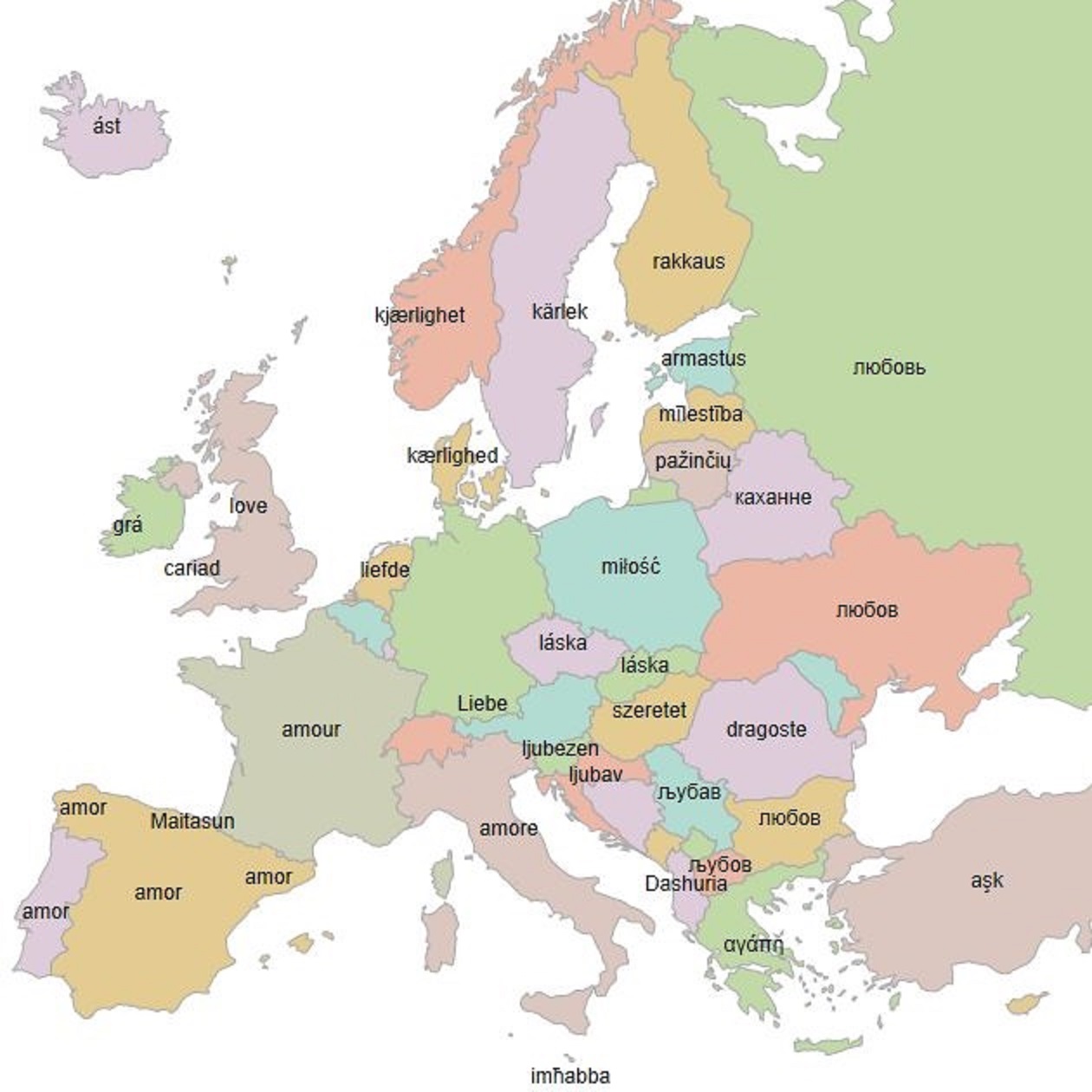
European Word Translator: A Google Translate Powered Map

This webpage uses the Google Translate API to translate English words into various European languages. Users input one or two lowercase English words to view translations. Inspired by etymology maps on Reddit, it leverages D3.js, Natural Earth data, and the Google Translate API. Note that translations may be inaccurate, and the data is no longer updated (circa 2014).

Development translation tool
1 2 152 153 154 156 158 159 160 214 215