Category: Development

From Chaos to Collaboration: Using Claude Code for Enhanced Software Design

2025-08-24

Initially, the author used Claude Code with a naive, direct-instruction approach, leading to inefficiencies and errors. As tasks grew complex, limitations emerged: conversations lost crucial information, and context limits impacted code quality. The author switched to a plan-driven approach, using Claude Code to create a plan document serving as the single source of truth. Each development phase starts with a fresh conversation, the plan document providing all necessary context. This 'living document' approach enables Claude Code to update the plan during implementation, solving context limitations and improving code reliability. The result is increased efficiency and improved design skills for the author.

Mob Programming: How Collaborative Coding Solves Persistent Development Problems

2025-08-24

This article explores how mob programming effectively addresses persistent issues in software development. The author observes that many problems, such as communication bottlenecks, decision-making paralysis, and technical debt, simply fade away with this approach. Mob programming encourages Agile methodologies, fostering face-to-face collaboration and a continuous focus on code quality and simplicity. This leads to rapid problem-solving, reduced wait times, and increased efficiency. It minimizes reliance on email and extensive documentation, promoting close teamwork and knowledge sharing, ultimately improving overall software development efficiency and quality.

AI Coding Subscriptions vs. Top-Tier CPUs: A Productivity Showdown

2025-08-24

While AI coding subscriptions like Cursor are all the rage, costing upwards of $500 annually, the author argues that investing in a high-performance CPU offers a superior return. A top-end CPU like the AMD Ryzen 9 9950X costs roughly the same but provides a dramatic performance boost, often exceeding a 10x improvement in compile times. Benchmarks comparing CPUs across generations highlight the significant productivity gains from superior hardware. The author concludes that businesses should prioritize high-performance hardware over solely relying on AI tools for productivity improvements.

Development

A Decade of Ruby Marshal Deserialization Exploits: A History and Path Forward

2025-08-24
A Decade of Ruby Marshal Deserialization Exploits: A History and Path Forward

This article delves into the decade-long saga of Ruby Marshal module deserialization vulnerabilities. Tracing the evolution from initial bug reports in 2013 to the latest exploit techniques in 2024, it reveals a persistent cat-and-mouse game between security researchers and attackers. The author highlights the limitations of a purely patch-based approach and advocates for the eventual deprecation of the Marshal module in favor of safer alternatives, aiming to eliminate this recurring security threat.

Seed: An Interactive Programming Environment in Your Browser

2025-08-24
Seed: An Interactive Programming Environment in Your Browser

Seed is an interactive software environment built on Common Lisp that runs inside a web browser. It allows you to create and use computer programs in diverse ways, visualizing them as a tree grid with glyphs representing functions and data types. Seed aims to transcend the limitations of traditional text-based programming by offering a representation orthogonal to the language's structure. It integrates the ASDF build system and provides comprehensive installation and usage instructions.

FSF40 Photo Contest: Celebrating 40 Years of Free Software

2025-08-24

To celebrate its 40th anniversary, the Free Software Foundation (FSF) is holding a photo contest, inviting global free software supporters to share how they use free software daily. Prizes include a grand prize FSF40 T-shirt, a second-place "Fight for your user rights" bag, and a third-place free software sticker pack. Entries close August 31, 2025, with winning photos displayed at the 40th-anniversary celebration in Boston, MA on October 4, 2025. This is more than a contest—it's a tribute to the free software community.

Development photo contest

Playing Games to Test Software: How One Company Conquered Metroid and Mario

2025-08-24
Playing Games to Test Software: How One Company Conquered Metroid and Mario

A company used playing Nintendo games, specifically Metroid and Super Mario Bros., to test its software platform, Antithesis. Initially, their AI testing system got stuck on a red door in Metroid because it prioritized eliminating enemies, depleting its missiles. This led them to develop a new 'swarm testing' technique that optimizes objectives while exploring the state space, such as prioritizing having more missiles. This not only solved the red door problem but enabled Antithesis to explore the game world more efficiently, uncover bugs, and even exploit game mechanics for speedruns. This technique isn't limited to game testing; it's applicable to various software testing scenarios, such as finding memory leaks or performance anomalies.

Development

ThinkMesh: Parallel Reasoning for LLMs

2025-08-24
ThinkMesh: Parallel Reasoning for LLMs

ThinkMesh is a Python library for running diverse reasoning paths in parallel, scoring them with internal confidence signals, reallocating compute to promising branches, and fusing outcomes with verifiers and reducers. It supports offline Hugging Face Transformers and vLLM/TGI, and hosted APIs. ThinkMesh offers various strategies like DeepConf, Self-Consistency, and Tree of Thoughts, and includes features like caching, metrics, and JSON tracing for enhanced efficiency and reliability in large language model reasoning.

Development parallel reasoning

Kafka's Genesis: A Data Integration Saga

2025-08-24
Kafka's Genesis: A Data Integration Saga

In 2012, LinkedIn faced a massive data integration challenge. Their existing data pipelines were inefficient, unscalable, and suffered from data silos. To solve this, they created Apache Kafka. This article delves into Kafka's origins, revealing its design was driven by the need for robustness, scalability, real-time capabilities, and seamless data integration. It explores how LinkedIn cleverly utilized Avro schemas and a schema registry to ensure data consistency and compatibility, ultimately achieving efficient data management. The article also reflects on Kafka's lack of first-class schema support and contrasts it with newer approaches like Buf's schema-first philosophy.

Development Data Integration

Acronis True Image Causes Explorer.exe High CPU Usage

2025-08-24
Acronis True Image Causes Explorer.exe High CPU Usage

The author discovered that after installing Acronis True Image, plugging or unplugging an external monitor would cause Explorer.exe to consume a significant amount of CPU resources, resulting in system sluggishness. Through ETW tracing and debugging, the culprit was identified as a shell extension within Acronis True Image. This extension repeatedly calls CreateToolhelp32Snapshot to retrieve a list of running processes, leading to performance issues. Acronis is aware of the problem and plans to fix it. A temporary workaround is to delete a registry key or uninstall the software.

Development performance issue

Static Sites with Python, uv, Caddy, and Docker: A Streamlined Workflow

2025-08-24
Static Sites with Python, uv, Caddy, and Docker: A Streamlined Workflow

This post details a streamlined workflow for building and deploying static websites using Python, uv, Caddy, and Docker. The author showcases a Dockerfile leveraging uv for Python dependency management and Caddy for serving the static files. A detailed Caddyfile configuration is provided, demonstrating handling multiple domains, custom error pages, and content type specification. The author highlights the efficiency of this stack and expresses plans for future simplification.

macOS Dev Tool: One-Click Kill for Processes on Ports 2000-6000

2025-08-24
macOS Dev Tool: One-Click Kill for Processes on Ports 2000-6000

This lightweight macOS status bar app monitors and manages development processes running on ports 2000-6000. It provides real-time process detection and lets you kill individual processes or all at once. Using `lsof`, it scans ports every 5 seconds, displaying the process count via a color-coded status bar icon (green: 0, red: 1-9, orange: 10+). Clicking the icon opens a context menu to kill all or specific processes. It uses a SIGTERM → SIGKILL termination strategy for safe process shutdown.

Development dev tool

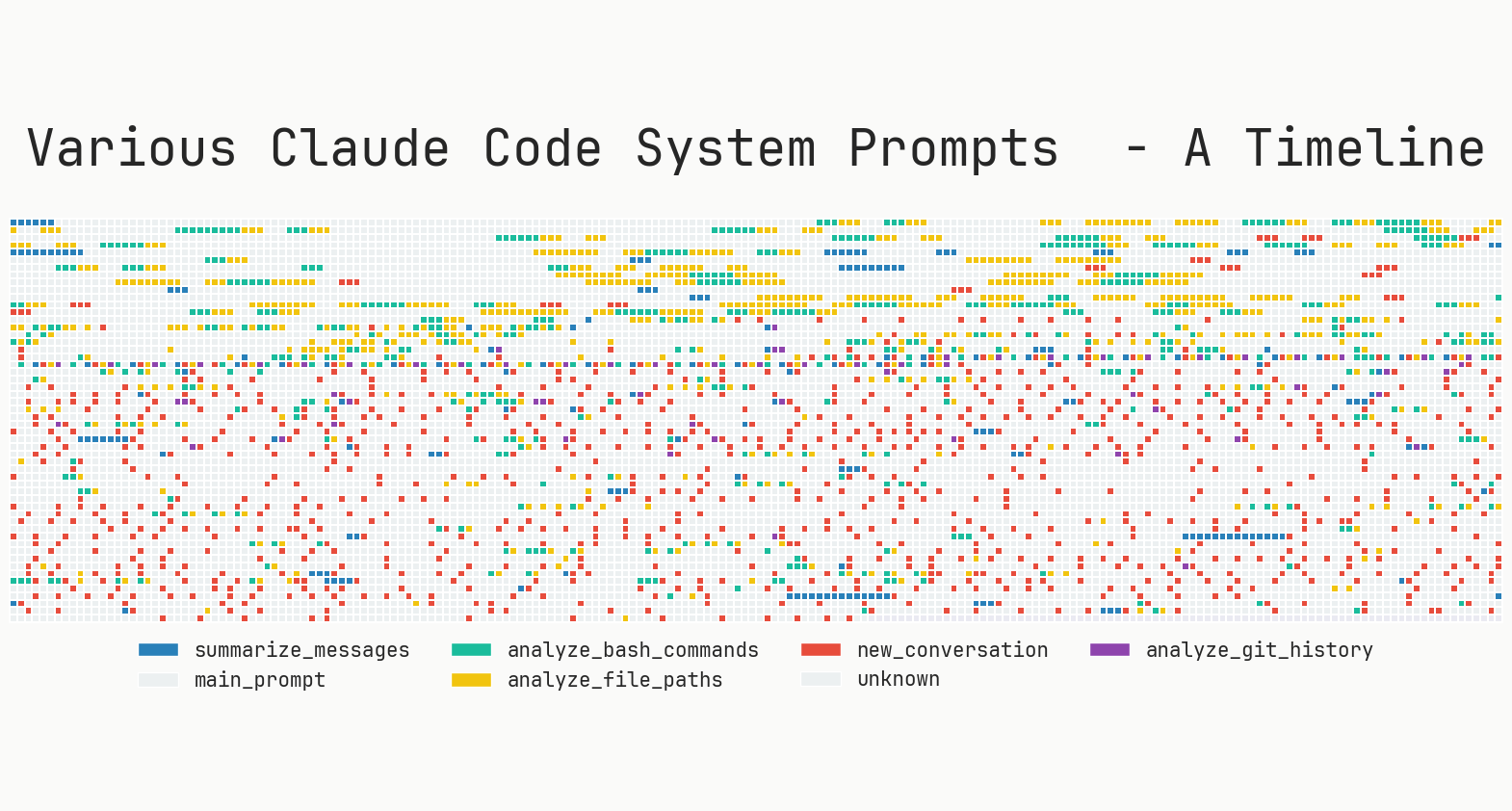
Claude Code: Simplicity and Delight in an AI Coding Agent

2025-08-24
Claude Code: Simplicity and Delight in an AI Coding Agent

This article delves into Claude Code, an AI coding assistant built on the Claude 4 model, highlighting its remarkable simplicity and ease of debugging. By analyzing Claude Code's inner workings, the author reveals its secret to success: a single-threaded architecture, simple prompts and tools, and the avoidance of complex RAG search algorithms. Claude Code achieves efficient and reliable code editing and generation through carefully crafted prompt engineering, including abundant examples and heuristics, and tight control over model behavior. The article also emphasizes the importance of maintaining code simplicity and leveraging lower-cost smaller models, providing valuable insights and guidance for building similar AI coding assistants.

Development

WiX Toolset: Simplifying Windows Installer Creation

2025-08-24
WiX Toolset: Simplifying Windows Installer Creation

The WiX Toolset is a powerful open-source tool for creating Windows Installer packages. It uses familiar build concepts, compiling and linking source code into .exe setup bundles, .msi installers, .msm merge modules, and .msp patches. WiX works with various build systems, including MSBuild, and offers extensions for tasks like installing IIS websites, creating SQL Server databases, and registering Windows Firewall exceptions. The WiX bootstrapper, Burn, handles installing prerequisites such as the .NET Framework. The SDK includes managed and native libraries for easier interaction with Windows Installer. Note that the WiX Toolset requires an open-source maintenance fee for full functionality, though community and commercial support options exist.

Development

CSS Random() Function: Say Goodbye to JavaScript for Random Animations

2025-08-24
CSS Random() Function: Say Goodbye to JavaScript for Random Animations

CSS is getting a `random()` function, a game-changer for web design! Generate random numbers directly in CSS without JavaScript for things like animation delays, randomized layouts, and random colors. The function takes min, max, and step arguments, offering various ways to share randomness – using custom properties or the `element-shared` keyword for element- or global-level sharing. The article uses examples like creating a star field, randomly placed rectangles, and photo stacks to showcase the power of `random()`, inviting developers to provide feedback to shape the feature's future.

Development random function

Build Your Own Coding Agent: 300 Lines of Code to AI Mastery

2025-08-24
Build Your Own Coding Agent: 300 Lines of Code to AI Mastery

In the ever-evolving tech landscape of 2025, building your own coding agent has become a crucial skill for developers seeking a competitive edge. Geoffrey Huntley, former Tech Lead for Developer Productivity at Canva and current engineer at Sourcegraph, demonstrates how to build a basic coding agent in a hands-on workshop using just 300 lines of code. Leveraging LLM tokens and a simple loop, the agent interacts with tools like file readers and bash command executors to automate coding tasks. Huntley emphasizes selecting the right agentic LLM model (like Claude Sonnet) and efficient context window management to avoid performance bottlenecks. Mastering this skill transforms you from an AI consumer to a creator, positioning you for success in today's demanding tech world.

Development

Adventures in Implementing Flash Attention in CUDA C++

2025-08-23

This post details the author's journey in implementing and optimizing Flash Attention in CUDA C++. Starting with a basic implementation, the author progressively refines the kernel using techniques like shared memory swizzling, two-stage pipelining, and more efficient ldmatrix usage. Through iterative profiling and optimization, the final implementation achieves near hardware-theoretical-limit performance. The post also delves into the intricacies of online softmax implementation and resolving shared memory bank conflicts, providing valuable insights for CUDA C++ developers.

Development

Making a JavaScript-Optional Online Board Game: A Case Study in Progressive Enhancement

2025-08-23

This article details how an online board game website achieved fully optional JavaScript functionality using server-side rendering, standard HTML elements, and URL parameters. The author replaced real-time updates with page auto-refresh, and used native HTML elements for dropdown menus and modals. While increasing server load and code complexity, this approach improved initial page load speed and site robustness, yielding unexpected benefits like more semantically correct HTML. However, the author concludes the extra effort isn't worthwhile unless targeting a very JavaScript-averse audience, and plans to eventually remove the extra code.

Development JavaScript-Optional

The Hardest Focus App: No Mercy, No Excuses

2025-08-23
The Hardest Focus App: No Mercy, No Excuses

Forget cute focus apps; this one's brutal. There's no start button – the only way to use it is to put your phone away. Pick it up, and a deafening siren will sound, erasing all progress. It's a paid app, no free features, and the developers argue that if you can't afford it, you're not their target audience. This app is designed to be the hardest and most effective, a defense system against the attention-grabbing economy, forcing discipline through harsh penalties for distraction.

Development discipline paid app

Readyset DB: Optimizing Cold Path Query Performance with ICP

2025-08-23
Readyset DB: Optimizing Cold Path Query Performance with ICP

Readyset database achieved a significant breakthrough in query performance during cache misses (cold path), specifically for straddled joins where predicates filter both join sides. The previous hash join algorithm proved inefficient due to extensive reads of irrelevant data. By introducing Index Condition Pushdown (ICP), Readyset combines the left-side predicate results with the right-side predicates, enabling precise data retrieval at the storage engine level, avoiding full table scans. Benchmarks show a >450x throughput improvement and >450x latency reduction, effectively resolving the performance bottleneck of cold path queries.

ArduinoOS: A Lightweight RTOS for Arduino

2025-08-23
ArduinoOS: A Lightweight RTOS for Arduino

ArduinoOS is a lightweight real-time operating system (RTOS) for Arduino. It features thread safety using locks to prevent conflicts, exception handling with try-catch-clearException supporting exception inheritance and custom types, kernel panic handling with the OnKernelPanic function, memory management functions (freeMemory, freeStack), configurable thread stack sizes (InitTaskWithStackSize) and argument passing (InitTaskWithArgument), and a configurable kernel tick period. It also provides abstract classes for various hardware, simplifying hardware interaction.

Development

RFC 9839: Navigating the Perils of Problematic Unicode Characters

2025-08-23
RFC 9839:  Navigating the Perils of Problematic Unicode Characters

This Tech article discusses the dangers lurking within the Unicode character set, focusing on RFC 9839. This RFC identifies problematic Unicode characters that can cause issues in software and network protocols, proposing three safer subsets. A JSON username example illustrates the potential problems these characters create. The author compares RFC 9839 to the more comprehensive PRECIS standard and recommends a Go library for validation.

Development Character Safety

Confidential Computing in the Linux Cloud Stack: A Balancing Act

2025-08-23

Public cloud inherently limits the privacy of VMs. Confidential computing protects guest memory, even from hypervisors, addressing privacy concerns. However, supporting confidential VMs requires rethinking the Linux cloud stack, balancing performance and security. This article explores how hardware isolation, software security mechanisms, and confidential computing impact the Linux cloud stack's boot process, secure boot, remote attestation, and more. It analyzes scaling and performance challenges, such as DRAM encryption/decryption, memory page acceptance, and ASID limitations. While confidential computing enhances security, it increases reliance on firmware and hardware, highlighting the security value of open architectures like RISC-V to reduce reliance on third-party trust. The article questions whether the investment in adapting the Linux kernel is worthwhile for the community.

Development

Echidna's Enhanced Symbolic Execution: A New Era in Smart Contract Security Testing

2025-08-23

The Echidna team has integrated enhanced symbolic execution into its fuzzing tool, significantly boosting smart contract security testing capabilities. The new functionality includes two modes: verification mode, used to prove the correctness of stateless tests; and exploration mode, which combines fuzzing to identify assertion failures in scenarios involving state changes. This functionality requires no additional code and provides stronger security guarantees on top of existing fuzzing, already showing promise in real-world testing. Challenges remain, such as handling loops and dynamic data structures, but the potential is significant.

The Neglected Client-Side Web: Why Nobody Cares About Slow Loading Times

2025-08-23

This article discusses the often-overlooked issue of poor client-side web experiences. While server-side problems frequently dominate discussions, the author points out the consistent neglect of slow loading times, clunky UIs, and other client-side frustrations. Using Github's recent update as an example, many users report slow performance, yet website operators prioritize server-side concerns. The author argues that websites hold significant power, leaving users with boycotts as their only recourse, which are largely ineffective. Websites often lack effective measurement of user churn, contributing to their apathy toward client-side experiences. Ultimately, the author admits to making editorial decisions that may negatively impact users but frames it as a necessary trade-off.

Development client-side

WebR: Run R in Your Browser

2025-08-23

WebR compiles the statistical language R to WebAssembly, enabling it to run directly in browsers and Node.js without needing an R server. This allows users to execute R code locally, with support for several ported R packages. While the API is under active development and mobile browsers may impose memory limitations, WebR offers a convenient way to perform data analysis directly within the browser.

Development

LibreOffice 25.8 Drops Support for Windows 7/8 and 32-bit Systems

2025-08-23
LibreOffice 25.8 Drops Support for Windows 7/8 and 32-bit Systems

LibreOffice 25.8 is here, boasting performance enhancements and new features. However, this release marks the end of support for Windows 7, Windows 8/8.1, and 32-bit Windows. Users on these older systems must upgrade to continue using LibreOffice. The update brings significant improvements across the suite, including enhanced hyphenation in Writer, new Excel-style functions in Calc, and improved PDF export capabilities.

Development System Compatibility

Developer's Block: Practical Strategies to Overcome Coding Impasse

2025-08-23

Developers often experience 'developer's block,' a frustrating inability to code. This article explores two common scenarios: the paralysis of starting a new project perfectly and the stagnation of working on existing projects. Perfectionism in new projects leads to over-engineering, while existing projects can suffer from a lack of understanding, burnout, or demotivation. The article offers practical solutions such as incremental learning, recognizing fatigue and taking breaks, incremental development, prototyping, drafting documentation first, avoiding premature optimization, and releasing early and often. These strategies help developers overcome coding blocks and boost productivity.

Development

FFmpeg 8.0 "Huffman" Released: Vulkan-Accelerated Decoding/Encoding and More

2025-08-23

FFmpeg 8.0 "Huffman" is here! After several delays, this major release delivers the largest update yet. It introduces a new class of decoders and encoders based on pure Vulkan compute, supporting FFv1 and ProRes RAW (decode only). This unlocks significant speed improvements across various hardware, opening possibilities for non-linear video editing and lossless screen recording/streaming. The release also boasts native decoders for APV, ProRes RAW, RealVideo 6.0, and more, plus hardware-accelerated decoding/encoding enhancements for Vulkan VP9, VAAPI VVC, and OpenHarmony H264/5. Numerous format and filter improvements round out this substantial update.

Development Video Codec
1 2 18 19 20 22 24 25 26 214 215