Category: Development

Photorealistic Clouds in 10 Lines of Code: Dissecting Shadertoy's 'Tiny Clouds'

2025-01-22
Photorealistic Clouds in 10 Lines of Code: Dissecting Shadertoy's 'Tiny Clouds'

Shadertoy's 'Tiny Clouds' shader generates stunningly realistic clouds using a mere 10 lines of code. This article delves into the code's intricacies, explaining its clever reverse ray marching, fractal Brownian motion (FBM) sampling, and alpha blending techniques. It reveals how high-quality cloud rendering is achieved with such concise code. The author also explores interesting code optimizations, such as using macros to reduce length and employing a sine function to add randomness for a more organic look. The analysis highlights the power of efficient coding and clever algorithms in achieving impressive visual results.

Development

Wine 10.0: Smoother Windows App Support on Linux

2025-01-22
Wine 10.0: Smoother Windows App Support on Linux

Wine 10.0 has been released, boasting over 6,000 changes that significantly improve performance, compatibility, and visual experience when running Windows applications on Linux. Key features include full ARM64EC architecture support, 64-bit x86 emulation for better resource utilization, and improved high-DPI scaling. Enhanced Vulkan graphics, better desktop integration, and Direct3D updates further boost performance, particularly for gamers.

Development Windows compatibility

Liskov Substitution Principle: The Real Meaning of Inheritance

2025-01-22
Liskov Substitution Principle: The Real Meaning of Inheritance

This article delves into the Liskov Substitution Principle (LSP), a frequently misunderstood SOLID principle. Using the classic rectangle-square problem, it illustrates common LSP violations: subtypes failing to fully substitute base types. The author advocates using composition and interfaces over inheritance to avoid LSP violations, providing a practical example with payment processing. Common LSP violations, such as throwing unexpected exceptions and returning inconsistent results with the base type, are outlined, along with how to ensure LSP compliance through contract testing and clear pre/postconditions. Ultimately, the article emphasizes that LSP is about more than just inheritance—it's about behavioral compatibility and meeting expectations. Following LSP leads to more reliable and maintainable code.

JReleaser: Effortless Project Releases

2025-01-21

JReleaser simplifies the project release process, supporting numerous languages like Java, Go, and Node.js. It effortlessly creates packages for various platforms (Homebrew, Snapcraft, etc.), publishes them to services like GitHub and GitLab, and even auto-generates changelogs and announces releases on Twitter. Whether you use CLI, Maven, Gradle, or Ant, JReleaser streamlines your workflow, letting you focus on development.

Sigstore: Securing the Open Source Software Supply Chain

2025-01-21
Sigstore: Securing the Open Source Software Supply Chain

Sigstore is an open-source project aiming to secure software supply chains through digital signatures and transparent logging. It simplifies software verification, allowing developers to easily verify software integrity and origin, thus preventing malicious software and supply chain attacks. Sigstore's core strength lies in its ease of use and integration with existing tools, contributing to a more secure and reliable software ecosystem.

Development supply chain security

Kamal's Killer: Deploying Rails with Dokku

2025-01-21
Kamal's Killer: Deploying Rails with Dokku

Basecamp's Kamal offers a solution for deploying Rails on bare metal, but it's not the easiest tool to use. This article champions a simpler alternative: Dokku – essentially Heroku, self-hosted. The author provides a step-by-step guide to deploying a Rails app using Dokku, covering installation, app creation, database configuration (PostgreSQL), environment variable setup, domain and SSL configuration (with Let's Encrypt), and using a Procfile for web and release processes. A bonus section introduces the Deployless gem, automating the entire deployment process for streamlined efficiency.

Development

The Curious History of Regex Anchors: Why `$` and `^`?

2025-01-21
The Curious History of Regex Anchors: Why `$` and `^`?

This post delves into the historical origins of using `$` and `^` as line anchors in regular expressions. Tracing back to the QED text editor, `$` initially represented the end of the buffer, later adapted by Ken Thompson to signify the end of a line in regexes. The choice of `^` likely stemmed from the limited character set of the Teletype Model 35 typewriter, with `^` already present in ASCII-67. This wasn't a brilliant design choice but rather a consequence of hardware and character set limitations of that era, becoming a convention in regexes.

Development regular expressions

Lisp's Advantages in Bioinformatics: Faster Programs, Faster Development

2025-01-21

This article argues for expanding the use of Lisp-family languages (Common Lisp, Scheme, and Clojure) in bioinformatics and computational biology. Lisp's strengths—speed, flexibility, and ease of creating domain-specific languages (DSLs)—enable faster program development and execution. Case studies of Pathway Tools and BioBike showcase Lisp's power in building complex, flexible bioinformatics applications. The authors discuss opportunities and challenges for Lisp's future in the field.

Foqos: Reclaim Your Focus with NFC

2025-01-21

Foqos is a focus app leveraging NFC technology to help users stay on task. Create multiple profiles for different scenarios (work, study, bedtime, etc.). Write these profiles to NFC tags for instant activation with a single tap – no unlocking or app opening required. Foqos is free, private, and open-source forever. No subscriptions, tracking, or data collection. Just pure focus.

Development focus app

Jupyter Notebooks and LLMs: An Unexpected Cost Optimization

2025-01-21

The author used LLMs for coding assistance, initially with a ContinueDev + OpenRouter setup. Costs unexpectedly soared. Investigation revealed that Jupyter Notebook (.ipynb) files contain significant hidden content (code outputs, metadata, base64-encoded images), leading to a large token count and increased LLM call costs. The solution was converting .ipynb files to .py files and removing base64-encoded images. This reduced costs by 94% and latency as well. The post highlights the importance of mindful input when using LLMs and recommends regularly checking costs.

Development Cost Optimization

Guided by the Beauty of Our Test Suite: A Story of Rust, Uxn, and Rigorous Engineering

2025-01-21

Last summer, the author released Raven, an independent implementation of the Uxn CPU and Varavara orchestrator. Recently, to improve stability and performance, the author built a robust testing infrastructure, including GitHub Actions CI, snapshot testing, static panic prevention, and fuzzing. This post details challenges and solutions encountered while building these tests, such as issues with the reliability of GitHub Actions' Windows and ARM runners, and pitfalls in statically proving the absence of panics and in fuzz testing. The author successfully improved Raven's performance and reliability, ensuring cross-platform portability. The journey highlights the power of Rust, cargo-fuzz, and even (sigh) GitHub Actions in creating robust and correct systems.

Development Virtual Machine

Maxing Out Alpine Package Installs: An NP-Hard Challenge

2025-01-21

This article details an experiment to determine the maximum number of Alpine Linux packages installable simultaneously. The author parsed Alpine's APKINDEX files, extracting package dependencies, conflicts, and provides relationships. These were translated into constraints for a PuLP solver. The experiment successfully installed 98.5% of packages from the main repository and 97.8% from main + community. This showcases algorithmic optimization of package installation, offering insights into building leaner container images.

Lessons Learned Building LLM Apps

2025-01-21

This post summarizes lessons learned from building applications using Large Language Models (LLMs). LLMs excel at transforming large amounts of text into concise summaries; they struggle with generating more text than input or relying on their pre-trained data for complex reasoning. Effective LLM applications should provide the LLM with all necessary information, letting the LLM perform text condensation. The author advises against using LLMs for tasks requiring human expertise (e.g., medical diagnosis) and emphasizes that LLMs should augment, not replace, human workers. Avoid using LLMs for tasks that can be done with regular code.

Fixing a Sneaky uname Bug in Apache NuttX RTOS: Static Variables Strike Back

2025-01-21
Fixing a Sneaky uname Bug in Apache NuttX RTOS: Static Variables Strike Back

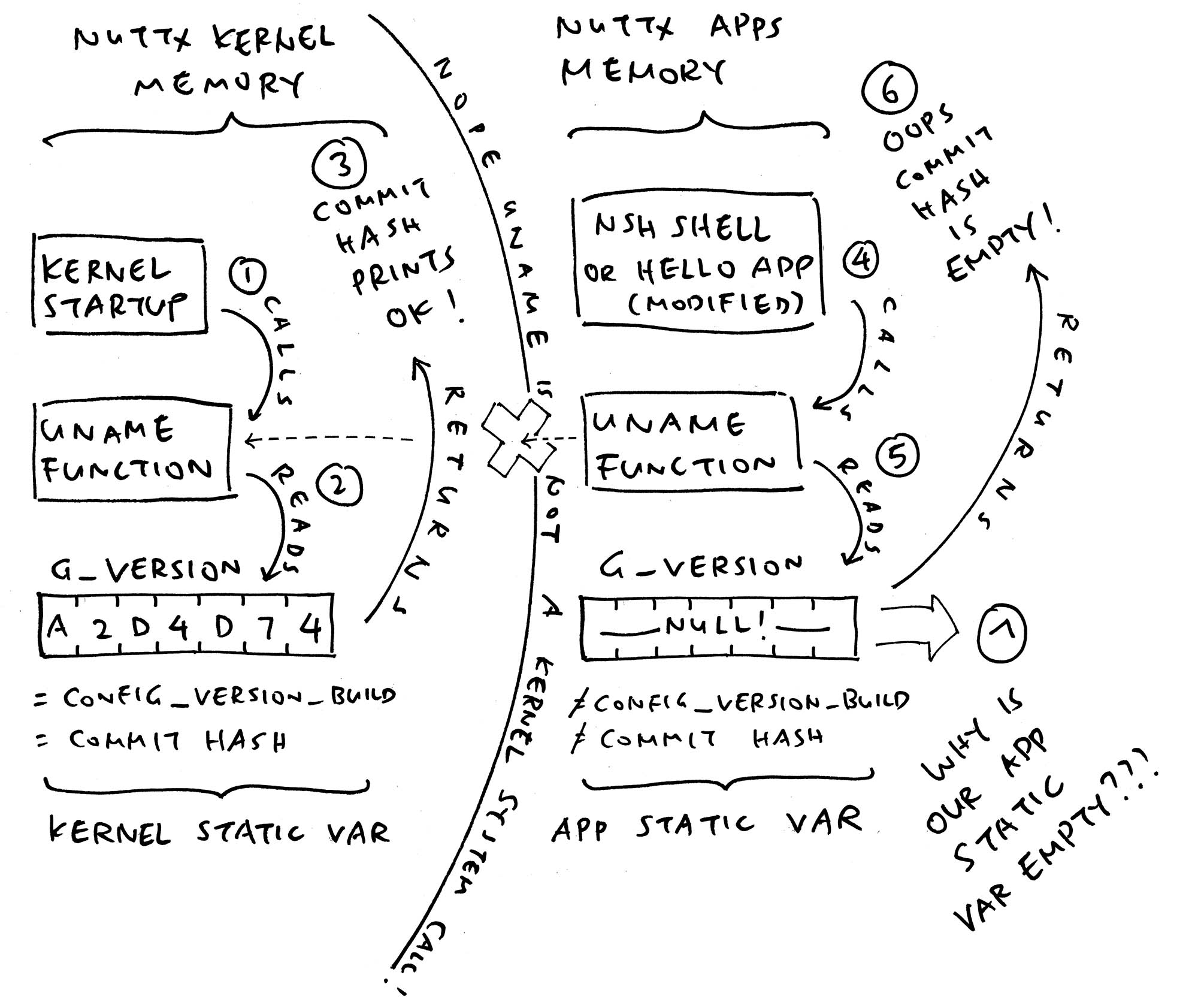
This post details the debugging journey of a seemingly minor bug in the Apache NuttX RTOS's `uname` command. The initial problem: the commit hash was missing from the output. The investigation led down a rabbit hole, involving inspecting the kernel image, calling `uname` at kernel startup, and disassembling the application. The culprit? A broken static variable (`g_version`) responsible for storing the commit hash within NuttX applications. This unexpected behavior highlighted the importance of thorough debugging in embedded systems, emphasizing that even minor anomalies can signal deeper, more serious issues.

Development bug fix

Dokploy: Effortless Deployment for Developers

2025-01-21
Dokploy: Effortless Deployment for Developers

Dokploy is an open-source, user-friendly platform streamlining multi-server application deployments and management. Supporting Nixpacks, Heroku Buildpacks, and custom Dockerfiles, it natively integrates with Docker Compose. Features include advanced user management, database management with backups, API & CLI access, and Docker Swarm cluster support. Real-time monitoring, alerts, numerous open-source templates, and a vibrant community further enhance its capabilities. Whether deploying small projects or large-scale applications, Dokploy provides a flexible and efficient solution.

Development

Redis UNLINK vs DEL: A Deep Dive into Internal Mechanics

2025-01-21
Redis UNLINK vs DEL: A Deep Dive into Internal Mechanics

Both Redis' UNLINK and DEL commands remove keys, but their internal implementations differ. DEL synchronously deletes keys and frees memory, while UNLINK asynchronously queues the deletion for background processing. UNLINK's 'non-blocking' nature isn't absolute; it calculates the cost of deleting an object: if the cost is less than 64, it deletes synchronously; otherwise, asynchronously. The article delves into the Redis source code, explaining the implementation details of UNLINK and DEL, including key slot calculation, two-phase unlinking, and asynchronous deletion, and discusses the role of LAZYFREE_THRESHOLD.

Development

Framework Fatigue: Why Developers Are Angry About New Tech

2025-01-21
Framework Fatigue: Why Developers Are Angry About New Tech

The constant stream of new JavaScript frameworks—from Svelte to Solid to Qwik—has left developers exhausted. Each promises blazing speed and improved performance, yet developers find themselves in a perpetual cycle of learning, consuming precious time and energy. This has sparked heated debates, with some arguing that new frameworks reinvent the wheel, while others express fears about job security and the obsolescence of existing skills. The article suggests that developer anger towards new frameworks is a self-defense mechanism stemming from anxieties about future career prospects. Understanding this perspective can foster healthier industry evolution.

Perl Community Buzz: New Podcast, Workshop, and Weekly Challenges

2025-01-21
Perl Community Buzz: New Podcast, Workshop, and Weekly Challenges

The Perl community is buzzing with exciting news! A new podcast, "The Underbar," has launched, bringing you the latest in Perl. The German Perl/Raku Workshop is coming to Munich, offering a great opportunity for developers to connect and learn. The Weekly Challenge, a popular coding contest, has secured sponsorship for another year, continuing to provide Perl enthusiasts with weekly programming exercises. This week's newsletter also features updates on several Perl modules and articles covering diverse topics such as MIDI music creation, geolocation data processing, and performance profiling.

OpenSSL Rejects QUIC API: A Setback for HTTP/3 Adoption?

2025-01-21
OpenSSL Rejects QUIC API: A Setback for HTTP/3 Adoption?

OpenSSL, the most popular TLS library, has rejected adding a QUIC API to its upcoming releases, posing a significant hurdle for widespread HTTP/3 adoption. Despite a community pull request (PR8797) offering the necessary APIs, the OpenSSL management committee decided to build a complete QUIC stack from scratch, a process expected to take several years. This decision has sparked community frustration, as mature QUIC libraries already exist. Microsoft and Akamai created quictls, an OpenSSL fork with the QUIC API, as a workaround. However, this isn't a sustainable solution, leaving the future of HTTP/3 adoption uncertain due to OpenSSL's choice.

Development

Should Go 2 Ditch the `context` Package?

2025-01-21

Go's `context` package, while solving the goroutine cancellation problem, does so at the cost of readability and maintainability, spreading like a virus throughout codebases. The author argues that `context` is overly complex, has too many interface methods, and `ctx.Value` presents numerous issues and is inefficient. They propose that Go 2 should directly address goroutine cancellation at the language level, providing a simpler, more efficient, and less intrusive solution.

Migrating from AWS App Mesh to Amazon ECS Service Connect: A Smooth Transition

2025-01-21
Migrating from AWS App Mesh to Amazon ECS Service Connect: A Smooth Transition

AWS is sunsetting AWS App Mesh on September 30th, 2026. This post details strategies for migrating from App Mesh to Amazon ECS Service Connect, a managed service offering improved reliability and observability for containerized microservices. Key differences between the two services are highlighted, including built-in health checks, outlier detection, and enhanced CloudWatch integration. A blue/green deployment strategy is recommended for minimizing downtime during the migration. The article also compares features like traffic routing, observability, security, and resource sharing.

Drawing World Flags with Python's Turtle Graphics Library

2025-01-21

This post details the author's journey of using Python's Turtle graphics library to draw flags of various countries by parsing SVG files. Starting from a simple Java drawing exercise, the author progressed to a more complex SVG parsing implementation using Python and Turtle. They overcame numerous challenges including coordinate transformation, Bézier curve rendering, and style application. The author successfully rendered a large number of flags, including complex ones previously considered 'impossible,' such as the flag of Wales. While some issues remain unresolved, this post showcases the author's programming skills and persistence.

Development

Guitaraoke: Automating Chord Generation for Karaoke Videos

2025-01-21
Guitaraoke: Automating Chord Generation for Karaoke Videos

To enhance his monthly Guitaraoke night, Dylan Beattie built a system that automatically displays song chords on karaoke videos. He uses the Vamp plugin to extract chord information from audio, then ImageSharp and FFMpegCore to generate a transparent video overlay with the chords, finally compositing this onto the original video. This involves audio analysis, image processing, and video composition, resulting in real-time chord display for guitarists. Future improvements include automatic beat detection and batch processing.

Development Audio Processing

Ruff: A Blazingly Fast Python Linter and Formatter

2025-01-21
Ruff: A Blazingly Fast Python Linter and Formatter

Ruff is an extremely fast Python linter and code formatter written in Rust. It's 10-100x faster than existing tools like Flake8 and Black, offering drop-in parity with popular tools while boasting built-in caching and automatic fix capabilities. With over 800 built-in rules and support for pyproject.toml, Ruff is used by major open-source projects like FastAPI and Pandas, making it a game-changer for Python development.

Development Linting

WordPress in Turmoil: Mullenweg's Actions Shake the Foundation

2025-01-21
WordPress in Turmoil:  Mullenweg's Actions Shake the Foundation

A conflict between WordPress creator Matt Mullenweg and hosting company WP Engine is threatening the future of WordPress. Mullenweg's aggressive actions, including banning WP Engine, offering severance packages to dissenting employees, and drastically reducing contributions to the open-source project, have sparked community backlash and a lawsuit. This turmoil undermines WordPress's stability and raises concerns about its future direction, even pushing users and developers towards alternatives. The core issue is a clash between open-source governance and commercial interests, with far-reaching implications for the tech industry.

Development community conflict

Meta Launches 'Edits' Video Editing App to Capitalize on CapCut's Absence

2025-01-20
Meta Launches 'Edits' Video Editing App to Capitalize on CapCut's Absence

Following the removal of ByteDance's CapCut video editing app from app stores, Meta announced its new video editing app, Edits, on Sunday. Instagram head Adam Mosseri revealed the app will launch on iOS next month, with Android to follow. Edits boasts a suite of creative tools, including inspiration and idea tracking tabs, and a high-quality camera, along with draft sharing capabilities. Meta's move is seen as capitalizing on the market gap left by CapCut's absence, mirroring previous strategic launches like Instagram Reels and Threads.

Development Video Editing

Kronotop: A Redis-Compatible, Distributed, Transactional Document Database

2025-01-20
Kronotop: A Redis-Compatible, Distributed, Transactional Document Database

Kronotop is a Redis-compatible, distributed, and transactional document database built on FoundationDB. It supports an MQL-like query language, ACID transactions, and an on-disk storage engine with a primary-standby replication model. While still in early development with an unstable API, it already features ZMap (an ordered key-value store), namespaces, and partial support for Redis data structures (strings and hashes). Future plans include support for more Redis data structures (lists, sets, sorted sets) and a Bucket data structure for storing JSON-like documents with MQL query language and transaction support.

Development

Proposal: Essential Effects for C

2025-01-20

This proposal suggests enhancing C's core type system with a type-and-effect system, requiring functions and blocks to declare the effects of their evaluation. This improves metaprogramming composability and simplifies defining MISRA-style restrictions. The system tracks and checks effects but doesn't handle dynamic effect handling. Three main effect groups are proposed: Local (e.g., local writes), Persistent (e.g., non-local writes), and Control (e.g., non-local control transfers). Static effect checking is achieved by assigning type-and-effect to each statement, expression, and function body, discarding local effects to ensure correct ordering. Best practices are suggested, like limiting the magnitude of `mut` and `vol` effects and specifying effect checks for operators and control structures. The goal is to improve C's safety, readability, and composability, especially for metaprogramming and resource management.

Development type system

SRCL: A Terminal-Aesthetic React Component Library

2025-01-20
SRCL: A Terminal-Aesthetic React Component Library

SRCL is an open-source React component and style repository that helps you build web applications, desktop applications, and static websites with terminal aesthetics. It boasts a comprehensive collection of components, including action bars, accordions, buttons, alert banners, avatars, badges, loaders, blog posts, breadcrumbs, cards, checkboxes, chessboards, code blocks, combo boxes, data tables, date pickers, dashboards, database examples, dropdown menus, empty states, input fields, forms, links, lists, messages, modals, navigation bars, popovers, progress bars, radio buttons, selects, sidebars, sliders, tables, text areas, tooltips, and tree views, all styled with a retro terminal look and feel.

WordPecker: Personalized Language Learning with Duolingo-Style Lessons and Custom Vocabulary

2025-01-20
WordPecker: Personalized Language Learning with Duolingo-Style Lessons and Custom Vocabulary

WordPecker is a personalized language learning app that combines Duolingo-style lessons with your own curated vocabulary lists. Seamlessly add words from books, articles, or videos, and review them through interactive quizzes and LLM-generated lessons. The app tackles the pain points of vocabulary acquisition in traditional language learning by connecting learning to context, boosting efficiency and retention. Currently featuring multiple question types, future development includes progress tracking, list sharing, and more.

Development
1 2 180 181 182 184 186 187 188 214 215