Category: Development

Magic Links: Convenient or Catastrophic?

2025-01-07

Magic Links: Convenient or Catastrophic?

This article critiques website designs that rely solely on magic email links for login. While secure, the author argues this method is inconvenient for multi-device users, hindering direct login on gaming PCs or work laptops and being susceptible to email delays. It also forces users to access personal emails on work devices, posing security risks. The author suggests offering more flexible login options like passwords or passkeys to improve user experience.

Development login methods

HipScript: Run HIP and CUDA Code on WebGPU

2025-01-07

Ben Schattinger's HipScript online compiler allows you to run HIP and NVIDIA CUDA code directly on WebGPU. This means developers can leverage familiar programming models to deploy high-performance computing tasks to the browser, eliminating the need for complex porting. Sample code, such as the Game of Life, is provided to ease the learning curve. This is a significant development, unlocking the potential for high-performance computing in web applications.

Development

OmniAI (YC) is Hiring a Full-Stack Engineer

2025-01-07
OmniAI (YC) is Hiring a Full-Stack Engineer

OmniAI, a Y Combinator-backed startup, is hiring a full-stack engineer with a salary of $125,000-$175,000 and equity. They're building a new way to work with unstructured data, enabling large-scale analytics previously impossible. The ideal candidate has 3+ years of experience, proficiency in Node.js, TypeScript, React/NextJS, Postgres, and a deep understanding of LLMs and OCR. The interview process involves a phone screen, architecture design interview, and an on-site coding challenge.

Development

Hacki: A Feature-Rich Hacker News Client Built with Flutter

2025-01-07
Hacki: A Feature-Rich Hacker News Client Built with Flutter

Hacki is a feature-rich Hacker News client built with Flutter. It boasts a comprehensive set of features including logging into your Hacker News account, browsing stories across various categories, searching and submitting stories, pinning and favoriting stories, commenting, participating in polls, and offline reading. Cross-device sync for favorites and pins (iOS only) and launching from the system share sheet are also included. Hacki aims to provide a more convenient and efficient way to experience Hacker News.

Development Client

PCalc: A 20-Year Journey of a Calculator App

2025-01-07

PCalc, a seemingly simple calculator app, boasts a remarkable 20-year history. It began as a university project, initially designed as a central heating control panel! The author then transformed it into a programmer's calculator, releasing it as freeware in 1992. Through numerous iterations and platform ports, PCalc now graces iOS, Mac, and Apple Watch, incorporating innovative features. The story behind it is filled with passion for technology, connections with Apple, and a tribute to the late science fiction author Douglas Adams.

Development app development

Say Goodbye to Obsolete Op-Amps: A Guide to Modern Alternatives

2025-01-07
Say Goodbye to Obsolete Op-Amps: A Guide to Modern Alternatives

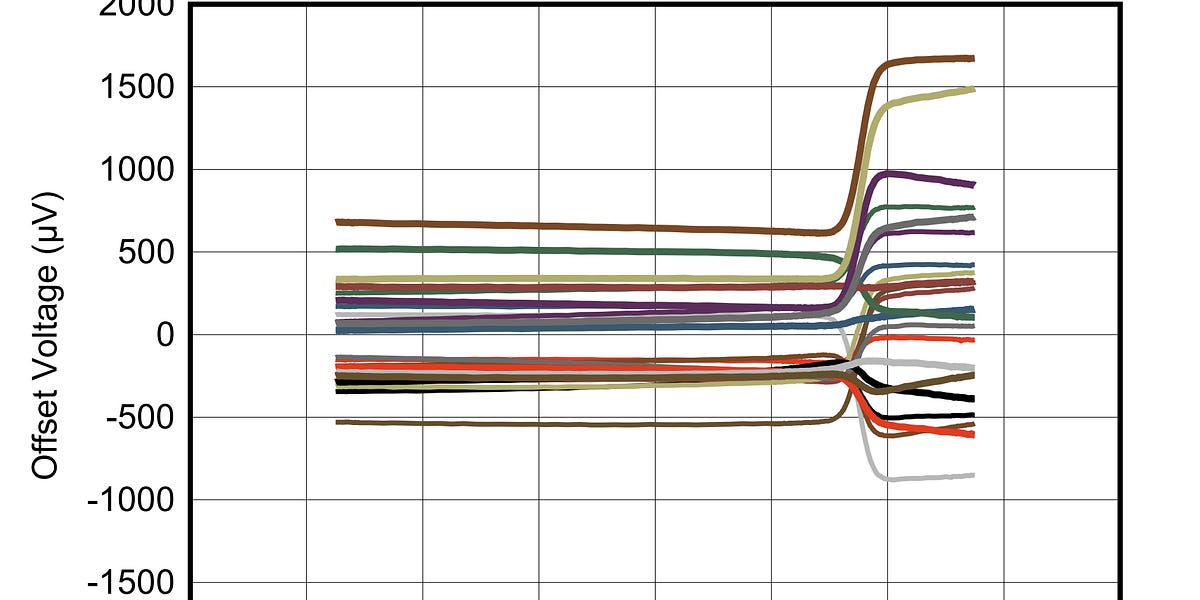
This article critiques the widely used but outdated LM741 and LM324/LM358 op-amps, recommending superior, user-friendly modern alternatives such as the Microchip MCP6272, MCP6022, and Texas Instruments OPA2323, TLV3542, and OPA2356. It details crucial parameters to consider when choosing an op-amp, including supply voltage range, maximum output current, rail-to-rail I/O (RRIO), input stage type (FET vs. bipolar), gain-bandwidth product, slew rate, and noise. The author emphasizes that many parameters are often overblown in hobbyist projects.

Extreme Minimization: Crafting a Cross-Platform Executable Under 400 Bytes

2025-01-07

This blog post details size optimization tricks from the Cosmopolitan Libc project, using x86 assembly and clever compilation techniques to drastically reduce executable size. Key methods discussed include run-length encoding, decentralized sections, dead code elimination, δzd encoding, overlapping functions, and optimizing printf. The ultimate result? A sub-400-byte ELF executable running on Linux, FreeBSD, NetBSD, and OpenBSD. This demonstrates efficient resource usage and offers new perspectives on the scalability of large codebases.

Chess Engine in 84,688 Regexes

2025-01-07

Nicholas Carlini built a 2-ply minimax chess engine using a mind-bending 84,688 regular expressions as a holiday project. He designed a regex-based virtual machine with a branch-free, conditional-execution, SIMD instruction set. A symbolic execution compiler translates Python code into regex sequences, enabling parallel computation. The engine leverages SIMD to calculate moves for multiple pieces simultaneously, with clever regex optimizations for speed. While limited in depth, it showcases the surprising computational power of regular expressions.

Development regex chess engine

Blazing Fast, Memory-Friendly Parallel Hashmap Library

2025-01-07
Blazing Fast, Memory-Friendly Parallel Hashmap Library

parallel-hashmap is a stunning C++ library offering a suite of incredibly fast and memory-efficient hashmap and btree containers. It's entirely header-only, requiring no build process; simply copy the directory into your project. Compatible with C++11 and later, it significantly outperforms your compiler's built-in unordered_map/set or Boost's equivalents, while using less memory. It supports heterogeneous lookups, is easy to forward declare, and features convenient dump/load functionality. Based on and improved from Google's Abseil library, it's extensively tested on Windows, Linux, and macOS.

Development C++ library hashmap btree

Zig's Comptime: Bonkers Good

2025-01-07

This article dives deep into Zig's compile-time metaprogramming (comptime) capabilities. Initially finding comptime challenging, the author ultimately marvels at its power. Six different perspectives on comptime are presented, including ignoring it, viewing it as generics, standard code run at compile time, partial evaluation, compile-time evaluation with runtime code emission, and textual code generation. Through examples, the author demonstrates how comptime improves code efficiency, simplifies reading and debugging, and enables advanced features like code generation. Zig's comptime allows for extensive computation and code generation at compile time, boosting performance and simplifying code writing.

DiscoTool: Effortlessly Manage Your Arduino USB Devices

2025-01-07
DiscoTool: Effortlessly Manage Your Arduino USB Devices

DiscoTool is a powerful command-line tool and Python library for discovering and managing Arduino-type development boards connected to USB. It supports macOS, Linux, and Windows and installs easily via pip without requiring additional installations. DiscoTool offers a rich set of commands, including connecting to the REPL, installing and updating modules, backing up board data, and more. It also allows customization of command-line tools and environment variables. Furthermore, a Python module allows developers to integrate it into their projects for easy access to device information such as manufacturer, serial number, and version.

Development Development Tool

LLMs and the Limits of Automated Code Optimization

2025-01-07
LLMs and the Limits of Automated Code Optimization

David Andersen experimented with using Large Language Models (LLMs) to optimize code that finds the difference between the smallest and largest numbers whose digits sum to 30 in a list of a million random integers. Initial Python and Rust code ran slowly. While the LLM improved parts, such as the digit summing function, it missed a crucial optimization: checking if a number is relevant *before* the expensive digit sum calculation. Manual intervention, involving a faster random number generator, parallelization, and preprocessing, sped up the Rust code by a factor of 55. This highlights LLMs' limitations in code optimization, particularly for complex problems demanding deep algorithmic understanding and parallelization strategies. Human ingenuity remains crucial.

Development Performance

Programming with LLMs in 2024: My Experiences

2025-01-07

This post summarizes the author's experiences using generative models for programming over the past year. He found LLMs to be a net positive on his productivity, particularly for autocomplete, search, and chat-driven programming. While chat-driven programming requires adjusting workflows, it provides a first draft and facilitates quicker error correction. The author emphasizes that LLMs excel with well-defined problems and advocates for smaller, more independent code packages for better LLM interaction. He introduces sketch.dev, a Go IDE designed for LLMs to streamline the feedback loop and boost efficiency.

Development

25 Years Later: The Untold Story of the Mac OS X Dock

2025-01-06
25 Years Later: The Untold Story of the Mac OS X Dock

This blog post recounts the experiences of James Thomson, an early engineer on the Mac OS X Dock. He details his time working on the Dock at Apple in Ireland, including the initial design process, interactions with Steve Jobs, and his eventual departure from Apple. The story is filled with tension and intrigue, including secrecy surrounding the project, Jobs's demands about the engineer's location, and the challenges and triumphs Thomson faced during development. The post offers a fascinating glimpse into the creation of a pivotal piece of Mac OS X, and the journey of a software engineer.

Development

Triptych: Three Proposals to Make Hypertext Hyper Again

2025-01-06

Alexander Petros and Carson Gross propose Triptych, three small proposals designed to make HTML far more expressive in how it handles network requests. The proposals add PUT, PATCH, and DELETE support to HTML forms, enable buttons to make requests without forms, and allow for partial page replacement with the response. Triptych aims to bring the best of libraries like htmx to native HTML, enhancing its REST capabilities and simplifying the declaration of page behavior for HTTP requests. This results in cleaner code and easier implementation of both full-page navigation and partial page updates.

Development Web Requests

FormBee: Open-Source Form Backend for Privacy-Conscious Developers

2025-01-06
FormBee: Open-Source Form Backend for Privacy-Conscious Developers

FormBee is an open-source form backend built for developers who prioritize data privacy. It simplifies submitting website form data, allowing you to send form submissions to email, Telegram, webhooks, and more without writing server-side code. Features include plugin support, CAPTCHA protection, domain whitelisting, and automatic reply emails. Self-hosting is easy with readily available Docker images.

Development forms

pl_synth: A Tiny JSON-Based Music Synthesizer

2025-01-06

Dominic Szablewski of PhobosLab released pl_synth, a lightweight C/JS music synthesizer and accompanying tracker editor. Inspired by Sonant, pl_synth prioritizes small code and data size and leverages WASM to drastically improve the JavaScript version's performance, reducing music generation time from 5 seconds to 25 milliseconds. It supports various instruments and effects, features undo/redo functionality, and allows embedding the final product directly into a URL. pl_synth is now bundled with the high_impact game engine.

Development music synthesizer

Simple Defer in C: Practical Implementations

2025-01-06
Simple Defer in C: Practical Implementations

This blog post explores practical ways to implement a `defer` keyword in C, enabling automatic cleanup actions (like memory deallocation or mutex unlocking) after a code block. The author first explains the purpose of `defer`, then demonstrates implementations using GCC extensions and C++ features. Finally, a new syntax proposal is presented to simplify `defer`'s implementation and usage, significantly improving C code readability and safety.

Development

Code Review Hack: Ask Engineers "How Do You Like What You've Built?"

2025-01-06

During a code review of complex UI changes, instead of immediately reviewing, the author asked the engineer, "How do you like the new behavior?" The engineer's response led to the discovery and fixing of several bugs and even dropping a problematic requirement. This simple question prompted the engineer to think more deeply about their work and make improvements, ultimately enhancing code quality. The author believes that regularly asking engineers about their feelings towards their creations is a useful technique worth trying.

Development code review

Getting LLMs to Generate Funny Memes: Surprisingly Hard

2025-01-06
Getting LLMs to Generate Funny Memes: Surprisingly Hard

A University of Waterloo intern attempted to build an app using LLMs and the Greptile API to generate memes that roast GitHub repositories. The process proved unexpectedly challenging. Directly prompting the LLM for roasts yielded generic results. The solution involved separating the task into code analysis (using Greptile to pinpoint specific issues) and roast generation (using the LLM to create targeted humor). Image generation proved difficult due to limitations in handling text, leading to the use of pre-built meme templates and node-canvas for text insertion. Despite the hurdles, the project culminated in reporoast.com, a website capable of generating custom code-roasting memes.

Development Meme Generation

htmx: The Next jQuery? Stability-First Web Dev Tool

2025-01-06

htmx, evolved from intercooler.js, aims to be a stable and reliable tool for web development, much like jQuery's long-lasting success. The article outlines htmx's future direction: prioritizing stability over frequent updates; limiting the addition of core features, mainly extending functionality through the extension API; maintaining a quarterly release schedule. htmx's goal isn't to be a total solution for web applications, but to focus on simplifying hypermedia controls and better integrate with other tools and techniques, ultimately hoping its core functionality will be integrated into the HTML standard.

Development hypermedia

Human-Centered Property-Based Testing: A PhD Dissertation

2025-01-06

This PhD dissertation focuses on improving the usability of Property-Based Testing (PBT) to reach a wider audience of developers. Through in-depth user studies, the researcher identified challenges PBT users face in random data generation and evaluating test effectiveness. To address these, the dissertation proposes novel algorithms for improved random data generators and develops Tyche, an open-source tool that provides developers with deeper insights into PBT and enhances its usability, ultimately leading to better software quality and assurance.

Spline Distance Fields: A Novel Terrain Generation Technique

2025-01-06

To overcome limitations in the Tangerine game engine, the author developed a CPU ray tracer called Star Machine and a racing game prototype, Rainy Road. Rainy Road requires an efficient and compact terrain rendering system capable of handling roads and other terrain features defined by splines. The author introduces a novel terrain generation technique using spline distance fields. This technique utilizes splines to generate terrain surfaces by calculating the distance of a point to the nearest spline and its normal vector to determine elevation. This avoids the limitations of traditional heightmaps and supports procedural object placement. The technique is under active experimentation and research, with exploration of improved interpolation strategies and the use of sparse point clouds.

42: A Powerful Spacecraft Attitude Control System Simulator

2025-01-06
42: A Powerful Spacecraft Attitude Control System Simulator

42 is a comprehensive general-purpose simulation of spacecraft attitude and orbit dynamics, primarily used to support the design and validation of attitude control systems throughout their lifecycle, from concept studies to integration and test. It accurately models multi-body spacecraft attitude dynamics (rigid and/or flexible bodies), and both two-body and three-body orbital flight regimes, simulating environments from low Earth orbit to throughout the solar system. 42 simulates multiple spacecraft concurrently, facilitating studies of rendezvous, proximity operations, and precision formation flying. It also features spacecraft attitude visualization.

Mashups.io: A Modern Yahoo Pipes Replacement

2025-01-06
Mashups.io: A Modern Yahoo Pipes Replacement

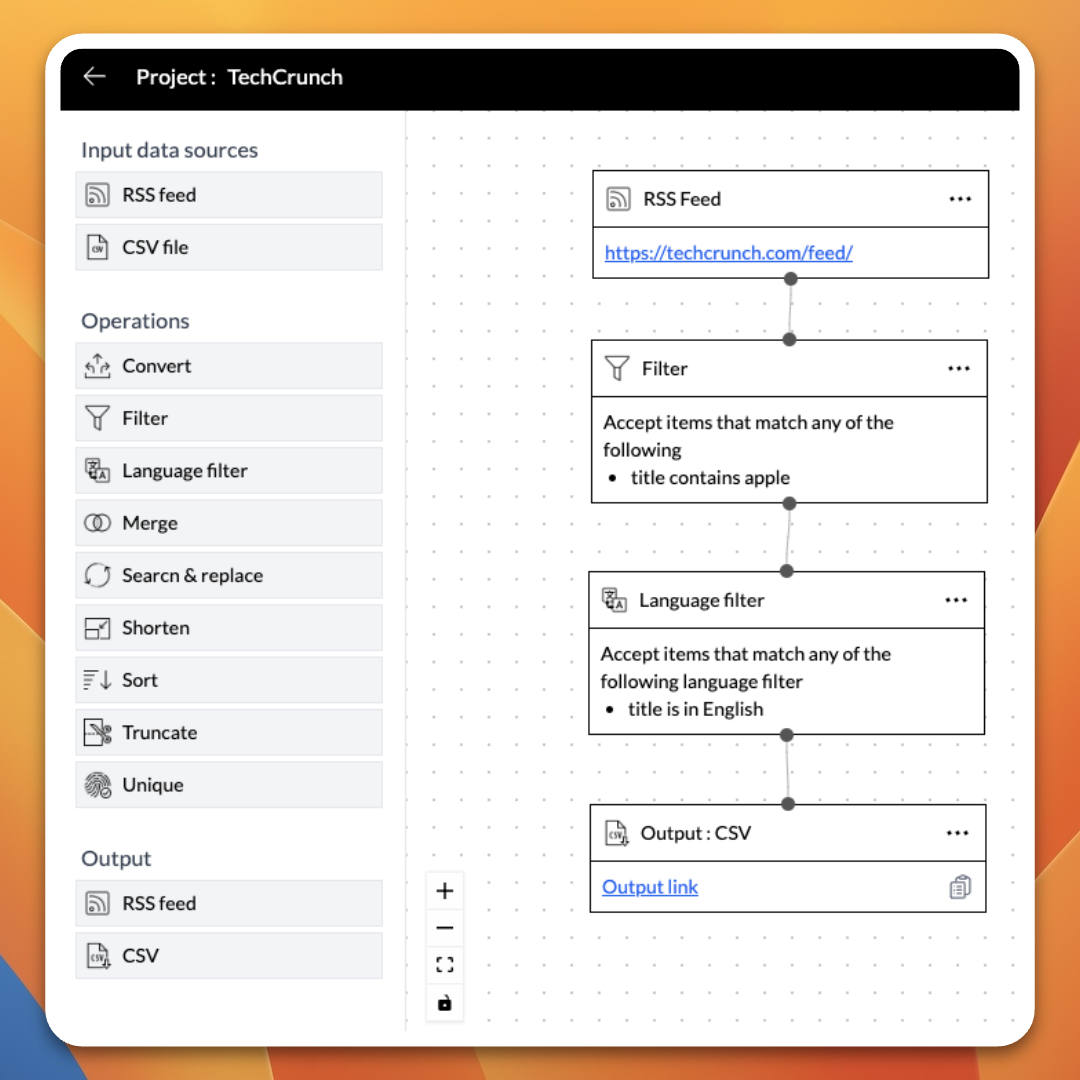
Mashups.io is a powerful online data integration tool that builds upon the legacy of Yahoo Pipes with significant improvements. Users can easily mix, filter, and transform RSS feeds, CSV files, and JSON data to create custom data sources. The platform offers an intuitive visual interface, requiring no programming experience to build complex data workflows. Mashups.io offers free and paid plans to cater to various needs, and its real-time updates ensure data always remains current.

Evolving a Structural Code Editor: From AST Manipulation to Intuitive UI

2025-01-06
Evolving a Structural Code Editor: From AST Manipulation to Intuitive UI

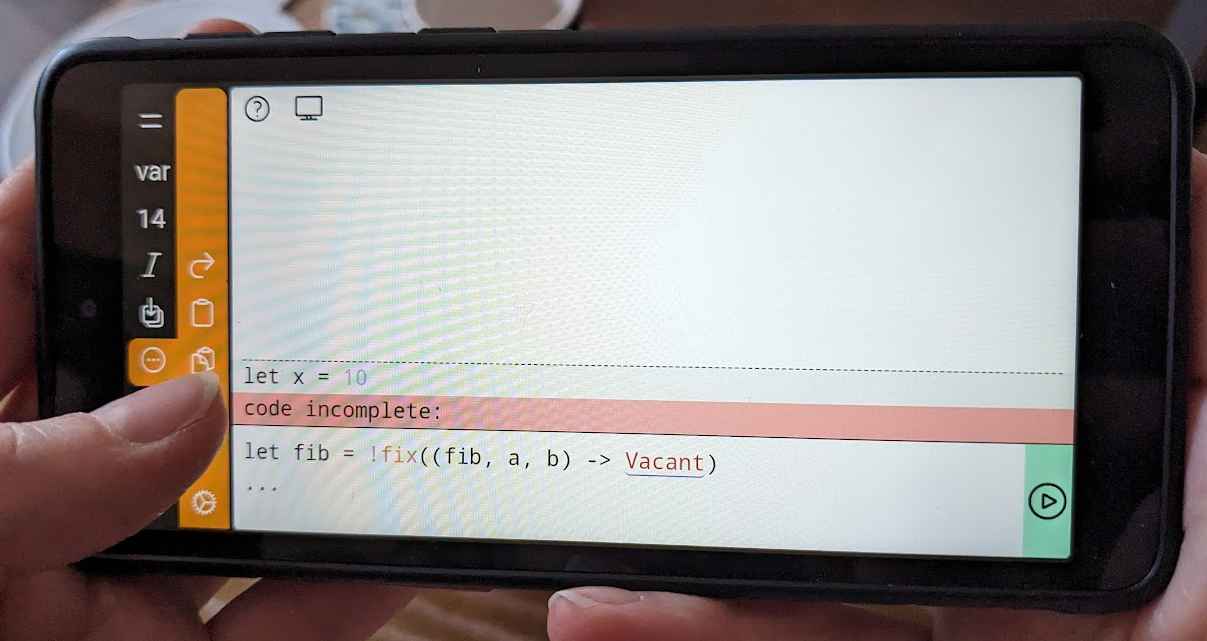
This post details the multi-year evolution of a structural code editor. The initial version directly manipulated the Abstract Syntax Tree (AST), proving cumbersome. Subsequent iterations simplified the AST and explored a text-cursor-based approach, but both fell short. The final version balances AST and text editing, employing techniques like Editable types, Projections, and Frames. A visual, icon-based UI was added, supporting keyboard, mouse, touch, and remote control, significantly enhancing user experience. Built with Gleam and Lustre, this project showcases the ongoing exploration and refinement of structural code editor design.

Development code editor UI design

SPath: Query Expressions for Semi-Structured Data

2025-01-06
SPath: Query Expressions for Semi-Structured Data

SPath is a Rust crate providing JSONPath-like query expressions for semi-structured data such as JSON, TOML, or custom variants. It serves as a drop-in replacement for JSONPath and supports multiple data formats. The library is easy to use; simply add `spath` to your project's Cargo.toml dependencies. An example demonstrates querying JSON data with SPath and verifying the result.

Development Data Parsing

Notion: Your All-in-One Workspace

2025-01-06
Notion: Your All-in-One Workspace

Notion is an all-in-one workspace that seamlessly integrates notes, task management, wikis, and databases. Organize your thoughts, manage projects, build team wikis, and create custom databases—all within a single, intuitive platform. Its flexibility caters to diverse needs, from personal knowledge management to complex team collaborations. Notion's clean interface and powerful features are making it a productivity powerhouse for many.

Development

Windows 3.1 on Modern Displays: A Generic SVGA Driver

2025-01-06
Windows 3.1 on Modern Displays: A Generic SVGA Driver

This project presents a modern, generic SVGA driver for Windows 3.1, supporting all available 8-bit, 16-bit, 24-bit, and 32-bit graphic modes. A rewrite of the original Windows 3.1 SVGA driver, it adds multi-byte pixel support, enabling Windows 3.1 to run in true color on modern high-definition displays. This solves compatibility issues for older hardware and enhances the experience for retro gaming enthusiasts.

The Magic Function: Crafting Elegant Abstractions in Rust

2025-01-06
The Magic Function: Crafting Elegant Abstractions in Rust

This excerpt from "The Secrets of Rust: Tools" by John Arundel demonstrates elegant abstraction design in Rust using a simple line-counting command-line tool. The 'magic function' approach is employed: first imagining an ideal function, then designing its API based on how it's called, resulting in a clean, reusable library. A unit test ensures correctness, highlighting the importance of API design prioritizing user needs over implementation details.

1 2 191 192 193 195 197 198 199 214 215