Category: Development

From 30 WPM to 120 WPM: My Touch Typing Journey and App Creation

2025-05-31

This post recounts the author's journey from a slow typist to achieving 120 WPM. Initially struggling with typing speed, impacting his programming and job search, he dedicated 10-15 minutes daily to practice. He experimented with typing apps, eventually creating his own, TypeQuicker. His techniques included focusing on accuracy, practicing specific character sequences, and utilizing AI-generated text for realistic practice. Improved typing dramatically boosted his coding efficiency, job prospects (landing roles at Amazon and Wealthsimple), and overall productivity, illustrating the significant impact of a seemingly small skill.

Development touch typing

Lookup Tables: A Cleaner Approach to Exponential Backoff

2025-05-31

Traditional exponential backoff algorithms often use loops to calculate delay times, leading to verbose and error-prone code. This article proposes a more elegant solution: using a lookup table to predefine delay times. This approach results in cleaner, more readable code. Modifying the backoff strategy becomes safer and easier, avoiding potential errors and complexity associated with loop-based calculations. This significantly improves code maintainability.

Development lookup table

Sampling Big Data: Small Samples, Big Answers

2025-05-31
Sampling Big Data:  Small Samples, Big Answers

Hadley Wickham's recent interview highlighted that many big data problems are actually small data problems, given the right subset, sample, or summary. This post delves into efficient sampling for big data analysis. Using the example of Goatly, a company serving narcoleptic goats, the author demonstrates how to calculate the appropriate sample size for logistic regression. The conclusion is that approximately 2345 samples are needed to accurately represent 100,000 farms. The post also details Python scripts and online tools for sample size calculation, and briefly touches on the concept of statistical power.

Reverse Engineering Linear's Sync Engine: A Deep Dive

2025-05-31
Reverse Engineering Linear's Sync Engine: A Deep Dive

This detailed study reverse-engineers Linear's Sync Engine (LSE), showcasing its elegant solution to challenges like supporting arbitrary data models, offering rich features (partial syncing, permission control, undo/redo, offline availability, and edit history), and providing a great developer experience. The author dissects LSE's model definition, MobX usage, bootstrapping process, local database construction, lazy data hydration, client-server synchronization, and undo/redo mechanisms through a deep dive into Linear's frontend code. The article explains how LSE defines models and metadata, performs bootstrapping and lazy loading, and handles transactions, incremental updates, and conflict resolution. LSE aims to empower developers to build collaborative applications without needing to be sync engine experts.

Development sync engine

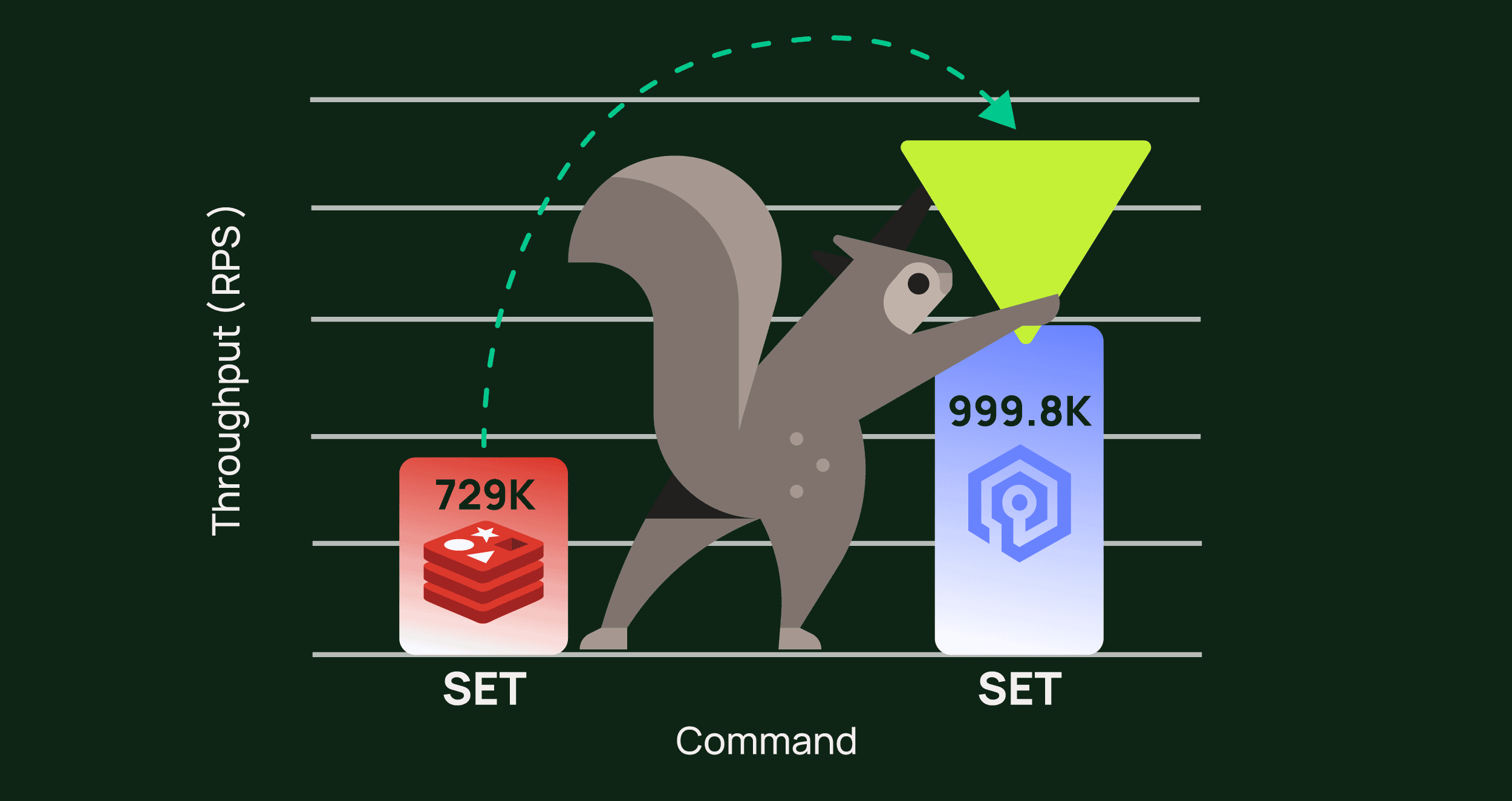
Redis 8.0 Open Source Comeback and Valkey Performance Showdown

2025-05-31
Redis 8.0 Open Source Comeback and Valkey Performance Showdown

Redis Inc.'s controversial decision last year to close-source Redis shook the open-source community, but the community responded by forking Redis into Valkey. Now, Redis 8.0 is open-source again, and the original creator, Antirez, has returned. This article benchmarks Valkey 8.1 against Redis 8.0, showing Valkey outperforms Redis 8.0 in throughput and latency, especially with I/O threads enabled. It also explores core allocation optimization techniques and the limitations of benchmarking.

Development

Mastering TestFlight: A Comprehensive Guide to Beta App Testing

2025-05-31
Mastering TestFlight: A Comprehensive Guide to Beta App Testing

Want to experience the latest apps before anyone else? TestFlight is your answer! This guide provides a comprehensive walkthrough of installing and testing beta apps, covering email/public link invitations, installation across iOS, iPadOS, macOS, tvOS, visionOS, and watchOS, managing automatic updates, testing previous builds and build groups, and even testing iMessage apps and App Clips. It also details testing periods and important considerations, ensuring a smooth beta testing experience and valuable feedback for developers.

Development App Testing

Changefly ID: Next-Gen Authentication for a Safer Internet

2025-05-30

Changefly ID offers a revolutionary approach to user authentication, moving beyond email and phone numbers. It provides secure logins for various applications, including payments, paywalls, loyalty programs, and more. The system uses a three-step process to generate API keys and authenticate users, prioritizing privacy and security. Changefly ID is free for personal use and offers commercial licensing options. Its mission is to build a safer internet by leveraging advanced security features like end-to-end encryption and machine learning.

Development

Virtual Threads Ate My Memory: A Web Crawler's Tale

2025-05-30
Virtual Threads Ate My Memory: A Web Crawler's Tale

This post details a developer's experience building a web crawler with Java's Virtual Threads. Initially, performance soared, but the crawler crashed with an `OutOfMemoryError`. The author explains how they used Virtual Threads to dramatically increase speed, then shows how they fixed the memory issue by introducing a semaphore to limit concurrent tasks. The comparison between platform threads and Virtual Threads highlights the need for explicit resource management when using Virtual Threads, as the JVM's implicit backpressure mechanisms no longer apply. The author concludes that while Virtual Threads offer significant performance gains, developers must carefully manage resources to avoid memory problems.

Notepad's Transformation: The End of Simplicity?

2025-05-30
Notepad's Transformation: The End of Simplicity?

Microsoft is adding formatting features like bold, italics, and hyperlinks to Notepad, transforming the minimalist text editor into a lightweight word processor. This move is controversial, with many users arguing it compromises Notepad's simplicity and ease of use, making it bloated and potentially driving users to alternatives. While Microsoft offers the option to disable formatting, it seems like a solution in search of a problem, rather than truly addressing user needs.

Development

Minimal Ray Tracer in J: A Surprisingly Enjoyable Experience

2025-05-30

This post details the author's experience building a minimal ray tracer in J, a terse array-based programming language. The author explores key J concepts like tacit verbs, array programming, and verb composition, demonstrating their application in implementing core ray tracing elements such as vector math, lighting calculations, and pixel rendering. The resulting ray tracer is concise and surprisingly performant, leading the author to praise J's interactive development experience and speed compared to other languages like Common Lisp.

Stack AI Hiring 10x Frontend Engineers to Democratize AI

2025-05-30
Stack AI Hiring 10x Frontend Engineers to Democratize AI

Stack AI, a Y Combinator and Gradient Ventures-backed AI startup founded by two MIT PhDs, is looking for 10x frontend engineers! They're building a user-friendly, no-code platform that democratizes access to large language models, enabling anyone to build impactful AI applications. Integrating top AI models (OpenAI, Anthropic, Google) and various data sources, Stack AI boasts over 85,000 users and 300+ paying customers. The role requires proficiency in React, TypeScript, and a strong UX focus. If you're passionate about AI and thrive in a dynamic startup environment, this is your chance to make a real impact.

Development

Beyond Vibe Coding: A Responsible Approach to AI-Assisted Development

2025-05-30
Beyond Vibe Coding:  A Responsible Approach to AI-Assisted Development

The allure of 'vibe coding,' using AI to rapidly generate code without understanding fundamentals, is prevalent. However, this approach, exemplified by a recent incident exposing an API key due to neglecting security basics, is deeply flawed. The author argues that while AI tools accelerate development, they shouldn't replace core programming knowledge, planning, and testing. True AI-assisted development involves intentional design, thorough understanding of the code's function, and rigorous testing to prevent security vulnerabilities and ensure reliable software. It's about using AI to enhance, not replace, good development practices.

Development Development Process

Automattic Reverses Course, Re-engages with WordPress Development

2025-05-30
Automattic Reverses Course, Re-engages with WordPress Development

Automattic, the parent company of WordPress.com, has surprisingly reversed its decision to pause contributions to the WordPress project. This follows last month's announcement that 2025 would only see the release of version 6.8. Internal communications reveal CEO Matt Mullenweg's desire for a 6.9 release this year, incorporating an admin refresh and AI features. Speculation abounds regarding the motives behind this U-turn, with some suggesting pressure, reputational concerns, or a direct link to Automattic's ongoing legal battle with WP Engine. Automattic accuses WP Engine of profiting from WordPress without contributing back, while WP Engine counters that Automattic misunderstands trademark law. The reasons remain unclear, but Automattic's renewed commitment adds a significant twist to the WordPress narrative.

Development

Lightweight Job Scheduling with Wasp and PgBoss: A Surprisingly Elegant Solution

2025-05-30
Lightweight Job Scheduling with Wasp and PgBoss: A Surprisingly Elegant Solution

This article explores lightweight job scheduling in React and Node.js applications using Wasp and PgBoss. PgBoss leverages PostgreSQL's reliability and scalability to manage background jobs efficiently, while Wasp simplifies job definition and configuration. The article uses a tennis score tracking app to demonstrate creating both one-time scheduled jobs (e.g., sending a daily match summary email) and recurring jobs (e.g., daily digest emails). This setup is perfect for small projects or early-stage startups, eliminating the need for complex external services. However, for high-load or computationally intensive tasks, a dedicated job processing system is recommended.

Development Job Scheduling

CatBench v0.3: Postgres Vector Search App Now with Performance Monitoring

2025-05-30

CatBench, a demo app using Postgres and PgVector with 25k pet photos, now features instance-wide throughput and query latency charts. Previously, users could explore a recommendation engine, view cat photos and product recommendations based on similar cat purchases, and see backend SQL query execution metrics. v0.3 adds a monitoring section displaying overall Postgres instance activity and SQL latency. Future plans include code cleanup, expanding the photo dataset to 9 million images, adding recall quality monitoring for fraud detection, and supporting other databases.

Asdf Overlay: Blazing Fast Windows Overlay Library

2025-05-30
Asdf Overlay: Blazing Fast Windows Overlay Library

Asdf Overlay is a blazingly fast and easy-to-use Windows overlay library that draws on top of the window framebuffer by hooking rendering backends. It utilizes GPU shared textures to avoid CPU framebuffer copies, enabling rendering of overlays of any size without performance loss. Supporting OpenGL, DX9-DX12, and Vulkan, it offers features like input capture control. Already used in projects like ingame lyrics overlays and ingame overlays, it requires Node.js, pnpm, a specific Rust compiler version, and MSVC. After installing dependencies, build with `pnpm build`. Multiple examples and debugging methods are provided.

Development

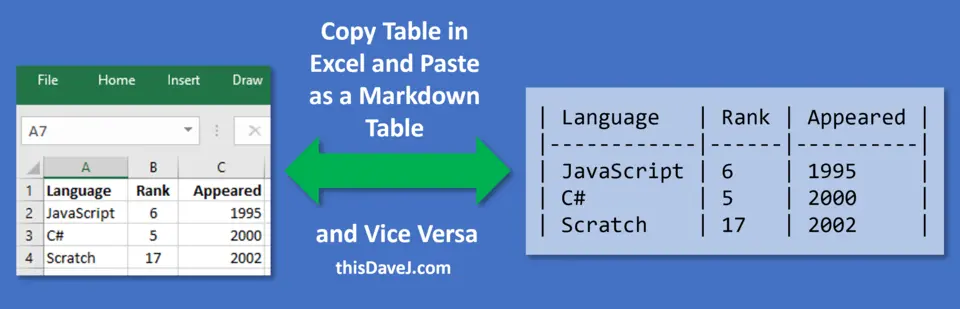
Excel/Google Sheets to Markdown Table Converter

2025-05-30
Excel/Google Sheets to Markdown Table Converter

This powerful online tool seamlessly converts between Excel or Google Sheets tables and Markdown tables. Simply copy and paste to convert; the result is automatically copied to your clipboard. The tool runs entirely client-side, ensuring your data privacy. It also supports custom column alignment (left, center, right).

Development Table Conversion

Sequor: SQL-centric Workflow Platform for Reliable API Integrations

2025-05-30
Sequor: SQL-centric Workflow Platform for Reliable API Integrations

Sequor is an open-source, SQL-centric workflow platform designed to build reliable API integrations within modern data stacks. It offers a powerful alternative to black-box SaaS connectors, giving data teams complete control over their integration pipelines. By fusing API execution with your database, Sequor enables bidirectional data flow, leveraging SQL for transformations, analytics, and business logic. This unified approach eliminates the traditional boundaries between iPaaS and ETL processes. A code-first approach (YAML for flows, Jinja/Python for parameters, SQL for logic) allows for version control, collaboration, CI/CD, and local development. Sequor empowers you to own, control, and scale your integrations transparently, using familiar open technologies and avoiding SaaS lock-in.

Development Data Stack

Cap: A Lightweight, Privacy-Preserving Open-Source CAPTCHA Alternative

2025-05-30
Cap: A Lightweight, Privacy-Preserving Open-Source CAPTCHA Alternative

Cap is a lightweight, modern, open-source CAPTCHA alternative using SHA-256 proof-of-work. It's fast, private, and incredibly easy to integrate. Composed of a JavaScript widget (@cap.js/widget) and a server-side component (@cap.js/server), Cap offers various extensions and supports multiple runtimes and programming languages. It even runs standalone in Docker. Compared to hCaptcha, Cap is 250x smaller and, using proof-of-work, requires no user tracking. Fully open-source, Cap offers modes like invisible and floating to suit various needs.

Development

vrs: A Lisp-based Concurrent Runtime for Joyful Programming

2025-05-30
vrs: A Lisp-based Concurrent Runtime for Joyful Programming

vrs is an ambitious personal software runtime project aiming to deliver a joyful and efficient programming experience by combining the best ideas from systems like Emacs, Erlang, and Unix. It uses an embedded Lisp dialect called Lyric, supporting lightweight processes, message passing, service registration, and the ability to run millions of processes without blocking the system. Developers can use the vrsctl command-line tool for interactive programming and debugging, along with an Emacs mode called `lyric-mode` for efficient development. vrs is under heavy development, but its innovative concurrency model and easy-to-use Lisp dialect show great potential.

Development

Sub-Second Proof-of-Work: Winning the $51k KernelCTF with AVX-512

2025-05-30
Sub-Second Proof-of-Work: Winning the $51k KernelCTF with AVX-512

In May 2025, the Crusaders of Rust team discovered and exploited a use-after-free bug in Linux's packet scheduler, aiming for Google's kernelCTF's $51,000 bounty. The author details their crucial contribution: optimizing the competition's proof-of-work (a Verifiable Delay Function, or VDF) using AVX-512IFMA instructions. Through mathematical optimizations, C++ porting, and meticulous assembly-level tweaks, they slashed execution time from 1.4 seconds to a blistering 0.21 seconds, ultimately securing the team's victory with a record-breaking 3.6-second submission. This showcases a deep understanding of low-level hardware and a relentless pursuit of performance.

Development VDF optimization

De Bruijn Indices and Levels: Solving Variable Capture in Lambda Calculus

2025-05-30
De Bruijn Indices and Levels: Solving Variable Capture in Lambda Calculus

This article introduces De Bruijn indices and levels, elegant solutions to the frustrating problem of variable capture in lambda calculus. By using natural numbers instead of variable names, these methods avoid naming conflicts, simplify substitution, and facilitate easier comparison of term equality. The article clearly explains how both methods work, compares their advantages and disadvantages, and concludes that De Bruijn indices are generally more useful for local operations, while De Bruijn levels are more convenient when moving subterms. This is a great read for programmers familiar with the basics of lambda calculus.

Microsandbox: Securely Executing Untrusted Code

2025-05-30
Microsandbox: Securely Executing Untrusted Code

Microsandbox solves the drawbacks of traditional methods (local execution, containers, VMs, cloud solutions) for running untrusted code. It boasts fast startup times, supports multiple languages (Python, JavaScript, Rust), and offers an SDK and project management tools for securely running AI-generated code, user submissions, or experimental code. Its unique microVM technology ensures code isolation, protecting your system from even malicious code. Microsandbox provides secure and efficient solutions for development environment setup, data analysis, and building AI assistants.

Development

The Mysterious Disappearance and Open Sourcing of W++

2025-05-30
The Mysterious Disappearance and Open Sourcing of W++

W++, a fun, experimental programming language designed for learning, chaos, and memes, has been open-sourced. After achieving over 33,000 downloads on the VSCode Marketplace, it was mysteriously removed. This repo contains the full source code, including a C#-based tokenizer, parser, and interpreter, along with a custom VSCode extension. Featuring async lambdas and a unique "pseudo-OOP" (OOPSIE) approach, W++ aims to demonstrate that even joke languages can teach valuable programming skills. The author, Ofek Bickel, encourages investigation into the reasons for its takedown.

Development

arXivLabs: Experimenting with Community Collaboration

2025-05-30
arXivLabs: Experimenting with Community Collaboration

arXivLabs is a framework for collaborators to develop and share new arXiv features directly on the website. Individuals and organizations involved share arXiv's values of openness, community, excellence, and user data privacy. arXiv only partners with those adhering to these principles. Got an idea to enhance the arXiv community? Learn more about arXivLabs.

Development

MinIO's Controversial Community Edition Changes Spark Outrage

2025-05-30
MinIO's Controversial Community Edition Changes Spark Outrage

MinIO, a popular open-source object storage solution, has removed key web-based management features from its community edition, prompting backlash from users. The free version now requires users to rely on command-line tools or upgrade to a paid plan. This decision, likened by some to 'enshittification,' has led many to explore alternatives like SeaweedFS, Garage, and Zenko. MinIO maintains that the changes are necessary to sustain the project's development.

Development minio

Interactive Git Add in Go: Enhanced Functionality

2025-05-30
Interactive Git Add in Go: Enhanced Functionality

This Go implementation of Git's interactive add functionality (`git add -i`, `git add -p`) offers a superior user experience. Beyond replicating the original Perl script's features, it introduces powerful additions: global filtering with regex, auto-hunk splitting, and improved search/navigation. It can be installed as a Git command and includes comprehensive unit tests. Enjoy enhanced control over staging your changes!

Development

Monolithic Deployment of Rust/Axum and Svelte/SvelteKit: An Elegant Solution?

2025-05-30

This article presents an unconventional approach to deploying SPAs in web development: embedding the built SPA directly into the backend binary. This simplifies deployment (single binary) and code (no CORS handling), but increases binary size, memory usage, and slightly reduces developer experience (no hot reloading). The author uses Rust/Axum and Svelte/SvelteKit to demonstrate, detailing a monorepo setup with the Moon build tool and using the rust-embed library to embed the frontend build artifacts. The result is a simple SPA fetching data from and navigating within the backend.

Development

Eval in Racket: A Powerful Tool, But Use with Caution

2025-05-30

This article delves into the advantages and disadvantages of the `eval` function in dynamic languages, particularly its use in Racket. Using vivid analogies, the author compares `eval` to relaying instructions to another person, highlighting how its use increases program complexity and reduces understandability due to language translation and environmental dependencies. While acknowledging that `eval` is sometimes necessary, such as when interacting with external systems, the author emphasizes the need for cautious use and clear context definition. In Racket, `eval`'s behavior is heavily influenced by the execution environment, demanding careful namespace management. Ultimately, `eval` is a powerful tool, but one that demands careful and considered application.

Development dynamic languages

OrioleDB's Bridged Indexes: Balancing Speed and Ecosystem

2025-05-30
OrioleDB's Bridged Indexes: Balancing Speed and Ecosystem

OrioleDB introduces bridged indexes, a clever solution to integrate PostgreSQL's rich ecosystem of non-B-tree indexes (like GIN, GiST) while preserving its MVCC-aware, heap-free architecture. A virtual `iptr` column and a lightweight bridge index map PostgreSQL indexes to OrioleDB's internal structure. This allows support for diverse index types. While adding a slight query overhead (one extra lookup), this cost is often negligible for complex indexes (e.g., pg_vector's ANN search). This innovation lets users leverage their preferred extensions without sacrificing performance.

Development index
1 2 72 73 74 76 78 79 80 214 215