Converge Careers: Redefining Career Development

2025-01-24

Converge Careers isn't your average job board. It's a personalized career development platform leveraging AI to help users understand their skills, identify career paths, and access relevant learning resources and opportunities. Think of it less as a job search engine and more as a career navigation system guiding users through the ever-evolving professional landscape.

Read more
Startup talent matching
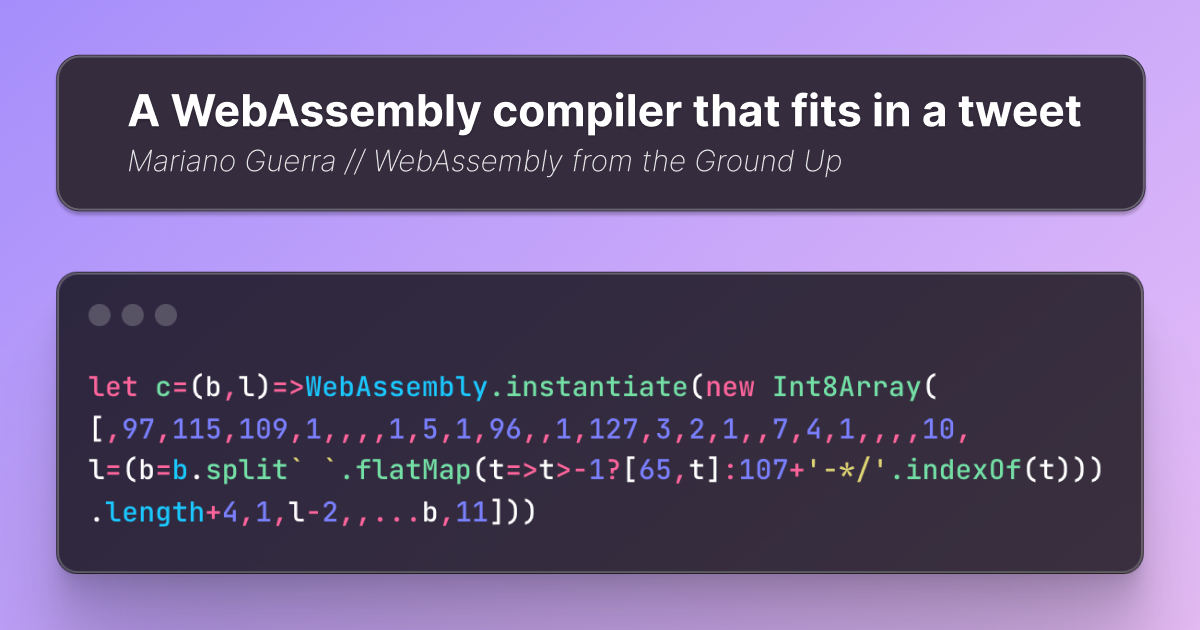
A 192-Byte WebAssembly Compiler: Code Golfing Extravaganza

2025-01-24
A 192-Byte WebAssembly Compiler: Code Golfing Extravaganza

This article details a WebAssembly compiler, a mere 192 bytes in size, capable of compiling reverse Polish notation expressions into WebAssembly modules. The author systematically deconstructs the code's optimizations, revealing clever uses of JavaScript features, WebAssembly bytecode manipulation, and variable/expression streamlining. While functionally simple, this tiny compiler offers a deep dive into the inner workings of WebAssembly.

Read more
Development

Little Snitch's Secret Weapon: Precisely Controlling Safari's Search Helper

2025-01-24

While configuring Little Snitch on a new Mac, the author discovered Safari's search helper process silently connecting to Google's ssl.gstatic.com. Changing the search engine or blocking the connection worked, but the latter interfered with Gmail authentication. The solution? A clever Little Snitch rule using the 'via' function, blocking only the search helper's connection while allowing Safari itself, showcasing a powerful, little-known feature. This highlights a subtle but significant aspect of browser-search engine background communication.

Read more
Development

Data Branching for Batch Job Systems: A Git-like Approach

2025-01-24

This blog post explores the application of Git-like branching strategies for managing data within batch job systems. The author proposes using the 'main' branch as the canonical production data version. Each job execution creates a new branch for processing and metadata recording; successful jobs merge back into 'main'. The post also covers branching strategies for test execution, experiments, and multi-step jobs, achieving efficient version control and experimental management, mirroring aspects of database transaction ACID properties.

Read more

Lightpanda: A Lightweight Headless Browser for AI and Automation

2025-01-24
Lightpanda: A Lightweight Headless Browser for AI and Automation

Lightpanda is an open-source headless browser designed for AI and automation tasks. Written in Zig, it boasts ultra-low memory footprint and exceptionally fast execution—11x faster and 9x less memory than Chrome. Supporting Javascript execution and partial Web APIs, it's compatible with Playwright and Puppeteer, ideal for AI agents, LLM training, scraping, and testing. Currently in Beta, it already features an HTTP loader, HTML parser, DOM tree, Javascript support (v8), basic DOM APIs, Ajax, XHR API, Fetch API, and DOM dumping.

Read more
Development headless browser

Wild: A Blazing-Fast Linker for Linux

2025-01-24
Wild: A Blazing-Fast Linker for Linux

Wild is a linker designed for speed in iterative development. While incremental linking isn't yet implemented, it's already impressively fast. For production builds, more mature linkers like GNU ld or LLD are recommended. However, for development, Wild significantly speeds up build times, especially on x86-64 Linux systems. It supports statically and dynamically linked executables and shared objects, and has been tested with many popular crates from crates.io. Currently under development are features like incremental linking, support for other architectures, and more linker flags.

Read more
Development linker

cs16.css: A CSS Library Inspired by Counter-Strike 1.6

2025-01-24
cs16.css: A CSS Library Inspired by Counter-Strike 1.6

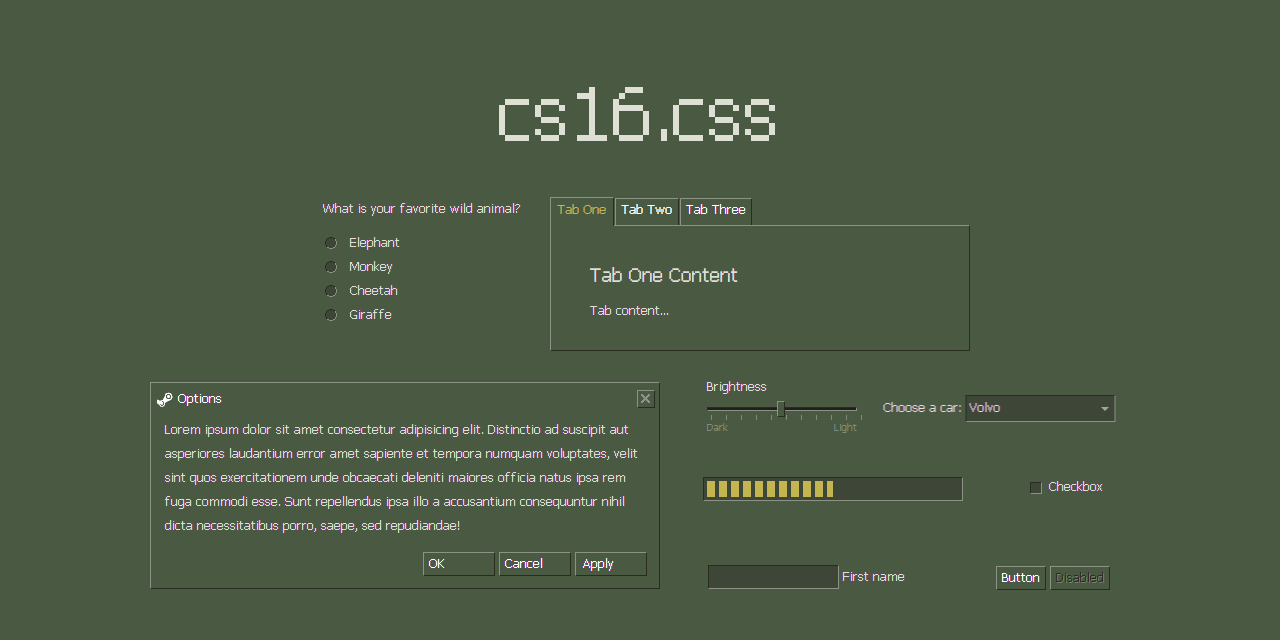
cs16.css is a CSS library inspired by the user interface of Counter-Strike 1.6. It offers a clean and easy-to-use style for various common components, including buttons, checkboxes, input fields, dropdown menus, radio button groups, sliders, dialogs, tooltips, progress bars, and tabs. Simply add the CSS link to your HTML's `` tag to get started. The library is available on GitHub under the MIT license.

Read more

Near-Perfect Book-Sorting Algorithm Achieved

2025-01-24
Near-Perfect Book-Sorting Algorithm Achieved

A breakthrough in the "library sorting problem" (also known as the "list labeling" problem) has been achieved. The problem focuses on finding the most efficient way to organize books or files in a database to minimize the time needed to insert new items. A team developed a new algorithm that comes tantalizingly close to the theoretical optimum (log n) for average insertion time. This algorithm cleverly combines limited knowledge of past contents with the surprising power of randomness, solving a decades-old challenge. This research has implications not only for librarians but also for database and hard drive organization, promising significant improvements in data storage and retrieval efficiency.

Read more
Development

Threlte 8 Released: Major Update to Svelte 3D Framework

2025-01-24
Threlte 8 Released: Major Update to Svelte 3D Framework

The Threlte team has released Threlte 8, a major milestone bringing significant performance, flexibility, and developer experience improvements. This release integrates Svelte 5's new features and leverages the latest advancements in Three.js. Key updates include an all-new `` component, an improved plugin API, WebGPU support, and the alpha release of Threlte Studio. While breaking changes exist, a migration guide is provided to assist users.

Read more
Development

My Home Assistant Journey in 2025

2025-01-24
My Home Assistant Journey in 2025

This blog post details the author's seven-year journey with Home Assistant, starting from a simple setup with IKEA smart bulbs in a small apartment to a sprawling smart home with over 100 devices. The core of the post focuses on using Home Assistant's Adaptive Lighting for sophisticated light control and leveraging an AI coding assistant, Cursor, to streamline YAML configuration and debugging. The author shares optimized Adaptive Lighting configurations for various IKEA bulb types and outlines plans to integrate smart radiator valves for more precise room temperature control.

Read more
Development

Self-Driving Buses: The Next Frontier for Autonomous Vehicle Tech?

2025-01-24
Self-Driving Buses: The Next Frontier for Autonomous Vehicle Tech?

Facing a looming shortage of bus drivers and the inefficiency of robotaxis, self-driving buses are emerging as a promising solution. Unlike robotaxis, which exacerbate traffic congestion, autonomous buses offer increased efficiency. Imagry, a San Jose-based company, has successfully deployed Level 3 autonomous buses in Israel and aims to expand to Level 4 technology globally. Their cost-effective approach utilizes cameras and machine learning for high-definition map generation, ensuring safe and reliable autonomous operation. Competitors like MAN, Karsan, and Iveco are also actively developing self-driving bus technology, with supportive government initiatives in Europe and Asia. The widespread adoption of autonomous buses could revolutionize public transportation.

Read more
Tech buses

magenta.nvim: A Tool-Use Focused LLM Plugin for Neovim

2025-01-24
magenta.nvim: A Tool-Use Focused LLM Plugin for Neovim

magenta.nvim is a powerful Neovim plugin leveraging LLMs to boost coding efficiency. It provides a chat window to interact with an AI coding assistant and tools for context population and inline edits. Unlike other plugins, magenta.nvim relies on the LLM to choose its context, utilizing various tools (listing directories, getting file contents, using LSP features, etc.) to accomplish tasks. Its clean architecture, extensive testing, and support for multiple providers like OpenAI and Anthropic make it highly extensible and robust.

Read more
Development

A Naturalist's Artistic and Scientific Exploration of Butterfly Wing Color Patterns

2025-01-24
A Naturalist's Artistic and Scientific Exploration of Butterfly Wing Color Patterns

In 1897, naturalist Alfred G. Mayer published *On the Color and Color-Patterns of Moths and Butterflies*, showcasing unique color projections of butterfly wings. Mayer presented the tonal variations of butterfly wings as geometric patterns, attempting to reveal the underlying principles. However, his method was criticized by renowned naturalist Alfred Russel Wallace for distorting the patterns and hindering species identification. Despite this, Mayer's work transcends scientific research, representing an artistic exploration of color itself. His vibrant color projections remain visually striking today.

Read more

AI is Breeding a Generation of Illiterate Programmers

2025-01-24

A seasoned programmer, after a ChatGPT outage, discovered his coding skills had severely deteriorated due to over-reliance on AI. He no longer reads documentation, debugs effectively, or even examines error messages, instead directly copy-pasting AI-generated solutions. This has robbed him of the joy and ability to deeply understand code, diminishing his programming passion. He urges programmers to use AI moderately, practicing regular AI-free coding sessions to avoid becoming dependent on AI and losing the ability to solve problems independently. The article warns that while AI enhances efficiency, it can also lead to skill degradation; a balance must be maintained to stay competitive in the age of AI. Try a day without AI; the results might surprise you.

Read more
(nmn.gl)
Development developers

Favicons: A Powerful, Underutilized Tool in OSINT Investigations

2025-01-24

This article highlights the crucial role of favicons (website icons) in Open-Source Intelligence (OSINT) investigations. Favicons, often overlooked, can be powerful indicators of fraudulent websites. By comparing the hash values of a target website's favicon with legitimate sites, investigators can identify impersonation attempts. The article demonstrates how tools like Favicone, Favicon Grabber, and Favihash can be used to analyze favicon hashes and search platforms like Shodan and Censys to uncover malicious websites mimicking legitimate ones, such as an example involving a fake Amazon UK site. This underscores favicon analysis as an effective, yet underutilized, technique in OSINT, enabling swift identification of online fraud and malicious activities.

Read more
Tech

Goodbye Distributed Coordination: How Restate Simplifies Distributed Apps with a Single Log

2025-01-24
Goodbye Distributed Coordination: How Restate Simplifies Distributed Apps with a Single Log

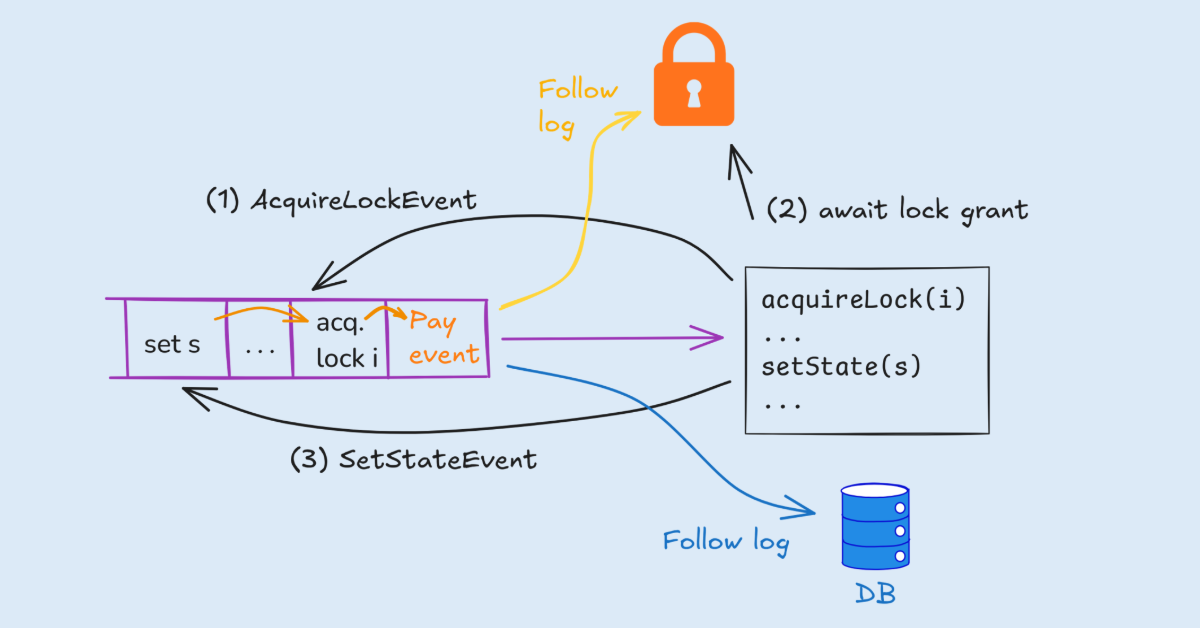
Building resilient distributed applications remains a significant challenge. Developers often spend considerable time addressing failover strategies, retries, race conditions, and other complexities. This article introduces Restate, a novel approach that simplifies development by avoiding distributed coordination. The core idea is to treat all systems (message queues, databases, locking services, etc.) as a single log. Every operation is recorded in this log, and retries automatically read previous operation records, preventing inconsistencies and race conditions. Restate is an open-source project based on this principle, simplifying the development and maintenance of distributed applications and improving system reliability.

Read more
Development log

FBI's Warrantless Searches Deemed Unconstitutional, Sparking Calls for Section 702 Reform

2025-01-24
FBI's Warrantless Searches Deemed Unconstitutional, Sparking Calls for Section 702 Reform

A US court ruled that the FBI's warrantless searches of communications, conducted under Section 702 of the Foreign Intelligence Surveillance Act (FISA), violate the Fourth Amendment. The ruling stems from a case involving 3.4 million warrantless searches in 2021. While the judge acknowledged potential exceptions for national security emergencies, the decision emphasizes that the government cannot circumvent warrant requirements simply because data is already held. This ruling reignites calls for Section 702 reform, with digital rights groups urging Congress to mandate warrants for searching US persons' data and increase transparency to protect civil liberties.

Read more

Trump Administration Orders End to Federal Remote Work

2025-01-24
Trump Administration Orders End to Federal Remote Work

President Trump issued an executive order mandating all federal agencies to terminate remote work arrangements within 30 days, forcing employees back to in-person work. This move addresses the high vacancy rate in federal offices stemming from pandemic-era remote work, citing economic losses and a "national embarrassment." While some exceptions are allowed, the order is considered forceful and has sparked controversy.

Read more

Building a Better Future with 'Plausible Fiction'

2025-01-24

This article proposes a novel approach called 'plausible fiction' to tackle real-world problems by constructing believable narratives that bridge the gap between our present and a desired future. The author argues that collective participation in filling the gaps within these narratives can transform fiction into reality. This process resembles a form of collective prediction and creation, potentially leveraging mathematical tools like applied category theory. The article uses a hypothetical platform, FutureForge, to illustrate how gamification and incentive mechanisms can encourage broader participation, ultimately leading to a better future.

Read more

The Case for Fewer Dependencies in Rust

2025-01-24
The Case for Fewer Dependencies in Rust

Armin Ronacher, a renowned developer, laments the over-reliance on external crates in the Rust ecosystem in a recent blog post. He argues that excessive dependencies lead to constant updates, patches, and security audits, burdening developers and often introducing unnecessary code bloat. He advocates a "build it yourself" philosophy, encouraging developers to write their own code when appropriate instead of blindly relying on external libraries. He uses the `terminal_size` crate as an example, illustrating how a simple function depends on multiple crates and has undergone numerous updates, highlighting the drawbacks of over-dependency. The post calls for a shift in the Rust community's perspective, prioritizing fewer dependencies and celebrating developers who create low-dependency libraries.

Read more
Development

Marshall Amplification Acquired by HSG in a €1.1 Billion Deal

2025-01-24
Marshall Amplification Acquired by HSG in a €1.1 Billion Deal

Funds managed by HSG have acquired a majority stake in Marshall Amplification, the iconic British audio brand, in a deal valuing the company at €1.1 billion. The Marshall family retains a significant minority stake, and will work with HSG to further expand the brand's global reach. HSG plans to leverage its expertise in digital channels and supply chain optimization to boost Marshall's growth. This acquisition follows a period of strong growth for Marshall, with revenue more than doubling between 2020 and 2024, reaching approximately €400 million.

Read more
Tech

Stealthy VPN Backdoor Uses 'Magic Packets' to Evade Detection

2025-01-24
Stealthy VPN Backdoor Uses 'Magic Packets' to Evade Detection

Researchers uncovered a novel backdoor, dubbed J-Magic, infecting dozens of enterprise VPNs running Juniper's Junos OS. This backdoor leverages 'magic packets' embedded within normal TCP traffic, activating only upon receiving specific data patterns. To prevent unauthorized access, J-Magic employs an RSA encryption challenge-response mechanism. Its in-memory operation further hinders detection. The backdoor has been found in 36 organizations across various industries, including semiconductor, energy, manufacturing, and IT. The origin of the infection remains unknown.

Read more
Tech Backdoor

Roto VR: Revolutionizing VR Comfort with a Rotating Chair

2025-01-24
Roto VR: Revolutionizing VR Comfort with a Rotating Chair

The Roto VR Explorer chair automatically rotates to match your head movements in VR, significantly enhancing comfort and immersion. By tracking a sensor on your headset, the chair synchronizes its rotation, mitigating motion sickness and improving comfort during extended VR sessions. A Pro version and add-ons are available for productivity, such as working with virtual monitors. While some lag and control issues exist, Roto VR's core concept is innovative, particularly excelling in relaxed VR experiences, showing immense potential for future development.

Read more
Hardware Haptic Feedback

Docker Hub's Trust Crisis: LinuxServer.io's Predicament

2025-01-24
Docker Hub's Trust Crisis: LinuxServer.io's Predicament

LinuxServer.io, a prominent Docker image provider, has long relied on Docker Hub as its primary registry. However, a series of policy changes by Docker Hub in recent years, including limitations on free users and a disastrous DSOS renewal process, resulted in LinuxServer.io losing its DSOS membership, facing the risk of image purging and pull limits. Despite attempts to contact Docker for assistance, they received no response. This forces LinuxServer.io to re-evaluate its image distribution strategy, potentially reducing reliance on Docker Hub, impacting many users who depend on it.

Read more
Development

Oracle Linux: The Unexpected Best Local VM for MacBooks

2025-01-24

The author needed a local Linux environment for Kubernetes development on their MacBook. After struggling with Docker Desktop's high power consumption and sleep issues, they discovered an unexpected solution: Oracle Linux. Oracle Linux, a downstream of Red Hat Enterprise Linux, offers an easy-to-use UTM template. The author details setting up k3s and cert-manager, highlighting Oracle Linux's surprisingly low power consumption in UTM, solving the problems encountered with Docker Desktop. This makes it a superior choice for local development.

Read more
Development

Impact of Extremely Low Temperatures on 5nm SRAM Array Size and Performance

2025-01-24
Impact of Extremely Low Temperatures on 5nm SRAM Array Size and Performance

New research explores the effects of extremely low temperatures (down to 10K) on the size and performance of 5nm FinFET SRAM arrays. Researchers found that at cryogenic temperatures, the maximum array size is limited by wordline parasitics, not leakage current, and performance is governed by both bitline and wordline parasitics. This has significant implications for future low-power, high-performance computing, offering valuable insights for optimizing SRAM arrays in extremely cold environments.

Read more

South Korea's Democracy Defends Itself Against a Midnight Coup Attempt

2025-01-24
South Korea's Democracy Defends Itself Against a Midnight Coup Attempt

President Yoon Suk-yeol's surprise midnight declaration of martial law in South Korea was swiftly met with a powerful response from legislators and civil society. This near-coup attempt was thwarted within hours, highlighting the resilience of South Korean democracy. Decades of struggle against authoritarian rule have fostered a deeply networked society with strong civic engagement and near-universal digital connectivity. While political polarization remains a concern, the rapid mobilization against the attempted power grab underscores the strength of South Korea's democratic institutions and its citizens' commitment to defending them.

Read more

Nix@NGI: Streamlining Open Source Software

2025-01-24
Nix@NGI: Streamlining Open Source Software

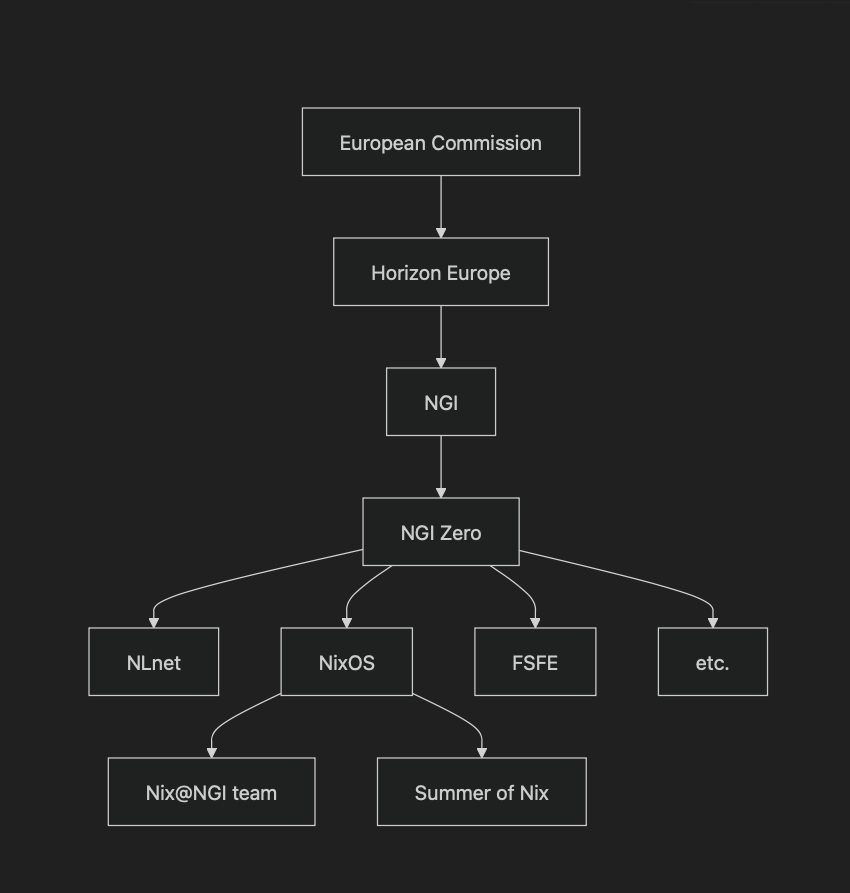
The Nix@NGI team is on a mission to make running open-source software easier, both now and in the long term. Partnering with the NGI Zero consortium, they aim to integrate over 1200 NLnet-funded projects into the Nix ecosystem. The team boasts a diverse skillset, encompassing management, operations, development, and maintenance, and actively welcomes volunteers and trainees. Their work benefits NixOS contributors and enhances open-source accessibility. Future plans include improving tools, processes, and user experience, further propelling open-source software development.

Read more
Development

100% Unemployment: The Looming Threat of Automation

2025-01-24

Software engineer Mike expresses concern about the potential for widespread unemployment due to automation. He argues that AI and automation will soon replace many, if not all, jobs susceptible to automation, challenging the notion that technological advancements will create new jobs. He raises the critical question of how to define personal worth in a future where most people lack economic value, prompting reflection on societal structures and individual value.

Read more
1 2 497 498 499 501 503 504 505 596 597