Category: Development

Rethinking Literate Programming: Is Knuth's Approach Obsolete?

2025-01-13

This article offers a critical examination of Donald Knuth's literate programming approach. The author argues that Knuth's method overemphasizes typesetting while neglecting the crucial aspect of code organization, resulting in static, less interactive documentation. The author advocates for a literate programming style that prioritizes code organization and interactive feedback, illustrating its advantages with a simple interpreter he created. The key takeaway is that effective literate programming should allow developers to modify and run code directly within their programming environment, not just passively read a static document.

London Underground Live Map Shut Down After 15 Years

2025-01-13

A developer built and maintained a website displaying real-time London Underground and bus routes using TfL's open data since 2010. The site, featured in BBC and Guardian, gained popularity. However, on January 7th, 2025, the developer received a cease and desist from TfL regarding the Tube map schematic. Despite willingness to modify, the developer shut down the site, citing TfL's heavy-handed approach. This story highlights the conflict between large organizations and individual developers, and the complexities of open data applications.

JUring: Blazing Fast File I/O in Java with io_uring

2025-01-13
JUring: Blazing Fast File I/O in Java with io_uring

JUring is a high-performance, experimental Java library leveraging Linux's io_uring asynchronous I/O interface via Java's Foreign Function & Memory API for lightning-fast data reads. Benchmarks demonstrate a 33% speed improvement over Java NIO for local files and a remarkable 78% improvement for remote files. Offering both blocking and non-blocking APIs for file reading and writing, JUring is currently under development with planned improvements in instance creation cost, memory usage, and added features like socket support.

Development High-Performance I/O

Debugging Bible: Nine Indispensable Rules

2025-01-13

David J. Agans's "Debugging: The 9 Indispensable Rules for Finding Even the Most Elusive Software and Hardware Problems" is hailed as a classic for software and hardware developers. This book focuses not on specific technologies, but on fundamental methods for finding and fixing bugs. Through nine rules, illustrated with numerous engaging examples, the author explains how to understand the system, make it fail, get data, divide and conquer, change one thing at a time, keep an audit trail, check assumptions, seek help, and verify fixes. Even experienced programmers will find helpful reminders, while novices will find it an invaluable resource.

Development

Raycast is Hiring a Full-Stack Software Engineer to Build the Future of Multi-Platform Productivity

2025-01-13
Raycast is Hiring a Full-Stack Software Engineer to Build the Future of Multi-Platform Productivity

Raycast, the Mac app company focused on building simple and efficient tools, is hiring a Full-Stack Software Engineer. You'll maintain and enhance their web and backend infrastructure, laying the foundation for their next-generation cross-platform product. This is a challenging and rewarding role requiring expertise in TypeScript, familiarity with Ruby on Rails or similar backend frameworks, and experience building high-performance web applications. You'll be involved in the entire process, from ideation to maintenance, working closely with a small, talented team to shape the product roadmap. If you're passionate about user experience, value code quality, and want to make a significant impact at a fast-growing company, this is your ideal opportunity.

Development

Oracle Refuses to Surrender JavaScript Trademark, Deno Land Fights Back

2025-01-13
Oracle Refuses to Surrender JavaScript Trademark, Deno Land Fights Back

Deno Land has filed a lawsuit against Oracle over the ownership of the JavaScript trademark. Oracle acquired the trademark in 2009 with the purchase of Sun Microsystems. Deno Land argues that Oracle has abandoned the trademark and that its 2019 trademark renewal was fraudulent. Both sides will submit their responses before February 3rd, followed by evidence gathering. This legal battle is expected to last for quite some time.

Development Trademark Dispute

IRC Driven: Reviving IRC as a Social Platform

2025-01-13

IRC Driven is a modern IRC indexing site and search engine aiming to revive IRC and transform it into a social platform. It offers network and channel indexing, user profile creation, and channel pages based on network channel lists. The site has undergone multiple rewrites and recent improvements include resolving API issues, bringing back channel bots. The site is also seeking volunteers to help with development to further enhance user experience.

Chumby 8 Kernel Upgrade: Solving the 100% CPU Usage Mystery

2025-01-13

While upgrading the Linux kernel of his Chumby 8 device to version 6.x, the author encountered a persistent 100% CPU usage problem. Through time-reversal debugging, kernel profiling, and a deep dive into the `/proc/stat` file, the root cause was traced to a timing issue in the kernel code that reads the PXA168 hardware timer register, resulting in inaccurate idle time counting. The author fixed this problem and contributed the solution back to the main Linux kernel.

Development Hardware Debugging

/etc/glob: The Untold Story of Early Unix Shell Globbing

2025-01-13

This article delves into the history and function of `/etc/glob` in early Unix systems. Before the V7 Bourne Shell, Unix shell globbing wasn't handled by the shell itself but delegated to the external program `/etc/glob`. `/etc/glob` received the command and arguments, expanded wildcards, and then executed the command. The article details how `/etc/glob` worked across different Unix versions, including handling escaped characters and the rationale behind using an external program—likely due to resource constraints in early systems.

Development Unix history Globbing

DoxyPress 1.7.0 Released: Streamlining Documentation Generation

2025-01-13

DoxyPress 1.7.0 is now available! This powerful documentation generator, built on CopperSpice, simplifies the documentation creation process. This release includes installation, building, usage instructions, and a FAQ, along with extensive customization options. Whether you're a beginner or an experienced developer, you can easily generate high-quality documentation quickly.

The Paradox of Elegant Programming Languages: Why Simplicity Can Be a Curse

2025-01-13

Some programming languages fail to gain traction due to obscurity or overly ambitious designs. The article explores the challenges faced by concise, elegantly designed languages like BF and Scheme, where developers often prioritize building their own implementations rather than using existing ones. The author argues that a balance between simplicity and practicality is crucial. Multiple implementations are beneficial only when a strong user community exists and demands diverse implementations. The success of Clojure and Racket suggests that languages need to reach a critical mass to attract users who focus on application development, rather than implementation.

Development

Comptime Configuration in Zig: Clever Design in httpz and ztl Libraries

2025-01-13

This article explores the techniques of using compile-time metaprogramming for configuration in the Zig programming language. The author uses their httpz and ztl libraries as examples, demonstrating how a generic type parameter `T` can simultaneously serve as both application context and configuration. Functions defined within the `T` type can override the library's default behavior, while fields in `T` can configure scalar values. Compile-time checks ensure the correctness of the configuration and allow for compile-time optimizations, such as adjusting the virtual machine stack size based on the configuration. While this approach requires users to provide configuration at compile time, it offers significant performance improvements and is an effective strategy for building flexible and efficient libraries.

Qubes OS Templates: Secure, Efficient VM Management

2025-01-13
Qubes OS Templates: Secure, Efficient VM Management

Qubes OS utilizes a template system for managing virtual machines, enhancing security, storage efficiency, and boot speed. Each template shares its root filesystem, with applications running and storing data within qubes. Updating a template automatically updates all qubes based on it after a restart. Software should be installed in templates, not app qubes. Qubes offers templates based on Fedora, Debian, and more, plus community templates. Users can install, update, uninstall, or switch templates via command-line or GUI tools. Uninstall warnings are normal. Switching templates requires updating all qubes based on the old template. Template security is crucial; install software only from trusted sources.

Whonix: The Ultimate Privacy OS

2025-01-12
Whonix: The Ultimate Privacy OS

Whonix is a Linux-based virtual machine operating system designed for maximum internet privacy and anonymity. It achieves this by routing all internet traffic through the Tor network and implementing multi-layered security measures, including browser fingerprinting protection, keystroke cloaking, and strict access controls, to protect users from tracking and malware. Whonix's design philosophy is 'all Tor,' and it offers features like anonymous web server hosting and Live Mode to ensure user security and anonymity online.

Development anonymity

wonderful.dev: The Developer Portfolio Platform

2025-01-12

wonderful.dev is a developer-focused online portfolio platform designed to help developers showcase their skills, track industry trends, and find ideal jobs or projects. The platform supports skill verification and integrates with WakaTime data, allowing developers to showcase their abilities with data-backed credibility, enhancing their competitiveness in the job market. Developers can create profiles, highlight verified skills and achievements, follow the latest tech trends, and discover opportunities perfectly aligned with their expertise.

uv: A Killer Feature You Should Know About

2025-01-12

uv isn't just a fast Python package manager; it boasts a killer feature: simplified dependency management. Need Pandas in your Python REPL? Just one command, `uv run --python 3.12 --with pandas python`, eliminates the need for virtual environments or Python version switching. This makes ad-hoc scripting and experimenting with different Python versions incredibly smooth.

Development package manager

Building the World's Best Product Engineering Org: Six Key Elements

2025-01-12

This article is a transcript of James Shore's keynote presentation at the Regional Scrum Gathering Tokyo conference, exploring how to build a world-class product engineering organization. He proposes six key elements: People, Internal Quality, Lovability, Visibility, Agility, and Profitability. The article details how to achieve these goals through improved hiring strategies, enhanced code quality, fast feedback loops, agile methodologies, and collaboration with other departments, emphasizing the importance of continuous improvement. Through case studies and practical experience, the author shares valuable insights, providing guidance for building efficient and excellent product engineering teams.

Development product engineering

Tabby: Your Self-Hosted AI Coding Assistant

2025-01-12
Tabby: Your Self-Hosted AI Coding Assistant

Tabby is an open-source, self-hosted AI coding assistant offering a local alternative to GitHub Copilot. It's self-contained, requiring no DBMS or cloud service, features an OpenAPI interface for easy integration, and supports consumer-grade GPUs. Recent updates include Llamafile deployment integration, an enhanced Answer Engine user experience, the ability to switch between different backend chat models in the Answer Engine, and displaying recently shared threads on the main page. It also boasts IDE plugins and enterprise features like team management and secured access.

Development AI coding assistant

SemHash: Blazing Fast Semantic Text Deduplication

2025-01-12
SemHash: Blazing Fast Semantic Text Deduplication

SemHash is a lightweight and flexible tool for deduplicating datasets using semantic similarity. It combines fast embedding generation from Model2Vec with efficient ANN-based similarity search through Vicinity. SemHash supports both single-dataset and multi-dataset deduplication and handles simple datasets like text lists and complex ones like multi-column QA datasets. It includes functions to inspect deduplication results, making it easier to understand and refine your data cleaning process. Benchmarks show SemHash is extremely fast and scales to large datasets with millions of records.

Racket Library for Elegant HTML5 Generation

2025-01-12

The `html-printer` library for Racket provides an elegant way to generate well-formatted HTML5 code. Its core function, `xexpr->html5`, converts X-expressions to HTML5 strings with automatic indentation and line wrapping, allowing customization of column width. It's Unicode-aware, correctly handling character lengths, and optionally adds line breaks between tags for improved readability and maintainability. Ideal for creating semantically clean and structurally sound HTML5.

Development

20 Great CPAN Modules Released Last Week

2025-01-12

Last week saw the release of 20 excellent Perl modules on CPAN (Comprehensive Perl Archive Network), each boasting 12 or more favorites. These modules cover a wide range of functionalities, including database browsing, database change management, CGI handling, configuration management, security auditing, password management, date/time parsing, database drivers, object models, code formatting, and ORMs. Updates included popular modules like DBD::mysql, DBI, and Perl::Tidy, alongside newer additions. This significant update provides Perl developers with a wealth of tools and enhanced development efficiency.

Development Module Updates

Rust's Allure Beyond Performance: A Programmer's Love Story

2025-01-12

A programmer shares their love for the Rust programming language, highlighting aspects beyond its renowned performance and memory safety. The post focuses on Rust's expressive and safe type system, helpful compiler error messages, and the flexibility of combining functional and imperative programming styles. While acknowledging the steeper learning curve, the author emphasizes Rust's predictability, concurrency safety, and overall enjoyment compared to languages like Go. Ultimately, Rust is presented as a worthwhile language even when top performance isn't a primary requirement.

Development

18 Years in the Linux Console: No Regrets

2025-01-12
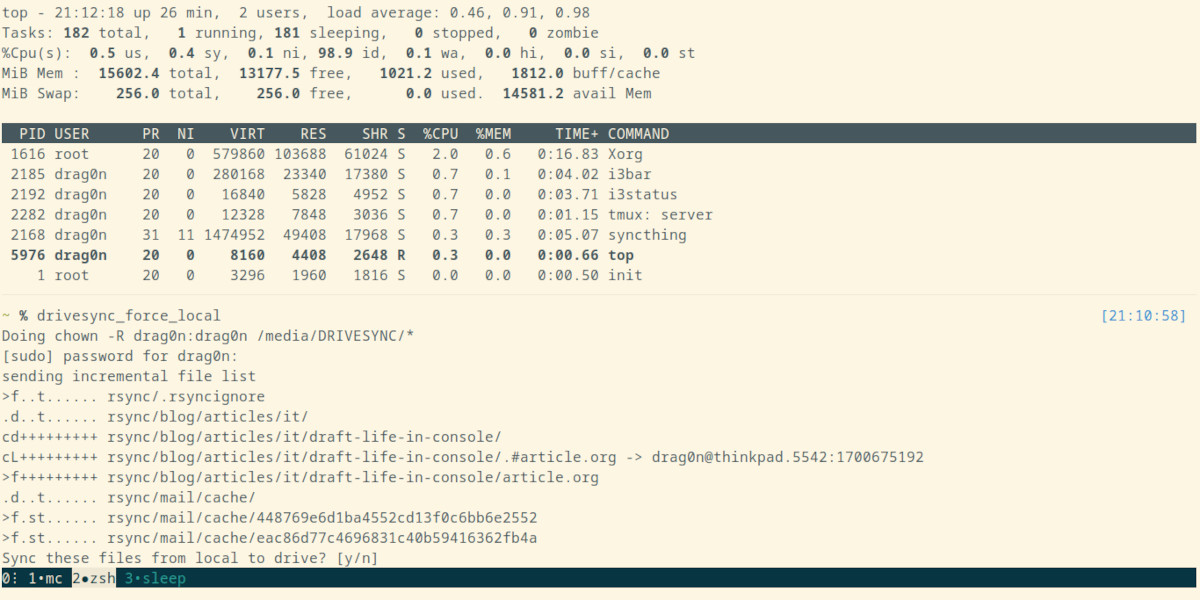
18 Years in the Linux Console: No Regrets

A programmer recounts his 18-year journey using only the Linux command line. Starting in the early 2000s in a rural area with limited internet access, he learned Linux, eventually finding his 'zen' through countless nights of coding and experimenting with various distributions. The author details challenges and solutions, sharing insights on modern Linux trends like the rise of systemd and his choice of Gentoo. This nostalgic piece is a captivating tale of dedication to pure technology.

Development

Nextest: Why Process-per-Test?

2025-01-12
Nextest: Why Process-per-Test?

Cargo-nextest, a Rust test runner, distinguishes itself by running each test in a separate process. This article delves into the rationale, emphasizing not just the technical benefits but also its role as a coordination point within the massive Rust ecosystem. Process isolation prevents test interference, addressing issues like shared resource contention and memory leaks, thus boosting reliability. While process creation incurs some overhead, the advantages outweigh the costs, particularly for large test suites, making it a stable and reliable focal point in Rust testing.

Bad Apple in Vim: 6500 Regexes and a Whole Lotta Magic

2025-01-12
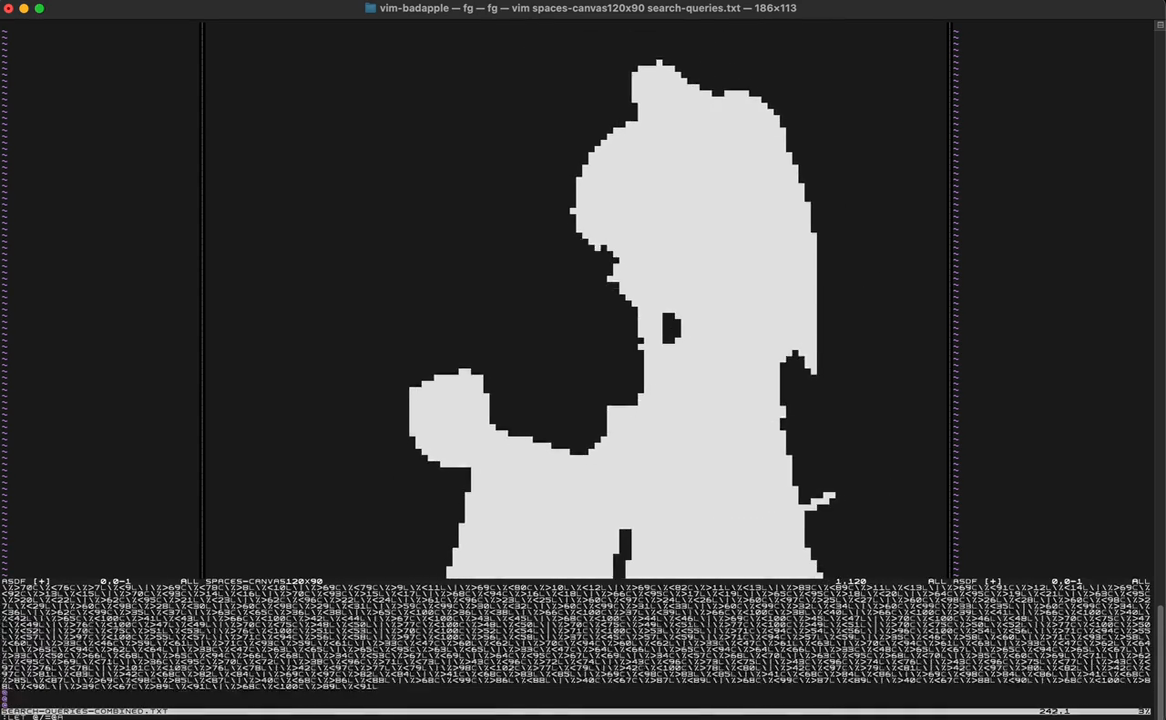
Bad Apple in Vim: 6500 Regexes and a Whole Lotta Magic

This post details how the author rendered the Bad Apple music video within Vim using only search queries. Each frame was converted into a binary pixel array, decomposed into rectangles, and represented by a Vim regex. The result? A file containing over 6500 regexes, played sequentially via a Vim macro to create the animation. This impressive feat showcases Vim's surprising capabilities and the author's considerable programming skill.

Development Regex

Animations Without Keyframes: A New CSS Trick

2025-01-12
Animations Without Keyframes: A New CSS Trick

CSS's new `@starting-style` allows creating animations without `@keyframes`. This isn't a replacement for traditional animation, but a useful CSS trick in certain situations. The article demonstrates two examples: an infinitely rotating square, and a more complex animation manipulating background color, translation, and rotation via an animated variable `--i`. While not always superior, it offers a fresh way to express animations, expanding CSS animation possibilities.

Invariants: A Powerful Tool for Writing Correct Code

2025-01-12

This article explores the concept of 'invariants' in programming and their applications. Starting with a small example—writing a binary search variation that computes the insertion point—the author demonstrates how defining and maintaining invariants leads to correct code. Invariants, the article explains, are properties that hold true throughout a system's dynamic evolution, simplifying reasoning by avoiding the complexities of considering numerous execution paths. Examples from projects like Cargo, rust-analyzer, and TigerBeetle illustrate the benefits of using invariants in large systems, such as improved maintainability and performance. The author concludes by summarizing the importance of invariants in both small-scale and large-scale programming, highlighting their value in writing correct and efficient code.

WordPress Sustainability Team Axed, Sparking Outrage

2025-01-12
WordPress Sustainability Team Axed, Sparking Outrage

Matt Mullenweg, co-founder of WordPress, abruptly disbanded the WordPress Sustainability Team, causing a major backlash within the community. The team, focused on social, economic, and environmental sustainability for WordPress, was dissolved despite its efforts to embed sustainable practices. Tech journalist Kara Swisher called the move "bizarrely heinous behavior." Mullenweg cited low ROI, but critics slammed his decision as short-sighted and dismissive of the team's contributions. The incident highlights governance issues and concerns about WordPress's long-term sustainability.

Development Community Backlash

SimpleGantt: A Lightweight, Offline-Capable Gantt Chart Tool

2025-01-12
SimpleGantt: A Lightweight, Offline-Capable Gantt Chart Tool

SimpleGantt is a lightweight project management tool designed for environments with software installation restrictions or where cloud applications are prohibited. Running entirely in the browser using only JavaScript, CSS, HTML, and YAML, it offers interactive Gantt chart rendering, task management with dependencies, milestone tracking, and offline usage. Even in restricted environments like SharePoint, SimpleGantt provides a simple project management solution. Project files are saved locally in YAML format, or can be manually uploaded to SharePoint.

Development gantt chart offline

Matt Mullenweg's Conflict of Interest: Time to Resign?

2025-01-12

This article argues that Matt Mullenweg, founder of WordPress, faces a significant conflict of interest by simultaneously leading the non-profit WordPress Foundation and the for-profit company Automattic. The author contends that Automattic's business interests could clash with the Foundation's mission, potentially harming the WordPress community. The article sparked a heated debate about open-source governance and commercial interests, with community members voicing strong opinions on both sides.

Development conflict of interest
1 2 186 187 188 190 192 193 194 214 215