Category: Development

Semcheck: Verify Code Against Specs Using LLMs

2025-07-05
Semcheck: Verify Code Against Specs Using LLMs

Semcheck is a tool that leverages large language models (LLMs) to verify that your code implementation matches its specification. Define semantic rules describing how your code should align with the specification, and Semcheck handles the comparison. Use it as a final check before committing or merging code. Semcheck supports various LLM providers, including OpenAI, Anthropic, and more, as well as local models and remote specification files. It's easy to set up and offers a rich command-line interface, making it easily integrable into CI/CD workflows. It even uses itself to verify its own specification.
SIMD Functions: The Promise and Peril of Compiler Auto-Vectorization

2025-07-05
SIMD Functions: The Promise and Peril of Compiler Auto-Vectorization

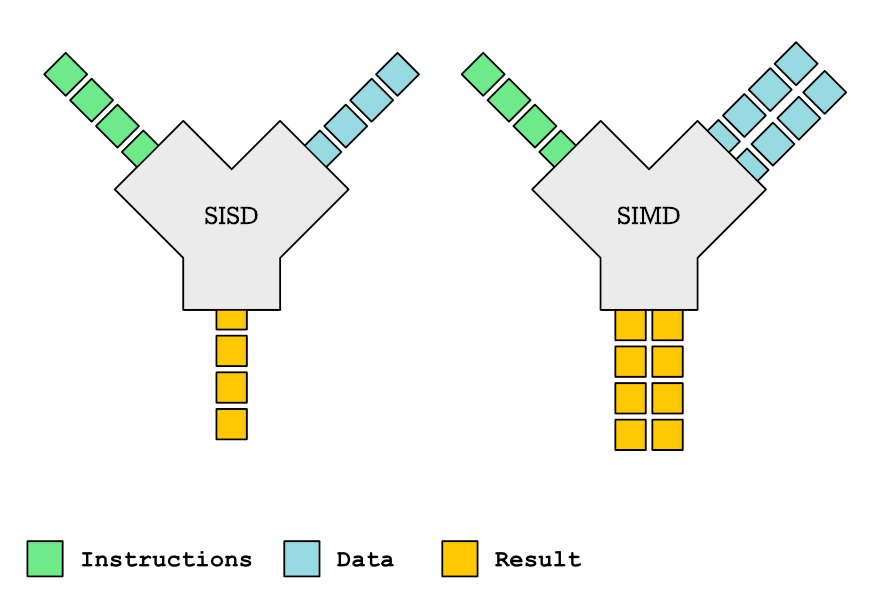
This post delves into the intricacies of SIMD functions and their role in compiler auto-vectorization. SIMD functions, capable of processing multiple data points simultaneously, offer significant performance improvements. However, compiler support for SIMD functions is patchy, and the generated vectorized code can be surprisingly inefficient. The article details how to declare and define SIMD functions using OpenMP pragmas and compiler-specific attributes, analyzing the impact of different parameter types (variable, uniform, linear) on vectorization efficiency. It also covers providing custom vectorized implementations using intrinsics, handling function inlining, and navigating compiler quirks. While promising performance gains, practical application of SIMD functions presents considerable challenges.

Development

Software Engineering: The Golden Age is Over?

2025-07-05
Software Engineering: The Golden Age is Over?

Software engineering used to be a highly sought-after profession, but now, with the rise of AI and increased competition, many engineers face the risk of unemployment. The author argues that this is because many engineers are complacent, lacking ambition, and content with simply writing simple code. He encourages engineers to upgrade their skills, actively learn AI tools, and solve real-world problems to stand out in a competitive environment. Software engineering is no longer for everyone; it requires true passion and dedication.

Development

AI-Powered Job Search: Navigating Layoffs with LLMs

2025-07-05
AI-Powered Job Search:  Navigating Layoffs with LLMs

Facing layoffs? This article explores using large language model (LLM) AI tools like ChatGPT and Copilot to ease the emotional and cognitive burden of job loss. The author provides prompt examples for career planning, resume optimization, LinkedIn profile enhancement, networking, and emotional support. While not a replacement for personal experience, these tools can help navigate the job search process more efficiently and calmly, offering clarity during a challenging time.

Development job search strategies

Linus Torvalds and bcachefs Developer Part Ways

2025-07-05

Linus Torvalds, the maintainer of the Linux kernel, rejected a pull request for the bcachefs filesystem in the 6.16-rc3 release and hinted at no longer accepting contributions from the project in the 6.17 merge window. This stems from a significant disagreement during code review, with Torvalds stating that bcachefs developer Kent Overstreet refused to accept any questioning or modification of his code. Following a private conversation, both parties decided to end their collaboration.

Development Development Dispute

AirBending: Plug-and-Play MIDI Controller for Universal Compatibility

2025-07-05
AirBending: Plug-and-Play MIDI Controller for Universal Compatibility

AirBending is a revolutionary MIDI controller offering seamless compatibility with popular DAWs like Logic Pro and Ableton Live, requiring no special drivers or plugins. Control external hardware synthesizers, software instruments, and effects processors with ease. Its advanced preset manager allows for customized gesture-to-music mapping, offering flexibility for both one-handed and two-handed control. Features include MIDI channel control, musical scale selection, and custom CC assignment for precise control over synth parameters like filters, effects, volume, and modulation, making it ideal for studio and live performance.

How Modern CPUs Efficiently Predict Bytecode Interpreter Loops

2025-07-05

While investigating the performance of a new Python interpreter, the author discovered that modern CPUs can efficiently predict indirect jumps within bytecode interpreter loops. This is achieved through advanced branch predictors like TAGE and ITTAGE. These predictors map the program counter (PC) and its history to past execution behavior, using multiple tables with geometrically increasing history lengths to dynamically choose the best prediction. The author explores applying ITTAGE's principles to coverage-guided fuzzing and program state exploration, suggesting it could lead to better understanding and exploration of interpreters and similar programs.

The Sisyphean Task: Convincing a Kubernetes Team to Embrace Serverless

2025-07-05

The author recounts their futile attempts to persuade their Kubernetes team to adopt an AWS serverless architecture. Kubernetes engineers raised concerns about runaway costs, vendor lock-in, and reliance on proprietary technology. The author details the arguments surrounding cost, scalability, and responsibility sharing, ultimately conceding that both technologies have strengths and can coexist. The humorous tone highlights the clash of perspectives within a tech team, reflecting the challenges of cloud-native technology adoption in enterprises.

Development

Amiga Linux Port: A Community Collaboration

2025-07-05

This email details Guenther Grau's decision to join the AmigaLinux porting project. He's been following Unix on Amiga for two years and believes Hamish's AmigaLinux port is the most promising, as it has a working kernel, albeit lacking drivers. Guenther wants to join the project to avoid reinventing the wheel and aims to get Unix running on the Amiga quickly.

Development OS Porting

Cursor Apologizes for Pro Plan Pricing Changes, Offers Refunds

2025-07-05
Cursor Apologizes for Pro Plan Pricing Changes, Offers Refunds

Cursor is apologizing for its recent pricing changes to its Pro plan, admitting poor communication led to unexpected charges for users. They're issuing full refunds for any unexpected usage between June 16th and July 4th. The new Pro plan offers unlimited usage of Tab and models in Auto mode, $20 of frontier model usage per month (at API pricing), with the option to purchase more. This change reflects the varying costs of different models across various tasks. Cursor promises improved communication for future pricing updates, including advance notice, clearer documentation, and better support.

Development pricing change

Haskell Lens Library: A Powerful Tool for Data Access

2025-07-04

The Haskell Lens library provides a powerful set of tools for accessing and manipulating data structures. It includes lenses, isomorphisms, folds, traversals, and more, allowing developers to handle complex data in a cleaner and safer way. The library offers comprehensive examples and documentation, and supports automatic lens generation, greatly simplifying the development process. Whether reading, writing, or transforming data, Lens provides efficient and elegant solutions.

Development

Database Query Optimizer: The Gap Between Ideal and Reality

2025-07-04

Database query optimizers aim to select the optimal query plan, but their reliance on cost estimations, which in turn depend on selectivity and the cost of basic resources (I/O, CPU, etc.), often leads to errors. Experiments reveal that for simple SELECT queries, the accuracy of the optimizer's plan selection varies greatly depending on data distribution. With uniform datasets, bitmap scans generally outperform index scans; however, with other distributions, the optimizer is more prone to selecting suboptimal index scans. This demonstrates that even for simple queries, the optimizer's cost model struggles to perfectly adapt to diverse data distributions and hardware environments. While cost-based planning remains the best approach, improving its robustness and adaptability remains a significant challenge.

Development

Batteries Included vs. No Batteries: A Framework Conundrum

2025-07-04

This article explores the trade-offs between 'batteries-included' and 'no-batteries' software frameworks. 'Batteries-included' frameworks, like Express, offer ease of use and high integration, but lack flexibility. 'No-batteries' frameworks, such as Flask, demand more configuration but provide greater control. The author argues that the ideal framework balances both approaches, offering core functionality with plugin extensibility to meet diverse needs. The example of Vim's lazyvim distribution highlights the potential downsides of excessive 'batteries-included' features, leading to bloat.

Development batteries included

QR Code Generator for Linux Kernel Panic Messages

2025-07-04
QR Code Generator for Linux Kernel Panic Messages

Kernel panic traces are notoriously difficult to copy and paste into bug reports, hindering debugging. The `panic_report` project solves this by embedding a QR code generator written in Rust directly into the Linux kernel. This allows users to easily scan and share the encoded panic information. The project, which prioritizes memory safety thanks to Rust, has been merged into Linux kernel v6.12-rc1 and is soon to be enabled in Arch Linux. A web frontend simplifies decoding the QR code. The main author is Jocelyn Falempe.

Development

Building a Game Boy Emulator in OCaml: A Developer's Journey

2025-07-04
Building a Game Boy Emulator in OCaml: A Developer's Journey

This article chronicles the development of CAMLBOY, a Game Boy emulator written in OCaml and running in the browser. The author details the architecture, interface design using functors and GADTs for testability and reusability, instruction set implementation, performance optimization, and JavaScript compilation. The process involved extensive use of test ROMs for integration testing and exploratory programming. The author also shares insights and reflections on the OCaml ecosystem and language features, highlighting both strengths and weaknesses.

Development

GitHub Copilot Agent Mode and MCP: My New Weapon for Efficient Development

2025-07-04
GitHub Copilot Agent Mode and MCP: My New Weapon for Efficient Development

I'm always searching for ways to boost efficiency and deliver better code faster. Recently, GitHub Copilot's Agent Mode combined with the Model Context Protocol (MCP) has revolutionized my development workflow. By customizing Copilot's AI responses, I've created specialized AI assistants for different development phases, such as research and planning modes. MCP allows the agent to access external tools and data sources, including search engines, browser automation tools, and the GitHub API. This process involves research, planning, implementation, correction, and validation phases, using custom prompt files to ensure the AI understands my needs and generates high-quality code, ultimately significantly improving my development efficiency and code quality.

Development efficient development

Clever Workaround for Conflicting Blanket Implementations in Rust

2025-07-04
Clever Workaround for Conflicting Blanket Implementations in Rust

Rust's trait system is powerful but strict about avoiding ambiguity in blanket implementations. The author encountered this while building Joydb, needing to support two mutually exclusive implementations of the `Adapter` trait: `UnifiedAdapter` and `PartitionedAdapter`. A direct approach using blanket implementations failed. The solution, detailed in this post, uses marker structs (`Unified` and `Partitioned`), a helper trait (`BlanketAdapter`), and an associated type within the `Adapter` trait. This cleverly allows for both behaviors without violating Rust's coherence rules, maintaining good code ergonomics and maintainability.

arXivLabs: Experimenting with Community Collaboration

2025-07-04
arXivLabs: Experimenting with Community Collaboration

arXivLabs is a framework enabling collaborators to develop and share new arXiv features directly on the website. Individuals and organizations involved share arXiv's commitment to openness, community, excellence, and user data privacy. Got an idea to enhance the arXiv community? Learn more about arXivLabs.

Development

Breaking the 40-Year Barrier: New Algorithm Cracks the 'Bookshelf Problem'

2025-07-04

Computer scientists have cracked the 'bookshelf problem' (list labeling problem), a decades-old challenge in efficiently inserting new data into sorted data structures. Researchers developed a new algorithm that approaches the theoretical lower bound, achieving a significant breakthrough in insertion cost. This advance has the potential to challenge the dominance of binary search trees in data management, revolutionizing how we handle massive datasets.

Development

Postcard: Open-Source Personal Website & Newsletter Tool

2025-07-04
Postcard: Open-Source Personal Website & Newsletter Tool

In 2022, Philip Thomas launched Postcard, a personal website and newsletter tool, as a replacement for social media to stay connected with friends. Postcard gained thousands of users, and despite modest revenue, the author continues to maintain it. Now, the author is open-sourcing the code, allowing developers to contribute and customize. Postcard is a simple Ruby on Rails application, supporting both single-user and multi-user modes. Deployment is straightforward with a Dockerfile and render.yaml for easy deployment on Render.

Development

The Curious Limitation of errno(3) in Linux

2025-07-04

The Linux errno(3) man page reveals a peculiar limitation: errno can be modified even on successful function calls, and it's never set to zero by any system call or library function. This stems from traditional Unix design where system calls typically return errno only on failure, leaving it unchanged on success. C library functions might make multiple system calls, some of which could fail without affecting the library function's overall success, leaving errno with the failure value. ANSI C and POSIX inherited this behavior, requiring errno to be meaningful only when a function fails and its documentation specifies setting errno.

Development

Caching: Abstraction, Not Optimization

2025-07-04
Caching: Abstraction, Not Optimization

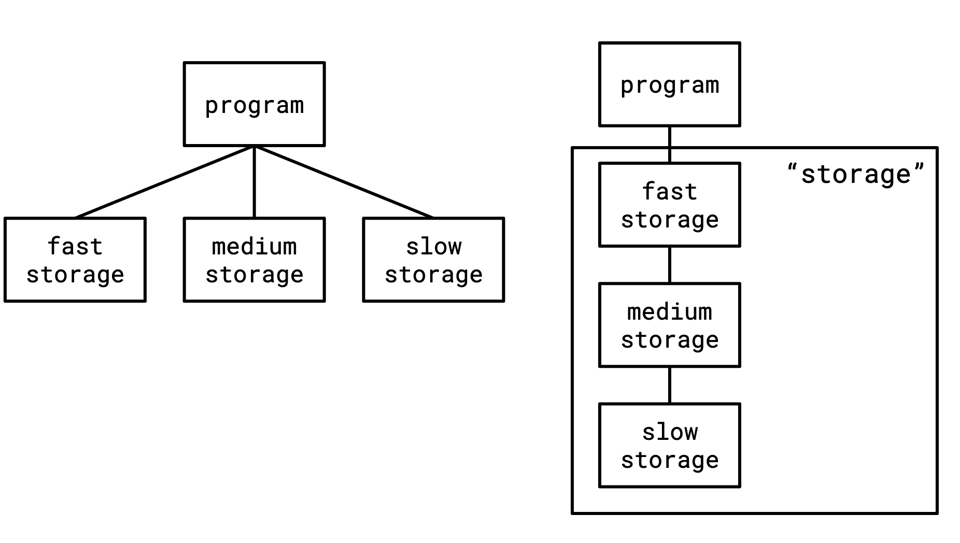
The conventional wisdom is that caching speeds up software. The author argues this is only part of the story. After working with data movement between object storage, disk, and memory, the author posits that caching's more crucial role is simplifying software. The article explores the limitations of pre-baked caching algorithms (LRU, LFU, etc.) and suggests caching acts more as an abstraction layer, hiding the underlying storage details, freeing programmers from worrying about data tier location. Database and OS caching mechanisms exemplify this abstraction. While caching can have issues, like OS page cache and fsync misuse, this doesn't necessitate abandoning caching but rather understanding and using it better.

Development

Pennybase: A Minimalist Go BaaS Under 1000 Lines

2025-07-04
Pennybase: A Minimalist Go BaaS Under 1000 Lines

Pennybase is a lightweight Backend-as-a-Service (BaaS) solution implemented in under 1000 lines of Go code, offering a simplified alternative to Firebase, Supabase, and Pocketbase. It relies solely on the Go standard library, requiring no external dependencies. Core features include file storage (versioned CSV), a REST API (JSON responses), session cookie and Basic Auth authentication, RBAC & ownership-based permissions, real-time updates via SSE, schema validation, and Go template rendering. Data is stored in human-readable CSVs, with updates creating new record versions. A clever in-memory index allows for fast lookups and updates. Permission control uses a simple RBAC model, and custom functionality is possible via hook functions.

Development minimalist backend

GitHub Code Suggestion Application Limitations

2025-07-04
GitHub Code Suggestion Application Limitations

Applying code suggestions in bulk during GitHub code review has several limitations. These include: invalid suggestions (no code changes), closed pull requests, viewing a subset of changes, only one suggestion per line in a batch, inability to apply suggestions to deleted lines, suggestions already applied or marked resolved, suggestions from pending reviews, suggestions on multi-line comments, inability to apply while the pull request is queued to merge, and an unspecified 'cannot apply suggestion right now' error.

Development

Run AI Agents Directly in Your Browser with Wasm-agents

2025-07-04
Run AI Agents Directly in Your Browser with Wasm-agents

Wasm-agents aims to revolutionize open-source agent accessibility by packaging them as HTML files runnable directly in your browser, eliminating the need for external tools or frameworks. Leveraging WebAssembly and Pyodide, this project enables near-native speed execution of Python-based AI agents within a browser sandbox. Currently supporting OpenAI APIs and self-hosted models (like those served via Ollama), Wasm-agents provides example HTML files demonstrating simple conversational agents, multi-agent systems, and advanced agents with built-in tools. While limitations exist, such as reliance on the openai-agents framework and CORS considerations, this project offers a novel approach to AI agent development and sharing, ripe for exploration.

Development

Tmux-rs: A 100k LOC Journey from C to (Unsafe) Rust

2025-07-03

Over six months, the author painstakingly ported the ~67,000 lines of C code behind tmux, the terminal multiplexer, to Rust, resulting in a ~81,000 line codebase. Initial attempts using the C2Rust transpiler proved unwieldy, leading to a manual rewrite. The author details the build process, encountered bugs, and strategies for converting C idioms to Rust, including handling raw pointers, goto statements, and intrusive macros. The project culminates in a lalrpop-based reimplementation of the yacc parser, achieving a complete C-to-Rust migration and culminating in a 0.0.1 release. The journey showcases the challenges and rewards of large-scale code porting.

Development C to Rust

Locality of Behavior: A Principle for More Maintainable Code

2025-07-03

This article introduces the principle of Locality of Behavior (LoB), which emphasizes that the behavior of a code unit should be readily apparent within that unit itself. The author uses examples of AJAX requests in htmx and jQuery to illustrate how LoB improves code maintainability. While LoB may conflict with principles like DRY (Don't Repeat Yourself) and SoC (Separation of Concerns), the author argues that judiciously prioritizing LoB enhances code readability and maintainability, ultimately leading to higher software quality and sustainability.

Development design principles

arXivLabs: Experimenting with Community Collaboration

2025-07-03
arXivLabs: Experimenting with Community Collaboration

arXivLabs is a framework for collaborators to build and share new arXiv features directly on the website. Individuals and organizations involved share arXiv's values of openness, community, excellence, and user data privacy. arXiv only partners with those who uphold these values. Got an idea to improve the arXiv community? Learn more about arXivLabs.

Development

uv Build Backend: Faster and Smoother Python Builds

2025-07-03

uv's native build backend, uv_build, significantly improves the speed and user experience of building Python projects. It features sensible defaults, aiming for zero configuration for most users, while offering flexible configuration to accommodate diverse project structures. uv_build currently supports pure Python code; alternative backends are needed for libraries with extension modules. Use this backend by adding `uv_build` to your `pyproject.toml` or by creating a new project with `uv init --build-backend uv`. uv_build also optimizes package name normalization, module discovery, and file inclusion/exclusion strategies, leading to more predictable and repeatable builds.

Development

Code Is All You Need: The Limitations of Multi-Component Pipelines (MCPs)

2025-07-03
Code Is All You Need: The Limitations of Multi-Component Pipelines (MCPs)

This article challenges the practicality of Multi-Component Pipelines (MCPs) for many tasks, arguing that their heavy reliance on inference makes them inefficient and difficult to scale. The author uses a personal example – converting reStructuredText to Markdown – to demonstrate a superior approach: using LLMs to generate code that performs the task, followed by LLM-based validation. This method reduces inference dependency, enhances reliability, and scales well, especially for repetitive tasks. While acknowledging MCP's strengths in niche scenarios, the author concludes that its inherent limitations hinder large-scale automation. The future, they suggest, lies in developing more effective code generation techniques coupled with LLM validation and explanation to improve usability and applicability.

Development
1 2 47 48 49 51 53 54 55 214 215