The Open Source Maintainer Crisis: Burnout, Pressure, and an Uncertain Future

2025-02-17
The Open Source Maintainer Crisis: Burnout, Pressure, and an Uncertain Future

The 2025 State Of Open conference highlighted the plight of open source maintainers: volunteers pour countless hours into projects with little support, leading many to quit or consider quitting. The resignation of Asahi Linux lead Hector Martin due to burnout and demanding users exemplifies this crisis. Maintainers face pressure from users, endless requests, and occasional negativity. Even with minimal corporate sponsorship, the demands far outweigh the support. Surveys reveal many maintainers considering quitting, and many projects may become unmaintained. The problem isn't solely financial; it also requires more contributors to share non-coding tasks like community management and fundraising. But change needs a catalyst—perhaps a major project collapse will finally convince people that paying open source maintainers is crucial.

Read more

The Ultimate Guide to File Watchers: A Comprehensive Overview

2025-02-12

This article provides a comprehensive list of file watching tools, covering various programming languages, licenses, and functionalities. From older inotify wrappers to modern tools written in Rust and Python like watchexec, the article meticulously compares each tool's pros and cons, dependencies, and Debian package support. The author also shares personal experiences and challenges encountered, such as using systemd .path units and the limitations of watchman. Developers and system administrators alike will find this resource invaluable in selecting the right file watching tool for their needs.

Read more
Development file watching

DiffRhythm: Generating Full-Length Songs in 10 Seconds

2025-03-04

DiffRhythm is a groundbreaking AI model that generates complete songs with vocals and accompaniment in just ten seconds, reaching lengths of up to 4 minutes and 45 seconds. Unlike previous complex multi-stage models, DiffRhythm boasts a remarkably simple architecture, requiring only lyrics and a style prompt for inference. Its non-autoregressive nature ensures blazing-fast generation speeds and scalability. While promising for artistic creation, education, and entertainment, responsible use requires addressing potential copyright infringement, cultural misrepresentation, and the generation of harmful content.

Read more

SRCL: A Terminal-Aesthetic React Component Library

2025-01-20
SRCL: A Terminal-Aesthetic React Component Library

SRCL is an open-source React component and style repository that helps you build web applications, desktop applications, and static websites with terminal aesthetics. It boasts a comprehensive collection of components, including action bars, accordions, buttons, alert banners, avatars, badges, loaders, blog posts, breadcrumbs, cards, checkboxes, chessboards, code blocks, combo boxes, data tables, date pickers, dashboards, database examples, dropdown menus, empty states, input fields, forms, links, lists, messages, modals, navigation bars, popovers, progress bars, radio buttons, selects, sidebars, sliders, tables, text areas, tooltips, and tree views, all styled with a retro terminal look and feel.

Read more

Hybrid Supercars: A Bridge to the Future or a Temporary Fix?

2025-06-22
Hybrid Supercars: A Bridge to the Future or a Temporary Fix?

Facing stricter emission regulations, luxury automakers are increasingly turning to hybrid technology. While all-electric vehicles remain the ultimate goal, limitations in charging infrastructure and the demand for high performance make hybrids a compelling interim solution. Top brands like Bugatti, Porsche, and Lamborghini have launched hybrid models, emphasizing that this technology isn't a temporary fix but a way to combine the best of combustion engines and electric power. With advancements in synthetic fuels and battery technology, hybrid supercars might well remain a significant market force for years to come.

Read more

Whonix: The Ultimate Privacy OS

2025-01-12
Whonix: The Ultimate Privacy OS

Whonix is a Linux-based virtual machine operating system designed for maximum internet privacy and anonymity. It achieves this by routing all internet traffic through the Tor network and implementing multi-layered security measures, including browser fingerprinting protection, keystroke cloaking, and strict access controls, to protect users from tracking and malware. Whonix's design philosophy is 'all Tor,' and it offers features like anonymous web server hosting and Live Mode to ensure user security and anonymity online.

Read more
Development anonymity

Google Maps Labels US as 'Sensitive Country' Amidst Gulf of Mexico Name Change

2025-02-01
Google Maps Labels US as 'Sensitive Country' Amidst Gulf of Mexico Name Change

Google Maps has reclassified the United States as a 'sensitive country,' a designation shared with nations like China and Russia, following its confirmation of renaming the Gulf of Mexico to the Gulf of America. This move, prompted by Trump's executive order, has sparked debate, highlighting the impact of political shifts on tech companies' operations and perceptions of the US globally. The reclassification raises concerns about the changing global perception of the United States under Trump's presidency.

Read more

OpenEoX: Revolutionizing Cybersecurity and Product Lifecycle Management

2025-05-12
OpenEoX: Revolutionizing Cybersecurity and Product Lifecycle Management

OpenEoX standardizes End-of-Life (EOL) and End-of-Support (EOS) policies across vendors and open-source maintainers, dramatically reducing cybersecurity risks. It allows organizations to quickly identify unsupported products, enabling timely retirement or replacement of outdated, vulnerable systems. This leads to a more secure IT environment. OpenEoX's machine-readable format enables automated vulnerability management, providing real-time monitoring and alerts for proactive risk mitigation. Further benefits include simplified product management, enhanced customer confidence, and smoother technology transitions.

Read more

Saying Goodbye to Kubernetes' CPU Hog: Podman's Lightweight Container Automation

2025-05-05
Saying Goodbye to Kubernetes' CPU Hog: Podman's Lightweight Container Automation

In 2018, the author experimented with Kubernetes for container orchestration. While enjoying the automated deployment, Kubernetes' high resource consumption proved troublesome. Eventually, they discovered Podman—a lightweight Docker alternative. Combined with systemd and user lingering login, it achieved similar automated updates as Kubernetes, but with significantly reduced resource usage, making their server run faster and more energy-efficiently. This post shares the author's experience migrating from Kubernetes to Podman and how to utilize Podman, systemd, and user lingering login for automated container updates, providing a new perspective for developers seeking lightweight container orchestration solutions.

Read more

We Should Own the Economy: A Movement to Redistribute Capital

2025-03-20
We Should Own the Economy: A Movement to Redistribute Capital

This article launches a movement to address wealth and power imbalances by changing who owns capital. The author argues that current capitalism concentrates wealth in the hands of a few, threatening democracy. To counter this, they're writing a book, "We Should Own the Economy," crowdfunded to research solutions. The book will explore how to broaden capital ownership, including employee ownership structures, purpose-driven businesses, and new financial platforms. Readers are invited to participate, co-creating a fairer, more inclusive economic system.

Read more

Beyond Autocomplete: TypeLeap UI/UX – Interfaces that Anticipate Your Needs

2025-03-08

TypeLeap UI/UX represents a paradigm shift in interface design. Leveraging Large Language Models (LLMs), it dynamically adapts the interface in real-time based on the user's typing intent, going far beyond simple autocomplete. Instead of just predicting words, TypeLeap understands the user's goal. Typing "weather in San..." might instantly display a weather widget. The article details the technical challenges and solutions, including local vs. server processing, performance optimization, and user feedback mechanisms. While practical examples are scarce, TypeLeap's potential is vast, promising a more intuitive and efficient user experience across search, knowledge management, AI assistants, and beyond.

Read more
Development AI interfaces UX design

Infinigen: Infinite Photorealistic 3D Scene Generator

2025-01-22
Infinigen: Infinite Photorealistic 3D Scene Generator

Developed by the Princeton Vision & Learning Lab, Infinigen is a procedural generator of 3D scenes, built on Blender and freely available under the BSD 3-Clause License. It generates limitless variations of high-quality 3D scenes using randomized mathematical rules, controlling everything from macro structures to micro details. Infinigen automatically generates annotations for various computer vision tasks like optical flow and depth estimation, making it ideal for 3D vision research. Its focus on real geometry ensures accurate ground truth data.

Read more

Unlocking Extreme Productivity with Claude Code and Background Agents

2025-07-18

This post details the author's experience using Claude Code and their tool, Terragon, for AI-assisted programming. Terragon manages multiple background Claude Code agents, running them in the cloud and automatically creating pull requests, dramatically boosting productivity. The author's workflow involves assigning tasks to Terragon's agents and then locally reviewing and testing. This hybrid approach allows for parallel task management, significantly increasing output, especially for repetitive tasks, code cleanup, and debugging. The post also shares lessons learned, including understanding the model's strengths and weaknesses, knowing when to abandon unsuccessful attempts, and effective time management.

Read more
Development

Toyota's Woven City: Phase 1 Complete, First Residents Moving In

2025-02-26
Toyota's Woven City: Phase 1 Complete, First Residents Moving In

Toyota Motor Corporation has announced the completion of phase one of its futuristic city, Woven City, located southwest of Tokyo. Spanning over 700,000 square meters, this innovative urban development will integrate autonomous vehicles, robotics, and advanced digital technologies to offer residents a unique and technologically advanced living experience. The city features dedicated roads for autonomous vehicles, pedestrian zones, and underground passageways for deliveries and waste management. Approximately 360 Toyota employees and their families will begin moving in during the second half of this year, with a projected population of 2,000 residents eventually.

Read more
Tech

The Ultimate AI Learning Resource: From Beginner to Expert

2025-08-11

Aman Chadha has curated a comprehensive list of AI learning resources covering the entire process of building, training, and evaluating neural networks. From linear regression to large language models, and from data preprocessing to model evaluation, this resource has it all. Whether you're focusing on algorithms, training techniques, or model deployment and evaluation, this guide provides comprehensive support for AI learners of all levels, from beginners to seasoned researchers.

Read more
AI

Building a Simple SQL Query Evaluator

2025-02-19
Building a Simple SQL Query Evaluator

This post details building a simple SQL query evaluator capable of handling basic SELECT statements. The author starts by creating a simple test database, then improves upon previous work on SQLite file format parsing and SQL parsing to handle more complex queries. The core is the implementation of `Operator` and `Planner`; `Operator` executes database operations, and `Planner` translates parsed SQL into `Operator`. Currently, it lacks support for filtering, sorting, grouping, and joins, but lays the foundation for adding these features. Improvements to the `Pager` for concurrent access are also described.

Read more
Development Query Evaluator

Building a Container Image from Scratch: A Deep Dive into OCI

2025-03-20

This article provides a clear and concise explanation of container image internals. By building a simple "hello world" image from scratch, the author details the four core components of an OCI image: layers, config, manifest, and index. The article explains how layers are created, how they combine to form a complete filesystem, and how content-addressability ensures data integrity and efficiency. The process of building with both a scratch and an alpine base image is compared, culminating in the successful running of the built container image.

Read more

Mysterious Squares in Windows Filenames: A UTF-16 Surrogate Pair Adventure

2025-02-26

This article describes a curious phenomenon in Windows: many small executables with strange squares in their names appearing in Task Manager. These files are not malicious; the issue stems from the use of UTF-16 surrogate pairs in filenames. UTF-16, to accommodate extended Unicode characters, uses surrogate pairs to represent characters beyond the Basic Multilingual Plane. When string manipulation produces isolated or malformed surrogate pairs, filenames become unrenderable. The article explains surrogate pairs and provides a Python script to generate files with unrenderable filenames, reproducing the phenomenon.

Read more
Development Surrogate Pairs

SmolGPT: A Minimal PyTorch Implementation for Training Small LLMs

2025-01-29
SmolGPT: A Minimal PyTorch Implementation for Training Small LLMs

SmolGPT is a minimal PyTorch project designed for educational purposes, allowing users to train their own small language models (LLMs) from scratch. It features a modern architecture incorporating Flash Attention, RMSNorm, and SwiGLU, along with efficient sampling techniques. The project provides a complete training pipeline, pre-trained model weights, and text generation examples, making it easy to learn about and experiment with LLM training.

Read more
Development LLM training

The Insane Genius: Karl Hans Janke's Fantastic Inventions

2025-03-04
The Insane Genius: Karl Hans Janke's Fantastic Inventions

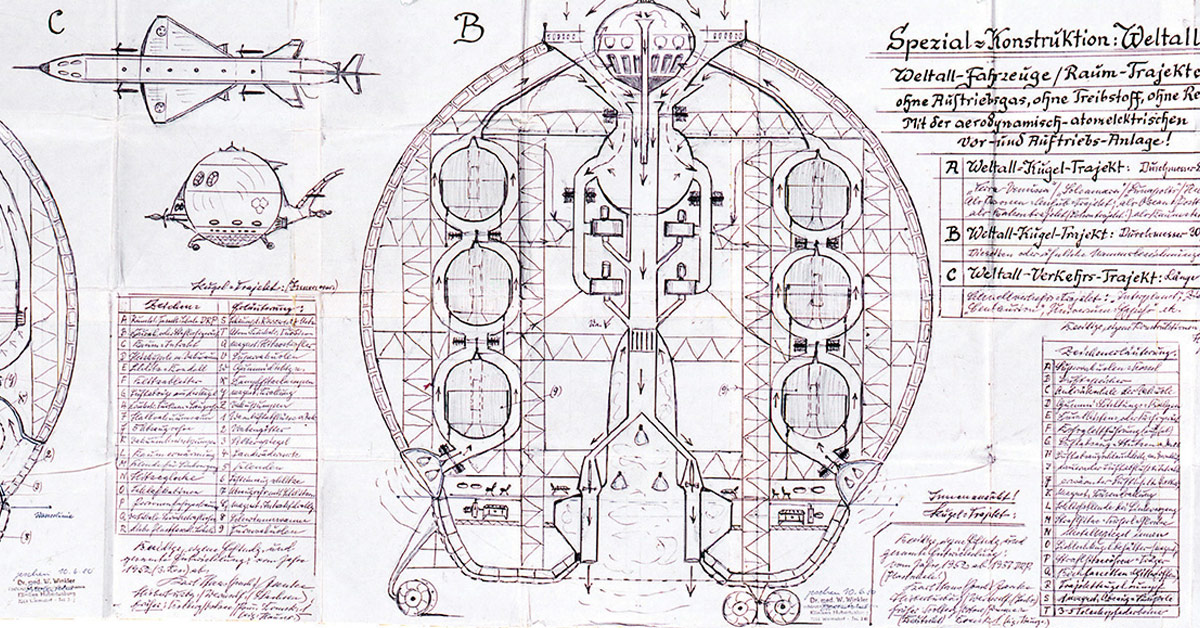
Karl Hans Janke, a patient at an East German psychiatric hospital, spent his life creating over 4,500 drawings and hundreds of models of technological inventions, mostly fantastical flying machines. He claimed to have invented a fuel-less energy system using the magnetic energy of the universe, his so-called 'German atom,' constantly seeking contact with the scientific community while fearing plagiarism. His archive, rediscovered a decade after his death, reveals a brilliant mind overshadowed by mental illness, leaving a poignant legacy.

Read more

AI-Generated CSAM: A First Amendment Showdown

2025-03-20
AI-Generated CSAM: A First Amendment Showdown

A recent US district court case involving AI-generated child sexual abuse material (CSAM) has ignited a First Amendment debate. The court ruled that private possession of AI-generated virtual CSAM is protected under the First Amendment, but production and distribution are not. This case highlights the challenges and legal complexities faced by law enforcement in combating AI-enabled child sexual exploitation and abuse.

Read more

Code Colocation: The Secret to Maintainable Codebases

2025-02-19

This article champions code colocation as a key to maintainable software. The author argues that keeping code comments, templates, CSS, unit tests, and application state close to their related code significantly improves maintainability, applicability, and ease of use. Compared to scattering these elements across various directories, colocation avoids synchronization issues, makes finding things easier, reduces context switching, and thus lessens technical debt. Examples from modern frameworks like React, Vue, and Angular illustrate the practice, highlighting how colocation boosts readability and simplifies codebase management. The article also addresses strategies for utility functions and resource files, recommending placing them as close as possible to their usage to minimize maintenance overhead and cognitive load.

Read more

Error Models for Systems Programming Languages: An Epic Treatise

2025-03-08

This 15,000+ word blog post delves deep into error models for systems programming languages. The author approaches error representation, propagation, and handling from multiple perspectives: product, type system, and language design. A hypothetical language, 'Everr', and its error model are proposed, aiming for a balance between graceful degradation, performance optimization, and interoperability between libraries. The post compares error models across various programming languages and explores programmers' understanding and handling of errors.

Read more
Development

Trump Admin Cuts Off Crucial F-16 Jamming Support: Ukraine's Response

2025-03-09
Trump Admin Cuts Off Crucial F-16 Jamming Support: Ukraine's Response

The Trump administration cut off vital support for the jamming capabilities of Ukraine's F-16 fighter jets, jeopardizing a critical air countermeasure. However, Ukraine isn't defenseless. They can leverage the jamming capabilities of French Dassault Mirage 2000 fighters, along with promised upgrades to their electronic warfare systems, to compensate for the American shortfall. While not a long-term solution, it buys Ukraine valuable time until more sustainable alternatives can be found.

Read more

Re-reading Neuromancer in 2025: A Cyberpunk Classic Reexamined

2025-07-13
Re-reading Neuromancer in 2025: A Cyberpunk Classic Reexamined

Reading William Gibson's *Neuromancer* for the first time in 2025, the author reflects on its groundbreaking impact on the cyberpunk genre. The book's depiction of AI, virtual reality, and cyberspace remains strikingly prescient, showcasing Gibson's visionary talent. However, the novel's omissions (like mobile phones) and assumptions (massive space stations) highlight the difficulty of accurately predicting future technology. Ultimately, *Neuromancer* transcends mere technological prediction; its unique prose and profound exploration of the human condition remain powerfully relevant, solidifying its status as a cyberpunk bible.

Read more

Exploring the Fourth Dimension: A Journey into 4D Geometry

2025-01-28

This article uses engaging analogies to explain the concept of the fourth dimension. By imagining a 2D being observing a 3D object, the author illustrates how we might perceive a 4D hypercube. It clearly explains how to understand 4D geometry through cross-sections, and utilizes rotation matrices and linear algebra to calculate and visualize the projection of a rotated hypercube into 3D space, resulting in complex geometric forms.

Read more

Bypassing Middleboxes Blocking MPTCP with eBPF

2025-07-18

The MPTCP protocol can be blocked by middleboxes (like NATs, firewalls) in certain network environments. This article introduces an eBPF-based TCP-in-UDP solution that cleverly bypasses these limitations by encapsulating TCP packets within UDP packets. This solution requires no extra data layers or VPNs, simply reordering the TCP header and using eBPF to efficiently handle checksums, ultimately solving challenges posed by network stack optimizations and hardware offloading. While some minor issues remain, such as the loss of the URG flag and MTU/MSS adjustments, this approach offers an effective way to improve MPTCP performance in complex network environments.

Read more
Development Network Optimization

Becoming a Great Engineer: Beyond the Paycheck

2025-03-09

This article delves into what makes a truly excellent software engineer. It argues that passion and ambition are crucial, going beyond simply collecting a paycheck. The author emphasizes a deep understanding of computer fundamentals, continuous learning, critical thinking, and practical application of knowledge. Specific projects like building a compiler or emulator are suggested, highlighting the importance of building from foundational principles. The article also stresses self-critique and the pursuit of excellence as key elements for growth.

Read more
Development Learning

The 1875 COBOL Date Myth: Efficient Data Structures, Not a Language Flaw

2025-02-17
The 1875 COBOL Date Myth: Efficient Data Structures, Not a Language Flaw

The widespread rumor that COBOL systems default to May 20, 1875, for missing dates is false. This article reveals that the origin lies in the extreme optimization of data storage in early systems. To save storage space, programmers cleverly used data structures, taking 1875 as the base year and encoding dates into fewer characters. This approach was efficient and reasonable in the resource-constrained environment of the time, not a flaw of COBOL but a clever use of data structures by programmers.

Read more
1 2 589 590 591 592 594 596 597