Cryptojacking Campaign Targets Misconfigured DevOps Tools

2025-06-03

Cryptojacking Campaign Targets Misconfigured DevOps Tools

A new cryptojacking campaign, attributed to an attacker named JINX-0132, is exploiting misconfigurations and vulnerabilities in publicly accessible DevOps tools to steal cloud computing resources for cryptocurrency mining. The campaign primarily targets HashiCorp's Nomad and Consul, Docker API, and Gitea. Researchers estimate that up to 25% of cloud environments are vulnerable, with 5% directly exposing these tools to the internet and 30% exhibiting misconfigurations. JINX-0132 leverages these flaws for remote code execution, deploying XMRig mining software. Mitigation involves updating software, disabling script checks, restricting API access, and properly configuring security settings.

Read more

Ukraine's Drone War: AI Navigation vs. Electronic Warfare

2025-06-03
Ukraine's Drone War: AI Navigation vs. Electronic Warfare

The war in Ukraine has spurred rapid advancements in drone technology. Faced with powerful Russian electronic warfare jamming, Ukraine and Western companies have collaborated to develop AI-navigated drones capable of autonomously navigating to targets even when GPS signals are blocked. For example, the Estonian company KrattWorks' Ghost Dragon drone utilizes a neural network–driven optical navigation system, allowing it to identify landmarks and autonomously locate itself. This has not only enhanced the Ukrainian military's capabilities but also demonstrated the significant battlefield role of low-cost drones, transforming the dynamics of warfare.

Read more
Tech

Browser Makers Battle Trackers in Privacy Arms Race

2025-06-03
Browser Makers Battle Trackers in Privacy Arms Race

Research reveals Meta and Yandex's sneaky use of localhost channels in browsers to share user identifiers. While browsers like DuckDuckGo and Brave effectively blocked this with extensive blocklists, researchers warn this is an ongoing arms race. Chrome, after initially executing the tracking code, recently updated to block the functionality. A long-term solution requires redesigning privacy and security controls for localhost channels, giving users granular control instead of relying on constantly updated blocklists.

Read more
Tech trackers

Garlic: A Blazing Fast Java Decompiler Written in C

2025-06-03
Garlic: A Blazing Fast Java Decompiler Written in C

Garlic is a Java decompiler written in C, offering fast and efficient decompilation of .class, .jar, and .war files into Java source code. It requires only CMake 3.26 or higher and has no other dependencies. Garlic supports multithreading, allowing you to specify the output path and thread count via command-line arguments. It outperforms javap, omitting LineNumber and StackMapTable attributes. The project is open-source under the Apache 2.0 License.

Read more
Development Java decompiler

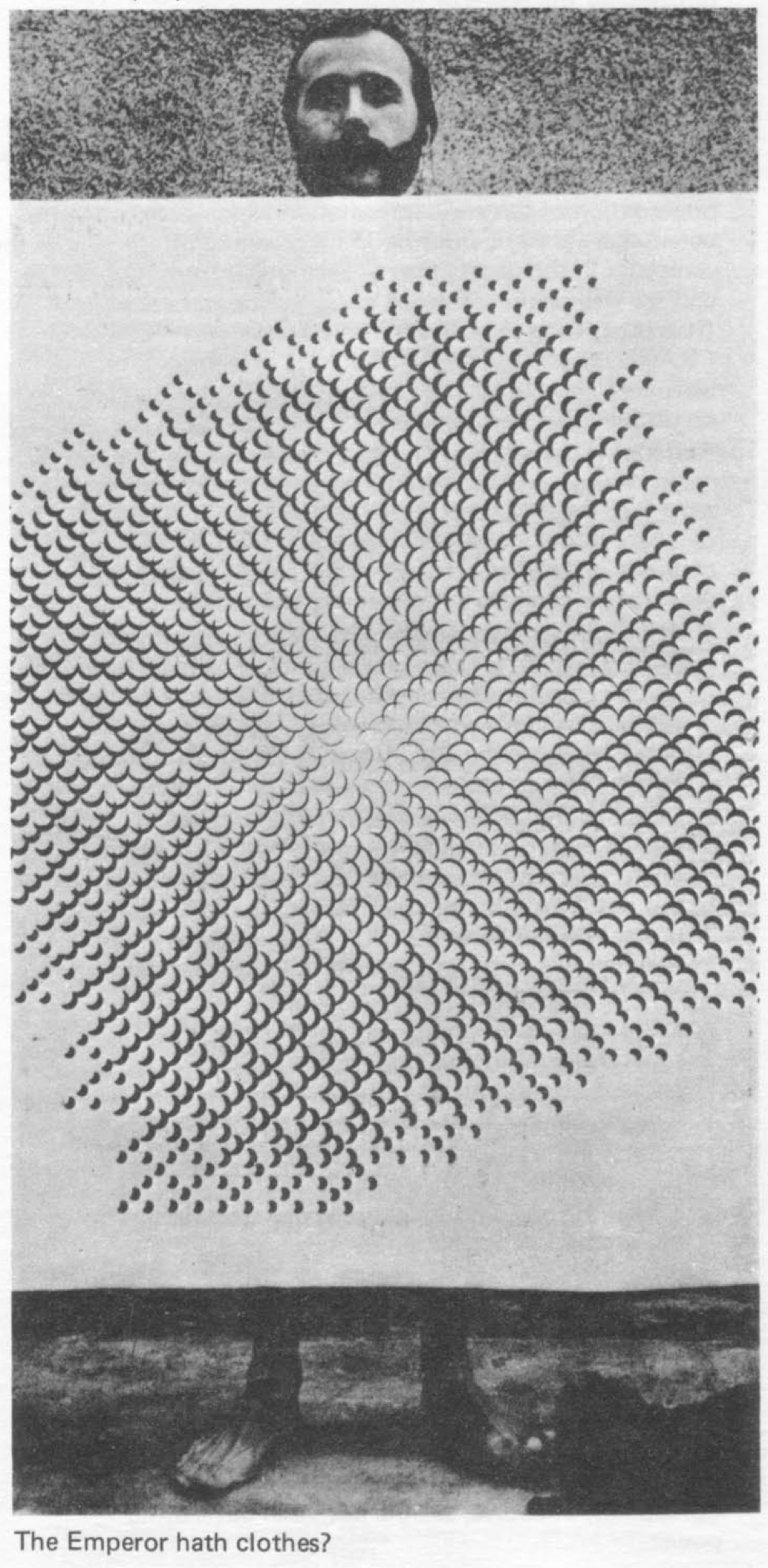
Is Computer Art Just Another Fad?

2025-06-03
Is Computer Art Just Another Fad?

This article critiques the notion of "computer art" as merely the latest fashion trend manipulated by art dealers. The author argues that the use of computers in art shouldn't be limited to producing more aesthetically pleasing objects but should focus on its potential to reveal social realities, enhance communication, and foster understanding. Several research avenues are proposed, such as investigating technology's impact on artists and their work, analyzing the sign systems of different artistic styles, and examining the role of aesthetic information in broader societal contexts. The author believes the true value of computers lies in their utility as tools serving more significant social issues, rather than becoming another art trend catering to market demands.

Read more

Minimalist Forth: Pushing the Boundaries of Language Size

2025-06-03

This article explores how small the core of the Forth language can be. It showcases several minimalist Forth implementations, including PlanckForth (under 1000 bytes), SmithForth (around 1000 bytes), sectorforth (512 bytes), and milliForth (336 bytes). These implementations achieve basic Forth functionality, even including compilers, with extremely small instruction sets. Frank Sergeant's 3-instruction Forth takes this to the extreme, running on a Motorola MC68HC11 chip in a mere 66 bytes. These examples challenge our assumptions about the size of programming languages and demonstrate the elegance of language design.

Read more

Cold War Legacy: A 17-Year Secret Mission to Secure Plutonium in Kazakhstan

2025-06-03
Cold War Legacy: A 17-Year Secret Mission to Secure Plutonium in Kazakhstan

On the desolate steppe of eastern Kazakhstan, the Soviet Union conducted 456 nuclear tests during the Cold War. Following the Soviet collapse, significant amounts of plutonium-containing waste were abandoned, posing a serious nuclear security threat. Scientists from the US, Russia, and Kazakhstan overcame numerous obstacles in a 17-year, $150 million secret operation to successfully seal this waste with special concrete, eliminating a major nuclear safety risk. This operation demonstrates the potential of international cooperation in nuclear safety, while also highlighting the long-term uncertainties stemming from a lack of transparency.

Read more

Writing for Smart People: Why Your Audience Is Young

2025-06-03

This essay explores the nature of writing and its target audience. The author argues that essays written for smart people on important topics primarily reach young people, as younger readers are more easily surprised and impacted by novel ideas. The piece analyzes reader knowledge levels (importance, obtuseness, experience) to explain this phenomenon, and notes that the author's writing motivation stems from personal curiosity rather than the age of the readers.

Read more

Cloning: Immortality or Pandora's Box?

2025-06-03
Cloning: Immortality or Pandora's Box?

From cloning superior beef cattle to replicating beloved pets, cloning technology is no longer science fiction. This article explores how companies like ViaGen have commercialized cloning, offering services to the wealthy and farmers to replicate pets, livestock, and even endangered species. However, cloning technology also raises ethical concerns, involving animal welfare, genetic diversity, and the potential phenomenon of "cellular memory." With vivid examples and details, the article examines the current state, challenges, and future of cloning technology and its impact on human society, particularly the possibility and ethical dilemmas of human cloning.

Read more

Linux Futexes: Spinlocks vs. Futexes – A Performance Deep Dive

2025-06-03

This article delves into the implementation and performance of futex locks in Linux. The author first implements a simple spinlock, then builds a more sophisticated mutex using the futex syscall. Experiments reveal that simple spinlocks can outperform futexes in certain scenarios, especially when critical section operations are lightweight. However, when critical sections are time-consuming and thread contention is high, futexes offer a significant advantage by avoiding unnecessary CPU spinning. The article concludes by discussing methods to improve futex lock performance and emphasizes the need to choose the right locking mechanism based on the specific application context.

Read more
Development spinlock mutex

The Surprisingly Affordable Path to AI Productivity: A Cost Breakdown

2025-06-03
The Surprisingly Affordable Path to AI Productivity: A Cost Breakdown

The author shares their experience and cost analysis of using various AI tools, concluding that the $200/month Claude Max subscription offers the best value. Claude Max provides nearly unlimited access to Claude Code, one of the best terminal-based AI tools. While OpenAI's o3 model offers superior reasoning, its high cost can reach hundreds of dollars monthly. For budget-conscious users, the author recommends Repo Prompt, which enables o3 usage via a ChatGPT subscription. The ultimate conclusion highlights that the time saved by AI tools far outweighs their cost, especially for high-billing freelancers, making investing in AI a smart efficiency booster.

Read more
Development cost analysis

TLA+: Modeling Beyond the Code Level

2025-06-03

TLA+ is a language for modeling software above the code level and hardware above the circuit level. It features an IDE and tools for model checking, most notably the TLC model checker. Based on mathematics, it differs significantly from programming languages. PlusCal, a simpler algorithm language, translates to TLA+ for verification. TLA+ models system behavior as sequences of states, emphasizing the importance of high-level modeling to prevent design flaws and enhance system simplicity. One industrial project demonstrated a tenfold reduction in real-time operating system code size using TLA+, highlighting its power in improving design before coding.

Read more
Development concurrent systems

Quarkdown: A Powerful Markdown-Based Typesetting System

2025-06-03
Quarkdown: A Powerful Markdown-Based Typesetting System

Quarkdown is a modern Markdown-based typesetting system designed around versatility, seamlessly compiling projects into print-ready books or interactive presentations. Its powerful, Turing-complete Markdown extension ensures ideas flow effortlessly onto paper. Users can define custom functions and variables, even create libraries for others to use. Output formats include HTML and PDF.

Read more
Development Typesetting

Meta Prompting: Revolutionizing LLM Prompt Engineering

2025-06-03
Meta Prompting: Revolutionizing LLM Prompt Engineering

This article explores meta prompting, a technique using Large Language Models (LLMs) to create and refine prompts. It details various meta-prompting methods, including the Stanford and OpenAI collaboration's method using a 'conductor' LLM to orchestrate expert LLMs; Amazon's Learning from Contrastive Prompts (LCP), which improves prompts by comparing good and bad ones; Automatic Prompt Engineer (APE), Prompt Agent, Conversational Prompt Engineering (CPE), DSPy, and TEXTGRAD. The article compares their strengths and weaknesses, highlighting how these methods significantly improve prompt engineering efficiency. Finally, it showcases prompt generation tools from platforms like PromptHub, Anthropic, and OpenAI, simplifying meta-prompting implementation and unlocking the full potential of LLMs.

Read more
Development meta prompting

Sid Meier's Pirates!: A Timeless Seafaring Adventure

2025-06-03
Sid Meier's Pirates!: A Timeless Seafaring Adventure

This article revisits the Amiga version of Sid Meier's Pirates!, praising its beautiful graphics and unique gameplay. The author recounts personal experiences playing the game with his father, highlighting its lasting impact. The open-ended world, rich storyline, and random events ensure each playthrough is unique. More than just a game, Pirates! is presented as a cherished memory, a time capsule of adventure and romance, transcending simple gameplay to become a cultural artifact.

Read more

The Tylenol Murders: A Nationwide Manhunt and a Library Bust

2025-06-03
The Tylenol Murders: A Nationwide Manhunt and a Library Bust

Following the 1982 Tylenol murders, James and Leann Lewis, the prime suspects, went on the run, using aliases and even brazenly reading Chicago newspapers in a New York City library to track the investigation. Their eventual arrest stemmed from their audacious behavior. The investigation revealed Lewis's troubled past and prior crimes, suggesting a possible link to another case, although their direct involvement in the Tylenol murders remained ambiguous. Leann's lie detector test indicated deception, adding a further layer of complexity to the case.

Read more

Cyberpunk Death Games: A Centenarian's Journey

2025-06-03

In a technologically advanced cyberspace, 690-year-old Caroline, Queen of the Death Jockeys, is known for her unique experiences. A death game pits her against Timothy, a young challenger with a poorly designed 'authentic death' experience, highlighting his misunderstanding of true death. She then engages in a violent and erotic death game with Fred, a zombie, before attending an annual reunion of criminals. The narrative interweaves the creation of Prime Intellect (a super AI) and its intervention in human society, culminating in universe-altering events and exploring humanity's role and fate in technological advancement.

Read more

Why GUIs Need at Least 2.5 Iterations: A Critique of Lean Software Development

2025-06-03
Why GUIs Need at Least 2.5 Iterations: A Critique of Lean Software Development

This article critiques the limitations of Lean Software Development, arguing that its analogy of software development to a factory assembly line is fundamentally flawed. Software development is more akin to a design process, requiring iterative experimentation to discover what users truly want. Using GUI development as an example, the author highlights how building GUIs often involves multiple iterations before achieving a satisfactory result, vastly different from the linear flow of a factory production line. The concept of 'waste' in Lean Software Development proves difficult to apply to software, neglecting the importance of exploration and discovery. The author contends that successful software development resembles a process of discovery, not manufacturing, demanding a deep understanding of user needs and continuous improvement through iteration.

Read more
Development lean development

Information Software Design: The Triumph of Graphics, the Failure of Interaction?

2025-06-03

Bret Victor's paper challenges conventional software design, arguing that most software (information software) centers on information presentation, not interaction. He advocates for information software design grounded in graphic design, reducing user interaction through clever visualizations and context awareness. The paper uses examples like train schedules, online bookstores, and movie listings to contrast traditional interactive designs with graphic design-led approaches. It proposes context inference methods leveraging environmental sensing and historical data. Victor calls for the software design industry to prioritize visual communication, revolutionizing information software design for more intuitive and efficient user experiences.

Read more
Development Graphic Design

AI in the Humanities: A Double-Edged Sword

2025-06-03
AI in the Humanities: A Double-Edged Sword

This article explores the profound impact of generative AI on humanities education. The author argues that ignoring AI's influence is foolish, as AI language models rely on humanistic knowledge and skills. AI demonstrates immense potential in language translation, classification, and other areas, while humanistic skills are increasingly crucial to AI research itself. Through personal experience developing history-themed educational games, the author showcases AI's applications in teaching, but also points out that AI misuse can lead to decreased student engagement and exacerbate educational inequities. Ultimately, the author calls on educators to actively participate in developing customized AI teaching tools, preventing AI abuse, and upholding the fundamental values of quality education.

Read more

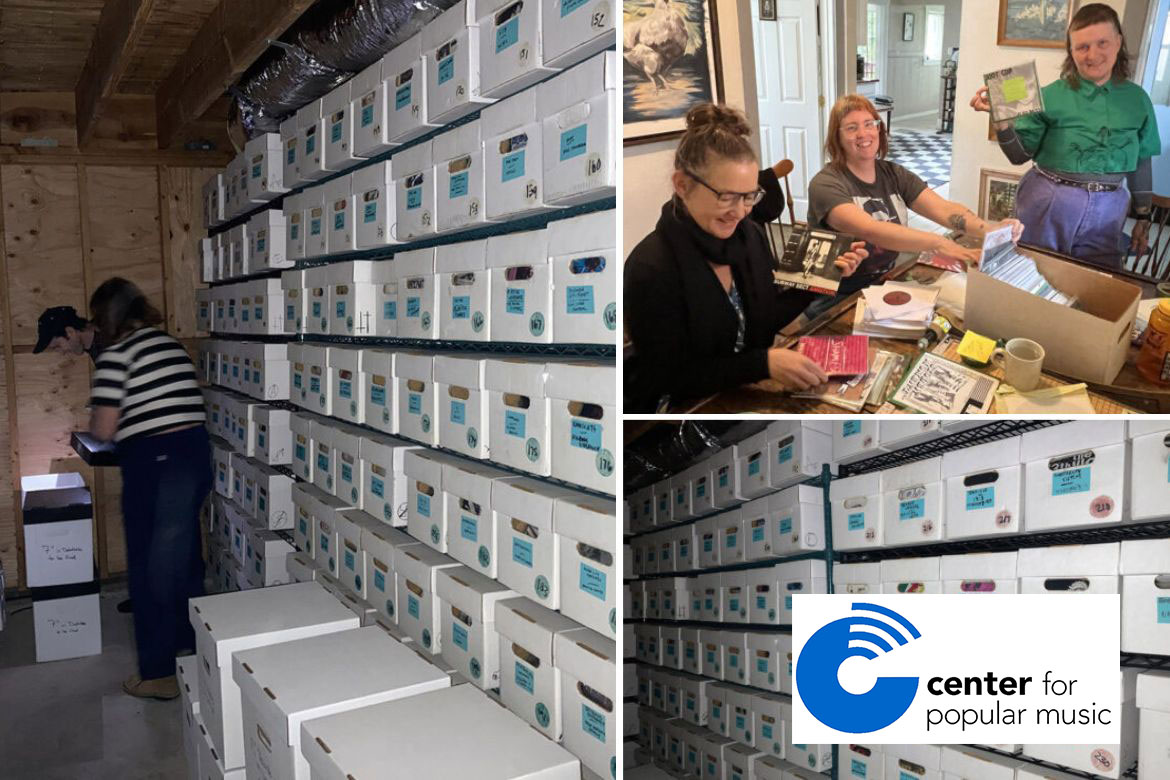
Punk Rock's Epicenter Shifts to Tennessee

2025-06-03
Punk Rock's Epicenter Shifts to Tennessee

The world's largest punk rock archive, the iconic Maximum Rocknroll (MRR) collection, is moving from California to Middle Tennessee State University's Center for Popular Music. This eight-ton trove of punk history includes roughly 60,000 vinyl records, photos, zines, and documents spanning decades of global punk evolution. The move establishes MTSU as a leading center for punk research, with plans for public programming including listening parties and zine workshops to engage a wider audience and explore punk's cultural and social impact.

Read more
Misc punk rock

OAuth 2.1 Provider Framework for Cloudflare Workers: An AI-Assisted Security Library

2025-06-03
OAuth 2.1 Provider Framework for Cloudflare Workers: An AI-Assisted Security Library

This TypeScript library implements the provider side of the OAuth 2.1 protocol with PKCE support for Cloudflare Workers. It acts as a wrapper, automating token management and user authentication. Developers write regular fetch handlers; the library handles authentication. It's agnostic to user management and UI frameworks, storing only hashes, not secrets. Interestingly, the library's development involved AI model Claude, with Cloudflare engineers' security review validating AI's potential in software development. The library also features a novel approach to refresh token management, balancing security with resilience to transient errors.

Read more
Development

AI Winter Bites: NZ Tech Job Market Stagnant, Immigrants Face Headwinds

2025-06-03
AI Winter Bites: NZ Tech Job Market Stagnant, Immigrants Face Headwinds

New Zealand's tech sector is facing a downturn in 2025, with layoffs at major companies and the expansion of AI exacerbating job pressures. Microsoft cut 6,000 jobs, and New Zealand's health sector also slashed IT roles. A 12-year veteran software engineer from China, James Zhang, struggled to find work in New Zealand, citing ageism in the Chinese tech industry and visa challenges. While job ads have slightly increased, competition remains fierce, with immigrants facing additional hurdles. Many are forced to upskill or pursue further education.

Read more
Tech

Printing Digital Data to Paper: An Extreme Storage Method

2025-06-03

This article explores various methods of storing digital data on paper, ranging from simple character encoding (like Base16, Base32, Base64) to more complex dot encodings (like QR codes, Optar), and even color encodings. The author experimentally compares the information density and reliability of different methods and discusses key issues such as OCR, error correction codes, and long-term storage. Results show that dot encoding methods (like stacked QR codes and Optar) can store up to 100KB of data on an A4 page, while character encoding methods are limited by OCR accuracy, resulting in relatively small storage capacity. The article also explores the possibility of handwriting data encoding and paper data transmission, offering new ideas for preserving digital data under extreme conditions.

Read more

Generative AI Art's Polyester Fate: Bubble or Future?

2025-06-03
Generative AI Art's Polyester Fate: Bubble or Future?

This article uses the rise and fall of polyester as a metaphor to explore the future of generative AI art. Just as polyester briefly dominated the textile market in the mid-20th century before being relegated to cheap and tacky status, generative AI art faces a similar fate. While AI lowers the barrier to art creation, its proliferation leads to aesthetic fatigue and devaluation, even being used for disinformation. The author argues that while AI art may dominate the market in the short term, the human desire for genuine emotion and unique artistic expression will not disappear, ultimately driving a revival of truly valuable human-made art.

Read more

MonsterUI: Build Modern Web UIs in Pure Python

2025-06-03
MonsterUI: Build Modern Web UIs in Pure Python

Tired of context-switching between HTML, CSS, and Python to build basic web UIs? MonsterUI is here to solve that! Built on top of FastHTML, it lets you build beautiful, responsive web apps using only Python. Leveraging modern libraries like Tailwind, FrankenUI, and DaisyUI, MonsterUI provides pre-styled components and smart defaults while maintaining full access to Tailwind CSS. It simplifies styling, letting you focus on features instead of remembering utility classes. Features include theming, base components, semantic text styling, smart layout helpers, common UI patterns, and higher-level components for enhanced productivity.

Read more
Development UI Framework

Bypass HWID Bans: The Ultimate Guide to Sync.top

2025-06-03

Sync.top is a premium HWID spoofer designed to help gamers circumvent hardware ID bans in online games. This article details how HWID bans work, explains Sync.top's functionality, and guides users on choosing between permanent and temporary spoofing modes. It boasts compatibility with major anti-cheat systems, a user-friendly interface, 24/7 support, and a money-back guarantee. However, it stresses responsible use and cautions against employing it for cheating or other rule violations.

Read more

Microsoft Makes Significant Windows Changes to Comply with the Digital Markets Act

2025-06-03
Microsoft Makes Significant Windows Changes to Comply with the Digital Markets Act

To comply with the EU's Digital Markets Act, Microsoft announced several new features for Windows users in the EEA. Users can now uninstall the Microsoft Store and avoid being forced to set Edge as their default browser. Setting a different default browser will pin it to the taskbar and extend its association to more file types. Microsoft assures users that apps installed from the Store will continue receiving updates even after uninstallation. Further improvements include enabling third-party apps to add their search results to Windows Search upon installation, and allowing users to customize the order of search providers. These updates will roll out in early June and July.

Read more
Tech

Texas Becomes Ninth State to Pass Right-to-Repair Law

2025-06-03
Texas Becomes Ninth State to Pass Right-to-Repair Law

Texas has joined the growing number of states with right-to-repair laws after the state Senate unanimously passed HB 2963. This makes Texas the ninth state with such a law and the first with a Republican-controlled government. The bill mandates manufacturers provide spare parts, manuals, and tools for equipment sold in the state, aiming to reduce the state's substantial electronic waste (621,000 tons annually). This victory follows similar legislation in states like New York and California, signaling a broader national movement toward increased repairability and reduced e-waste.

Read more
Tech

Amazon Releases Dafny-Based Program Verification Course

2025-06-02

Amazon has open-sourced teaching materials for program verification using Dafny. The course goes beyond basic Dafny programming, delving into its capabilities as a proof assistant. It's structured in three parts: Part 1 introduces Dafny as a programming language; Part 2 explores Dafny as a proof assistant, covering formal proof methods like natural deduction; and Part 3 applies this knowledge to program verification, covering functional, imperative, and object-oriented programs. This resource is suitable for beginners and experienced Dafny developers alike, offering a comprehensive approach to program verification.

Read more
Development formal proof
1 2 191 192 193 195 197 198 199 596 597