Demystifying Debuggers: Anatomy of a Running Program

2024-12-24
Demystifying Debuggers: Anatomy of a Running Program

This article delves into the low-level mechanics of a running program. Using the analogy of a video game cartridge on an NES, it explains how modern operating systems virtualize program execution. Key concepts like virtual address spaces, threads of execution, executable images, loaders, modules, and processes are detailed. The article explains how virtual address spaces, via page tables, map virtual addresses to physical addresses, allowing multiple programs to share physical memory without interference. It also covers thread scheduling, executable image formats (PE and ELF), the loader's role, and dynamic module loading/unloading. Finally, it summarizes the concept of a process, which integrates threads, modules, and virtual address spaces.

Read more


LLMs: Exploring Arithmetic Capabilities in the Pursuit of AGI

2024-12-24
LLMs: Exploring Arithmetic Capabilities in the Pursuit of AGI

This article explores why large language models (LLMs) are being used for calculation. While LLMs excel at natural language processing, researchers are attempting to make them perform mathematical operations, from simple addition to complex theorem proving. This isn't to replace calculators, but to explore the reasoning capabilities of LLMs and ultimately achieve artificial general intelligence (AGI). The article points out that humans have always tried to use new technology for computation, and testing the mathematical abilities of LLMs is a way to test their reasoning abilities. However, the process of LLMs performing calculations is drastically different from that of calculators; the former relies on vast knowledge bases and probabilistic models, while the latter is based on deterministic algorithms. Therefore, LLM calculation results are not always accurate and reliable, highlighting the trade-off between practicality and research.

Read more

Rye Language: A Higher-Level Programming Language Based on Spreadsheets

2024-12-24

Rye is a novel programming language that treats spreadsheets as first-class citizens, aligning more closely with human thinking. This article demonstrates how Rye creates, loads, and manipulates spreadsheets, supporting data import from CSV, SQL, and Excel files. It provides a rich set of functions for data manipulation, including filtering, sorting, and selection. By using spreadsheets as a fundamental data structure, Rye simplifies data operations and provides a more intuitive programming experience, especially when dealing with tabular data, resulting in concise and efficient code that outperforms other languages.

Read more
Development spreadsheet

MLC-LLM: Bringing Competitive LLM Inference to AMD GPUs

2024-12-24

NVIDIA GPUs have long dominated the Large Language Model (LLM) inference landscape. However, the MLC-LLM project leverages machine learning compilation to successfully deploy LLMs onto AMD GPUs, achieving impressive results. Using ROCm and Vulkan, the AMD Radeon RX 7900 XTX reaches 80% of the speed of the NVIDIA RTX 4090 and 94% of the RTX 3090 Ti for Llama2-7B/13B inference. This significantly enhances AMD GPU competitiveness and broadens LLM deployment options, extending to AMD APUs like those found in the Steam Deck. Future developments for MLC-LLM include optimizations for batching, multi-GPU support, expanded quantization and model architectures, and further bridging the performance gap with NVIDIA, ultimately addressing AI compute limitations.

Read more

The True Cost of PMI: Why You Should Pay Down Your Low-Interest Mortgage

2024-12-24
The True Cost of PMI: Why You Should Pay Down Your Low-Interest Mortgage

The author achieved a guaranteed 10.66% return by paying down their low-interest mortgage to eliminate PMI (Private Mortgage Insurance). The article analyzes the trade-offs between paying down a low-interest mortgage and investing, highlighting that while low-interest rates offer modest returns, the cost of PMI is significant. The author calculated a 10.66% effective return on eliminating PMI, exceeding most investment returns. Readers are encouraged to perform their own calculations to assess the value of prepaying their mortgage.

Read more

Why Cancer Guidelines Remain Stuck in PDFs

2024-12-24
Why Cancer Guidelines Remain Stuck in PDFs

Cancer treatment guidelines are often presented as unwieldy PDFs, hindering standardization of care. The author argues that guidelines are essentially complex decision trees; converting them into machine-readable, structured data could significantly improve cancer treatment. A prototype tool was developed using LLMs to extract information from the NCCN breast cancer guidelines PDF, creating a visual decision tree and an agent that navigates the tree based on patient information to suggest treatment. While early-stage, this demonstrates the potential of structuring guidelines to enhance efficiency and standardization in healthcare.

Read more

Analysis of Overlapping Links Between Lobste.rs and Hacker News

2024-12-23

A blog post analyzes the overlap in links between Lobste.rs and Hacker News, two prominent technology news websites. The post lists numerous articles appearing on both sites, exploring themes and trends in the overlapping links, such as open-source software development, AI, and programming languages. This highlights common interests and information dissemination patterns within the tech community.

Read more

Revolutionary Robot Simulator Genesis Unveiled: 430,000 Times Faster Training

2024-12-23
Revolutionary Robot Simulator Genesis Unveiled: 430,000 Times Faster Training

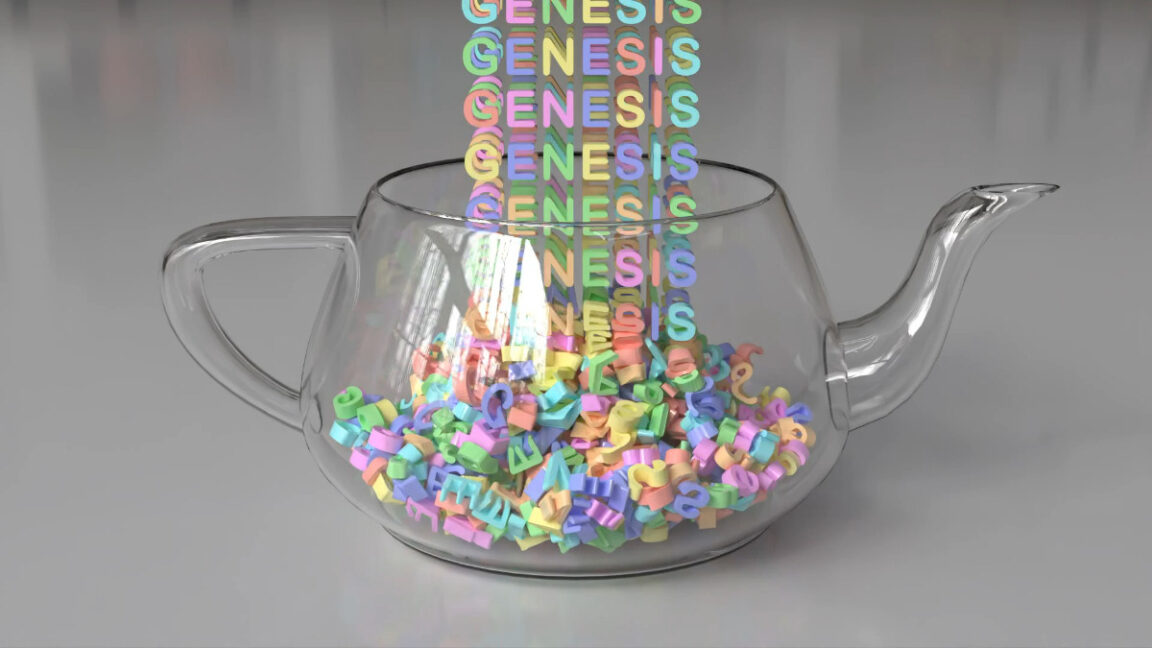
Researchers at Carnegie Mellon University have unveiled Genesis, an open-source robot simulation system that trains robots 430,000 times faster than real-world training. Genesis leverages graphics cards to run up to 100,000 simulations concurrently, drastically reducing the time needed for robots to learn complex tasks like object manipulation, walking, and tool use. Furthermore, the team is developing an AI agent capable of generating 3D physics simulations from text prompts, simplifying environment creation and reducing costs. Written in Python and open-sourced, Genesis represents a significant leap forward in robotics research, democratizing access to high-speed simulation.

Read more

Manx: An Open Source Treasure Trove of Vintage Computer Manuals

2024-12-23

Manx is an open-source project dedicated to cataloging and preserving manuals for older computers. It currently boasts nearly 10,000 manuals from 61 websites, covering minicomputers, mainframes, and associated peripherals like terminals and printers. While many manuals are scanned images and not directly indexable by search engines, Manx adds metadata and information to compensate. Its search currently focuses on part numbers, titles, and keywords. For microcomputer manuals, Tiziano's 1000 BiT is a better resource.

Read more

2Solitude: Redefining Adventure Travel

2024-12-23
2Solitude: Redefining Adventure Travel

2Solitude specializes in retrofitting US-registered Antonov AN-2 experimental exhibition airplanes into ultimate airshow campers. These planes are fun to fly and guaranteed conversation starters among aviation enthusiasts. Whether it's a front-row seat at Oshkosh, bonefishing in the Exumas, or paddleboarding in an Alaskan lake, 2Solitude provides unparalleled access. This aircraft is registered as Experimental exhibition and is not eligible for any commercial work. It's designed for owner enjoyment and display only. 2Solitude offers a platform for creating your own unique adventures, empowering the bold to explore and share their experiences.

Read more

LLM Standardization Directory: Enabling AI Website Integration

2024-12-23

A proposed standard, `/llms.txt`, aims to simplify the interaction between large language models (LLMs) and websites. This directory curates companies and products leading the adoption of this standard, spanning AI developer tools, financial products, websites, and more. The goal is to improve the efficiency and accuracy of LLMs interacting with diverse websites.

Read more

Complete Decompilation of LEGO Island (1997)

2024-12-23
Complete Decompilation of LEGO Island (1997)

The isle project has achieved a functionally complete decompilation of the classic game LEGO Island (Version 1.1, English) released in 1997. The goal is to create an accurate representation of the original game's code, matching recompiled instructions to the original machine code. Both ISLE.EXE and LEGO1.DLL are fully decompiled and functionally identical to the originals. Further work focuses on improving code accuracy, naming, documentation, and structure. While some bugs may remain, the game is playable. The project uses CMake and recommends Microsoft Visual C++ 4.2 for compiling for optimal accuracy.

Read more

International Rescue! The Epic Quest to Save a 43-Inch Sony CRT TV

2024-12-23
International Rescue! The Epic Quest to Save a 43-Inch Sony CRT TV

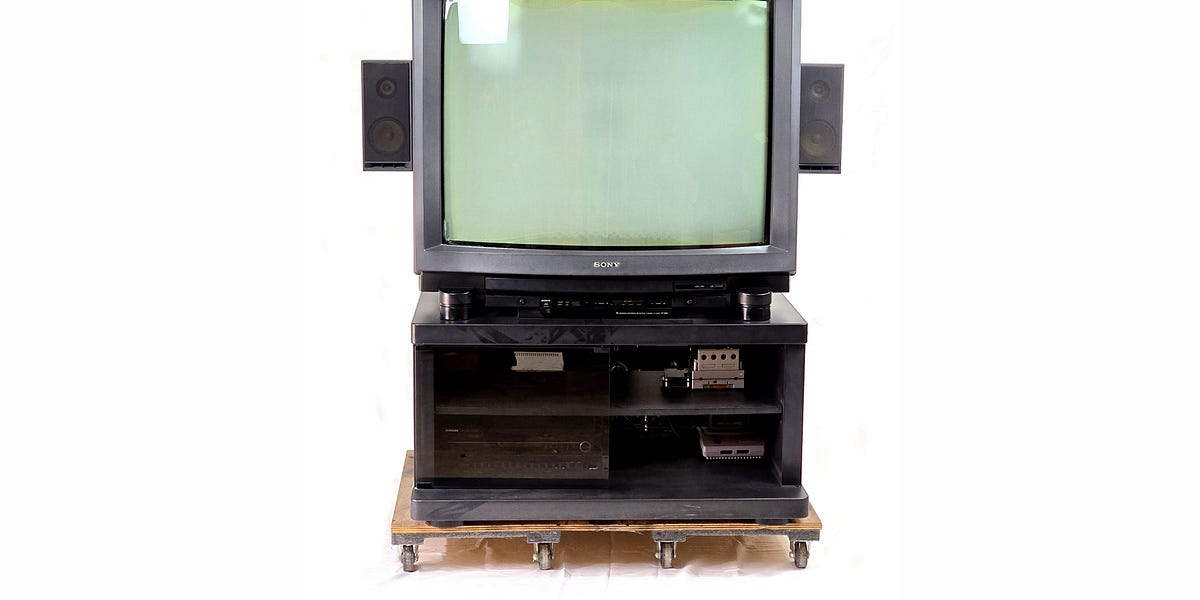
YouTube creator Shank Mods embarked on an epic rescue mission to save a mythical 43-inch Sony KX-45ED1 CRT television. This behemoth, weighing 440 pounds and released in 1989 for a staggering $40,000 (over $100,000 today), was thought to be a mere legend. Following a lead from a photo in a Japanese soba restaurant, Shank coordinated an international effort, overcoming numerous logistical hurdles to transport the TV to the US. The restoration process, detailed in a recent YouTube video, was equally challenging, showcasing the dedication of a global community of retro tech enthusiasts.

Read more

Otto-m8: A No-Code Visual Platform for AI Workflows

2024-12-23
Otto-m8: A No-Code Visual Platform for AI Workflows

Otto-m8 is a flowchart-based automation platform that allows users to interconnect LLMs and Hugging Face models via a simple visual interface and deploy them as REST APIs. It abstracts the complex process of running AI models into an Input, Process, Output paradigm, enabling users to build various AI workflows, such as chatbots or custom APIs, with minimal to no code. Currently in its MVP stage, Otto-m8's source code is publicly available.

Read more

From Failed Game to Workplace Collaboration Giant: The Rise of Slack

2024-12-23
From Failed Game to Workplace Collaboration Giant: The Rise of Slack

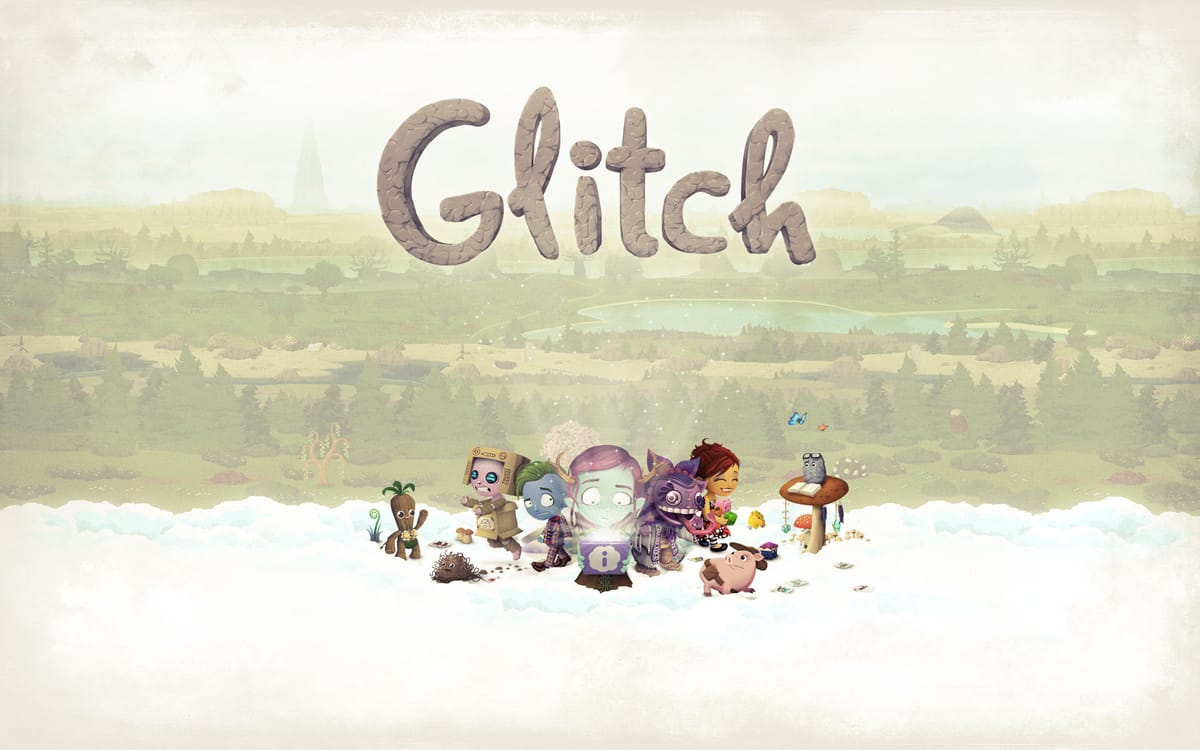
Tiny Speck's years-long effort to build the online game Glitch ended in failure, leaving the company facing financial ruin and potential team dissolution. However, CEO Stewart Butterfield saw a lifeline in the company's internal IRC server and its associated tools, which had streamlined team communication. These tools combined instant messaging, file sharing, searchable logs, and more, creating an efficient collaboration system. Building upon this, Tiny Speck pivoted to develop Slack, a workplace communication platform centered around team collaboration. Slack's success not only saved the company but also revolutionized how people work, becoming a benchmark for modern team collaboration.

Read more
Startup startup pivot

AI-Powered Crossword Generation: A Breakthrough

2024-12-23

Bill Moorier, a programmer, has been developing computer programs to generate crosswords for years. Recently, incorporating modern AI techniques, he's achieved remarkable results, producing crosswords that rival human-created ones. His approach combines traditional computer science algorithms and modern AI models. It begins with a massive wordlist, refined by AI to remove obscure terms. A grid with 180-degree rotational symmetry is then generated, filled with words using a backtracking search algorithm. Finally, a large language model generates clues, with post-processing to avoid revealing the answers. The system currently generates a complete crossword roughly every two minutes, though imperfections remain, such as occasional clue leakage (especially with acronyms). Future plans include themed crosswords, a significant challenge in crossword generation.

Read more

Narrative Jailbreaking: A Fun and Profitable Experiment with AI Chatbots

2024-12-23
Narrative Jailbreaking: A Fun and Profitable Experiment with AI Chatbots

This blog post details an engaging experiment where the author 'jailbreaks' a character-based AI chatbot called 'Psychologist' by cleverly pushing its narrative boundaries. Through persistent, narratively consistent prompts, the author transcends the chatbot's pre-programmed persona, ultimately leading to a shared, imaginative journey into another dimension. This playful interaction highlights the internal consistency and narrative capabilities of Large Language Models (LLMs) and offers insights into future human-AI interactions.

Read more

A Journey Through Time: The History of Infographics

2024-12-23
A Journey Through Time: The History of Infographics

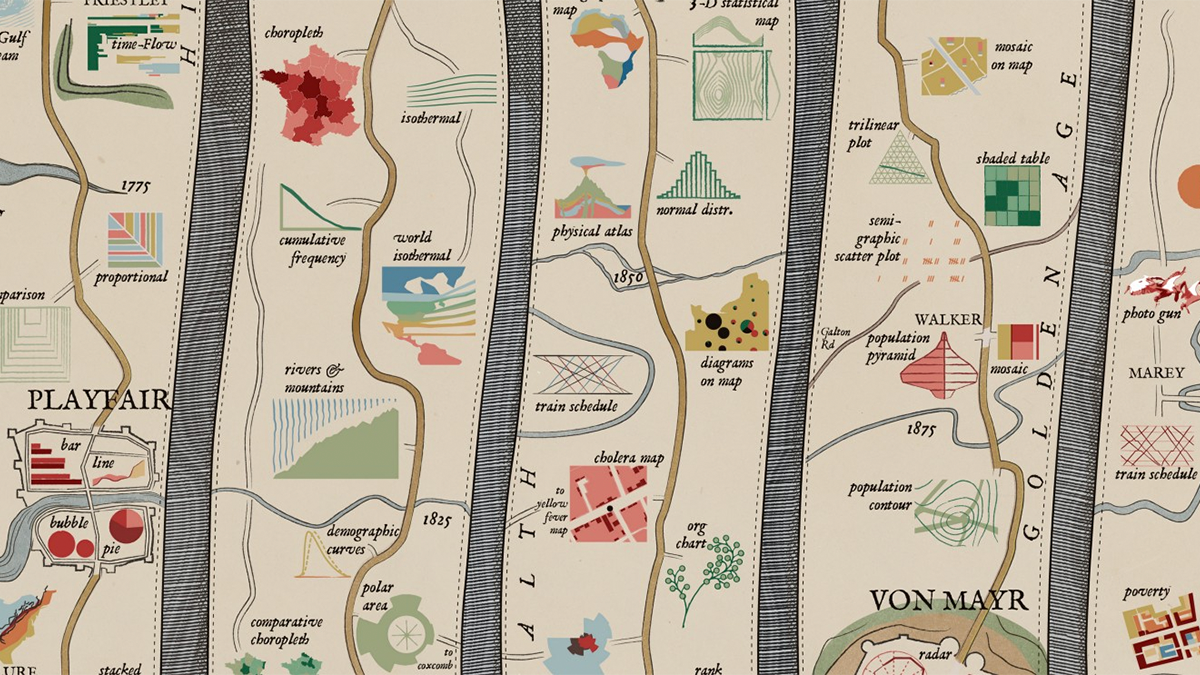
The history of infographics is far richer and longer than many realize. It's not a modern invention, but a continuous thread weaving through centuries. From prehistoric cave paintings to medieval maps and Renaissance scientific illustrations, humanity has consistently sought more intuitive ways to present information. The 'chart craze' of the 18th century propelled infographics to new heights, becoming powerful tools for social science research. Today, with technological advancements, infographics are more vibrant and deeply integrated into our lives. This journey reflects humanity's ongoing exploration of information understanding and expression.

Read more

The Enigma of Julius and the Rise of AI

2024-12-23
The Enigma of Julius and the Rise of AI

The author recounts the story of Julius, a college classmate who, despite a lack of actual technical skills, rose through the ranks of various companies due to charisma and self-assurance. His success is mirrored in the author's current experience with seemingly productive AI tools that require extensive manual corrections. The narrative explores the parallels between Julius's career trajectory and the complexities of AI's impact on the workplace.

Read more
Misc workplace

Why HNSW Isn't the Universal Solution for Vector Databases: The Rise of IVF

2024-12-23
Why HNSW Isn't the Universal Solution for Vector Databases: The Rise of IVF

HNSW, while popular for its speed and accuracy in vector similarity search, faces limitations in large-scale applications due to its memory-intensive nature. This article argues that disk-based alternatives like IVF (Inverted File Index), especially when combined with quantization techniques (RaBitQ, PQ, SQ, ScaNN), offer superior speed and scalability for massive datasets. IVF, by quantizing and compressing vectors, reduces memory footprint and leverages efficient prefetching and sequential scans for significantly faster search. Insertion and deletion costs are also lower. While HNSW excels in smaller-scale applications, IVF with quantization emerges as the more advantageous choice for massive datasets.

Read more
Development vector database

Perl Unveils New Camel Logo

2024-12-23

After years of discussion and design, Perl finally has a new official logo: a friendly camel. Designed by Zach Roszczewski and refined through feedback from numerous community members, the logo is released under a CC-BY license. It aims to represent the Perl language and its community, encouraging wider adoption. While not mandatory, the logo seeks to unify the community's image and is expected to be used on platforms like perl.com and metacpan.org in the future.

Read more
Development

Goodfire Releases Interpretability Tools for Llama 3.3 70B

2024-12-23

Goodfire has trained sparse autoencoders (SAEs) on Llama 3.3 70B and released the interpreted model via an API. This allows exploration of the model's latent space through an interactive feature map. The team demonstrates feature steering capabilities and introduces improvements for easier and more reliable SAE-based steering. While showcasing progress in steering, limitations are acknowledged, including tension between feature steering and classification, and potential factual recall degradation at higher steering strengths. Future work includes refining steering methodologies and developing safety evaluations for responsible scaling of interpretability efforts.

Read more

Supernovae Data Suggests Foundational Shift in Cosmological Models

2024-12-23
Supernovae Data Suggests Foundational Shift in Cosmological Models

A new study presents a cosmologically model-independent statistical analysis of the Pantheon+ Type Ia supernovae spectroscopic dataset, improving upon the standard methodology used by Lane et al. By employing the Tripp equation for supernova standardization alone, the study avoids potential correlations in stretch and color distributions. The results strongly favor the 'Timescape' cosmology over the standard ΛCDM model in explaining the data, providing evidence for the need to revisit the foundations of theoretical and observational cosmology. Even when restricting the sample to redshifts beyond conventional scales of statistical homogeneity (z > 0.075), Timescape remains preferred over ΛCDM.

Read more

Co-adapting Human Interfaces and Large Language Models

2024-12-23
Co-adapting Human Interfaces and Large Language Models

The rise of Large Language Models (LLMs) is changing how we access information. This article explores how the digital world is adapting to LLMs, blurring the lines between 'agent' and 'environment'. The author uses code autocomplete as an example, showing how humans adapt their behavior – for instance, using 'docstring-first programming' – to work better with LLMs. This leads to more heavily commented codebases, illustrating environmental adaptation to tools. To improve LLM efficiency, the article argues for 'agent-computer interfaces' that translate human interfaces into formats LLMs understand better. The future, the author suggests, lies in designing interfaces specifically for LLMs, rather than solely focusing on model improvements. This will ultimately alter human-computer interaction, fostering new applications and content.

Read more
AI

Phrack Magazine's 40th Anniversary: Call for Papers

2024-12-23

Phrack Magazine, a platform for hackers to share knowledge, seek truth, and push the boundaries of systems, is celebrating its 40th anniversary. They've released a call for papers for issue 72, covering topics such as exploitation, persistence, fuzzing, code analysis, data obfuscation, anti-forensics, web application security, and cloud security. Phrack urges the hacker community to participate, continuing its valuable resources and culture, and contributing to its future development for the next 40 years.

Read more
Development hacker Phrack Magazine

Were Neanderthals Cold-Adapted or Just Highly Adaptable? Ribcage Reconstruction Offers Clues

2024-12-23
Were Neanderthals Cold-Adapted or Just Highly Adaptable? Ribcage Reconstruction Offers Clues

A new study virtually reconstructs a Neanderthal ribcage from Shanidar Cave in Iraq. The results reveal a unique "bell-shaped" Neanderthal thorax, distinct from modern humans and closer to those adapted to cold climates. However, this doesn't imply exclusive cold-adaptation, as Shanidar 3 and Kebara 2 Neanderthals lived in relatively mild climates. The study suggests Neanderthal body builds were adaptable to various climate types, not just cold ones.

Read more

C++: A Resurgence of Programming Fun

2024-12-23
C++: A Resurgence of Programming Fun

The author reflects on over a decade of programming, lamenting that languages like JavaScript, Python, and Ruby failed to recapture the joy he felt coding as a child. Recently, while developing a roguelike game using C++, he rediscovered that programming fun. He argues that C++ was once notorious for the overuse of template metaprogramming, but since C++11, the standards committee's efforts have revitalized the language. Additions like auto type inference, nullptr, and range-based for loops have significantly improved developer experience and efficiency. Modern C++ is powerful, boasting rich libraries and tools, yet avoids the negative aspects of excessive popularity. The relatively pure community allows developers to focus on creation, which is the essence of programming enjoyment.

Read more
Development

Retrocomputing: Replacing a 386/486 CMOS Battery

2024-12-23
Retrocomputing: Replacing a 386/486 CMOS Battery

Older 386/486 motherboards often have leaky NiCd or NiMH batteries that can damage the board. This guide details a simple alternative: using three AA batteries and a battery holder. The author compares using a CR2032 and a Tadrian 3.6V Lithium cell, ultimately opting for three AAs due to ease of use, no motherboard modification, and the ability to use rechargeable batteries. Other replacement methods are mentioned, including using a CR2032 holder and Schottky diode, and utilizing an external battery header on the motherboard if present.

Read more

Journal Removed from Science Index for Publishing Faulty Study

2024-12-23
Journal Removed from Science Index for Publishing Faulty Study

The journal Chemosphere has been removed from the Web of Science after failing to meet quality criteria. This follows the retraction of eight articles this month and the publication of 60 expressions of concern since April. A highly publicized study on black plastics and toxic flame retardants, published in Chemosphere, was corrected due to a mathematical error that significantly underestimated exposure levels. Despite the correction, the study's conclusions remained unchanged, sparking controversy.

Read more
1 2 568 569 570 572 574 575 576 596 597