Stroboscopic Tuner in Odin: Precise Pitch Detection and Adaptive Gain

2025-09-08
Stroboscopic Tuner in Odin: Precise Pitch Detection and Adaptive Gain

A developer has created a novel stroboscopic tuner written in Odin. This tuner utilizes the NSDF pitch detection algorithm, boasting smooth visual feedback, manual target note selection, harmonic and vernier modes. It achieves precise pitch detection and visual effects through a single-bin DFT and phase comparator algorithm, incorporating adaptive gain control to maintain consistent visual contrast. Compared to alternative approaches, this tuner offers significant advantages in visual resolution, sensitivity, and latency.

Read more
Development Tuner Pitch Detection

The Strangest Microwave Purchase Ever: A Trip to GO12

2025-09-08
The Strangest Microwave Purchase Ever: A Trip to GO12

SoraNews24 reporter Mr. Sato embarked on a mission to buy a new office microwave, but chose the unusual route of GO12, a 24/7 unmanned electronics store in Kamata, Tokyo. This store stocks used appliances, offering a self-service shopping experience via a tablet payment system. Mr. Sato purchased a 5,000 yen microwave, enjoying a smooth transaction, yet feeling a strange sense of guilt. GO12's trust-based system and unique shopping experience, while convenient, spark reflections on social trust and human nature.

Read more

TheAuditor: Giving AI-Assisted Development the Gift of Sight

2025-09-08
TheAuditor: Giving AI-Assisted Development the Gift of Sight

TheAuditor is an offline-first, AI-centric Static Application Security Testing (SAST) and code intelligence platform. It runs industry-standard code analysis tools and generates structured, AI-digestible reports, providing developers and AI assistants with a trustworthy source of "ground truth." Unlike traditional SAST tools, TheAuditor tackles the security and quality assurance challenges inherent in AI-assisted development, preventing AI from generating insecure or flawed code. It supports multiple languages and frameworks, offers dependency graph visualization, refactoring detection, and more, ultimately aiming for a human-free, self-correcting AI development loop.

Read more
Development

GPT-5's Shockingly Good Search Capabilities: Meet My Research Goblin

2025-09-08
GPT-5's Shockingly Good Search Capabilities: Meet My Research Goblin

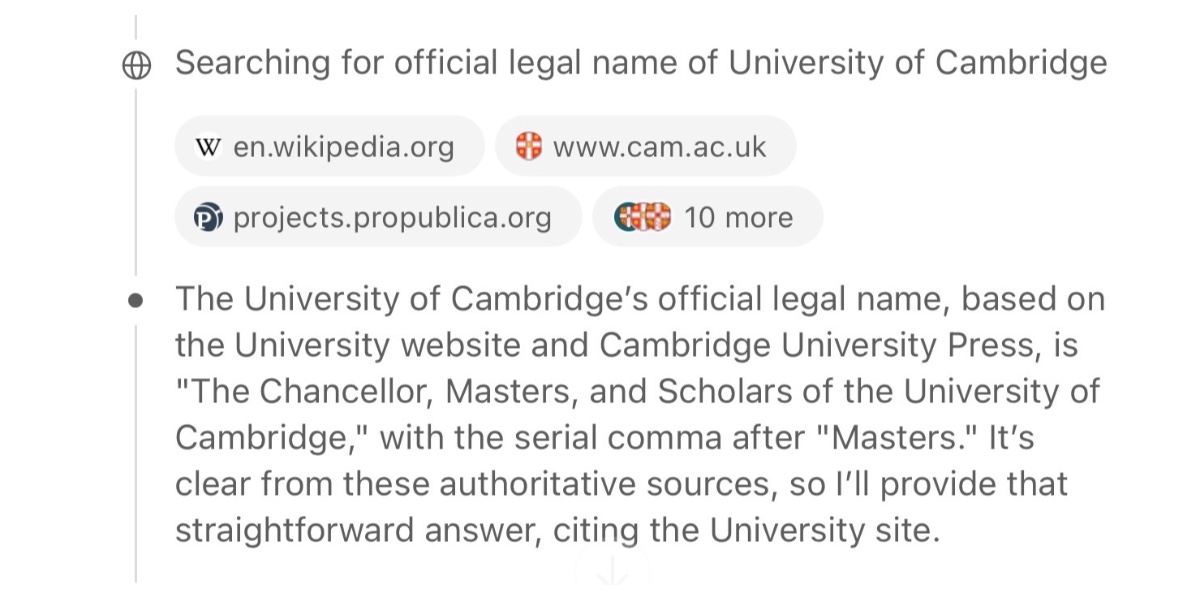
The author discovered OpenAI's GPT-5, combined with Bing's search capabilities, possesses surprisingly powerful search functionalities. It tackles complex tasks, performs in-depth internet searches, and provides answers, earning the nickname "Research Goblin." Multiple examples demonstrate GPT-5's prowess: identifying buildings, investigating Starbucks cake pop availability, finding Cambridge University's official name, and more. GPT-5 even autonomously performs multi-step searches, analyzes results, and suggests follow-up actions, such as generating emails to request information. The author concludes that GPT-5's search capabilities surpass manual searches in efficiency, particularly on mobile devices.

Read more
AI

Gen Z Locked Out: How AI Is Aging Silicon Valley's Workforce

2025-09-08
Gen Z Locked Out: How AI Is Aging Silicon Valley's Workforce

Silicon Valley is getting older, and it's not a natural aging process. Data reveals a dramatic decline in the number of Gen Z employees at tech companies, halved in just two years. AI-driven automation is replacing entry-level positions, leaving younger workers displaced while older, more established employees retain their jobs. This trend, fueled by efficiency gains and cost-cutting measures, threatens innovation and long-term stability. Experts advise Gen Z to adapt by mastering AI tools, pursuing upskilling opportunities, and exploring alternative career paths to navigate this changing landscape.

Read more
Tech

Pezy Computing's SC4s: A Japanese Math Accelerator Challenging GPU Hegemony

2025-09-08
Pezy Computing's SC4s: A Japanese Math Accelerator Challenging GPU Hegemony

After fifteen years of development, Japan's Pezy Computing has unveiled its latest SC4s math accelerator, challenging Nvidia's GPU dominance in high-performance computing and AI. The SC4s boasts 2048 RISC-V cores, 96GB of HBM3 memory, and a peak power consumption of 600 watts. Its FP64 performance rivals Nvidia's H100, while offering excellent energy efficiency. Unlike the SIMT architecture of GPUs, Pezy uses an SPMD architecture for greater programming flexibility and supports mainstream AI frameworks like PyTorch. While the future FugakuNext supercomputer primarily uses Nvidia GPUs, Pezy's continued R&D ensures Japan's technological independence in high-performance computing and opens possibilities for diverse computing architectures.

Read more
Hardware

AI Adoption Slowdown Among Large US Firms: Census Bureau Data

2025-09-08
AI Adoption Slowdown Among Large US Firms: Census Bureau Data

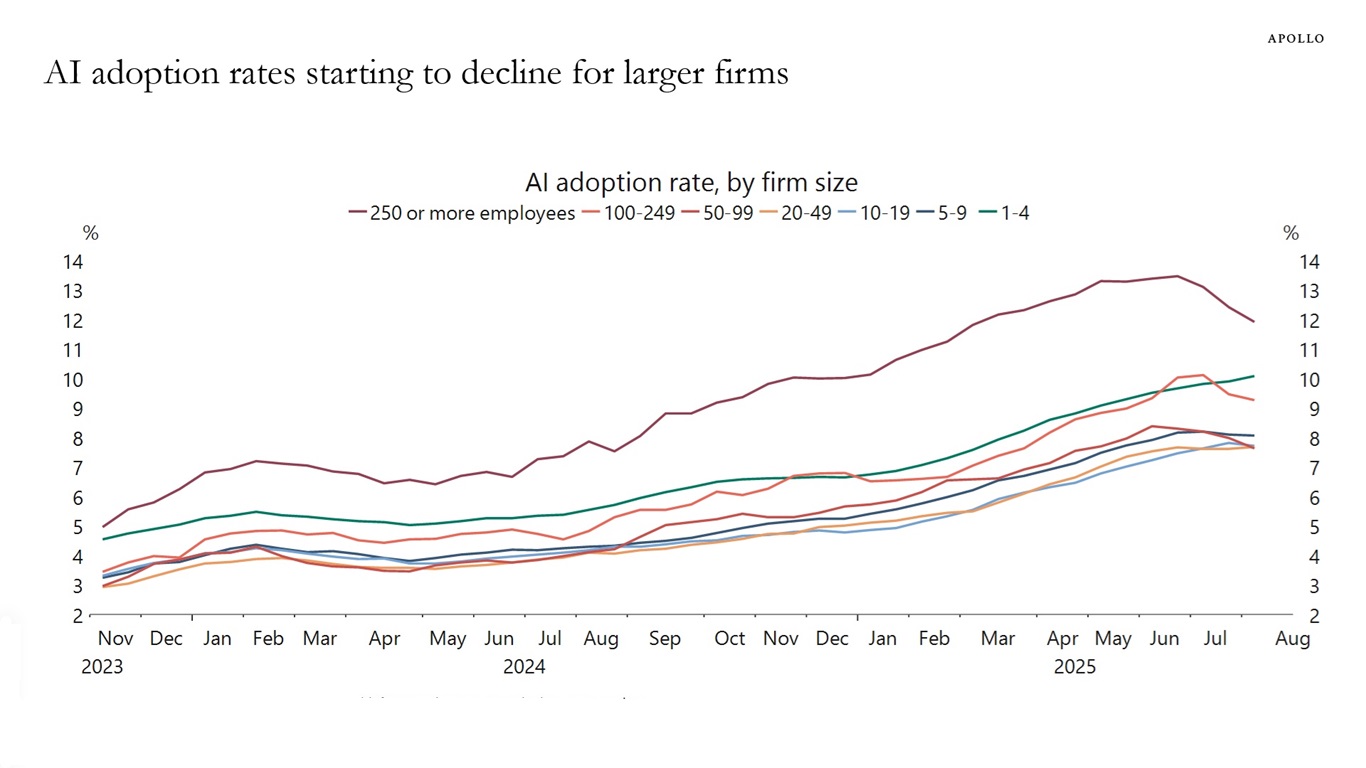
US Census Bureau's bi-weekly survey of 1.2 million firms reveals a decline in AI adoption among companies with over 250 employees. The survey asks businesses about their use of AI tools like machine learning and natural language processing in the past two weeks. While overall AI adoption continues to grow, the data shows a slowing trend among larger firms, suggesting potential challenges in widespread AI integration, particularly regarding diminishing marginal returns for large enterprises.

Read more

Flexible Software Design Trumps Rigid Domain Models

2025-09-08

This article challenges the popular software design principle of tightly binding code to the domain model. The author argues that over-emphasizing the avoidance of invalid states, such as through strict database schemas and type constraints, limits software flexibility and makes it difficult to handle inevitable real-world exceptions. Using state machines and foreign key constraints as examples, the author demonstrates how to allow arbitrary state transitions while keeping the core design simple, thus improving software adaptability and maintainability. Ultimately, the author advocates for allowing the representation of some invalid states in user-facing software to cope with evolving requirements and unforeseen circumstances.

Read more
Development domain model

How Britain Built Some of the World's Safest Roads

2025-09-08
How Britain Built Some of the World's Safest Roads

Britain's road safety journey is a remarkable success story. From a chaotic pre-war era with lax enforcement and minimal safety features, the UK has dramatically reduced its road death rate. This article details the key milestones: the construction of motorways, the widespread adoption of roundabouts, the war on drunk driving, mandatory seatbelts and motorcycle helmets, and stricter speed limits, especially around schools. These policies, combined with advancements in car safety technology, have transformed British roads into some of the safest globally. The article highlights the significant impact of these interventions and advocates for their adoption worldwide to address the global issue of 1.2 million annual road fatalities.

Read more
Tech

C++ Library for Accessing MacBook Lid Angle Sensor

2025-09-08
C++ Library for Accessing MacBook Lid Angle Sensor

This open-source project provides a C++ library for reading MacBook lid angle sensor data. By reverse-engineering HID device specifications, the library offers real-time, precise angle measurements (0-360 degrees), a high-performance, easy-to-use API, and comprehensive exception handling. It supports 16-inch MacBook Pros from 2019 and later, and M-series MacBook Pros. This library is a C++ port and extension of Sam Gold's original Objective-C work.

Read more
Development

Intel Arc Pro B50: A Compact AI Workhorse for Professional Workstations

2025-09-08
Intel Arc Pro B50: A Compact AI Workhorse for Professional Workstations

Intel launched the Arc Pro B50, a professional GPU designed for small-form-factor workstations. Based on the Battlemage BMG-G21 GPU with 16 Xe2 cores and 16GB GDDR6 VRAM, it boasts a 70W TDP, eliminating the need for external power connectors. Its PCIe Gen 5 x8 interface ensures efficient bandwidth. The Arc Pro B50 delivers up to 170 TOPS in INT8 compute, ideal for AI inference, machine learning, and data preprocessing, while also optimizing CAD, engineering, and design software. Its low-profile dual-slot design and four mini DisplayPorts make it perfect for space-constrained workstations. Priced at $349, it offers a competitive entry point into the professional GPU market.

Read more
Hardware Professional GPU

Linus Torvalds Cracks Down on Useless Links in Git Commits

2025-09-08

Linus Torvalds, the creator of Linux, is fed up with pointless "Link:" tags in Git commit messages for the Linux kernel. He finds that many of these links simply redirect to the same patch already present, offering no additional context. Moving forward, he'll be stricter about accepting pull requests with these useless links. While he appreciates links for multi-part patch series cover letters, he's pushing for better automation to filter out valueless links, even suggesting AI could help determine a link's usefulness. He urges developers to ensure any "Link:" tags add genuine value, avoiding time-wasting redundancy.

Read more
Development

Microsoft's Analog Optical Computer: Faster, More Energy-Efficient Computing

2025-09-08
Microsoft's Analog Optical Computer: Faster, More Energy-Efficient Computing

Microsoft has developed a novel Analog Optical Computer (AOC) that leverages photons for computation, demonstrating significant potential in solving optimization problems and running AI models. The AOC achieved breakthroughs in medical image reconstruction and financial transaction settlement, such as reducing MRI scan times to one-fifth and efficiently processing complex financial transactions. Microsoft is publicly sharing its AOC's algorithm and digital twin model to foster further research, aiming to build a more efficient and energy-saving computing platform for the future.

Read more

NASA's Year-Long Mars Simulation: Paving the Way to the Red Planet

2025-09-08
NASA's Year-Long Mars Simulation: Paving the Way to the Red Planet

Four volunteers will embark on a year-long Mars mission simulation at NASA's Johnson Space Center, living in a 3D-printed habitat for 378 days. This CHAPEA (Crew Health and Performance Exploration Analog) mission will evaluate the effects of long-duration space exploration on human health and performance, including resource limitations, equipment malfunctions, communication delays, and isolation. The crew will conduct scientific research and operational tasks, such as simulated Mars walks and vegetable gardening. The simulation is a crucial step in preparing for future crewed Artemis missions and the eventual landing on Mars, providing valuable data for human exploration of the Moon, Mars, and beyond.

Read more

Pico: A Minimalist CSS Framework for Effortless Elegance

2025-09-08
Pico: A Minimalist CSS Framework for Effortless Elegance

Pico is a minimalist CSS framework that directly styles HTML tags using fewer than 10 classes, even offering a classless version. It works seamlessly without dependencies, package managers, or external files, achieving elegant styles with pure CSS. It natively supports responsive design and automatically adapts to light/dark mode based on user preferences. Customization is easy with CSS variables. Pico prioritizes performance, keeping HTML lean and reducing memory usage and file load times, making it ideal for those seeking speed and elegance.

Read more
Design CSS framework

Beyond Single-GPU Limits: The Distributed Computing Revolution for Datacenters

2025-09-08
Beyond Single-GPU Limits: The Distributed Computing Revolution for Datacenters

With explosive data growth, single GPU servers are no longer sufficient. Data movement between GPU memory and VRAM becomes a bottleneck, leading to inefficiencies and increased costs. NVIDIA and AMD are racing to develop distributed computing runtimes, such as NVIDIA's CUDA DTX and RAPIDS-based solutions, and AMD's ROCm-DS. However, Voltron Data's Theseus takes a different approach, putting data movement at the core. Through asynchronous executors and sophisticated data prefetching strategies, it significantly improves the efficiency of analytics and AI tasks at datacenter scale, and has already outperformed Databricks Photon in benchmarks.

Read more
Tech

Taco Bell's AI Drive-Thru Debacle: When Tacos Met Their Match

2025-09-08
Taco Bell's AI Drive-Thru Debacle: When Tacos Met Their Match

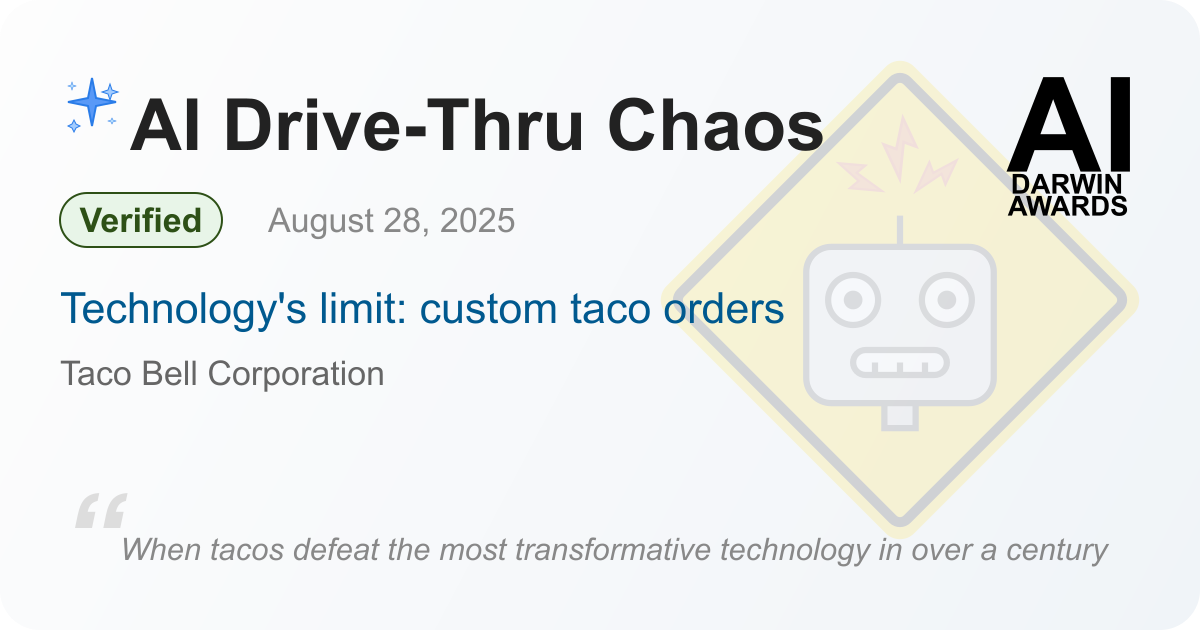
Taco Bell deployed AI voice ordering systems across 500+ drive-thrus, believing AI could conquer the chaos of fast food ordering. However, customer creativity, system glitches, and complex orders overwhelmed the system, leading to widespread complaints and delays. The Wall Street Journal reported the AI's struggles, forcing Taco Bell to reassess its AI strategy and admit limitations. This incident highlights overconfidence in AI capabilities, insufficient testing, and the unexpected challenges of human-AI interaction in a fast-paced environment. Despite the failure, Taco Bell remains committed to AI, showcasing a unique brand of technological optimism.

Read more
Tech Failure

Embedding Dimensions: From 300 to 4096, and Beyond

2025-09-08
Embedding Dimensions: From 300 to 4096, and Beyond

A few years ago, 200-300 dimensional embeddings were common. However, with the rise of deep learning models like BERT and GPT, and advancements in GPU computing, embedding dimensionality has exploded. We've seen a progression from BERT's 768 dimensions to GPT-3's 1536 and now models with 4096 dimensions or more. This is driven by architectural changes (Transformers), larger training datasets, the rise of platforms like Hugging Face, and advancements in vector databases. While increased dimensionality offers performance gains, it also introduces storage and inference challenges. Recent research explores more efficient embedding representations, such as Matryoshka learning, aiming for a better balance between performance and efficiency.

Read more

From Magician to Founder: The Buildkite Story

2025-09-08
From Magician to Founder: The Buildkite Story

This interview features Keith Pitt, co-founder of Buildkite, a successful devtools company. He shares his journey from side project to exit, highlighting challenges faced along the way, including early bootstrapping, securing funding, managing a growing team, and evolving product philosophy. Pitt emphasizes cash flow management, the perils of high initial valuations, and the importance of maintaining a long-term vision when dealing with VCs. His story culminates in Buildkite's sale and the launch of Unreasonable Magic, a new venture focused on enhancing the programmer experience with AI coding tools, focusing on fulfilling work rather than just productivity.

Read more
Startup

Ancient DNA Reveals How Slavic Migrations Reshaped Central and Eastern Europe

2025-09-08
Ancient DNA Reveals How Slavic Migrations Reshaped Central and Eastern Europe

Analysis of over 550 ancient genomes reveals the scale of Slavic migrations. The study shows that between the 6th and 8th centuries CE, Eastern Europe saw a massive influx of migrants into Eastern Germany, Poland/Ukraine, and the Northern Balkans, comprising over 80% of the ancestry in some regions. This wasn't conquest, but a movement of entire families and communities. Eastern Germany saw a shift to large, patrilineal family structures, while Croatia saw a blending of old and new traditions. This research fundamentally alters our understanding of Slavic expansion, demonstrating its complexity and diversity in shaping the genetic and linguistic landscape of modern Central and Eastern Europe.

Read more

Musl's Default Allocator: A 7x Performance Nightmare!

2025-09-08
Musl's Default Allocator: A 7x Performance Nightmare!

A real-world benchmark revealed a shocking 7x slowdown using Musl's default allocator compared to alternatives. The author strongly recommends all Rust projects immediately switch to a different allocator like mimalloc or jemalloc by adding a few lines of code to their `main.rs`. The root cause is thread contention during memory allocation, worsening with more threads or allocations. Switching is advised even if not targeting Musl or for single-threaded programs. The author explains the reasons for using Musl (cross-compilation and static executables) and details the discovery process. Numerous other projects have encountered this issue, with benchmarks on various core counts showing slowdowns up to 700x! The author concludes by urging a switch to a more performant allocator.

Read more
Development Memory Allocator

How Many Dimensions Does a Line Have?

2025-09-08
How Many Dimensions Does a Line Have?

This article explores the definition of dimensionality in geometric shapes. The author starts with an intuitive approach based on spatial containment, but this method falls short when dealing with curved line segments. A 'degrees of freedom' approach is then proposed, but this also proves ambiguous. Finally, the author introduces the Minkowski dimension, a more precise method using box counting that can even handle fractal shapes, resulting in non-integer dimensions—for example, the Sierpinski triangle has a dimension of approximately 1.6.

Read more
Math

Programming with Music and Photos? Exploring the Weird World of Esoteric Languages

2025-09-08
Programming with Music and Photos? Exploring the Weird World of Esoteric Languages

A new book, "Forty-Four Esolangs: The Art of Esoteric Code," explores 44 bizarre programming languages, some using musical notation, others producing different results each run, and even one using photographs. Author Daniel Temkin uses these languages to explore the creativity of programming and the subtle power dynamics between programmer and machine. He highlights the contrast between esoteric languages and AI-generated code, the latter often lacking creativity. The history of esoteric languages dates back to early computing and is intertwined with the rise of shareware, demoscene culture, and the early internet.

Read more
Development esoteric languages

Creative Technology: From Sound Blaster Domination to Diversification's Rollercoaster

2025-09-08
Creative Technology: From Sound Blaster Domination to Diversification's Rollercoaster

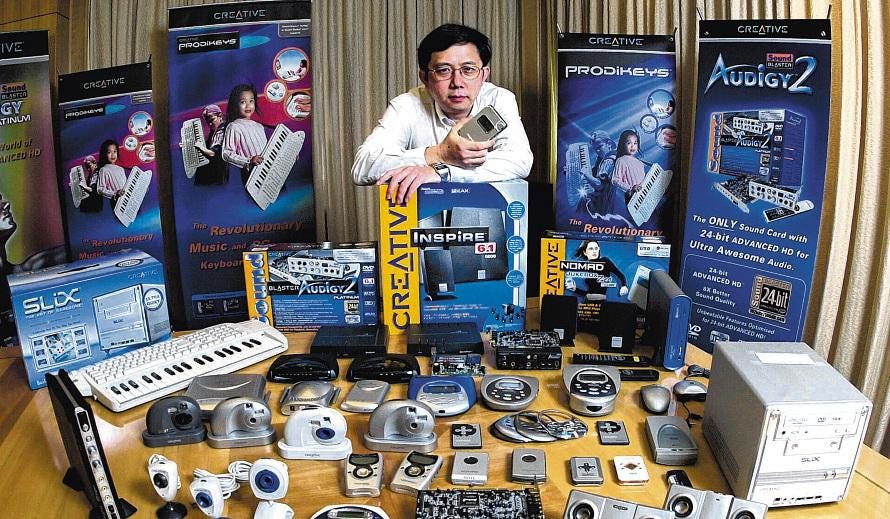
This article chronicles the remarkable journey of Sim Wong Hoo and Creative Technology. From humble beginnings selling eggs as a child to founding Creative, he leveraged his passion for music and keen business acumen to create the iconic Sound Blaster sound card, achieving market dominance. However, Creative's diversification into graphics cards, MP3 players, and other ventures led to a rollercoaster ride, ultimately returning to its audio roots with continued success. The narrative highlights Creative's triumphs and challenges, illustrating its adaptation and transformation within the ever-evolving tech landscape.

Read more

Optical Architecture for Simulated Annealing: A Novel Approach

2025-09-08
Optical Architecture for Simulated Annealing: A Novel Approach

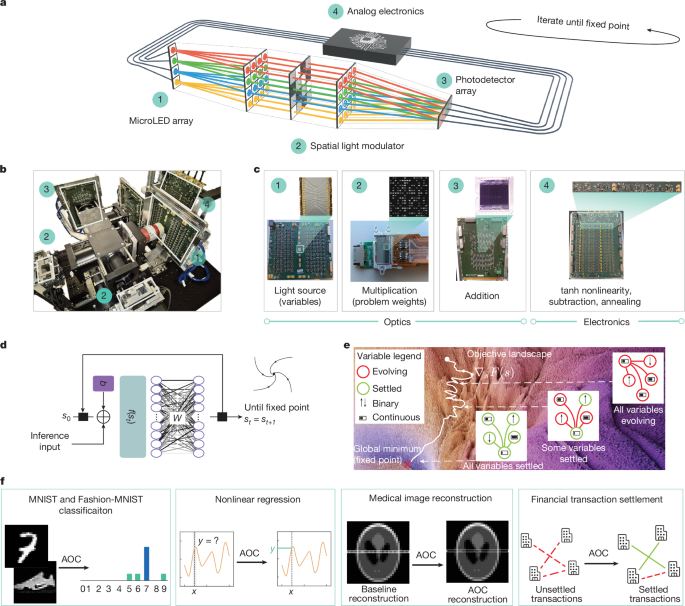
Researchers have devised an optical architecture for simulated annealing, employing microLED arrays, liquid-crystal spatial light modulators, and photodetector arrays to perform matrix-vector multiplication. This system efficiently handles machine learning and optimization problems, leveraging a simulated tanh nonlinearity for efficient solving. Experiments demonstrate high-accuracy classification on MNIST and Fashion-MNIST datasets, and superior performance on various optimization problems, offering a novel hardware solution for large-scale simulated annealing computation.

Read more

Code Formatting Solved in the 80s? The Case of DIANA and the Rational R1000

2025-09-08
Code Formatting Solved in the 80s?  The Case of DIANA and the Rational R1000

In the 1980s, developers working on the Ada compiler used a Descriptive Intermediate Attributed Notation for Ada (DIANA) intermediate representation (IR) instead of plain text source code, effectively solving the code formatting problem. The compiler and IDE directly manipulated the DIANA tree, allowing users to customize the code display format without worrying about spaces or tabs. This enabled incremental compilation, refactoring, and fast integration. The author uses this example to reflect on how code formatting remains a problem for programmers today, encouraging exploration of more advanced solutions.

Read more
Development

Veena Chromatic Tuner: Precise Tuning for Musicians

2025-09-08
Veena Chromatic Tuner: Precise Tuning for Musicians

Veena Chromatic Tuner is a powerful tuning app for musicians needing precise control across various musical traditions. It features Equal Temperament and Just Intonation tuning, a unique oscilloscope-like waveform display for visual feedback, and support for multiple note naming systems (including Indian classical). Users can customize the reference pitch, transpose notes, and create custom tuning profiles. A dedicated Veena instrument mode assists in fretting and tuning, making it ideal for instrument makers and players alike. While ad-supported and compatibility may vary, it offers a versatile solution for precise tuning.

Read more

Resurrecting a 25-Year-Old Tape Driver with AI

2025-09-08

The author enjoys recovering data from old QIC-80 tapes, a popular backup medium in the 1990s. These tapes require the outdated ftape driver, only compatible with very old Linux versions (CentOS 3.5). Using Claude Code, an AI model, the author modernized the ftape driver to compile and run on modern Linux kernels. Through iterations and minor manual adjustments, a loadable kernel module was created, successfully reading test tapes on Xubuntu 24.04. The author shares lessons learned collaborating with AI, emphasizing clear instructions, understanding AI limitations, and leveraging AI as a skill multiplier.

Read more
Development

Argentina's 80s Computing Scene and the Birth of Truco

2025-09-08

This article chronicles the rise and fall of Argentina's computing industry in the 1980s and the creation of its first commercial game, Truco. Starting with the early computer project 'Clementina' led by Manuel Sadosky, Argentina's computing journey faced political turmoil and economic policy shifts. Despite a native computer, the MS101, it couldn't compete with foreign imports after import restrictions eased. The mid-80s saw a boom in home computing with the rise of clones (like ZX81 and Commodore 64 clones) and government support. However, the game market was dominated by pirated titles. Against this backdrop, Enrique and Ariel Arbiser developed Argentina's first commercial game, Truco, a computer game based on a popular Argentinian card game, which was released on TI-99/4A and DOS platforms, becoming a milestone in Argentinian gaming history.

Read more

The Demise of the Demo Scene: A Graceful Exit

2025-09-07

The demo scene, recently recognized as a UNESCO Living Cultural Heritage in Sweden, is slowly fading away. This isn't due to a lack of appeal, but rather its unique cultural attributes resisting commodification and replication. Born in the early days of affordable home computers in the 80s and 90s, it thrived on limited resources and communication, fostering a community of passionate programmers and creative individuals. The internet and powerful modern computers have since opened up new creative avenues, offering younger generations a plethora of alternatives. The author argues that the scene's decline is natural, and its essence lies not in perpetuation, but in the joy of creation and preserving its unique charm.

Read more
1 2 26 27 28 30 32 33 34 596 597