Category: AI

OpenAI Uses Reddit's r/ChangeMyView to Benchmark AI Persuasion

2025-02-02

OpenAI Uses Reddit's r/ChangeMyView to Benchmark AI Persuasion

OpenAI leveraged Reddit's r/ChangeMyView subreddit to evaluate the persuasive abilities of its new reasoning model, o3-mini. The subreddit, where users post opinions and engage in debates, provided a unique dataset to assess how well the AI's generated responses could change minds. While o3-mini didn't significantly outperform previous models like o1 or GPT-4o, all demonstrated strong persuasive abilities, ranking in the top 80-90th percentile of human performance. OpenAI emphasizes that the goal isn't to create hyper-persuasive AI, but rather to mitigate the risks associated with excessively persuasive models. The benchmark highlights the ongoing challenge of securing high-quality datasets for AI model development.

DeepSeek-R1: China's AI Surge and the Open-Source Victory

2025-02-02
DeepSeek-R1: China's AI Surge and the Open-Source Victory

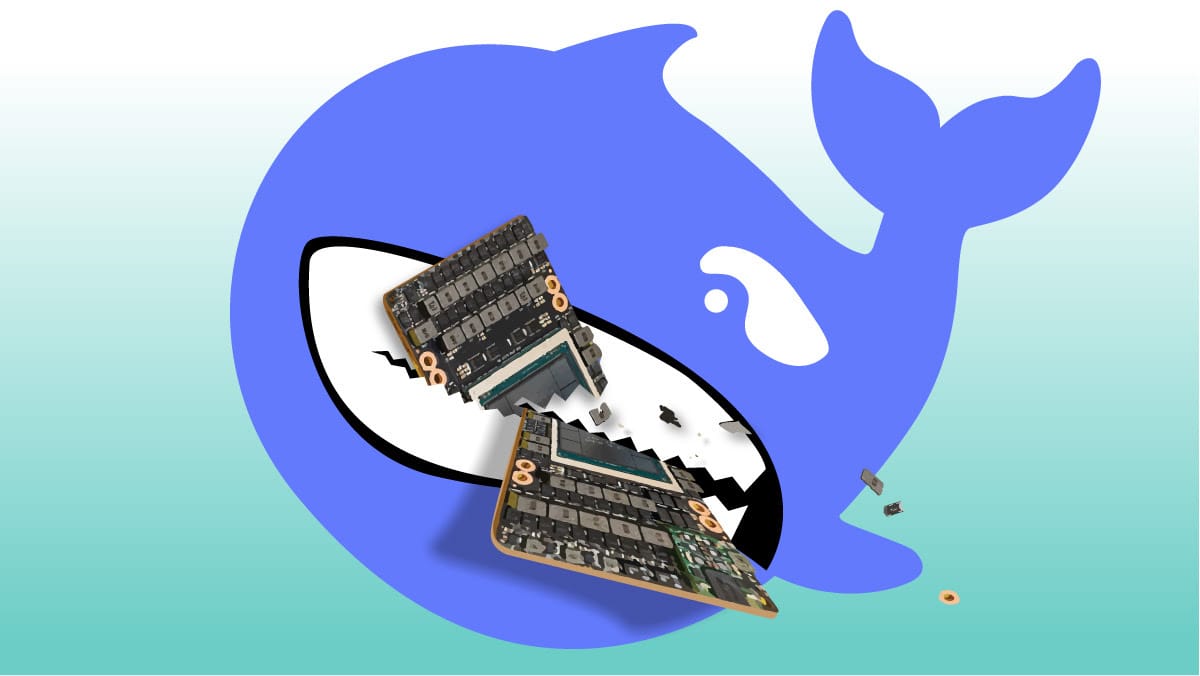
DeepSeek, a Chinese company, released DeepSeek-R1, a large language model comparable to OpenAI's models, under an open-weight MIT license. This triggered a market selloff in US tech stocks, highlighting several key trends: China is rapidly catching up to the US in generative AI; open-weight models are commoditizing the foundation model layer, creating opportunities for application builders; scaling isn't the only path to AI progress, with algorithmic innovations rapidly lowering training costs. DeepSeek-R1 signifies a shift in the AI landscape, offering new opportunities for AI application development.

LLMs Hit a Wall: Einstein's Riddle Exposes Limits of Transformer-Based AI

2025-02-02
LLMs Hit a Wall:  Einstein's Riddle Exposes Limits of Transformer-Based AI

Researchers have discovered fundamental limitations in the ability of current transformer-based large language models (LLMs) to solve compositional reasoning tasks. Experiments involving Einstein's logic puzzle and multi-digit multiplication revealed significant shortcomings, even after extensive fine-tuning. These findings challenge the suitability of the transformer architecture for universal learning and are prompting investigations into alternative approaches, such as improved training data and chain-of-thought prompting, to enhance LLM reasoning capabilities.

OpenAI AMA: Admitting Lag, Embracing Open Source?

2025-02-01
OpenAI AMA: Admitting Lag, Embracing Open Source?

In a wide-ranging Reddit AMA, OpenAI CEO Sam Altman admitted that OpenAI's lead in AI is shrinking, partly due to competitors like DeepSeek. He hinted at a shift towards a more open-source strategy, potentially releasing older models. OpenAI is also navigating pressure from Washington, a massive funding round, and the need to build out substantial data center infrastructure. To compete, the company plans to increase model transparency by revealing the reasoning process behind its outputs. Altman expressed optimism about the potential for rapid AI advancement but acknowledged the risk of misuse, particularly in the development of weapons.

AI AI Race

Sparse Interpretable Audio Codec: Towards a More Intuitive Audio Representation

2025-02-01

This paper introduces a proof-of-concept audio encoder that aims to encode audio as a sparse set of events and their times of occurrence. It leverages rudimentary physics-based assumptions to model the attack and physical resonance of both the instrument and the room, hopefully encouraging a sparse, parsimonious, and easy-to-interpret representation. The model works by iteratively removing energy from the input spectrogram, producing event vectors and one-hot vectors representing time of occurrence. The decoder uses these vectors to reconstruct the audio. Experimental results show the model's ability to decompose audio, but there's room for improvement, such as enhancing reconstruction quality and reducing redundant events.

DeepSeek R1 Brings AI to the Edge on Copilot+ PCs

2025-02-01
DeepSeek R1 Brings AI to the Edge on Copilot+ PCs

Microsoft is bringing the power of AI to the edge with DeepSeek R1, now optimized for Copilot+ PCs powered by Qualcomm Snapdragon and Intel Core Ultra processors. Leveraging the Neural Processing Unit (NPU), DeepSeek R1 runs efficiently on-device, enabling faster response times and lower power consumption. Developers can easily integrate the model using the AI Toolkit to build native AI applications. This initial release of DeepSeek R1-Distill-Qwen-1.5B, along with upcoming 7B and 14B variants, showcases the potential of edge AI for efficient inference and continuously running services.

AI Edge AI

AI's $200 Task Conquest: A Progress Report

2025-02-01
AI's $200 Task Conquest: A Progress Report

The author recounts commissioning a $200 mascot design in 2013, illustrating the type of tasks now achievable by AI. AI excels at transactional tasks with well-defined outputs, like logo design, transcription, and translation, previously requiring specialized skills. However, more complex tasks demanding nuanced expertise and judgment, such as landscape design, remain beyond AI's current capabilities. While AI's progress is impressive, its economic impact in solving paid tasks is still in its early stages.

OpenAI's o3-mini: A Budget-Friendly LLM Powerhouse

2025-02-01

OpenAI has released o3-mini, a new language model that excels in the Codeforces competitive programming benchmark, significantly outperforming GPT-4o and o1. While not universally superior across all metrics, its low price ($1.10/million input tokens, $4.40/million output tokens) and exceptionally high token output limit (100,000 tokens) make it highly competitive. OpenAI plans to integrate it into ChatGPT for web search and summarization, and support is already available in LLM 0.21, but currently limited to Tier 3 users (at least $100 spent on the API). o3-mini offers developers a powerful and cost-effective LLM option.

AI

AI Music Generation: Convenience vs. Creativity

2025-01-31
AI Music Generation: Convenience vs. Creativity

The success of AI music company Suno sparks a reflection on the role of AI in artistic creation. The author, a Stanford professor, questions Suno's claim that AI can easily solve the tedious parts of music creation, arguing that the challenges and difficulties inherent in the creative process constitute the meaning and value of art. Using his own experiences and teaching practices as examples, he illustrates the importance of the creative process and calls for the preservation of human active creation in the age of AI, avoiding a purely consumerist culture.

Tensor Diagrams Simplify Tensor Manipulation: Introducing Tensorgrad

2025-01-31

High-dimensional tensor manipulation can be confusing? A new book, "The Tensor Cookbook," simplifies this process using tensor diagrams. Tensor diagrams are more intuitive than traditional index notation (einsum), easily revealing patterns and symmetries, avoiding the hassle of vectorization and Kronecker products, simplifying matrix calculus, and effortlessly representing functions and broadcasting. The accompanying Python library, Tensorgrad, uses tensor diagrams for symbolic tensor manipulation and differentiation, making complex calculations easier to understand.

OpenAI Launches Cheaper, Faster Reasoning Model: o3-mini

2025-01-31
OpenAI Launches Cheaper, Faster Reasoning Model: o3-mini

OpenAI unveiled o3-mini, a new AI reasoning model in its 'o' family. While comparable in capability to the o1 family, o3-mini boasts faster speeds and lower costs. Fine-tuned for STEM problems, particularly programming, math, and science, it's available in ChatGPT with adjustable 'reasoning effort' settings balancing speed and accuracy. Paid users get unlimited access, while free users have a query limit. Also accessible via OpenAI's API to select developers, o3-mini offers competitive pricing and improved safety, though it doesn't surpass DeepSeek's R1 model in all benchmarks.

AI

DeepSeek: A Chinese AI Dark Horse Emerges

2025-01-31
DeepSeek: A Chinese AI Dark Horse Emerges

DeepSeek, an AI company incubated by Chinese hedge fund High-Flyer, has taken the world by storm with its highly efficient models, DeepSeek V3 and R1. DeepSeek V3 boasts low training costs (significantly higher than the publicized $6 million) and powerful performance, along with innovative Multi-head Latent Attention technology, resulting in substantial advantages in inference costs. While DeepSeek's success is tied to its massive GPU investment (around 50,000 Hopper GPUs) and emphasis on talent, its low-pricing strategy raises questions about cost sustainability. Google's Gemini Flash 2.0 Thinking also presents a challenge to DeepSeek's leading position. DeepSeek's rise reflects the growing strength of Chinese AI technology, while also prompting reflection on international tech competition and export controls.

Train Your Own AI Image Model in Under 2 Hours

2025-01-31
Train Your Own AI Image Model in Under 2 Hours

The author trained a custom AI image model in under two hours to generate images of themselves in various styles, such as a Superman version. This was achieved using the Flux model and LoRA training technique, leveraging Replicate's easy-to-use GPU cloud service and pre-built tools. With just a few personal photos and Hugging Face for model storage, the process was surprisingly straightforward. Results varied, but were fun enough to justify the low cost (under $10).

AI

RamaLama: Running AI Models as Easily as Docker

2025-01-31
RamaLama: Running AI Models as Easily as Docker

RamaLama is a command-line tool designed to simplify the local running and management of AI models. Leveraging OCI container technology, it automatically detects GPU support and pulls models from registries like Hugging Face and Ollama. Users avoid complex system configuration; simple commands run chatbots or REST APIs. RamaLama supports Podman and Docker, offering convenient model aliases for enhanced usability.

DeepSeek R1: Open-Source Model Challenges OpenAI in Complex Reasoning

2025-01-31
DeepSeek R1: Open-Source Model Challenges OpenAI in Complex Reasoning

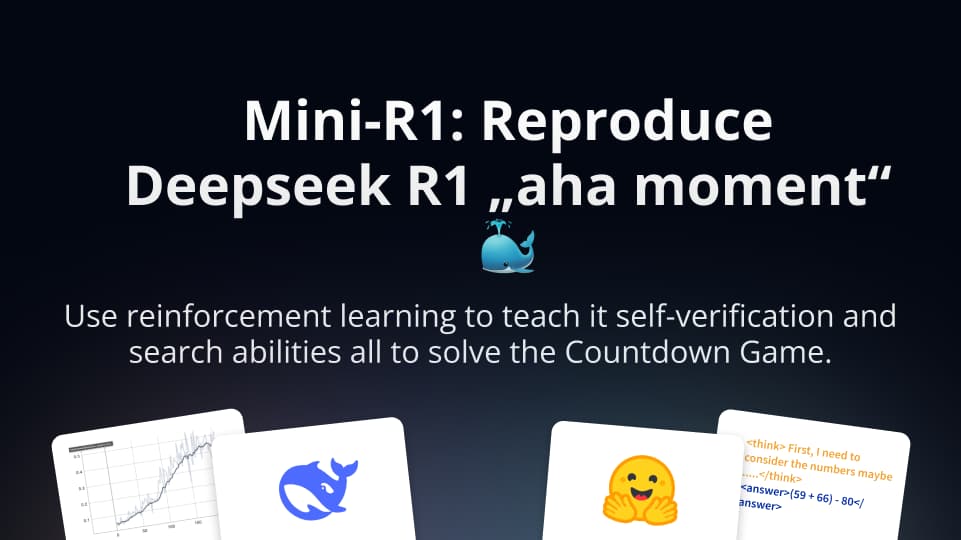
DeepSeek R1, an open-source model, is challenging OpenAI's models in complex reasoning tasks. Utilizing Group Relative Policy Optimization (GRPO) and an RL-focused multi-stage training approach, the creators released not only the model but also a research paper detailing its development. The paper describes an "aha moment" during training where the model learned to allocate more thinking time to a problem by reevaluating its initial approach, without human feedback. This blog post recreates this "aha moment" using GRPO and the Countdown game, training an open model to learn self-verification and search abilities. An interactive Jupyter Notebook code, along with scripts and instructions for distributed training on multi-GPU nodes or SLURM clusters, is provided to facilitate learning GRPO and TRL.

AI

Authors Guild Launches 'Human Authored' Certification to Combat AI-Generated Books

2025-01-31
Authors Guild Launches 'Human Authored' Certification to Combat AI-Generated Books

In response to the surge of AI-generated books on platforms like Amazon, the Authors Guild has launched a 'Human Authored' certification. This initiative aims to provide readers with clarity on authorship, distinguishing human-written books from AI-generated content. Currently limited to Guild members and single-author books, the certification will expand to include non-members and multiple authors in the future. While minor AI assistance like grammar checks is permissible, the certification emphasizes that the core literary expression must be of human origin. The Guild frames this not as anti-technology, but as a push for transparency and the recognition of the unique human element in storytelling.

AI
1 2 33 34 35 36 37 38 39 41 Next →