Apple WWDC2025: Supercharging Developer Tools for the Future of Apps

2025-06-09
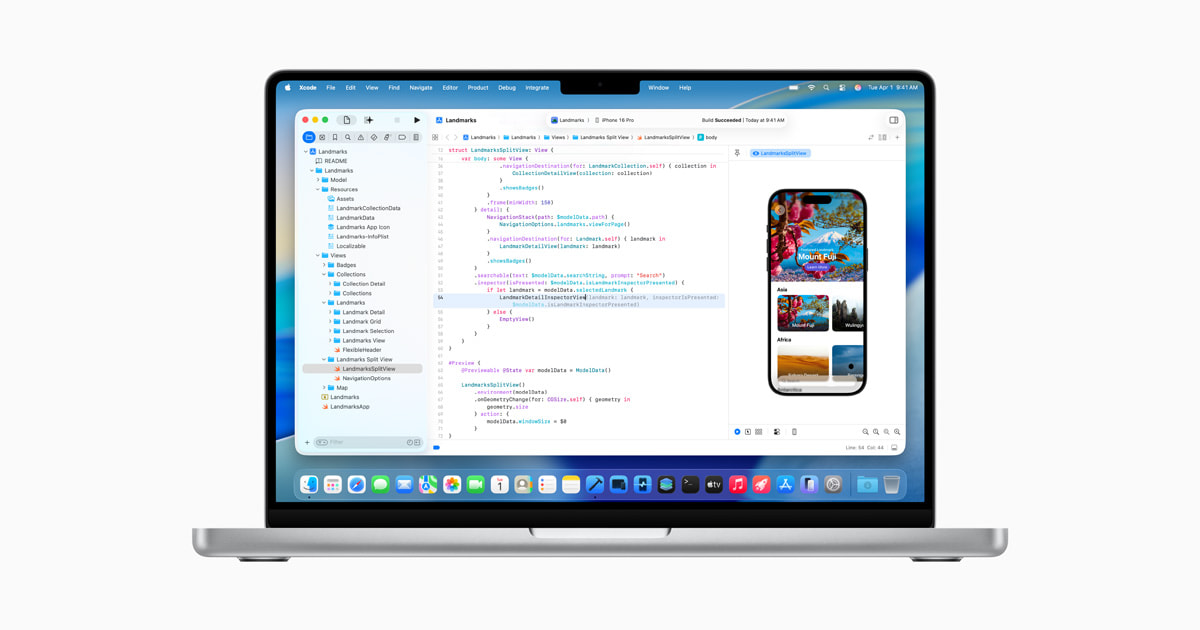
Apple WWDC2025: Supercharging Developer Tools for the Future of Apps

Apple's WWDC2025 keynote unveiled significant updates empowering developers to build smarter, more beautiful, and engaging apps. Xcode 26 integrates large language models like ChatGPT, boosting coding efficiency. The new Foundation Models framework allows developers to leverage on-device AI for offline, privacy-preserving intelligent apps. A refined 'Liquid Glass' design language brings a fresh visual experience. Further enhancements include upgraded game development tools, improved child online safety features, and increased App Store accessibility. These powerful tools and resources are designed to help developers create the next generation of exceptional apps.

Read more
Development Apple Developers

Apple's WWDC2025: Liquid Glass Redesign Sweeps Across Platforms

2025-06-09
Apple's WWDC2025: Liquid Glass Redesign Sweeps Across Platforms

Apple unveiled Liquid Glass, a sweeping design update at WWDC2025, bringing transparency and glass-like shine effects to iOS 26, iPadOS 26, macOS Tahoe 26, watchOS 26, and tvOS 26. Inspired by visionOS, this universal design adapts to light and dark modes, transforming elements from the dock and lock screen to app interfaces like Camera and Safari. New APIs are provided for developers to update their apps for this major UI overhaul. Marking Apple's biggest design shift in over a decade, Liquid Glass will significantly impact app development in the coming months.

Read more

Why Go is the Perfect Language for Building AI Agents

2025-06-09

This article explores the advantages of Go for building AI agents. The author argues that the rise of AI agents necessitates high concurrency, long-running processes, and efficient resource management. Go excels in these areas due to its lightweight goroutines, efficient concurrency model, robust standard library, and convenient cancellation mechanisms. The article compares Go to other languages like Python and Node.js, highlighting Go's superior handling of concurrency, memory management, and error handling. A code example illustrates Go's elegant approach to inter-agent communication and state management. While acknowledging Go's relative lack of machine learning libraries, the article strongly advocates for Go as the ideal choice for building high-performance, scalable AI agents.

Read more
Development

Major Grocery Distributor UNFI Hit by Cyberattack, Disrupting Operations

2025-06-09
Major Grocery Distributor UNFI Hit by Cyberattack, Disrupting Operations

United Natural Foods (UNFI), a major grocery distributor to Whole Foods and other retailers, has suffered a cyberattack, significantly disrupting its operations. The attack, discovered last Thursday, forced UNFI to shut down parts of its network, impacting order fulfillment and distribution. While workarounds are in place, the company acknowledges ongoing disruptions. UNFI, a primary distributor to Whole Foods and serving over 30,000 stores across North America, hasn't disclosed the nature of the attack or ransom demands but has reported it to law enforcement. This incident follows recent cyberattacks targeting the retail and grocery supply chain, highlighting growing cybersecurity vulnerabilities in the sector.

Read more

The Perils of Trusting Your Gut on AI

2025-06-09
The Perils of Trusting Your Gut on AI

Drawing on personal anecdotes and psychological research, the author argues that cognitive biases make us vulnerable to manipulation, especially in the AI realm. The article critiques the reliance on personal experience and anecdotal evidence to validate AI tools, emphasizing the need for rigorous scientific studies to avoid repeating past mistakes. The author warns against the uncritical adoption of AI in software development, arguing that it exacerbates existing flaws rather than solving them. Blind faith in AI, the author concludes, is a significant risk.

Read more
AI

The Last Inca Bridge: A 500-Year-Old Tradition in the Andes

2025-06-09

High in the Peruvian Andes, Victoriano Arizapana annually rebuilds a bridge made of grass and fiber – the Q’eswachaka bridge – a tradition spanning over 500 years. This incredible feat of engineering, hanging 60 feet above a rushing river, is strong enough to support over a hundred men. Arizapana's family has been the custodian of this Inca legacy, annually dismantling and rebuilding the bridge with the local community. This story explores not only the breathtaking architectural marvel but also the enduring power of tradition, community, and the dedication to preserving a unique cultural heritage.

Read more

Anthropic Quietly Shuts Down Claude AI Blog

2025-06-09
Anthropic Quietly Shuts Down Claude AI Blog

Anthropic has quietly shut down its AI-powered blog, "Claude Explains," which experimented with using its Claude AI models to write blog posts. The blog, while garnering a respectable number of backlinks in its short month-long lifespan, faced criticism on social media due to a lack of transparency regarding AI-generated content and limitations in the AI's writing capabilities. The swift demise highlights the importance of transparency and accuracy in AI content creation, and the continued need for human oversight in AI-assisted writing.

Read more
AI

Glowstick: Safe and Efficient Tensor Operations in Rust

2025-06-09
Glowstick: Safe and Efficient Tensor Operations in Rust

Glowstick is a Rust crate that makes working with tensors safe, easy, and fun by tracking tensor shapes within the type system. It offers a variety of tensor operations including matrix multiplication, convolution, reshaping, squeezing, flattening, and more. Integrating seamlessly with popular Rust ML frameworks like Candle and Burn, Glowstick empowers Rust developers with powerful tensor computation capabilities, significantly simplifying the development of deep learning models. Note that the project is currently pre-1.0 and subject to breaking changes.

Read more
Development Tensor

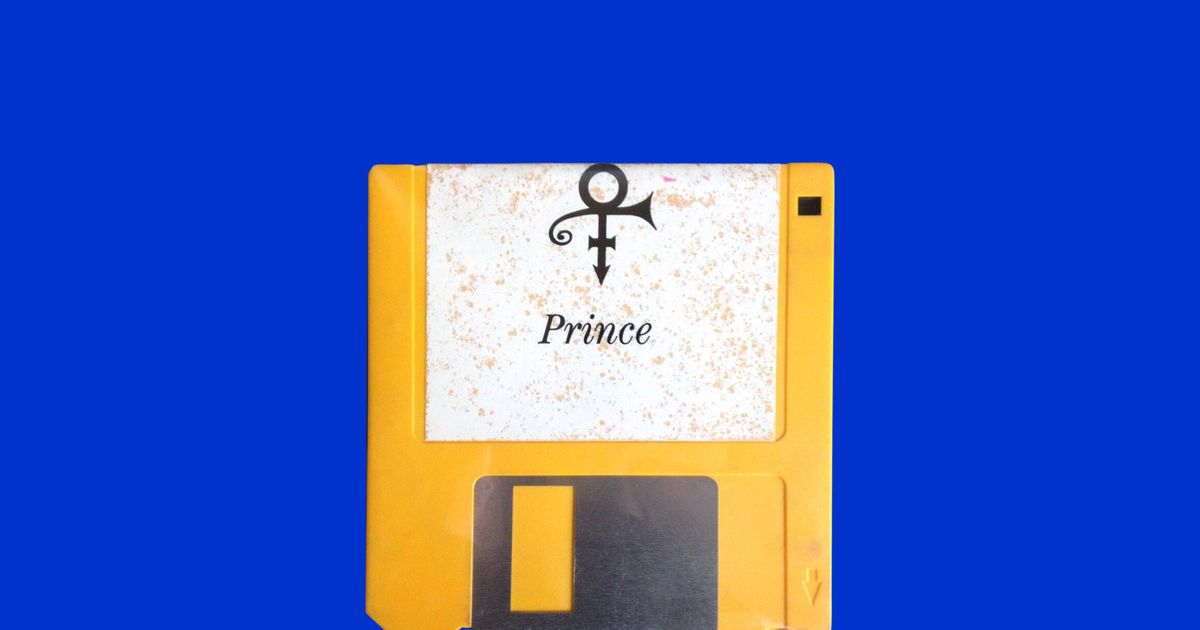
Prince's Custom Font: A 90s Tech Legend

2025-06-09
Prince's Custom Font: A 90s Tech Legend

In 1993, Prince's name change to an unpronounceable symbol created chaos for his record label and computer users. His solution? A custom font featuring his new glyph, distributed on floppy disks and CompuServe. This unconventional move not only highlighted Prince's personality but also showcased his early adoption of technology. While later known for his skepticism of streaming, this anecdote reveals his early enthusiasm for computers and innovation, and how he integrated technology into his artistic expression.

Read more
Misc

Critical Google Account Flaw Allowed Phone Number Extraction

2025-06-09
Critical Google Account Flaw Allowed Phone Number Extraction

A security researcher discovered a critical vulnerability in Google accounts that allowed attackers to easily obtain users' phone numbers through brute-forcing. The exploit leveraged Google Looker Studio's document ownership transfer feature, allowing attackers to guess phone numbers without the victim's knowledge. Google has since patched the vulnerability and awarded the researcher $5,000. This flaw poses a significant risk to SIM swappers, enabling them to steal various accounts, including cryptocurrency and email, through identity theft.

Read more
Tech

May Day Math: Maypole Dancing and Braid Groups

2025-06-09
May Day Math: Maypole Dancing and Braid Groups

Attending a May Day party, the author was inspired by a traditional maypole dance to explore its mathematical underpinnings. The intricate braiding of ribbons reminded him of braid groups in group theory. However, the standard braid group proved insufficient to describe all possible patterns. He proposed a new group, the "Maypole Braid Group," defined by generators and relations, extending the classic braid group to encompass the circular nature of the maypole dance.

Read more

CoverDrop: Secure Messaging for Newsreader Apps

2025-06-09
CoverDrop: Secure Messaging for Newsreader Apps

CoverDrop is a secure messaging system enabling confidential communication between users of news organizations' mobile apps and journalists, without leaving a trace. It comprises four key components: a module integrated into the news app, a cloud-based API, the CoverNode (securely hosted services), and a journalist desktop application. CoverDrop uses 'cover messages' to make secure communication indistinguishable from regular app usage, providing strong plausible deniability. The system's architecture, detailed in a white paper, is designed to protect source anonymity and message integrity. The project is open-source and includes comprehensive documentation.

Read more

The Modern Guide to OAuth 2.0: Beyond the Specs

2025-06-09
The Modern Guide to OAuth 2.0: Beyond the Specs

This isn't just another OAuth 2.0 guide; it's a deep dive into real-world OAuth usage based on the experience of building FusionAuth, an OAuth server with over a million downloads. The guide details eight common OAuth modes, including local login, third-party login, enterprise login, service authorization, and machine-to-machine authentication, explaining each mode's workflow and security considerations. It also delves into the authorization code grant, PKCE, JWTs, token refresh, and user info retrieval, offering practical implementation advice.

Read more
Development

Focused Ultrasound Stimulation: A Revolutionary Treatment for Inflammation and Metabolic Diseases?

2025-06-09
Focused Ultrasound Stimulation: A Revolutionary Treatment for Inflammation and Metabolic Diseases?

Exciting research suggests that focused ultrasound stimulation (FUS), a non-invasive technique using sound waves to treat diseases, holds promise as a revolutionary therapy for inflammatory diseases (like arthritis) and metabolic disorders (like obesity and diabetes). Researchers found that FUS can suppress inflammatory responses by stimulating nerves in the spleen, achieving significant results in animal and human trials. The technique is non-surgical and may eventually be delivered via wearable devices at home. While clinical application is still years away, FUS opens new avenues for precise treatment and could reduce reliance on pharmaceuticals.

Read more

Quadratic Funding: The Theory vs. Reality – Why It's Not a Perfect Solution

2025-06-09

Quadratic Funding (QF) has gained traction as a mechanism for funding public goods, especially in the cryptocurrency space. Theoretically, under certain assumptions, QF is optimal. However, these assumptions rarely hold in reality. This article outlines several crucial assumptions for QF's optimal functioning: wealth equality, free subsidies, selfish contributors, equilibrium discovery, sufficient budget, diminishing returns, perfect knowledge, and independent agents. When these assumptions fail, QF can yield results far from optimal, potentially transferring wealth from poor to rich or resulting in a net decrease in social welfare. While improved variants attempt to address some issues, achieving QF's theoretical optimality remains a significant challenge.

Read more

Gödel Prize Awarded for Breakthrough in Explicit Two-Source Extractors

2025-06-09
Gödel Prize Awarded for Breakthrough in Explicit Two-Source Extractors

The 2025 Gödel Prize was awarded to Eshan Chattopadhyay and David Zuckerman for their groundbreaking paper, "Explicit two-source extractors and resilient functions," published in STOC 2016 and the Annals of Math 2019. This work significantly improves the construction of Ramsey graphs, achieving an exponential bound far exceeding previous methods. The result is lauded for its implications in derandomization and its surprising application to Ramsey theory, sparking debate about its dual significance in pseudorandomness and combinatorics.

Read more

Exploiting a Google Account Recovery Flaw: Brute-forcing Phone Numbers with IPv6 and BotGuard Tokens

2025-06-09
Exploiting a Google Account Recovery Flaw: Brute-forcing Phone Numbers with IPv6 and BotGuard Tokens

A security researcher discovered a vulnerability in Google's account recovery process, allowing attackers to brute-force phone numbers to gain access to user accounts. The vulnerability exploited the fact that the account recovery form still worked with JavaScript disabled, bypassing Google's rate limiting and CAPTCHAs using IPv6 IP rotation and BotGuard tokens. Attackers first obtain the target's name via Looker Studio, then use the password reset flow to get the phone number suffix. A custom program then uses proxies for brute-forcing, revealing the full phone number. Google has since patched the vulnerability.

Read more

The Trillion-Dollar Gamble: Generative AI's Costly Uncertainty

2025-06-09
The Trillion-Dollar Gamble: Generative AI's Costly Uncertainty

This article challenges the viability of generative AI's business model, starting with its astronomical costs. Hundreds of billions in venture capital and massive capital expenditures by tech giants raise concerns about future returns. The author analyzes generative AI's application in coding, education, and professional communication, highlighting both potential benefits and significant drawbacks. While acknowledging some productivity gains in coding, the author finds AI detrimental to education and expresses skepticism about its role in professional communication. The overall outlook is pessimistic, further emphasizing the significant carbon footprint of generative AI.

Read more
Tech Cost

AT&T's 5G Expansion Plan Sparks Outrage from Small ISPs

2025-06-09
AT&T's 5G Expansion Plan Sparks Outrage from Small ISPs

AT&T's proposal to reallocate the Citizens Broadband Radio Service (CBRS) spectrum from the 3.5 GHz band to the 3.1-3.3 GHz band to expand its 5G network has sparked outrage among small internet service providers (ISPs). They argue this move will render their existing equipment obsolete and stifle internet connectivity in rural areas. Small ISPs highlight CBRS's crucial role in broadband access in underserved areas, calling AT&T's plan a grab for America's digital future. The Department of Defense also expressed concerns, citing potential non-adherence to established coordination conditions by non-federal users.

Read more
Tech small ISPs

LLMs Are Surprisingly Cheap to Run

2025-06-09

This post challenges the widespread misconception that Large Language Models (LLMs) are prohibitively expensive to operate. By comparing the costs of LLMs to web search engines and citing various LLM API prices, the author demonstrates that LLM inference costs have dropped dramatically, even being an order of magnitude cheaper than some search APIs. The author also refutes common objections to LLM pricing strategies, such as price subsidization and high underlying costs, and points out that the real cost challenge lies in the backend services interacting with AI, not the LLMs themselves.

Read more

Beating the Odds: A 20-Year Cancer Battle and the Medical Advancements That Made It Possible

2025-06-09
Beating the Odds: A 20-Year Cancer Battle and the Medical Advancements That Made It Possible

In 2003, Jon Gluck, 38, was diagnosed with multiple myeloma and given 18 months to live. Over two decades later, he's still here, chronicling his experience in a new book. His survival, coupled with a one-third decrease in the US age-adjusted cancer death rate since 1991, showcases a turning tide in the war on cancer. This progress is attributed to breakthroughs like autologous stem-cell harvesting and CAR-T therapy, alongside anti-smoking policies, vaccinations, and improved early screening. While challenges remain, the future of cancer treatment is brighter, offering renewed hope for patients.

Read more

So Long, Figma: AI's Revolution in UI Design

2025-06-09
So Long, Figma: AI's Revolution in UI Design

Your future self writes to you: ditch Figma and other UI design tools! With a mature design system and AI, you can escape the pixel-perfect hell. Hand-drawn sketches, processed by AI, generate production-ready code in seconds, freeing you to focus on solving business and user problems instead of tweaking pixels in Figma. Design is no longer production, but true creation. This requires building a mature design system, investing in design exploration, collaborating closely with teams, and starting small. AI won't replace you; it will give you superpowers!

Read more
Design AI Design

EU OS: A Common Linux Distro for the Public Sector (But Not an EU Project)

2025-06-09
EU OS: A Common Linux Distro for the Public Sector (But Not an EU Project)

EU OS isn't an official European Union project, but it should be. It's a proof-of-concept Fedora-based Linux distribution using KDE Plasma and bootable containers, designed for public sector organizations. Its value lies in providing a common base OS with options for layered modifications (national, regional, organizational). This ensures a consistent desktop environment, user management, and data handling. EU OS also partners with HackDays and endof10.org, promoting Linux adoption.

Read more
Development Public Sector

Founding Fathers and Mandatory Healthcare: A Historical Surprise

2025-06-09
Founding Fathers and Mandatory Healthcare: A Historical Surprise

This article refutes claims that the US Constitution prohibits mandatory health insurance. It reveals that in 1798, Congress passed a law requiring private sailors to purchase health insurance, creating the nation's first socialized medical program and mandatory healthcare tax. This directly contradicts arguments against the Affordable Care Act, demonstrating that the Founding Fathers, many of whom were involved in drafting the Act, supported mandated healthcare, at least for merchant sailors.

Read more

Apple Paper Challenges AI Reasoning: Not 'Real' Reasoning?

2025-06-09

Apple's recent paper, "The Illusion of Thinking," tests large language models' reasoning abilities on Tower of Hanoi puzzles. Results show models perform worse than non-reasoning models on simple problems; better on medium difficulty; but on complex problems, models give up, even when given the algorithm. The authors question the models' generalizable reasoning capabilities. However, this article argues the paper's use of Tower of Hanoi is flawed as a test. The models' 'giving up' may stem from avoiding numerous steps, not limited reasoning ability. Giving up after a certain number of steps doesn't mean models lack reasoning; this mirrors human behavior in complex problems.

Read more
AI

Shawn Mendes' Song Secretly Reveals His Stance on the Kuril Islands Dispute?

2025-06-09
Shawn Mendes' Song Secretly Reveals His Stance on the Kuril Islands Dispute?

This article humorously analyzes Shawn Mendes' song "Lost in Japan," using lyrics, flight schedules, and geographical data to deduce that Mendes may have visited Iturup Island in the Kuril Islands, subtly supporting Japan's claim to the territory. The author's playful yet detailed investigation links seemingly simple lyrics to a complex geopolitical issue, leading to a surprising conclusion.

Read more

AI Security: The Roadblock to Enterprise AI Adoption

2025-06-09
AI Security: The Roadblock to Enterprise AI Adoption

Chatterbox Labs' CEO and CTO highlight that enterprise AI adoption is only at 10%, due to a lack of understanding and continuous security testing mechanisms for AI. They argue that traditional cybersecurity measures are insufficient to address AI's unique attack surface, and enterprises need to establish continuous testing to verify the safety of AI services and avoid blindly trusting vendor claims. Only in this way can large-scale enterprise AI adoption be promoted, reducing risks and costs.

Read more

One-Person Armies: Projects That Changed the World

2025-06-09
One-Person Armies: Projects That Changed the World

This article showcases a remarkable array of projects, from blockbuster video games like Stardew Valley to groundbreaking theories like General Relativity, all accomplished largely or entirely by individuals. It challenges the common assumption that significant achievements require large teams, demonstrating the extraordinary power of passionate, dedicated individuals. The examples inspire readers to reconsider dependencies in their workflows and unlock their own potential.

Read more

Stop Drowning Your Website in Design Tricks!

2025-06-09
Stop Drowning Your Website in Design Tricks!

Designers, it's time for a reality check! Overusing flashy design elements like animations and pop-ups hurts user experience. Google research shows users form opinions about websites in 50 milliseconds; slow loading times lead to significant user loss. The average website now weighs around 2.5MB—more than the original Doom game! Great design is about simplicity and functionality, helping users achieve their goals efficiently, not showing off. Prioritize user satisfaction and conversion rates over design awards. Remember, good design is invisible; it facilitates human connection and information sharing, not an art gallery.

Read more
Design loading speed
1 2 177 178 179 181 183 184 185 596 597