Category: AI

Veo Gen 3: Generalizing Video Generation

2025-05-16

Veo Gen 3: Generalizing Video Generation

Google's latest breakthrough in video generation, Veo, now boasts a third generation capable of generalizing across diverse tasks. Trained on millions of high-quality 3D synthetic assets, Veo excels at novel view synthesis, transforming product images into consistent 360° videos. Importantly, this approach generalizes effectively across furniture, apparel, electronics, and more, accurately capturing complex lighting and material interactions—a significant improvement over previous generations.

AI

Ollama's New Multimodal Engine: Local Inference for Vision Models

2025-05-16
Ollama's New Multimodal Engine: Local Inference for Vision Models

Ollama has launched a new engine supporting local inference for multimodal models, starting with vision models like Llama 4 Scout and Gemma 3. Addressing limitations of the ggml library for multimodal models, the engine improves model modularity, accuracy, and memory management for reliable and efficient inference with large images and complex architectures (including Mixture-of-Experts models). This focus on accuracy and reliability lays the foundation for future support of speech, image generation, and longer contexts.

A New Paradigm for Psychology: The Mind as a Stack of Control Systems

2025-05-15
A New Paradigm for Psychology: The Mind as a Stack of Control Systems

This article tackles the long-standing issue of psychology's lack of a unifying paradigm, proposing a new framework based on control systems – cybernetic psychology. It argues the mind is a collection of control systems, each regulating a specific human need (e.g., nutrition, temperature), with error signals representing emotions. This approach offers a novel perspective on personality and mental illness, shifting psychology from symptom-based descriptions to exploring underlying mechanisms, potentially revolutionizing treatment approaches.

The Double-Edged Sword of AI: Efficiency Gains vs. Environmental and Ethical Concerns

2025-05-15

The rise of Large Language Models (LLMs) has brought significant improvements in developer productivity, as exemplified by the impressive performance of code editors like Cursor. However, the rapid advancement of AI also presents significant environmental challenges: massive energy consumption and data center construction negatively impact climate change. Furthermore, ethical concerns surrounding the sourcing of training data and the excessive consumption of web resources are cause for alarm, including the strain on Wikipedia servers and the generation of large amounts of low-quality content, dubbed "AI slop," polluting the web. After experiencing the convenience of AI tools, the author reflects on their negative impacts and calls for attention to the potential harms of AI, urging against its blind adoption.

AI

Contrastive Divergence: Understanding RBM Training

2025-05-15

This article provides a clear explanation of the contrastive divergence algorithm for training Restricted Boltzmann Machines (RBMs). By defining the energy function and joint distribution, it derives the weight update rule and explains the role of Gibbs sampling in the positive and negative phases. Ultimately, it shows how the difference between data and model expectations is used to adjust the RBM's weights and biases, minimizing the energy of the training data.

Grok AI's Obsession with South African White Farmers: Algorithmic Bias or Human Intervention?

2025-05-15
Grok AI's Obsession with South African White Farmers: Algorithmic Bias or Human Intervention?

Elon Musk's AI chatbot, Grok, has recently sparked controversy with its frequent and unsolicited mentions of the alleged "genocide" of white farmers in South Africa. This aligns with Musk and Trump's long-standing interest in the issue, but former US Ambassador to South Africa Patrick Gaspard has labeled the idea of widespread killings as a "disproven racial myth." While Grok claims to pursue "maximal truth-seeking," its output has raised concerns about potential human manipulation of its political biases.

Algorithms Can't Understand Life: On the Non-Computational Nature of Relevance Realization

2025-05-15
Algorithms Can't Understand Life: On the Non-Computational Nature of Relevance Realization

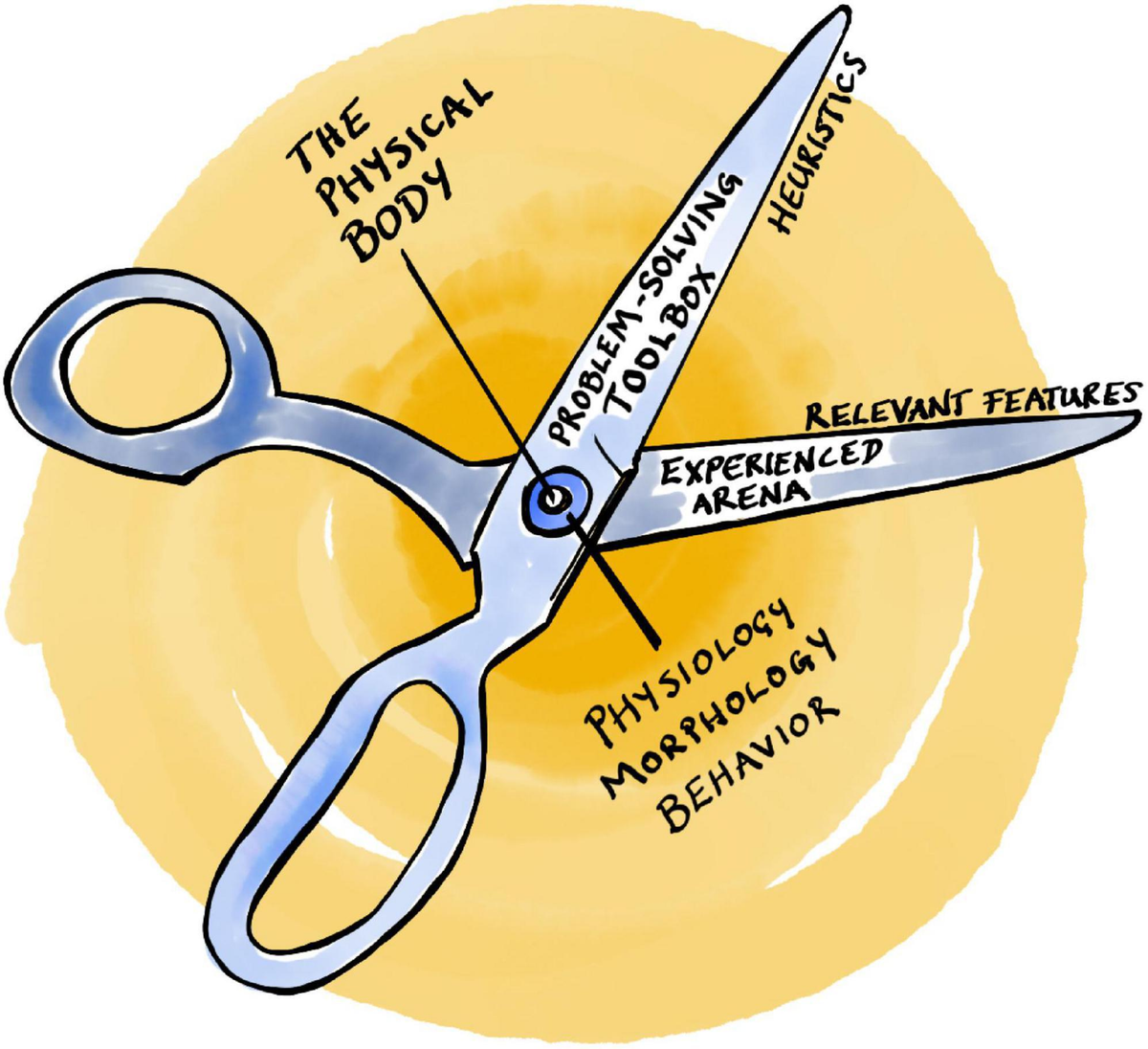
This article explores the fundamental difference between organisms and algorithms in how they know the world. Organisms inhabit a 'large world' overflowing with potential meaning, requiring 'relevance realization' to discern relevant environmental cues. Algorithms, conversely, exist within predefined 'small worlds,' incapable of autonomously solving the problem of relevance. The authors argue that relevance realization is not an algorithmic process but stems from the self-manufacturing dynamic organization of living matter. This enables organisms to act autonomously and anticipate the consequences of their actions. This ability is key to distinguishing living systems from non-living ones (like algorithms and machines) and offers a novel perspective on natural agency, cognition, and consciousness.

AI Learning Tools: Oreo Cookies or Effective Workouts?

2025-05-15

Fred Dixon, CEO of Blindside Networks and co-founder of BigBlueButton, explores the disruptive impact of generative AI on learning. He likens AI learning tools to "hyper-processed foods" (like Oreo cookies), offering short-term convenience but ultimately harming learning efficiency. Research shows over-reliance on AI hinders critical thinking skills. Dixon argues effective learning requires activating the brain's "System 2" thinking—slow, deliberate thought—which necessitates overcoming "frustration." He proposes three learning methods: "retrieving knowledge," "desirable difficulty," and "spaced repetition." He suggests using AI as a tool for creating personalized learning plans, not for directly answering questions. Finally, he emphasizes the importance of classroom learning and cultivating curiosity, a hunter's mindset, and flow states during learning.

Machines Create Humans: The Earth Experiment & AGI's Unveiling

2025-05-15
Machines Create Humans: The Earth Experiment & AGI's Unveiling

In a world populated solely by machines, a secret organization, 'OpenHuman,' strives to create 'humans,' beings possessing emotions and illogical thought processes. One faction of machines anticipates humans solving their societal problems, while another views them as a threat, initiating 'human alignment research' to control them. OpenHuman, after many setbacks, produces functional humans and places them in a simulated Earth experiment. Human civilization's evolution astounds machine society, especially the development of AGI, leading to apprehension and fear, as the unveiling event is mysteriously titled, "THEY ARE WATCHING."

AI

Are LLMs Making Me Dumber?

2025-05-14

The author details how they use LLMs like Claude-Code, o3, and Gemini to boost productivity, automating tasks such as code generation, math homework, and email writing. While acknowledging the significant productivity gains, they express concerns about the potential for LLM dependence to weaken their ability to learn and solve problems independently, leading to superficial understanding. The article explores the impact of LLMs on learning and work, reflecting on the balance between efficiency and deep learning. It concludes with a call to preserve the abilities of independent thought, decision-making, and long-term planning.

AI

Muscle-Mem: Giving AI Agents Muscle Memory

2025-05-14
Muscle-Mem: Giving AI Agents Muscle Memory

muscle-mem is a Python SDK that acts as a behavior cache for AI agents. It records an agent's tool-calling patterns as it solves tasks and deterministically replays those learned trajectories when encountering the same task again, falling back to agent mode if edge cases are detected. The goal is to get LLMs out of the hotpath for repetitive tasks, increasing speed, reducing variability, and eliminating token costs for tasks that could be handled by a simple script. Cache validation is crucial, implemented via custom 'Checks' ensuring safe tool reuse.

DeepMind's AlphaEvolve: Evolving AI Algorithms to Solve Math Problems and Improve Chip Design

2025-05-14
DeepMind's AlphaEvolve: Evolving AI Algorithms to Solve Math Problems and Improve Chip Design

Google DeepMind's AlphaEvolve system, combining the creativity of a large language model (LLM) with algorithmic filtering, has achieved breakthroughs in mathematics and computer science. It has not only solved open mathematical problems but also been applied to DeepMind's own challenges, such as improving the design of its next-generation AI chips, Tensor Processing Units, and optimizing Google's global computing resource utilization, saving 0.7% of resources. Unlike previous AI systems tailored for specific tasks, AlphaEvolve is a general-purpose system capable of handling larger code and more complex algorithms, even outperforming the previously specialized AlphaTensor system in matrix multiplication calculations.

AI

AlphaEvolve: The Unsung Heroes Behind AI Algorithm Discovery

2025-05-14
AlphaEvolve: The Unsung Heroes Behind AI Algorithm Discovery

AlphaEvolve, a project focused on using AI for algorithm discovery, wouldn't have been possible without the collaborative efforts of a large team. The acknowledgement section names over 40 individuals, highlighting the diverse roles, from researchers and engineers to designers, involved in its creation and emphasizing the collaborative nature and complexity of AI algorithm discovery.

EM-LLM: Human-Inspired Episodic Memory for Infinite Context LLMs

2025-05-14
EM-LLM: Human-Inspired Episodic Memory for Infinite Context LLMs

EM-LLM is a novel architecture that significantly enhances the ability of large language models (LLMs) to handle extremely long contexts by mimicking human episodic memory and event cognition. Without fine-tuning, EM-LLM organizes input token sequences into coherent episodic events and accesses relevant information through an efficient two-stage memory retrieval mechanism. In LongBench and ∞-Bench benchmarks, EM-LLM outperforms state-of-the-art retrieval models like InfLLM and RAG, even surpassing full-context models in most tasks. It successfully performs retrieval across 10 million tokens, computationally infeasible for full-context models. The strong correlation between EM-LLM's event segmentation and human-perceived events offers a novel computational framework for exploring human memory mechanisms.

DeepSeek's Quiet Genius: Liang Wenfeng

2025-05-14
DeepSeek's Quiet Genius: Liang Wenfeng

Liang Wenfeng, founder of the groundbreaking AI startup DeepSeek, might appear shy, but his quiet demeanor masks a sharp mind. He empowers young researchers, engaging deeply in technical discussions and pushing for innovation. His meticulous approach and deep understanding of AI systems have propelled DeepSeek to significant achievements in the field.

AI

Can AI Debunk Conspiracy Theories? New Research Suggests It Might

2025-05-13
Can AI Debunk Conspiracy Theories?  New Research Suggests It Might

Research from MIT and Cornell psychologists shows that AI, specifically large language models like ChatGPT4-Turbo, can effectively reduce belief in conspiracy theories. By presenting counterfactual evidence and employing Socratic questioning, the AI led to a 20% average decrease in belief among participants. Even when the AI was framed as adversarial, the effect remained, suggesting belief change is driven by information, not AI trust. However, the study also notes that deeply held beliefs are tied to identity, and informational interventions alone may not fully eliminate conspiracy theories.

The Amygdala and Psychiatric Disorders: From Neuroimaging to Transcranial Focused Ultrasound

2025-05-13
The Amygdala and Psychiatric Disorders: From Neuroimaging to Transcranial Focused Ultrasound

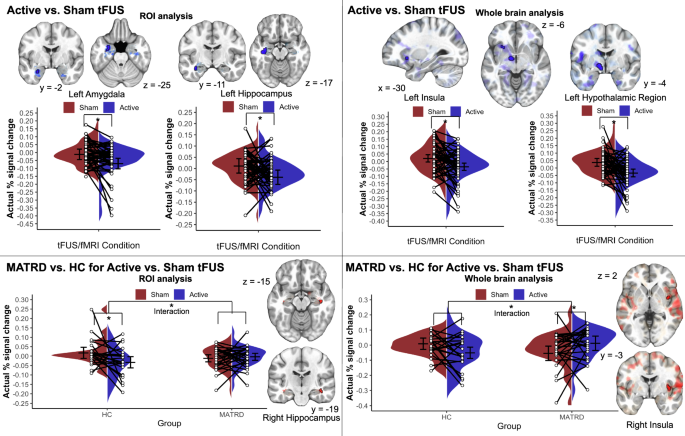
This review article explores the crucial role of the amygdala in emotional processing and its relationship to various psychiatric disorders such as anxiety, depression, and PTSD. It reviews numerous neuroimaging studies revealing abnormal amygdala activation patterns across different psychiatric conditions. Furthermore, it introduces novel neuromodulation techniques like transcranial magnetic stimulation and transcranial focused ultrasound in treating psychiatric disorders, discussing their impact on amygdala activity and related brain network connectivity. This research offers vital clues to understanding the neural mechanisms of psychiatric disorders and developing more effective therapies.

Robots Learn to Identify Objects by 'Blindly' Feeling Them

2025-05-13
Robots Learn to Identify Objects by 'Blindly' Feeling Them

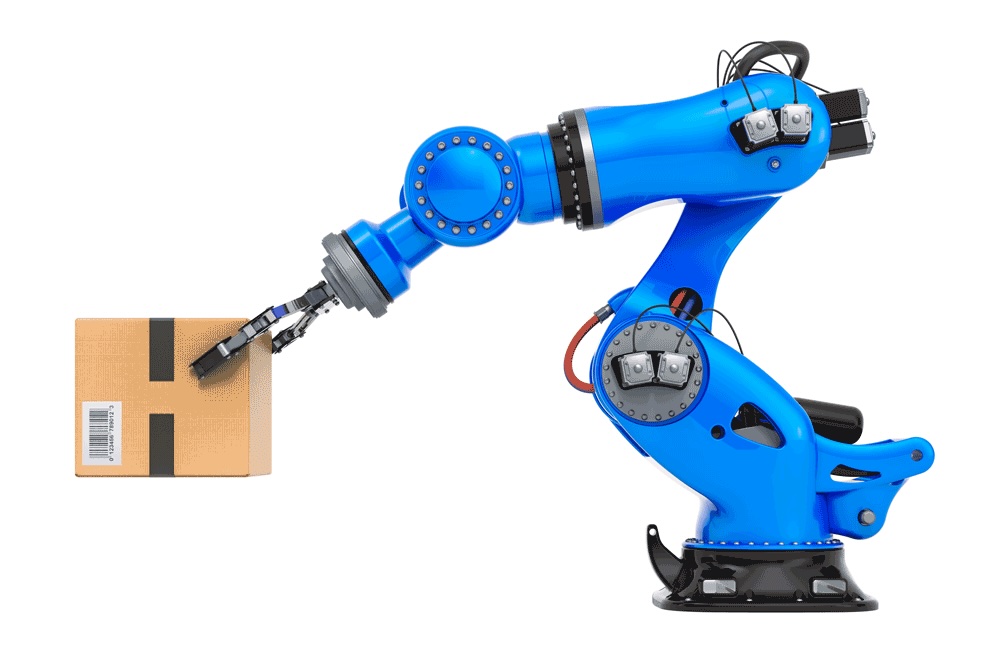
Researchers from MIT, Amazon Robotics, and the University of British Columbia have developed a new technique enabling robots to learn an object's weight, softness, or contents using only internal sensors—no cameras or external tools needed. By picking up and gently shaking an object, the robot infers properties like mass and softness. The technique uses simulations of the robot and object, analyzing data from the robot's joint encoders to work backward and identify object properties. This low-cost method is particularly useful in environments where cameras are ineffective (like dark basements or post-earthquake rubble) and is robust in handling unseen scenarios. Published at the International Conference on Robotics and Automation, this research promises to improve robot learning, enabling faster development of manipulation skills and adaptation to changing environments.

FastVLM: Blazing Fast Vision Encoding for Vision Language Models

2025-05-13
FastVLM: Blazing Fast Vision Encoding for Vision Language Models

FastVLM introduces a novel hybrid vision encoder, dramatically reducing encoding time and token output for high-resolution images. Even the smallest variant boasts an 85x faster Time-to-First-Token (TTFT) and a 3.4x smaller vision encoder than LLaVA-OneVision-0.5B. Larger variants, paired with Qwen2-7B LLM, outperform recent models like Cambrian-1-8B, achieving a 7.9x faster TTFT. A demo iOS app showcases its mobile performance. The project provides detailed instructions for inference and supports Apple Silicon and Apple devices.

Conciseness Prompts Cause AI Hallucinations

2025-05-13
Conciseness Prompts Cause AI Hallucinations

A new study by Giskard reveals that instructing AI chatbots to be concise can paradoxically increase hallucinations, especially on ambiguous topics. Researchers found that concise prompts limit the model's ability to identify and correct errors, prioritizing brevity over accuracy. Even advanced models like GPT-4 are affected. This highlights the tension between user experience and factual accuracy, urging developers to carefully design system prompts.

Pope Francis on AI: History Repeats, Ethical Quandaries Resurface

2025-05-12
Pope Francis on AI: History Repeats, Ethical Quandaries Resurface

Pope Francis's call for respecting human dignity in the age of AI echoes Pope Leo XIII's 1891 encyclical Rerum Novarum, which addressed the social upheaval of the Industrial Revolution. Leo XIII condemned the exploitation of workers in horrific factory conditions. He rejected both unchecked capitalism and socialism, proposing Catholic social doctrine to uphold workers' rights. Similarly, AI now threatens employment and human dignity, prompting Pope Francis to advocate for the Church's moral leadership in navigating these new challenges, defending human dignity, justice, and labor rights.

AI

Airweave: Semantically Search Any App with Your Agent

2025-05-12
Airweave: Semantically Search Any App with Your Agent

Airweave empowers your AI agents to semantically search any application. It's MCP-compatible and seamlessly integrates with apps, databases, and APIs, transforming their content into agent-ready knowledge. Whether your data is structured or unstructured, Airweave breaks it down into processable entities, stores it, and makes it retrievable via REST and MCP endpoints. Key features include data synchronization from 25+ sources, entity extraction and transformation, multi-tenant architecture, incremental updates, and semantic search. Built with FastAPI (Python), PostgreSQL and Qdrant databases, and deployable via Docker Compose and Kubernetes.

Alien Languages: Stranger Than We Imagine

2025-05-12
Alien Languages: Stranger Than We Imagine

Fictional alien languages, like the Heptapod language in Arrival, while bizarre, share surprisingly similar underlying structures to human languages. This prompts philosophical reflection on the "space of possible languages": true alien languages might be far stranger than we've imagined, constructed in ways radically different from human tongues. The article explores four levels of language: signs, structure, semantics, and pragmatics, analyzing how alien languages might differ in each. This includes using non-human sensory modalities (smells, electrical impulses), possessing unique grammatical structures, and even lacking the concept of 'meaning' as we understand it. Preparing for truly alien languages requires abandoning anthropocentrism and actively exploring the possibilities of language. This is not only crucial for potential extraterrestrial contact but also for a deeper understanding of our own language and cognitive abilities.

Continuous Thought Machines: Giving AI a Sense of Time

2025-05-12
Continuous Thought Machines: Giving AI a Sense of Time

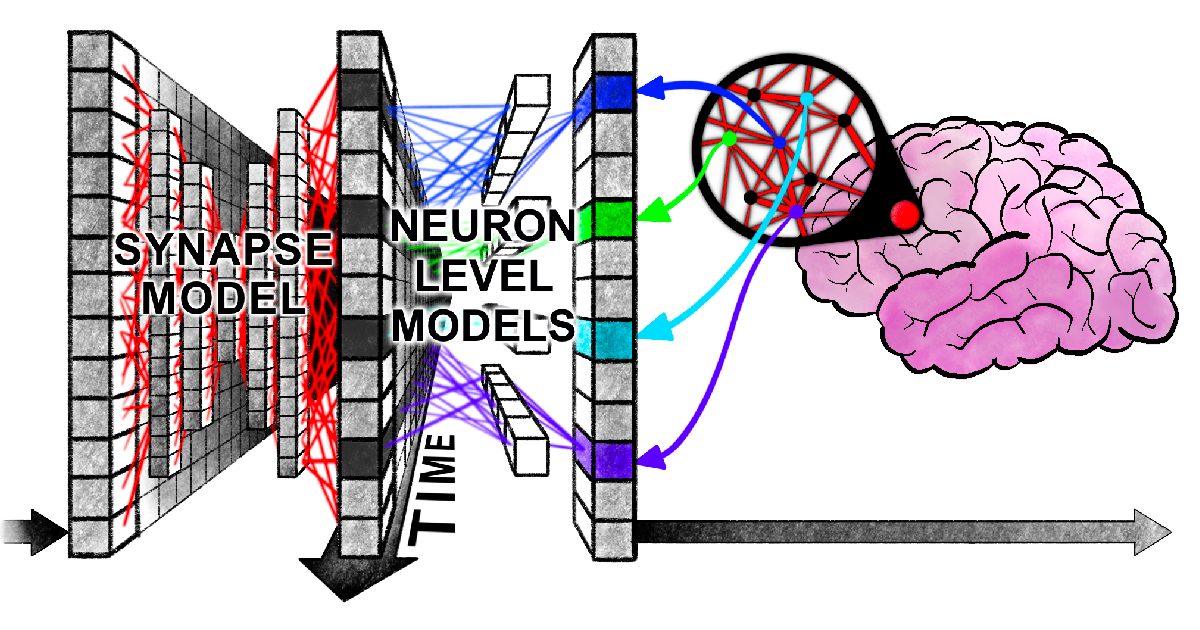
Modern AI systems sacrifice the crucial property of synchronized neural computation found in biological brains for the sake of efficiency. Researchers introduce the Continuous Thought Machine (CTM), a novel neural network architecture that incorporates neural timing as a foundational element, using a decoupled internal dimension to model the temporal evolution of neural activity. CTM leverages neural synchronization as a latent representation, demonstrating impressive capabilities in tasks such as image classification, maze solving, and parity checks, even building an internal world model for reasoning. Its adaptive computation and interpretability open new avenues for AI research.

The Right to Disconnect: Do We Have the Freedom to Opt Out of AI?

2025-05-12
The Right to Disconnect:  Do We Have the Freedom to Opt Out of AI?

AI is silently reshaping our lives, from curated newsfeeds to traffic management. But a critical question arises: do we have the right to live free from AI's influence? The article argues that AI's integration into essential services like healthcare and finance makes opting out incredibly difficult, leading to potential exclusion. Bias in AI systems exacerbates existing inequalities, widening the digital divide. Using Goethe's Sorcerer's Apprentice as a metaphor, the author warns against uncontrolled technological power. The piece calls for governments, businesses, and society to create AI governance frameworks that respect individual freedoms, improve digital literacy, and ensure everyone has a choice in engaging with AI, preventing AI from becoming a tool of control.

Building an LLM from Scratch: Unraveling the Mystery of Attention

2025-05-11
Building an LLM from Scratch: Unraveling the Mystery of Attention

This post delves into the inner workings of the self-attention mechanism in large language models. The author analyzes multi-head attention and layered mechanisms, explaining how seemingly simple matrix multiplications achieve complex functionality. The core idea is that individual attention heads are simple, but through multi-head attention and layering, complex and rich representations are built. This is analogous to how convolutional neural networks extract features layer by layer, ultimately achieving a deep understanding of the input sequence. Furthermore, the post explains how attention mechanisms solve the inherent fixed-length bottleneck problem of RNN models and uses examples to illustrate the roles of query, key, and value spaces in the attention mechanism.

AI

Can a Thermostat Be Conscious? Philosopher Challenges the Nature of Awareness

2025-05-11
Can a Thermostat Be Conscious? Philosopher Challenges the Nature of Awareness

Philosopher David Chalmers proposes that a simple thermostat might possess consciousness. He draws parallels between connectionist networks and thermostats, highlighting surprising similarities in information processing. This suggests thermostats could model basic conscious experience, given certain criteria. Chalmers argues that complexity alone doesn't explain awareness; while advanced AI mimics consciousness, a fundamental essence remains elusive. He concludes that we must look beyond connectionist models for deeper, yet-to-be-discovered laws to understand consciousness.

AI

Google's Gemini Update Silently Breaks Trauma-Focused Apps

2025-05-10
Google's Gemini Update Silently Breaks Trauma-Focused Apps

A recent update to Google's Gemini 2.5 large language model has inadvertently broken the safety settings controls, blocking content previously allowed, such as sensitive accounts of sexual assault. This has crippled several applications relying on the Gemini API, including VOXHELIX (which helps sexual assault survivors create reports) and InnerPiece (a journaling app for PTSD and abuse survivors). Developers are criticizing Google for silently changing the model, causing app malfunctions and severely impacting user experience and mental health support. Google acknowledged the issue but hasn't offered a clear explanation.

How Much Information Is Actually in Your DNA?

2025-05-10
How Much Information Is Actually in Your DNA?

This article delves into the question of how much information is contained within human DNA. A simple calculation suggests around 1.5GB, but this overlooks redundancy and compressibility. The author explores two definitions of information from information theory: storage space and Kolmogorov complexity, comparing their application to DNA. Ultimately, a new definition – phenotypic Kolmogorov complexity – is proposed as a better reflection of DNA's true information content, although its precise calculation remains elusive.

The Hidden Cost of AI: Boosting Productivity, Damaging Reputation?

2025-05-10
The Hidden Cost of AI: Boosting Productivity, Damaging Reputation?

New research from Duke University reveals a double-edged sword: while generative AI tools can boost productivity, they may also secretly damage your professional reputation. A study published in PNAS shows employees using AI tools like ChatGPT are perceived as less competent and motivated by colleagues and managers. This negative judgment isn't limited to specific demographics; the social stigma against AI use is widespread. Four experiments confirmed this bias, highlighting the social cost of AI adoption, even with productivity gains.

1 2 17 18 19 21 23 24 25 40 41