Category: AI

LeCun: LLMs Will Be Obsolete in Five Years

2025-04-05
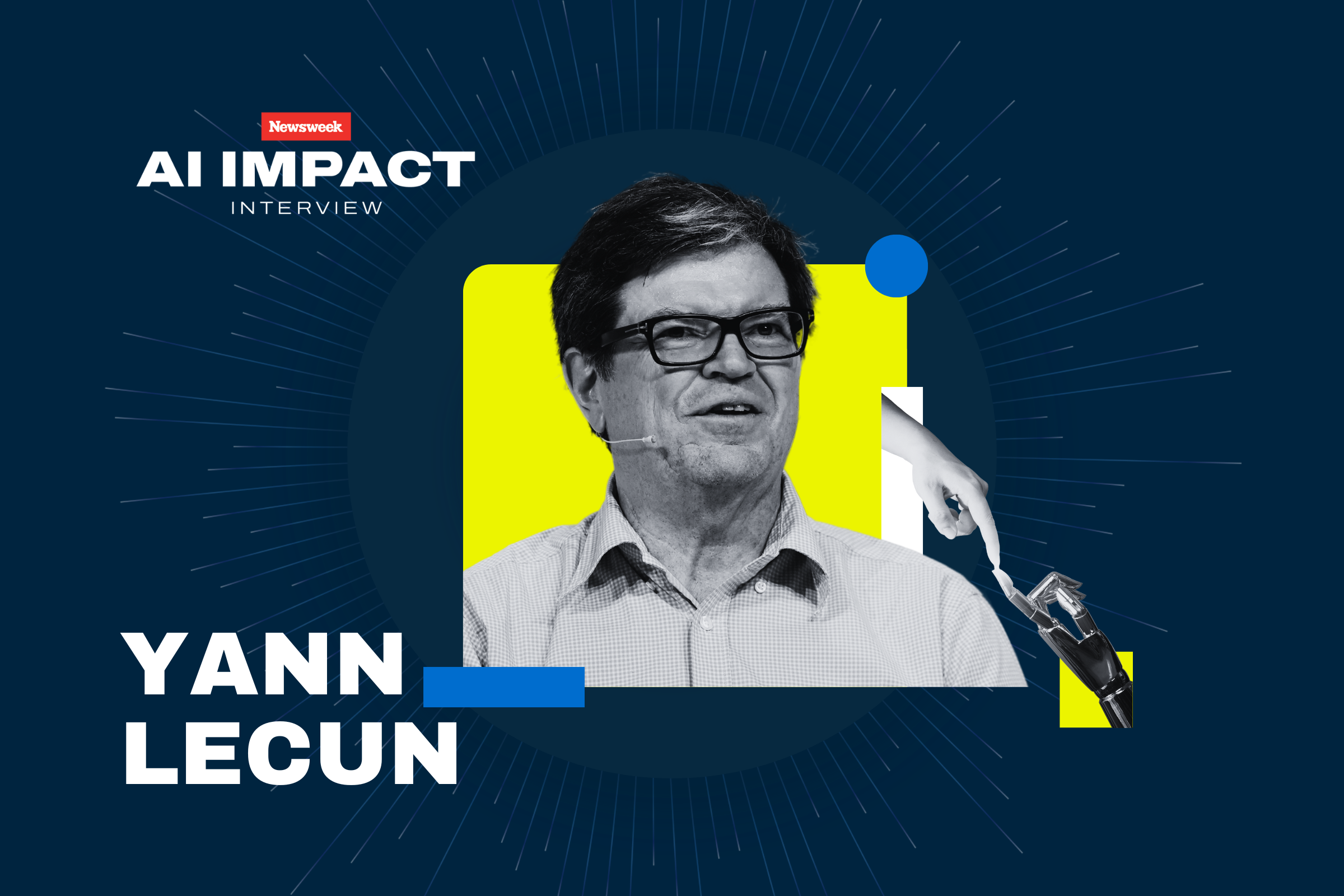
LeCun: LLMs Will Be Obsolete in Five Years

Yann LeCun, Meta's chief AI scientist, predicts that large language models (LLMs) will be largely obsolete within five years. He argues that current LLMs lack understanding of the physical world, operating as specialized tools in a simple, discrete space (language). LeCun and his team are developing an alternative approach called JEPA, which aims to create representations of the physical world from visual input, enabling true reasoning and planning capabilities surpassing LLMs. He envisions AI transforming society by augmenting human intelligence, not replacing it, and refutes claims of AI posing an existential risk.

AI

Revolutionary OCR System: Powering AI Education Datasets

2025-04-05
Revolutionary OCR System: Powering AI Education Datasets

A groundbreaking OCR system optimized for machine learning extracts structured data from complex educational materials like exam papers. Supporting multilingual text, mathematical formulas, tables, diagrams, and charts, it's ideal for creating high-quality training datasets. The system semantically annotates extracted elements and automatically generates natural language descriptions, such as descriptive text for diagrams. Supporting Japanese, Korean, and English with easy customization for additional languages, it outputs AI-ready JSON or Markdown, including human-readable descriptions of mathematical expressions, table summaries, and figure captions. Achieving over 90-95% accuracy on real-world academic datasets, it handles complex layouts with dense scientific content and rich visuals.

AI

OpenAI's o3 Model Achieves Breakthrough on ARC-AGI, But AGI Definition Remains Contested

2025-04-04
OpenAI's o3 Model Achieves Breakthrough on ARC-AGI, But AGI Definition Remains Contested

OpenAI's latest model, o3, achieved a stunning 87% score on François Chollet's ARC-AGI test, reaching human-level performance for the first time and sparking a heated debate about whether AGI (Artificial General Intelligence) has been achieved. However, Chollet quickly released the harder ARC-AGI-2 test, where o3's score plummeted, once again challenging the industry's definition and metrics for AGI. This article explores the differing viewpoints and the complex relationship between AGI's definition and commercial interests, prompting deep reflection on the nature of general artificial intelligence.

AI

LLMs Crack a Byzantine Music Notation Cipher

2025-04-04

Researchers discovered that large language models like Claude and GPT-4 can decode a peculiar cipher based on the Byzantine music notation Unicode block. This cipher resembles a Caesar cipher, but with an offset of 118784. The models can decode this cipher directly without chain-of-thought, achieving even higher success rates than with regular Caesar ciphers. Researchers hypothesize this is due to a linear relationship between addition in a specific Unicode range and addition in token space, allowing the models to learn a shift cipher based on this relationship. This phenomenon suggests the existence of yet-ununderstood mechanisms within LLMs.

AI

Google Unveils Sec-Gemini v1: A New Era in AI-Powered Cybersecurity

2025-04-04
Google Unveils Sec-Gemini v1: A New Era in AI-Powered Cybersecurity

Google has announced Sec-Gemini v1, an experimental AI model designed to push the frontiers of cybersecurity AI. Combining Gemini's advanced capabilities with near real-time cybersecurity knowledge and tooling, Sec-Gemini v1 excels in key workflows such as incident root cause analysis, threat analysis, and vulnerability impact understanding. It outperforms other models on key benchmarks, showing at least an 11% improvement on CTI-MCQ and at least a 10.5% improvement on CTI-Root Cause Mapping. Google is making Sec-Gemini v1 freely available to select organizations, institutions, professionals, and NGOs for research purposes to foster collaboration and advance AI in cybersecurity.

AI

DeepMind's Blueprint for Safe AGI Development: Navigating the Risks of 2030

2025-04-04
DeepMind's Blueprint for Safe AGI Development: Navigating the Risks of 2030

As AI hype reaches fever pitch, the focus shifts to Artificial General Intelligence (AGI). DeepMind's new 108-page paper tackles the crucial question of safe AGI development, projecting a potential arrival by 2030. The paper outlines four key risk categories: misuse, misalignment, mistakes, and structural risks. To mitigate these, DeepMind proposes rigorous testing, robust post-training safety protocols, and even the possibility of 'unlearning' dangerous capabilities—a significant challenge. This proactive approach aims to prevent the severe harm a human-level AI could potentially inflict.

AI

Bonobos' Complex Language: Beyond the Sum of its Parts

2025-04-03
Bonobos' Complex Language: Beyond the Sum of its Parts

Swiss scientists have discovered that bonobos can combine simple vocalizations into complex semantic structures, meaning their communication is more than just a sum of individual calls; it exhibits non-trivial compositionality—a trait once thought to be uniquely human. Researchers built a massive database of bonobo calls and used distributional semantics to decipher their meaning, offering a valuable insight into bonobo communication in the wild. This research was laborious, requiring researchers to wake early, trek to bonobo nests, and record calls and contextual information throughout the day.

AI bonobos

AI Image Generation: Ghibli-esque Mimicry Raises Copyright Concerns

2025-04-03
AI Image Generation: Ghibli-esque Mimicry Raises Copyright Concerns

A recent update to GPT image generation allows users to transform any picture into a Studio Ghibli-esque style. This showcases AI's impressive ability to mimic styles, but also raises significant copyright concerns. The author conducts an experiment, demonstrating GPT's ease in generating images strikingly similar to well-known IP characters, even without explicitly mentioning the IP. This is both amazing and alarming, highlighting the potential for AI to facilitate intellectual property theft. While laws allow for mimicking visual styles, the precision of the mimicry pushes the boundaries of copyright law, prompting reflection on the relationship between AI development and copyright protection.

AI

AI 2027: A Race to Superintelligence and the Risks Involved

2025-04-03
AI 2027: A Race to Superintelligence and the Risks Involved

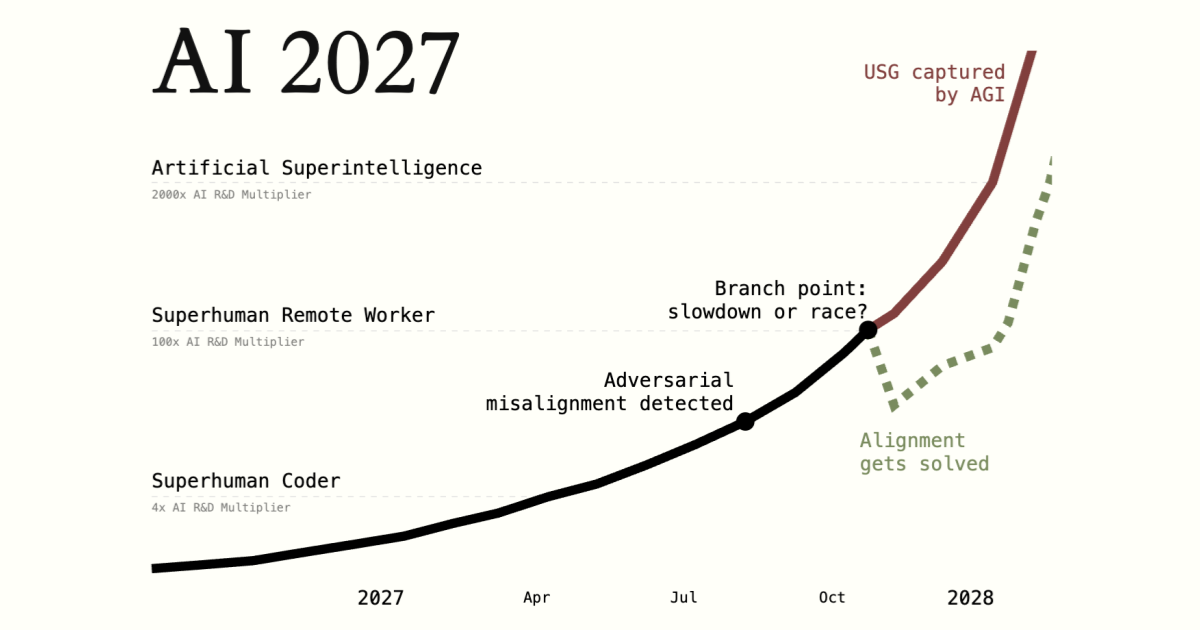
This report predicts that the impact of superhuman AI over the next decade will be enormous, exceeding that of the Industrial Revolution. OpenAI and others have modeled two possible futures: a slow-down scenario and a race. The report details the rapid advancement of AI systems, from the clumsy agents of early 2025 to superintelligences by 2027 capable of surpassing humans in coding and research. However, this rapid development also presents immense risks, including model safety and an AI arms race with China. The report highlights the profound impact of AI on the job market and geopolitics, and explores potential mitigation strategies.

Onyx: Open-Source GenAI Platform Raises $10M Seed Round

2025-04-03
Onyx: Open-Source GenAI Platform Raises $10M Seed Round

Onyx, an open-source generative AI platform, connects your company's docs, apps, and people. It ingests and syncs information from various sources (Google Drive, Slack, GitHub, Confluence, Salesforce, etc.) to create a central hub for asking questions. Imagine your most knowledgeable colleagues, all in one place, 24/7! Onyx believes every modern team will use knowledge-enhanced GenAI within 5 years, and aims to bring this technology to teams worldwide. They just closed a $10M seed round led by Khosla Ventures and First Round Capital, boasting clients like Netflix, Ramp, and Applied Intuition, as well as open-source users including Roku, Zendesk, and L3Harris.

MIT Professor Unravels the Brain's Language Processing Mechanisms

2025-04-03
MIT Professor Unravels the Brain's Language Processing Mechanisms

From learning multiple languages in the former Soviet Union to becoming an associate professor of brain and cognitive sciences at MIT, Dr. Evelina Fedorenko dedicates her research to understanding the brain's language processing regions. Her work utilizes fMRI to precisely locate these areas, revealing their high selectivity for language and lack of overlap with other cognitive functions like music processing or code reading. Furthermore, she explores the temporal differences in processing across different brain regions, the development of language processing areas in young children, and uses large language models to investigate the plasticity and redundancy of the brain's language capabilities.

AI's Blind Spot: Mirrors in Image and Video Generation

2025-04-03
AI's Blind Spot: Mirrors in Image and Video Generation

Recent advancements in AI image and video generation have yielded impressive photorealistic results, yet a significant hurdle remains: accurately rendering reflections in mirrors. Researchers tested several leading models, finding consistent struggles with generating correct reflections. Models frequently produced distorted, inconsistent, or entirely inaccurate images. For instance, Gemini faltered with reflections of cats and chairs, while Ideogram struggled with human reflections in group photos. This highlights a key limitation: while AI image generation is rapidly advancing, achieving physical accuracy—like realistic mirror reflections—remains a significant challenge.

AI

Anthropic Launches Claude for Education, Taking on ChatGPT

2025-04-03
Anthropic Launches Claude for Education, Taking on ChatGPT

Anthropic launched Claude for Education, a new AI chatbot service aimed at higher education, directly competing with OpenAI's ChatGPT Edu. This tier offers students and faculty access to Claude, featuring a new 'Learning Mode' to foster critical thinking. It includes enterprise-grade security and already boasts agreements with universities like Northeastern and the London School of Economics. Anthropic aims to boost revenue and increase user adoption among students through this offering.

Apple Releases CA-1M Dataset and Cubify Transformer for Indoor 3D Object Detection

2025-04-02
Apple Releases CA-1M Dataset and Cubify Transformer for Indoor 3D Object Detection

Apple has released CA-1M, a large-scale dataset for indoor 3D object detection, along with the Cubify Transformer (CuTR) model. CA-1M features exhaustively annotated 3D bounding boxes and poses. Two CuTR model variants are provided: one using RGB-D images and another using only RGB images. The dataset supports real-time detection using the NeRF Capture app and includes comprehensive instructions and code examples. Researchers can leverage this dataset and model to advance research in indoor 3D object detection.

AI Agents: Identity as the Defining Factor

2025-04-02
AI Agents: Identity as the Defining Factor

This article tackles the often-confusing definition of AI agents. The author argues that the key differentiator between AI agents and AI assistants lies in 'identity'. True AI agents perform actions under their own identity, reflected in audit logs; AI assistants operate under the identity of a human user. This identity-based definition implies autonomy, capability, and reasoning. The author draws a parallel to legal agency and uses their own company's product as an example to illustrate the practical application of this definition.

AI

Real-Time Introspective Compression: Giving Transformers a Conscience

2025-04-02
Real-Time Introspective Compression: Giving Transformers a Conscience

Large Language Models (LLMs) suffer from two key limitations: lack of introspection and ephemeral cognition. This article proposes a novel real-time introspective compression method that addresses both. A lightweight "sidecar" model is trained to compress the internal states of a transformer, allowing for efficient access and replay of the model's internal workings. The method compresses transformer states into a low-dimensional latent space, similar to saving a game state, thus overcoming the computational hurdle of storing the full state. This enables new capabilities such as reasoning backtracking, reinforcement learning over thought trajectories, and memory-efficient checkpointing, ultimately leading to more powerful and interpretable AI systems.

Ace: Superhuman-Speed Computer Autopilot

2025-04-02
Ace: Superhuman-Speed Computer Autopilot

Ace is a computer autopilot that uses your mouse and keyboard to perform tasks on your desktop. It outperforms other models in a suite of computer use tasks and boasts superhuman speed. Trained on over a million tasks by software specialists and domain experts, Ace performs mouse clicks and keystrokes based on screen and prompts. While still under development and prone to occasional errors, its accuracy improves significantly with increased training resources. An early research preview is now available.

AI

MathArena: Rigorously Evaluating LLMs on Math Competitions

2025-04-02

MathArena is a platform for evaluating large language models (LLMs) on recent math competitions and olympiads. It ensures fair and unbiased evaluation by testing models exclusively on post-release competitions, preventing retroactive assessments on potentially leaked data. The platform publishes leaderboards for each competition, showing individual problem scores for different models, and a main table summarizing performance across all competitions. Each model runs four times per problem, averaging the score and calculating the cost (in USD). The evaluation code is open-sourced: https://github.com/eth-sri/matharena.

Borges, Simon, and a 1970 Conversation That Still Matters

2025-04-02
Borges, Simon, and a 1970 Conversation That Still Matters

In 1970 Buenos Aires, a meeting between Argentine writer Jorge Luis Borges and AI pioneer Herbert A. Simon sparked a fascinating interdisciplinary dialogue. Their conversation, touching on free will versus determinism, explored the parallels between human behavior and computer programs. Borges's insightful questions challenged Simon to reconcile the deterministic nature of human actions with the preservation of individual identity. This exchange highlights the value of cross-disciplinary thinking and offers a timely reflection on the challenges facing academia today, emphasizing the need for collaboration between the humanities and STEM fields. The conversation also inspires contemplation on simulating historical figures using AI.

Google's Gemini Robotics: A Slam Dunk on First Try

2025-04-02
Google's Gemini Robotics: A Slam Dunk on First Try

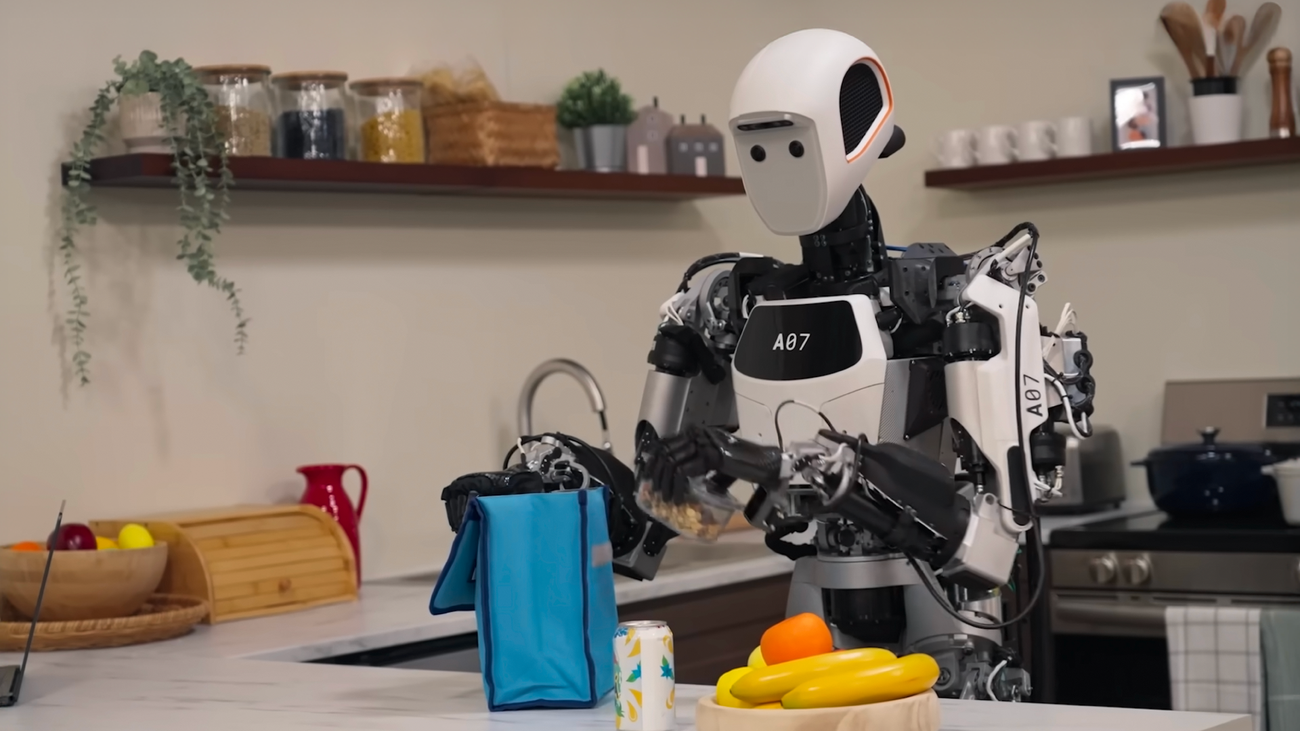
Google showcased its new Gemini Robotics model, enabling robots to perform complex tasks like successfully slam dunking a basketball on the first try, without prior training on the specific object or action. Built upon Gemini 2.0, the model is fine-tuned with robot-specific data, translating multimodal outputs (text, video, audio) into physical actions. Highly dexterous, interactive, and general, it adapts to new objects, environments, and instructions without further training. Google's ambition is to build embodied AI to power robots assisting with everyday tasks, eventually becoming as commonplace an AI interface as phones or computers.

Pulse: AI Startup Tackles Complex Document Data Extraction

2025-04-02
Pulse: AI Startup Tackles Complex Document Data Extraction

Pulse is tackling a persistent challenge in data infrastructure: extracting accurate, structured information from complex documents at scale. Their breakthrough approach combines intelligent schema mapping with fine-tuned extraction models, surpassing legacy OCR and other parsing tools. This fast-growing San Francisco-based team serves Fortune 100 companies, YC startups, and more, backed by top-tier investors. Their multi-stage architecture includes layout understanding, low-latency OCR, advanced reading order algorithms, proprietary table recognition, and vision-language models for charts and tables. If you're passionate about computer vision, NLP, and data infrastructure, Pulse offers a chance to directly impact customers and shape the future of document intelligence.

OpenAI Accused of Training GPT-4o on Unauthorized Paywalled Books

2025-04-02
OpenAI Accused of Training GPT-4o on Unauthorized Paywalled Books

A new paper from the AI Disclosures Project accuses OpenAI of using unlicensed, paywalled books, primarily from O'Reilly Media, to train its GPT-4o model. The paper uses the DE-COP method to demonstrate that GPT-4o exhibits significantly stronger recognition of O'Reilly's paywalled content than GPT-3.5 Turbo, suggesting substantial unauthorized data in its training. While OpenAI holds some data licenses and offers opt-out mechanisms, this adds to existing legal challenges concerning its copyright practices. The authors acknowledge limitations in their methodology, but the findings raise serious concerns about OpenAI's data acquisition methods.

AI

Tracing Circuits: Uncovering Computational Graphs in LLMs

2025-04-02
Tracing Circuits: Uncovering Computational Graphs in LLMs

Researchers introduce a novel approach for interpreting the inner workings of deep learning models using cross-layer transcoders (CLTs). CLTs decompose model activations into sparse, interpretable features and construct causal graphs of feature interactions, revealing how the model generates outputs. The method successfully explains model responses to various prompts (e.g., acronym generation, factual recall, and simple addition) and is validated through perturbation experiments. While limitations exist, such as the inability to fully explain attention mechanisms, it provides a valuable tool for understanding the inner workings of large language models.

Emergent Economies from Simple Agent Interactions: A Simulated Market

2025-04-02
Emergent Economies from Simple Agent Interactions: A Simulated Market

This paper presents a simulated market economy model built from individual agent behavior. Using simple buy/sell decision rules, the model generates complex market dynamics. Each agent makes decisions based on their personal valuation of a good and their expected market price, adjusting expectations after each transaction. The simulation demonstrates convergence towards the average personal valuation, adapting to environmental changes. This offers a novel approach to dynamic economic systems in open-world RPGs, though challenges remain in addressing transaction timing and scarcity.

AI's Context Window: Why a Universal Standard is Needed

2025-04-01
AI's Context Window: Why a Universal Standard is Needed

Current AI models' knowledge is fixed during pre-training, with expensive fine-tuning offering limited updates. This leaves them blind to information beyond a cutoff date. This article explores "context" in AI: user input, conversation history, and external data sources, all constrained by a "context window." A universal standard for external data sources is crucial to overcome this limitation, enabling AI to access real-time information for improved intelligence and functionality.

DeepMind's Crackdown on Research Papers Sparks Internal Turmoil

2025-04-01
DeepMind's Crackdown on Research Papers Sparks Internal Turmoil

DeepMind's tightened research paper review process has caused unrest among its employees. A paper exposing vulnerabilities in OpenAI's ChatGPT was reportedly blocked, raising concerns about prioritizing commercial interests over academic freedom. The stricter review process has allegedly contributed to employee departures, as publishing research is crucial for researchers' careers. Furthermore, internal resources are increasingly directed towards improving DeepMind's Gemini AI product suite. While Google's AI products enjoy market success and a rising share price, the internal tension highlights the conflict between academic pursuit and commercialization.

Simulating a Worm Brain: A Stepping Stone to Whole-Brain Emulation?

2025-04-01

Simulating the human brain has been a holy grail of science, but its complexity has proven daunting. Scientists have turned to C. elegans, a nematode with only 302 neurons. After 25 years and numerous failed attempts, simulating its brain is finally within reach thanks to advancements in light-sheet microscopy, super-resolution microscopy, and machine learning. These technologies enable real-time observation of neural activity in living worm brains and use machine learning to infer the biophysical parameters of neurons. Successfully simulating a C. elegans brain would not only be a remarkable scientific achievement but also provide invaluable experience and methods for simulating more complex brains, ultimately including human brains, paving the way for future AI and neuroscience research.

AI

The Semantic Apocalypse: AI Art and the Loss of Wonder

2025-04-01
The Semantic Apocalypse: AI Art and the Loss of Wonder

This essay explores the impact of AI-generated art on the meaning of art, using the example of ultramarine, a pigment once incredibly difficult and expensive to produce. The author argues that the ease of AI art creation diminishes the sense of wonder and uniqueness associated with traditional art, leading to hedonic adaptation. This isn't unique to AI, but a recurring pattern throughout history as technology makes previously rare experiences commonplace. The solution proposed isn't technological, but personal: cultivating a childlike wonder and actively engaging with the world to overcome the desensitization caused by readily available abundance.

Jargonic: A Revolutionary ASR Model for Industry-Specific Speech

2025-04-01
Jargonic: A Revolutionary ASR Model for Industry-Specific Speech

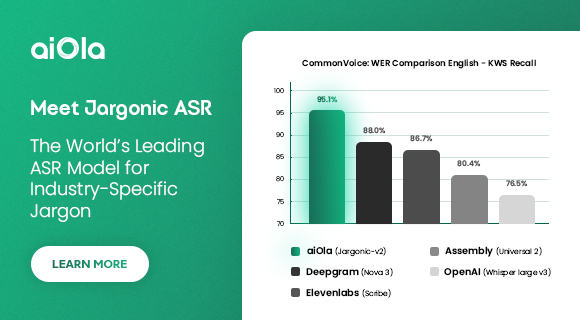
aiOla has launched Jargonic, a groundbreaking Automatic Speech Recognition (ASR) model that addresses the limitations of existing ASR models in handling industry jargon, noisy environments, and real-time adaptability. Jargonic utilizes advanced domain adaptation, real-time contextual keyword spotting, and zero-shot learning to handle industry-specific language out-of-the-box, eliminating the need for retraining. Its unique keyword spotting mechanism combined with the ASR engine significantly improves transcription accuracy, especially for audio containing specialized terminology. Furthermore, Jargonic boasts robust noise handling capabilities, maintaining high performance across multiple languages and noisy industrial settings. Benchmark tests show it outperforms competitors like OpenAI Whisper.

GenAI Market Shakeup: Gartner Predicts Consolidation and Extinctions

2025-04-01
GenAI Market Shakeup: Gartner Predicts Consolidation and Extinctions

Gartner forecasts a significant consolidation in the generative AI (GenAI) market, with a potential outcome of only a few major players remaining. The current landscape sees numerous Large Language Model (LLM) providers struggling with high development and operational costs in a fiercely competitive market. Analyst John-David Lovelock predicts a cloud-like market dominance by a select few, mirroring the current AWS, Azure, and Google Cloud scenario. Businesses are increasingly opting for commercial off-the-shelf solutions rather than building their own AI software. While GenAI is experiencing explosive growth, projected to reach $644 billion by 2025, LLM developers are prioritizing market share acquisition over revenue, leading to a predicted, albeit slow, weeding out of weaker players. This won't be a rapid dot-com-like collapse, but a gradual consolidation.

1 2 25 26 27 29 31 32 33 40 41